Shigesaburo Kabe - Böcker
Visar alla böcker från författaren Shigesaburo Kabe. Handla med fri frakt och snabb leverans.
2 produkter
2 produkter
1 481 kr
Skickas inom 5-8 vardagar
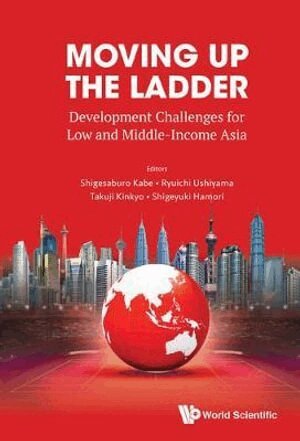
Besides export expansion, a growing middle class in Asia has contributed to the area's economic expansion, providing Asian countries with a window of opportunity to leap from low/middle income levels to high income levels. It may sound easy for these countries to run up the ladder of economic growth, but the potential risks of quickly shifting from low/middle to high income levels are often overlooked. Careful studies in history reveal that the experience of moving up the ladder of economic growth has varied among countries.This book explores (1) the current state of Asian economies and 2) the conditions or policy counter-measures that lead to higher income levels under changing external circumstances. This is illustrated through case studies on five Asian economies, with emphasis on their structural problems. It also aims to paint a comprehensive picture of necessary policies, which will encourage Asian countries to move up the ladder of growth.
483 kr
Skickas inom 7-10 vardagar
This book focuses on the high-income Asia that experienced fast economic growth and rapid demographic change in recent decades. High-income Asia includes Japan, South Korea, Taiwan, Singapore and Hong Kong, according to the World Bank’s category classification. These economies enjoyed a brief period of brilliant economic growth but then faced a demographic shift, with the lowest fertility in the world.For example, Japan today must confront difficult challenges such as how to balance childbirth and childcare with women’s employment as its population rapidly ages—a consequence that was hardly foreseen in the process of economic growth. The changing landscape is different at each stage of the process, and the issues related to economic growth cannot be clearly recognized before or during that growth. Therefore, as a reference for the future of developing countries, this book aims to provide positive and negative lessons, learned from high-income Asia’s experiences in high-speed economic growth and demographic changes.First, it gives an overview of the rapid economic growth and demographic changes in high-income Asia over the past several decades. Then, among the challenges following economic growth, it focuses on two points: 1) how to balance childbirth and childcare with women’s employment; and 2) how to respond to the anticipated labor shortage in the future. The former issue requires a delicate balance between preventing fertility decline and supporting women's employment. Here, a comparison among Japan, Taiwan and Korea is made. The latter question focuses primarily on Japan as the fastest-aging population in the world, with additional reference to parts of high-income Asia other than Japan, which also are aging. Based on analyses of these major points, the author discusses the policy implications for developing countries learned from the tough lessons of high-income Asia.