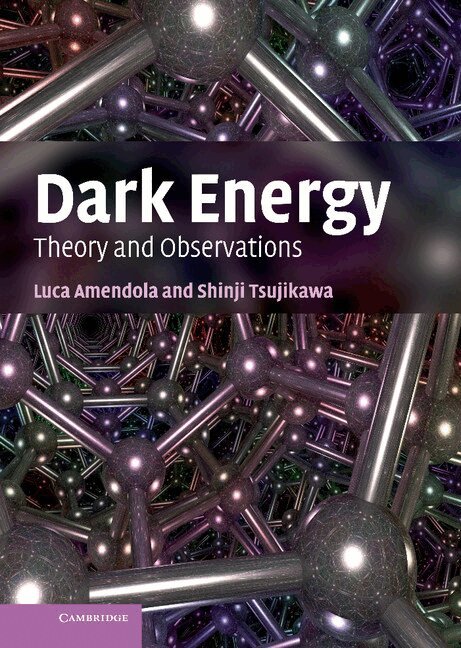
Dark energy, the mysterious cause of the accelerating expansion of the universe, is one of the most important fields of research in astrophysics and cosmology today. Introducing the theoretical ideas, observational methods and results, this textbook is ideally suited to graduate courses on dark energy, and will also supplement advanced cosmology courses. Providing a thorough introduction to this exciting field, the textbook covers the cosmological constant, quintessence, k-essence, perfect fluid models, extra-dimensional models, and modified gravity. Observational research is reviewed, from the cosmic microwave background to baryon acoustic oscillations, weak lensing and cluster abundances. Every chapter ends with problems, with full solutions provided, and any calculations are worked through step-by-step.
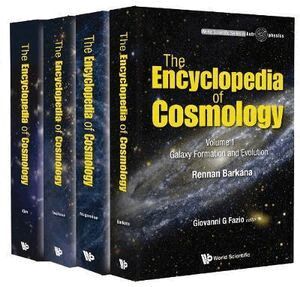
The Encyclopedia of Cosmology, in four volumes, is a major, long-lasting, seminal reference at the graduate student level, laid out by the most prominent, respected researchers in the general field of Cosmology. These volumes will be a comprehensive review of the most important concepts and current status in the field, covering both theory and observation.One of the attractive features of the encyclopedia is that it is accompanied by supplementary materials including videos and simulations of the numerical computation. This will help the readers to better understand and visualize the concepts discussed.This encyclopedia is edited by Dr. Giovanni Fazio from Harvard Smithsonian Center for Astrophysics, with an advisory board comprised of renowned scientists: Lars Hernquist and Abraham Loeb (Harvard Smithsonian Center for Astrophysics), and Christopher McKee (UC Berkeley). Each volume is authored/edited by a specialist in the area: Galaxy Formation and Evolution written by Rennan Barkana (Tel Aviv University), Numerical Simulations in Cosmology edited by Kentaro Nagamine (Osaka University / University of Nevada), Dark Energy written by Shinji Tsujikawa (Tokyo University of Science), and Dark Matter written by Jihn E Kim (Seoul National University).
Dark energy, the mysterious cause of the accelerating expansion of the universe, is one of the most important fields of research in astrophysics and cosmology today. Introducing the theoretical ideas, observational methods and results, this textbook is ideally suited to graduate courses on dark energy, and will also supplement advanced cosmology courses. Providing a thorough introduction to this exciting field, the textbook covers the cosmological constant, quintessence, k-essence, perfect fluid models, extra-dimensional models, and modified gravity. Observational research is reviewed, from the cosmic microwave background to baryon acoustic oscillations, weak lensing and cluster abundances. Every chapter ends with problems, with full solutions provided, and any calculations are worked through step-by-step.
The Encyclopedia of Cosmology, in four volumes, is a major, long-lasting, seminal reference at the graduate student level, laid out by the most prominent, respected researchers in the general field of Cosmology. These volumes will be a comprehensive review of the most important concepts and current status in the field, covering both theory and observation.One of the attractive features of the encyclopedia is that it is accompanied by supplementary materials including videos and simulations of the numerical computation. This will help the readers to better understand and visualize the concepts discussed.This encyclopedia is edited by Dr. Giovanni Fazio from Harvard Smithsonian Center for Astrophysics, with an advisory board comprised of renowned scientists: Lars Hernquist and Abraham Loeb (Harvard Smithsonian Center for Astrophysics), and Christopher McKee (UC Berkeley). Each volume is authored/edited by a specialist in the area: Galaxy Formation and Evolution written by Rennan Barkana (Tel Aviv University), Numerical Simulations in Cosmology edited by Kentaro Nagamine (Osaka University / University of Nevada), Dark Energy written by Shinji Tsujikawa (Tokyo University of Science), and Dark Matter written by Jihn E Kim (Seoul National University).