Shirley C. Strum – författare
Visar alla böcker från författaren Shirley C. Strum. Handla med fri frakt och snabb leverans.
3 produkter
3 produkter
Häftad, Engelska, 2002
410 kr
Skickas inom 5-8 vardagar
How have our conceptions of primate behaviour and society changed since primatology came into its own after World War II? What kind of science is primatology, and what role have women scientists played in its development? "Primate Encounters" represents a pioneering attempt to answer these questions by bringing together two groups of scholars who often ask them: scientists and those who study them. The result is a fascinating and provocative collective reflection on primatology and on science in general, and on the relations of both broader cultural, historical and social issues. Beginning with a history of ideas about primate society, the book continues with personal reflections from senior primatologists who have lived that history. Other chapters reveal the diversity of "primatologies" that exist outside North America, compare the history of primatology to that of closely related disciplines such as archaeology and animal behaviour, and examine the roles that gender, media, society and technology have played in the development of the field.With contributions by a number of well known scholars in both primatology and science studies, including Donna Haraway, Alison Jolly, Bruno Latour and Robert W. Sussman, "Primate Encounters" demonstrates the exciting possibilities that arise when scholars from both sides of the "science wars" trade ideas rather than insults. The book also includes a selection of informal e-mail exchanges that allows readers to experience firsthand some of the lively discussions generated by such a diverse group of contributors.
Häftad, Engelska, 1990
295 kr
Skickas inom 5-8 vardagar
When Shirley C. Strum first set out in 1972 to do graduate work with baboons in Kenya, conventional wisdom had it that primate society, epitomized by monkeys such as baboons, was based on aggression and ruled by the males, their brute force and their dominance hierarchy. But her absorbing chronicle of fifteen years spent observing a troop of baboons has revealed remarkable new aspects of animal behavior.
Inbunden, Engelska, 2025
349 kr
Skickas inom 5-8 vardagar
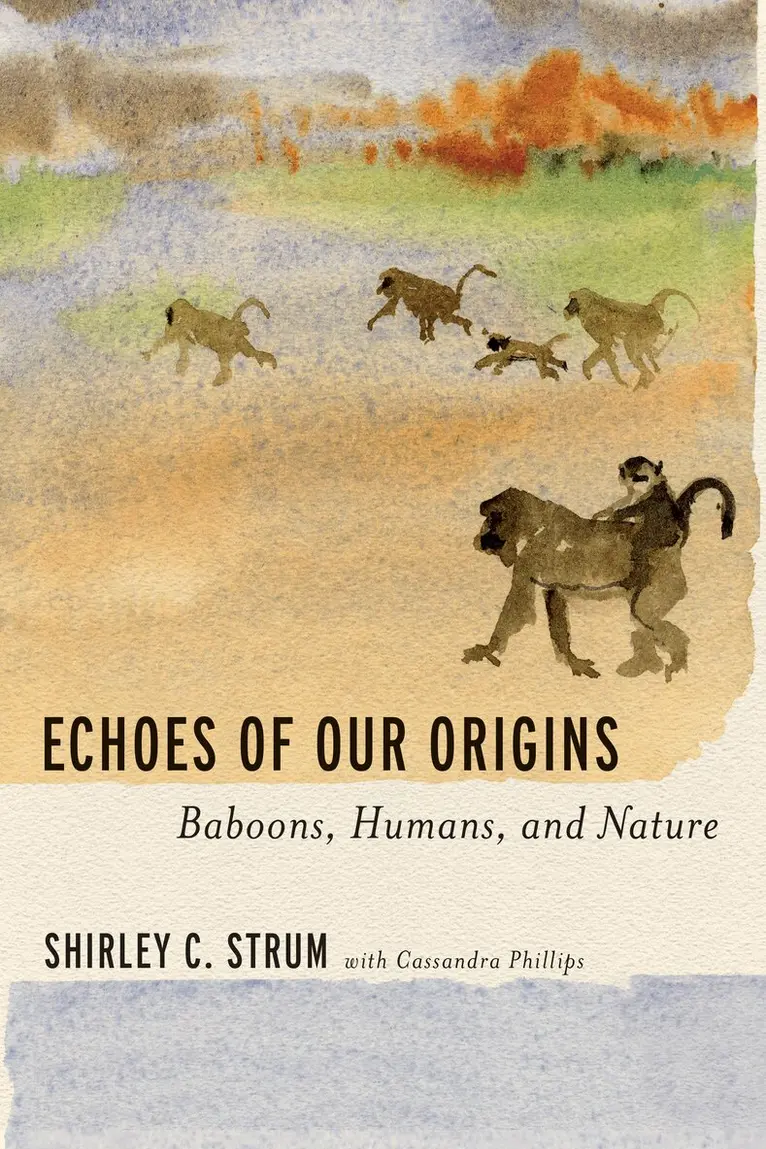
The amazing chronicle of a primate scientist's fifty-year journey studying baboons—and what her findings can tell us about primates, resilience, and human coexistence.In 1972, renowned anthropologist Shirley C. Strum traveled to Kenya to study the origins of human aggression through observing baboons. What Dr. Strum discovered completely defied her expectations, scientific notions about baboons, and even well-established assumptions about primate behavior writ large. In Echoes of Our Origins, Strum takes readers on an extraordinary fifty-year journey alongside baboons, creatures that transformed not just her scientific understanding, but also her perspective on life, people, nature, and evolution. Strum's groundbreaking research began when she embarked on fieldwork in Kenya. Observing the lives of these social creatures, Strum uncovered their unexpectedly complex strategies of negotiation, collaboration, and resilience in the face of adversity. From exploring the evolution of social bonds and trust in baboon society—a common idea today but not then—to confronting the consequences of human-wildlife conflict, Strum illustrates what it means to coexist with the natural world and question our role within it. With insights drawn from half a century of living among and studying baboons, Strum reflects on the delicate balance of nature and humanity, how science itself must evolve to see beyond its rigid frameworks, and how to think about evolution. This profound narrative challenges readers to look anew at not only baboons but also the very methods by which we understand the animal kingdom—and ourselves. Equal parts natural history, adventure story, memoir, and call to action, Echoes of Our Origins will engage, enlighten, and contribute to the vital conversation about our natural world and how to ensure its survival.