Shiv Shankar Kumar – författare
Visar alla böcker från författaren Shiv Shankar Kumar. Handla med fri frakt och snabb leverans.
4 produkter
4 produkter
Inbunden, Engelska, 2026
2 557 kr
Skickas inom 10-15 vardagar
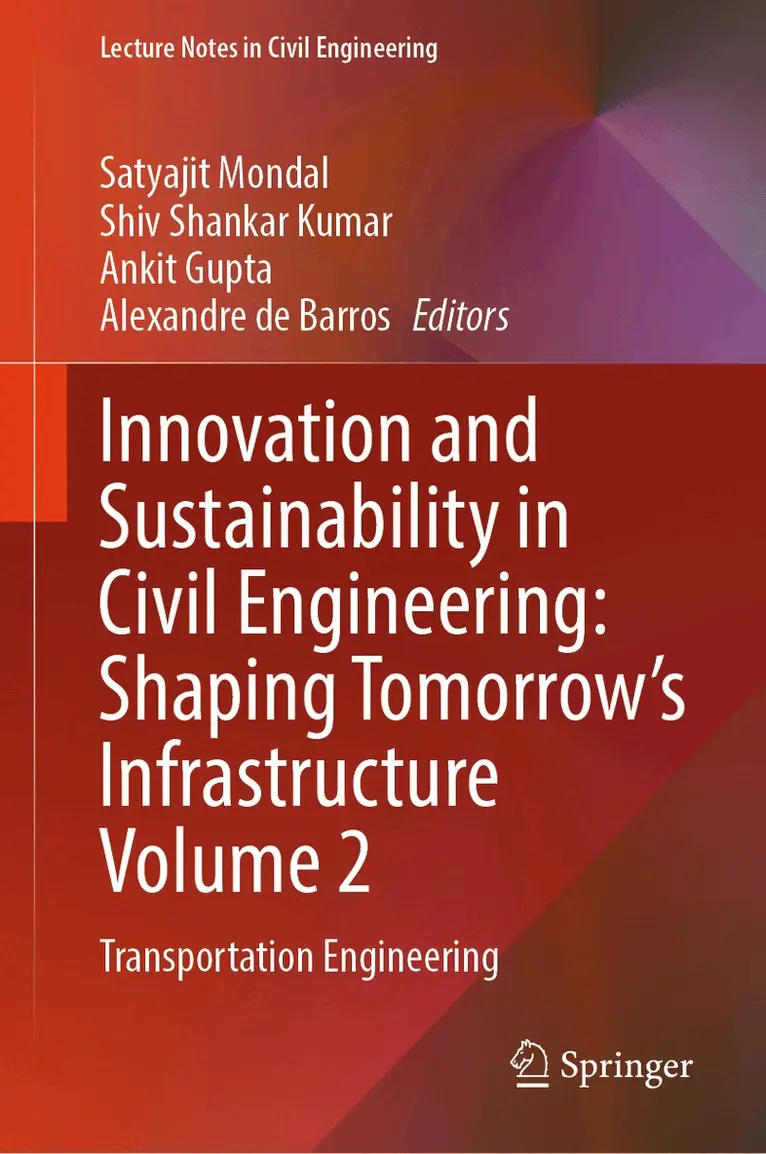
This book captures the intellectual spirit and interdisciplinary synergy of a global forum dedicated to redefining the future of civil engineering through innovation and sustainability in the field of transportation engineering. The proceedings of the 1st International Conference on Innovations and Sustainability in Civil Engineering: Shaping Tomorrow’s Infrastructure (ISCESTI – 2025), held from May 14–16, 2025, at the National Institute of Technology (NIT) Patna, present a groundbreaking compendium of scholarly research, transformative ideas, and forward-thinking practices in the realm of civil infrastructure. This book delves into contemporary challenges and advancements across a broad spectrum ranging from intelligent traffic and pedestrian systems, integrated traffic management strategies, and cutting-edge safety protocols, to next-generation transportation planning, design innovations, and policy frameworks. It critically examines demand modelling, the socio-economic dimensions of transportation, and the economics of infrastructure development. A special emphasis is placed on sustainable materials and technologies to pavement design and management, with focused insights into low-cost, eco-friendly alternatives, recycling methodologies, and the reuse of materials in infrastructure systems. Serving as a valuable reference, this book is intended for researchers, academicians, industrial practitioners, and policymakers engaged in sustainable infrastructure development and related disciplines. The diverse contributions encapsulate the latest innovations in transportation engineering, offering data-driven strategies and sustainable solutions that address the complexities of a rapidly urbanizing world. It provides insights into cutting-edge innovations and sustainable solutions, aligning with the evolving needs of civil engineering and environmental sustainability.
E-bok
Engelska, 20263 251 kr
Läs direkt efter köp
This book captures the intellectual spirit and interdisciplinary synergy of a global forum dedicated to redefining the future of civil engineering through innovation and sustainability in the field of transportation engineering. The proceedings of the 1st International Conference on Innovations and Sustainability in Civil Engineering: Shaping Tomorrow’s Infrastructure (ISCESTI – 2025), held from May 14–16, 2025, at the National Institute of Technology (NIT) Patna, present a groundbreaking compendium of scholarly research, transformative ideas, and forward-thinking practices in the realm of civil infrastructure. This book delves into contemporary challenges and advancements across a broad spectrum ranging from intelligent traffic and pedestrian systems, integrated traffic management strategies, and cutting-edge safety protocols, to next-generation transportation planning, design innovations, and policy frameworks. It critically examines demand modelling, the socio-economic dimensions of transportation, and the economics of infrastructure development. A special emphasis is placed on sustainable materials and technologies to pavement design and management, with focused insights into low-cost, eco-friendly alternatives, recycling methodologies, and the reuse of materials in infrastructure systems. Serving as a valuable reference, this book is intended for researchers, academicians, industrial practitioners, and policymakers engaged in sustainable infrastructure development and related disciplines. The diverse contributions encapsulate the latest innovations in transportation engineering, offering data-driven strategies and sustainable solutions that address the complexities of a rapidly urbanizing world. It provides insights into cutting-edge innovations and sustainable solutions, aligning with the evolving needs of civil engineering and environmental sustainability.
Del 839 - Lecture Notes in Civil Engineering
Innovation and Sustainability in Civil Engineering: Shaping Tomorrow’s Infrastructure Volume 3
Geotechnical Engineering
Inbunden, Engelska, 2026
2 557 kr
Skickas inom 10-15 vardagar
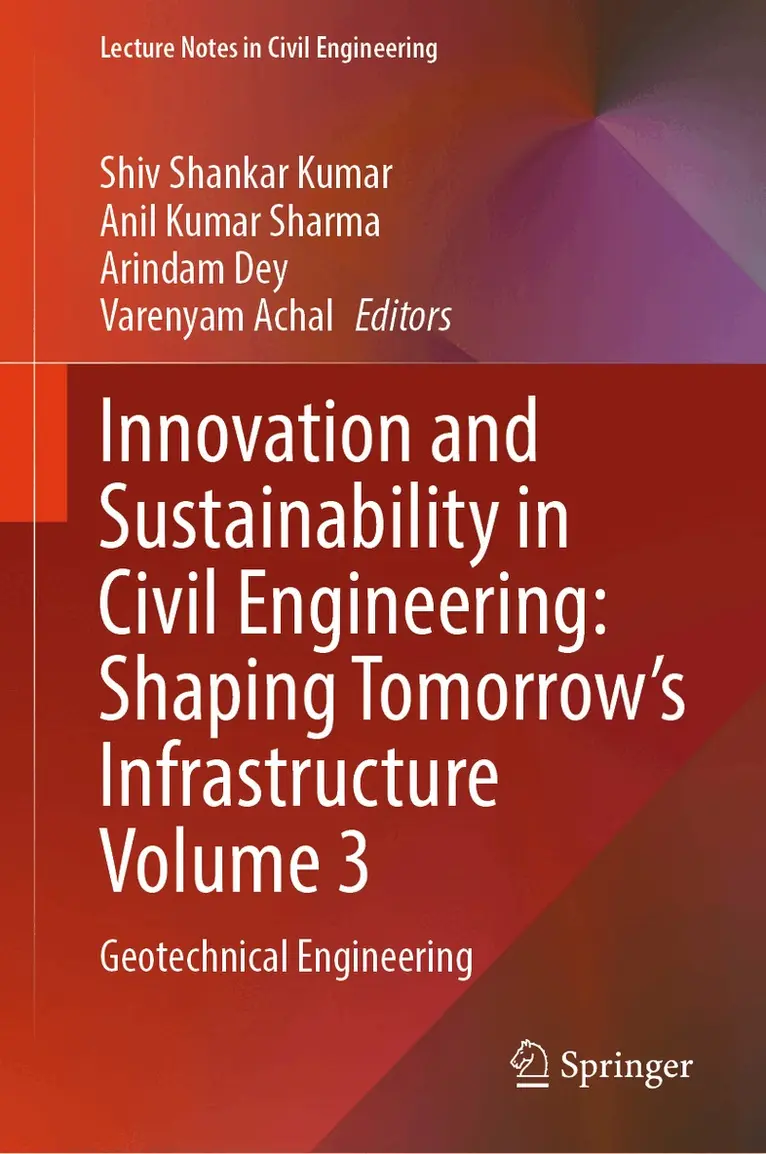
This book encapsulates the intellectual rigor and cross-disciplinary collaboration showcased at a global forum dedicated to advancing the understanding and application of geotechnical systems in sustainable infrastructure development. Proceedings of the 1st International Conference on Innovations and Sustainability in Civil Engineering: Shaping Tomorrow’s Infrastructure (ISCESTI—2025), held from May 14–16, 2025, at the National Institute of Technology (NIT) Patna, present a compelling compilation of pioneering research, emerging technologies, and sustainable practices in the field of geotechnical engineering.It addresses a broad spectrum of contemporary issues, from ground improvement techniques and geosynthetics to the impacts of climate change on soil behavior and foundation design.The contributions explore innovative approaches to soil stabilization, earthquake geotechnics, underground construction, and slope stability analysis, integrating field investigations, laboratory experimentation, and advanced numerical modeling. Particular emphasis is placed on eco-friendly solutions such as bio-mediated ground improvement, reuse of industrial waste materials in geotechnics, and the development of resilient and adaptive foundation systems.This book also highlights the role of digital and data-driven technologies—such as machine learning, remote sensing, and geotechnical instrumentation—in enhancing subsurface characterization, predictive modeling, and risk mitigation strategies. Case studies and practical insights illustrate the application of geotechnical innovations in real-world infrastructure projects under challenging environmental and geohazard conditions.Serving as a vital resource for geotechnical engineers, researchers, academicians, and infrastructure policymakers, this book provides actionable frameworks and future-oriented solutions to address the evolving demands of urbanization, climate adaptation, and sustainability. It positions geotechnical engineering at the forefront of building resilient, safe, and environmentally responsible infrastructure for the generations to come.
E-bok
Engelska, 20263 251 kr
Läs direkt efter köp
This book encapsulates the intellectual rigor and cross-disciplinary collaboration showcased at a global forum dedicated to advancing the understanding and application of geotechnical systems in sustainable infrastructure development. Proceedings of the 1st International Conference on Innovations and Sustainability in Civil Engineering: Shaping Tomorrow’s Infrastructure (ISCESTI—2025), held from May 14–16, 2025, at the National Institute of Technology (NIT) Patna, present a compelling compilation of pioneering research, emerging technologies, and sustainable practices in the field of geotechnical engineering.It addresses a broad spectrum of contemporary issues, from ground improvement techniques and geosynthetics to the impacts of climate change on soil behavior and foundation design.The contributions explore innovative approaches to soil stabilization, earthquake geotechnics, underground construction, and slope stability analysis, integrating field investigations, laboratory experimentation, and advanced numerical modeling. Particular emphasis is placed on eco-friendly solutions such as bio-mediated ground improvement, reuse of industrial waste materials in geotechnics, and the development of resilient and adaptive foundation systems.This book also highlights the role of digital and data-driven technologies—such as machine learning, remote sensing, and geotechnical instrumentation—in enhancing subsurface characterization, predictive modeling, and risk mitigation strategies. Case studies and practical insights illustrate the application of geotechnical innovations in real-world infrastructure projects under challenging environmental and geohazard conditions.Serving as a vital resource for geotechnical engineers, researchers, academicians, and infrastructure policymakers, this book provides actionable frameworks and future-oriented solutions to address the evolving demands of urbanization, climate adaptation, and sustainability. It positions geotechnical engineering at the forefront of building resilient, safe, and environmentally responsible infrastructure for the generations to come.