Shiv Shanker Tiwary – författare
4 294 kr
Läs direkt efter köp
This book is intended, as an introduction to aesthetics and presents the relation of Aft and Philosophy. These relations throw a fresh light at once on the significance of major art and on the imaginative meaning of major philosophies. An introduction to the experience of the art and the implications of art in civilization, the general relations of art the whole of our experience, the origins and the functions of the artistic process in society. the aesthetic problems and attitude, representation ofar1. social evaluation of art and its influence are some of the related topic lavish are equally important in the study of aesthetics. This book on aesthetics is justified not so much by leading the reader to further books on aesthetics, but rather by returning him to the arts. a return, it is to be hoped, marked by sharpened and deepened appreciation. This book is written in this very spirit which can provide the readers with comprehensive and authoritative knowledge on aesthetics.
2 238 kr
Läs direkt efter köp
This encyclopaedia is about many great thinkers of Buddhism who have significantly contributed towards the development and spreading of Buddhism around the world. Many pupils of Gautama Buddha started his thoughts after his death. In the later years many prominent thinkers carry forward his work and helped to spread the message of Ahimsa (non-violence)and Brotherhood around the world. Even today many scholars, authors and thinkers are working towards this great goal. This encyclopaedia traces some of the greatest Buddhist thinkers of all time right through the days of early Buddhism. In tracing these thinkers weave also included some important chapters of Buddhism which helps in understanding this religion in its true manner. There are some other branches of Buddhism which later evolved. Zen Buddhism is one of these important branches which are very influential in some parts of the world, most notably in the Japan and some parts of China. we have also given some of the most important Zen thinkers here. Our attempt is to cover as many thinkers as possible. We hope that the readers of Buddhism who want to know, about the teachers and thinkers of this religion will find this encyclopaedia very useful.
4 294 kr
Läs direkt efter köp
One of the most enduring achievements of Indian civilization is undoubtedly its architecture, which extends to a greatening more than the Taj Mahal or the. temple complexes of Khajuraho and vijayanagara. the beginnings of the Buddhist school of architecture can bet: aced back to B.C. 255 when the mauryan emperor Asoka established Buddhism as the state religion of his large empire. Buddhism spread rapidly throughout lndia and other parts of Asia. Buddhist art and architecture was not limited to India. In fact it reached insurant other parts of the world where this religion got prosperous. These places include Japan, Sri Lanka, Korea, Cambodia, Thailand, China, etc. Buddhist art and architecture was very rich and it can beer. preened any wherein the world where the followers of Buddhism are found. This book covers the rich art and architecture of Buddhism. Starting with India, where Buddhism started as religion and where Buddhist art and architecture can be widely seen across the country, to the other parts of the world, the prominent features of Buddhist art and architecture has been given in this book.
4 422 kr
Läs direkt efter köp
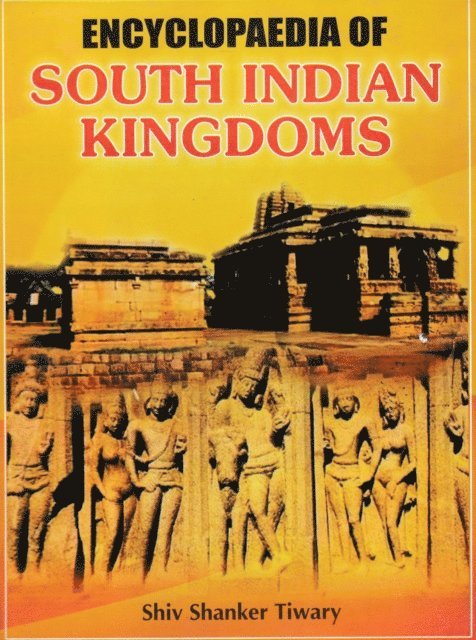
Southern India has seen many great empires in its history. The history of South India covers a span of over two thousand years during which the region saw the rise and fall of a number of dynasties and empires. The period of known history of the region begins with the ancient period during which the great king Ashoka ruled over most of the Indian subcontinent. The dynasties of Satavahana, Chera, Chola, Pandya Kakatiya and Hoysala were at their peak during various periods of history. Theses kingdoms constantly fought amongst each other and against external forces when Muslim armies invaded South India. Vijayanagara empire rose in response to the Muslim intervention and covered the most of south India and acted as a bulwark Mughal expansion into the south. The present encyclopaedia tries to give various aspects of these kingdoms. Their art, architecture, administration education system, etc. were very influential. Every dynasty had some of their unique characteristics. This encyclopaedia tries to cover these very unique characteristics of these kingdoms. A chronology has been maintined which will help the readers. From the golden period of these kingdoms to finally their integration all the important events have been included in this encyclopaedia which we expect will find its due place among the readers.
4 461 kr
Läs direkt efter köp
Southern India has seen many great empires in its history. The history of South India covers a span of over two thousand years during which the region saw the rise and fall of a number of dynasties and empires. The period of known history of the region begins with the ancient period during which the great king Ashoka ruled over most of the Indian subcontinent. The dynasties of Satavahana, Chera, Chola, Pandya Kakatiya and Hoysala were at their peak during various periods of history. Theses kingdoms constantly fought amongst each other and against external forces when Muslim armies invaded South India. Vijayanagara empire rose in response to the Muslim intervention and covered the most of south India and acted as a bulwark Mughal expansion into the south. The present encyclopaedia tries to give various aspects of these kingdoms. Their art, architecture, administration education system, etc. were very influential. Every dynasty had some of their unique characteristics. This encyclopaedia tries to cover these very unique characteristics of these kingdoms. A chronology has been maintined which will help the readers. From the golden period of these kingdoms to finally their integration all the important events have been included in this encyclopaedia which we expect will find its due place among the readers.
4 294 kr
Läs direkt efter köp
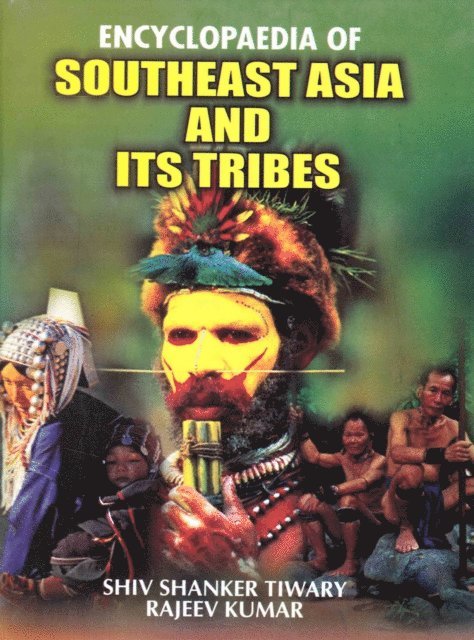
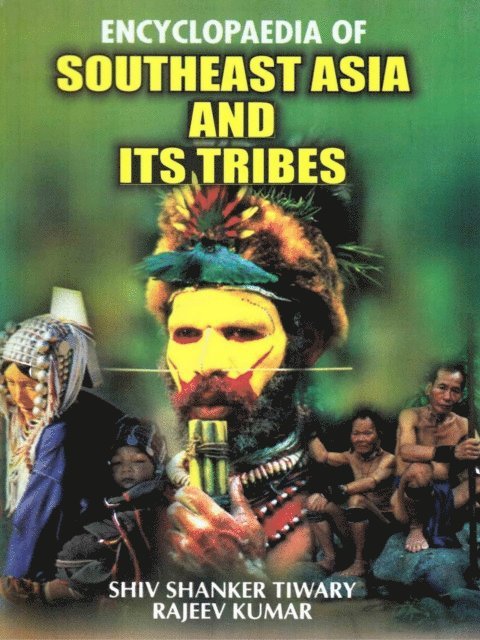
Southeast Asia is a region where one can find many similarities between different countries. Southeast Asia has never been in any sense an isolated or self-contained unit. Because of its crossroads situation on the map of Asia it has always been peculiarly exposed to external influences; it has been a meeting- ground of commerce, cultures and civilizations. In a sense Southeast Asia has always been part of something bigger than itself; it has generally played a passive role in history, one which has meaning and significance only against the background of the history of Asia as a whole. Southeast Asia has a large number of tribes and ethnic groups. These countries are very similar with each other in many aspects and many of the tribes are found in more than ore country. This encyclopaedia traces these tribes of Southeast Asia, their culture and traditions, religions, customs, cuisines and other aspects of their life. Each country has been presented as a separate chapter and tribes and ethnic groups of that country is given in an elaborate manner. The language of this encyclopaedia has been kept very simple and pragmatic which is easy to understand and we hope that readers will find this book enjoyable on reading.
4 294 kr
Läs direkt efter köp
Southeast Asia is a region where one can find many similarities between different countries. Southeast Asia has never been in any sense an isolated or self-contained unit. Because of its crossroads situation on the map of Asia it has always been peculiarly exposed to external influences; it has been a meeting- ground of commerce, cultures and civilizations. In a sense Southeast Asia has always been part of something bigger than itself; it has generally played a passive role in history, one which has meaning and significance only against the background of the history of Asia as a whole. Southeast Asia has a large number of tribes and ethnic groups. These countries are very similar with each other in many aspects and many of the tribes are found in more than ore country. This encyclopaedia traces these tribes of Southeast Asia, their culture and traditions, religions, customs, cuisines and other aspects of their life. Each country has been presented as a separate chapter and tribes and ethnic groups of that country is given in an elaborate manner. The language of this encyclopaedia has been kept very simple and pragmatic which is easy to understand and we hope that readers will find this book enjoyable on reading.
4 422 kr
Läs direkt efter köp
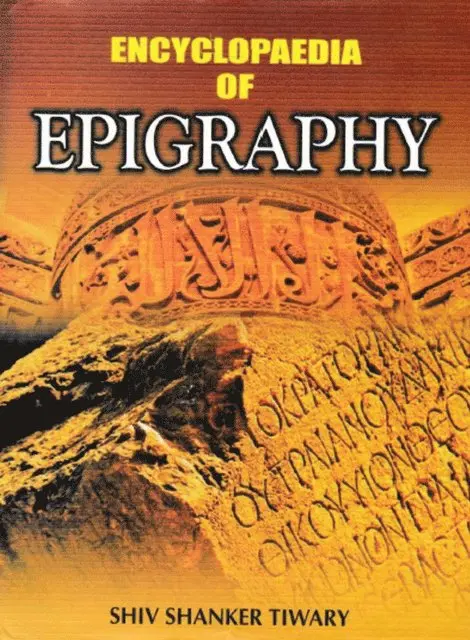
The study of epigraphy is a substantial and ever-growing resource for archaeologists and historians. It can be estimated that over 30,000 inscriptions of the great Roman world alone are known; this mass of evidence grows at upwards of 1000 items per year, and the volume of new discoveries shows no sign of diminishing. Inscriptions provide valuable confirmation and amplification of our often meagre and selective literacy sources. They can provide details of events of the past empires, or can attest the careers and activities of officials and officers otherwise completely unknown. Inscriptions are a major source of information, which seeks to reconstruct administrative hierarchies and family relationship, thereby illuminate ancient societies. Inscription cover a wide, though by no means complete, socio-economic spectrum of the community, bringing before us a vast number of people of the ancient civilizations, their activities and their rituals. The evidence of inscriptions is especially useful in reconstruction the story of the province of past empires. Above all they provide an enormous reservoir of incidental information on the world of their empire. The Encyclopaedia of Epigraphy is an attempt to provide readers with an in depth analysis of the interesting and fascinating world of inscriptions. We expect that readers will find this encyclopaedia very useful in enhancing their knowledge on epigraphy.
2 211 kr
Läs direkt efter köp
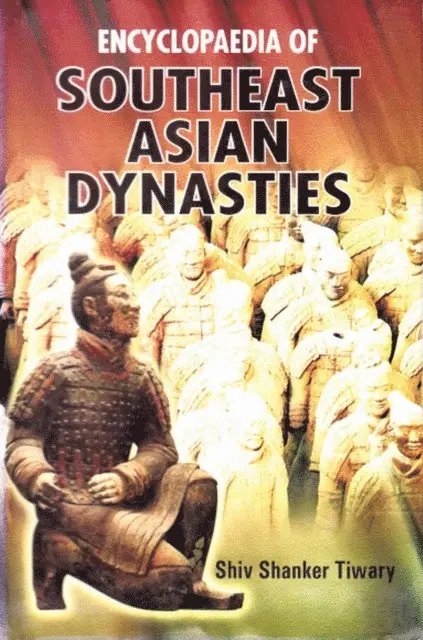
The history of Southeast Asia has been characterized as interaction between regional players and foreign powers. Though 11 countries currently makeup the region, the history of each country is intertwined with all the others. For instance, the Malay empires of Sri vijaya and Malacca covered modern day Indonesia, Malaysia and Singapore while the Burmese, Thai, and Khmer people governed much of lndo china. Southeast Asia has been inhabited since prehistoric times. The communities in the region evolved to form complex cultures with varying degrees of influence from India and China. There were many kingdoms in the Southeast Asian region. The ancient kingdom scan be grouped into two distinct categories. The first is agrarian kingdoms. Agrarian kingdoms had agriculture as the main economic activity. Most agrarian states were located in mainland Southeast Asia. Examples are the Ayutthaya Kingdom ,based on the Chao Phraya River delta and the Khmer Empire on the Tonle Sap. The second type is maritime states. Maritime states were dependent on sea trade. Malacca and Sri vijaya were maritime states. This encyclopaedia traces the various dynasties of Southeast Asia. How these dynasties came into power, how efficiently they ruled their kingdom ,the prominent rulers of these dynasties, their important cultures and rituals are covered in this book.
2 166 kr
Läs direkt efter köp
The history of Southeast Asia has been characterized as interaction between regional players and foreign powers. Though 11 countries currently makeup the region, the history of each country is intertwined with all the others. For instance, the Malay empires of Sri vijaya and Malacca covered modern day Indonesia, Malaysia and Singapore while the Burmese, Thai, and Khmer people governed much of lndo china. Southeast Asia has been inhabited since prehistoric times. The communities in the region evolved to form complex cultures with varying degrees of influence from India and China. There were many kingdoms in the Southeast Asian region. The ancient kingdom scan be grouped into two distinct categories. The first is agrarian kingdoms. Agrarian kingdoms had agriculture as the main economic activity. Most agrarian states were located in mainland Southeast Asia. Examples are the Ayutthaya Kingdom ,based on the Chao Phraya River delta and the Khmer Empire on the Tonle Sap. The second type is maritime states. Maritime states were dependent on sea trade. Malacca and Sri vijaya were maritime states. This encyclopaedia traces the various dynasties of Southeast Asia. How these dynasties came into power, how efficiently they ruled their kingdom ,the prominent rulers of these dynasties, their important cultures and rituals are covered in this book.
2 211 kr
Läs direkt efter köp
The history of Southeast Asia has been characterized as interaction between regional players and foreign powers. Though 11 countries currently makeup the region, the history of each country is intertwined with all the others. For instance, the Malay empires of Sri vijaya and Malacca covered modern day Indonesia, Malaysia and Singapore while the Burmese, Thai, and Khmer people governed much of lndo china. Southeast Asia has been inhabited since prehistoric times. The communities in the region evolved to form complex cultures with varying degrees of influence from India and China. There were many kingdoms in the Southeast Asian region. The ancient kingdom scan be grouped into two distinct categories. The first is agrarian kingdoms. Agrarian kingdoms had agriculture as the main economic activity. Most agrarian states were located in mainland Southeast Asia. Examples are the Ayutthaya Kingdom ,based on the Chao Phraya River delta and the Khmer Empire on the Tonle Sap. The second type is maritime states. Maritime states were dependent on sea trade. Malacca and Sri vijaya were maritime states. This encyclopaedia traces the various dynasties of Southeast Asia. How these dynasties came into power, how efficiently they ruled their kingdom ,the prominent rulers of these dynasties, their important cultures and rituals are covered in this book.
2 219 kr
Läs direkt efter köp
This encyclopaedia is about many great thinkers of Buddhism who have significantly contributed towards the development and spreading of Buddhism around the world. Many pupils of Gautama Buddha started his thoughts after his death. In the later years many prominent thinkers carry forward his work and helped to spread the message of Ahimsa (non-violence)and Brotherhood around the world. Even today many scholars, authors and thinkers are working towards this great goal. This encyclopaedia traces some of the greatest Buddhist thinkers of all time right through the days of early Buddhism. In tracing these thinkers weave also included some important chapters of Buddhism which helps in understanding this religion in its true manner. There are some other branches of Buddhism which later evolved. Zen Buddhism is one of these important branches which are very influential in some parts of the world, most notably in the Japan and some parts of China. we have also given some of the most important Zen thinkers here. Our attempt is to cover as many thinkers as possible. We hope that the readers of Buddhism who want to know, about the teachers and thinkers of this religion will find this encyclopaedia very useful.
2 219 kr
Läs direkt efter köp
This encyclopaedia is about many great thinkers of Buddhism who have significantly contributed towards the development and spreading of Buddhism around the world. Many pupils of Gautama Buddha started his thoughts after his death. In the later years many prominent thinkers carry forward his work and helped to spread the message of Ahimsa (non-violence)and Brotherhood around the world. Even today many scholars, authors and thinkers are working towards this great goal. This encyclopaedia traces some of the greatest Buddhist thinkers of all time right through the days of early Buddhism. In tracing these thinkers weave also included some important chapters of Buddhism which helps in understanding this religion in its true manner. There are some other branches of Buddhism which later evolved. Zen Buddhism is one of these important branches which are very influential in some parts of the world, most notably in the Japan and some parts of China. we have also given some of the most important Zen thinkers here. Our attempt is to cover as many thinkers as possible. We hope that the readers of Buddhism who want to know, about the teachers and thinkers of this religion will find this encyclopaedia very useful.
2 219 kr
Läs direkt efter köp
This encyclopaedia is about many great thinkers of Buddhism who have significantly contributed towards the development and spreading of Buddhism around the world. Many pupils of Gautama Buddha started his thoughts after his death. In the later years many prominent thinkers carry forward his work and helped to spread the message of Ahimsa (non-violence)and Brotherhood around the world. Even today many scholars, authors and thinkers are working towards this great goal. This encyclopaedia traces some of the greatest Buddhist thinkers of all time right through the days of early Buddhism. In tracing these thinkers weave also included some important chapters of Buddhism which helps in understanding this religion in its true manner. There are some other branches of Buddhism which later evolved. Zen Buddhism is one of these important branches which are very influential in some parts of the world, most notably in the Japan and some parts of China. we have also given some of the most important Zen thinkers here. Our attempt is to cover as many thinkers as possible. We hope that the readers of Buddhism who want to know, about the teachers and thinkers of this religion will find this encyclopaedia very useful.
2 219 kr
Läs direkt efter köp
This encyclopaedia is about many great thinkers of Buddhism who have significantly contributed towards the development and spreading of Buddhism around the world. Many pupils of Gautama Buddha started his thoughts after his death. In the later years many prominent thinkers carry forward his work and helped to spread the message of Ahimsa (non-violence)and Brotherhood around the world. Even today many scholars, authors and thinkers are working towards this great goal. This encyclopaedia traces some of the greatest Buddhist thinkers of all time right through the days of early Buddhism. In tracing these thinkers weave also included some important chapters of Buddhism which helps in understanding this religion in its true manner. There are some other branches of Buddhism which later evolved. Zen Buddhism is one of these important branches which are very influential in some parts of the world, most notably in the Japan and some parts of China. we have also given some of the most important Zen thinkers here. Our attempt is to cover as many thinkers as possible. We hope that the readers of Buddhism who want to know, about the teachers and thinkers of this religion will find this encyclopaedia very useful.
4 294 kr
Läs direkt efter köp
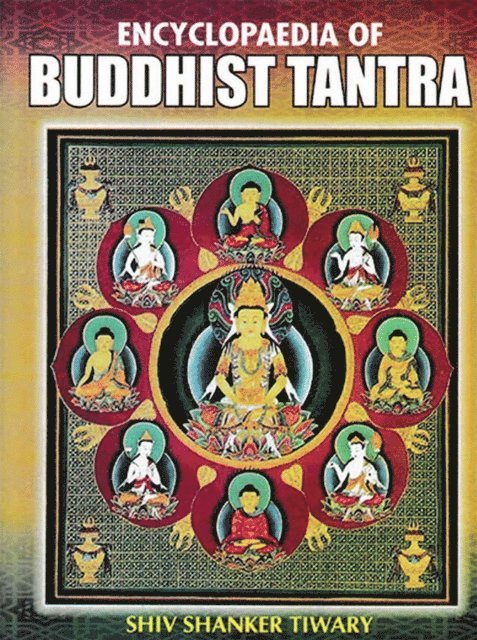
This book is about the various characteristics of tantric Buddhism. History of tantric Buddhism in India is very old. Tantric texts began to appear in India by the third century CE and they continue through to Buddhism's effective disappearance from India during the twelfth century. From around the beginning of the eighth century tantric techniques and approaches increasingly dominated Buddhist practice in India. A reason for this was -that by then tantric meditation and ritual began to be seen as powerful and effective tools in the quest for Buddha hood, as well as for attaining worldly powers and goals. It was in Tibet however where Buddhism became thoroughly tantric in complexion with all the four major schools of Tibetan Buddhism regarding tantric Buddhism as the highest and most effective form of Buddhism. This book tries to explain different forms of tantric Buddhism. It starts with an introductory chapter on religious theories in India before Buddhism, followed by the origin and development of Buddhism, secret of Buddhism, theism within Buddhism, the ethics of Buddhism, the understanding of Buddhist tantric, etc. Rituals, methods and various schools of tantric Buddhism have been defined in this book. We have tried to cover many aspects of tantric Buddhism in this encyclopaedia and hope that readers will appreciate this effort and this encyclopaedia will enhance the acknowledge on Buddhism in general and tantric Buddhism in particular.
4 489 kr
Läs direkt efter köp
4 398 kr
Läs direkt efter köp
4 489 kr
Läs direkt efter köp
4 332 kr
Läs direkt efter köp
Southeast Asia is a region where one can find many similarities between different countries. Southeast Asia has never been in any sense an isolated or self-contained unit. Because of its crossroads situation on the map of Asia it has always been peculiarly exposed to external influences; it has been a meeting- ground of commerce, cultures and civilizations. In a sense Southeast Asia has always been part of something bigger than itself; it has generally played a passive role in history, one which has meaning and significance only against the background of the history of Asia as a whole. Southeast Asia has a large number of tribes and ethnic groups. These countries are very similar with each other in many aspects and many of the tribes are found in more than ore country. This encyclopaedia traces these tribes of Southeast Asia, their culture and traditions, religions, customs, cuisines and other aspects of their life. Each country has been presented as a separate chapter and tribes and ethnic groups of that country is given in an elaborate manner. The language of this encyclopaedia has been kept very simple and pragmatic which is easy to understand and we hope that readers will find this book enjoyable on reading.
3 435 kr
Läs direkt efter köp
The Encyclopaedia of World Religions and Interfaith Dialogues is an initiative to deal with the subject of religion and interfaith dialogue in its totality. This Encyclopaedia is a unique attempt in the sense that for the first time the editor has attempted to provide readers with most contemporary information-base about these very important religions, faiths and dialogues among them. Interfaith or interfaith dialogue refers to cooperative and positive interaction between people of different religious traditions, (i.e. "faiths") at both the individual and institutional level with the aim of deriving a common ground in belief through a concentration on similarities between faiths. However, it is distinct from syncretism or alternative religion, in that dialogue often involves promoting understanding between different religions to increase "tolerance" towards others, rather than to synthesize new beliefs. The history of religion shows that conflict has been more the state of affairs than dialogue. Interreligious relations refers to relationships between religions.
3 435 kr
Läs direkt efter köp
The Encyclopaedia of World Religions and Interfaith Dialogues is an initiative to deal with the subject of religion and interfaith dialogue in its totality. This Encyclopaedia is a unique attempt in the sense that for the first time the editor has attempted to provide readers with most contemporary information-base about these very important religions, faiths and dialogues among them. Interfaith or interfaith dialogue refers to cooperative and positive interaction between people of different religious traditions, (i.e. "faiths") at both the individual and institutional level with the aim of deriving a common ground in belief through a concentration on similarities between faiths. However, it is distinct from syncretism or alternative religion, in that dialogue often involves promoting understanding between different religions to increase "tolerance" towards others, rather than to synthesize new beliefs. The history of religion shows that conflict has been more the state of affairs than dialogue. Interreligious relations refers to relationships between religions.
3 435 kr
Läs direkt efter köp
The Encyclopaedia of World Religions and Interfaith Dialogues is an initiative to deal with the subject of religion and interfaith dialogue in its totality. This Encyclopaedia is a unique attempt in the sense that for the first time the editor has attempted to provide readers with most contemporary information-base about these very important religions, faiths and dialogues among them. Interfaith or interfaith dialogue refers to cooperative and positive interaction between people of different religious traditions, (i.e. "faiths") at both the individual and institutional level with the aim of deriving a common ground in belief through a concentration on similarities between faiths. However, it is distinct from syncretism or alternative religion, in that dialogue often involves promoting understanding between different religions to increase "tolerance" towards others, rather than to synthesize new beliefs. The history of religion shows that conflict has been more the state of affairs than dialogue. Interreligious relations refers to relationships between religions.
3 435 kr
Läs direkt efter köp
The Encyclopaedia of World Religions and Interfaith Dialogues is an initiative to deal with the subject of religion and interfaith dialogue in its totality. This Encyclopaedia is a unique attempt in the sense that for the first time the editor has attempted to provide readers with most contemporary information-base about these very important religions, faiths and dialogues among them. Interfaith or interfaith dialogue refers to cooperative and positive interaction between people of different religious traditions, (i.e. "faiths") at both the individual and institutional level with the aim of deriving a common ground in belief through a concentration on similarities between faiths. However, it is distinct from syncretism or alternative religion, in that dialogue often involves promoting understanding between different religions to increase "tolerance" towards others, rather than to synthesize new beliefs. The history of religion shows that conflict has been more the state of affairs than dialogue. Interreligious relations refers to relationships between religions.
3 466 kr
Läs direkt efter köp
The Encyclopaedia of World Religions and Interfaith Dialogues is an initiative to deal with the subject of religion and interfaith dialogue in its totality. This Encyclopaedia is a unique attempt in the sense that for the first time the editor has attempted to provide readers with most contemporary information-base about these very important religions, faiths and dialogues among them. Interfaith or interfaith dialogue refers to cooperative and positive interaction between people of different religious traditions, (i.e. "faiths") at both the individual and institutional level with the aim of deriving a common ground in belief through a concentration on similarities between faiths. However, it is distinct from syncretism or alternative religion, in that dialogue often involves promoting understanding between different religions to increase "tolerance" towards others, rather than to synthesize new beliefs. The history of religion shows that conflict has been more the state of affairs than dialogue. Interreligious relations refers to relationships between religions.