Shuguang Cui – författare
1 835 kr
Läs direkt efter köp
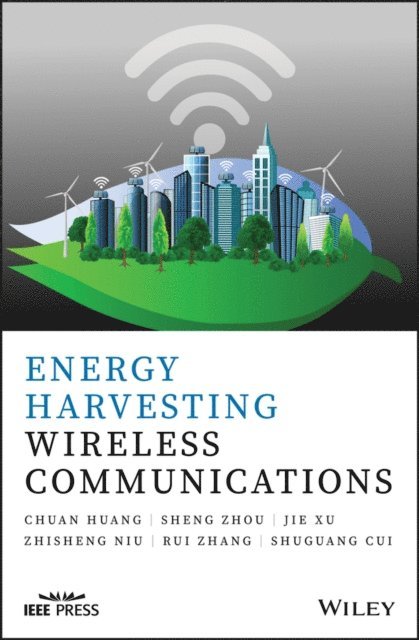
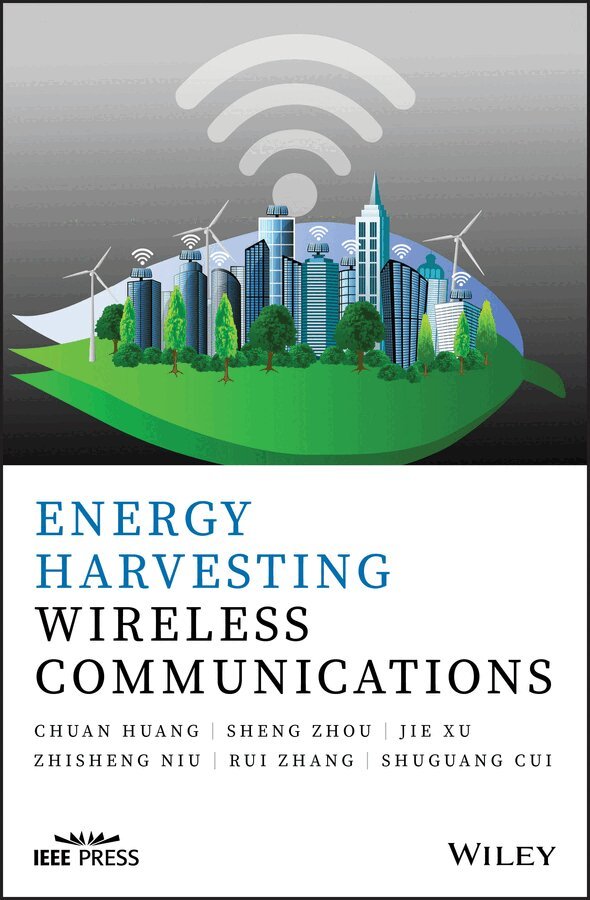
Energy Harvesting Wireless Communications offers a review of the most current research as well as the basic concepts, key ideas and powerful tools of energy harvesting wireless communications. Energy harvesting is both renewable and cheap and has the potential for many applications in future wireless communication systems to power transceivers by utilizing environmental energy such as solar, thermal, wind, and kinetic energy.
The authors—noted experts in the field—explore the power allocation for point-to-point energy harvesting channels, power allocation for multi-node energy harvesting channels, and cross-layer design for energy harvesting links. In addition, they offer an in-depth examination of energy harvesting network optimization and cover topics such as energy harvesting ad hoc networks, cost aware design for energy harvesting assisted cellular networks, and energy harvesting in next generation cellular networks.
1 771 kr
Läs direkt efter köp
Energy Harvesting Wireless Communications offers a review of the most current research as well as the basic concepts, key ideas and powerful tools of energy harvesting wireless communications. Energy harvesting is both renewable and cheap and has the potential for many applications in future wireless communication systems to power transceivers by utilizing environmental energy such as solar, thermal, wind, and kinetic energy.
The authors—noted experts in the field—explore the power allocation for point-to-point energy harvesting channels, power allocation for multi-node energy harvesting channels, and cross-layer design for energy harvesting links. In addition, they offer an in-depth examination of energy harvesting network optimization and cover topics such as energy harvesting ad hoc networks, cost aware design for energy harvesting assisted cellular networks, and energy harvesting in next generation cellular networks.
1 108 kr
Läs direkt efter köp
1 108 kr
Läs direkt efter köp
546 kr
Skickas inom 10-15 vardagar
712 kr
Läs direkt efter köp
922 kr
Skickas inom 10-15 vardagar
1 515 kr
Skickas inom 10-15 vardagar
1 891 kr
Läs direkt efter köp
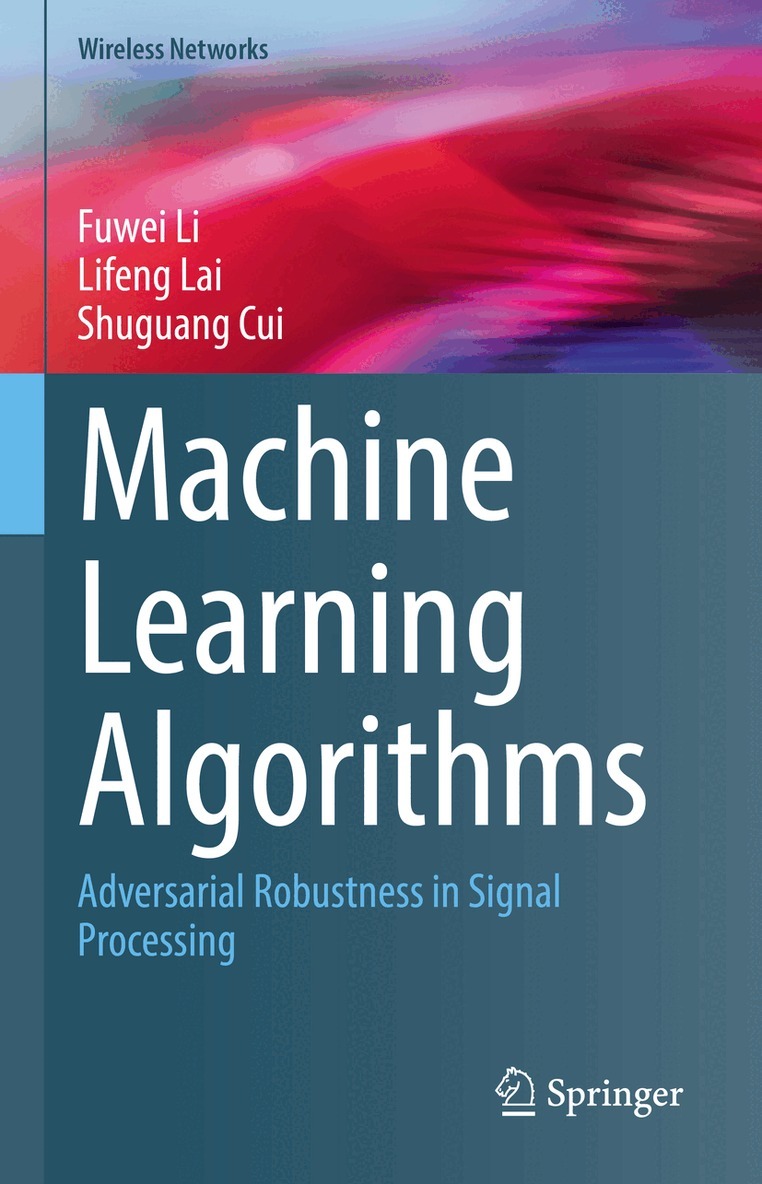
This book demonstrates the optimal adversarial attacks against several important signal processing algorithms. Through presenting the optimal attacks in wireless sensor networks, array signal processing, principal component analysis, etc, the authors reveal the robustness of the signal processing algorithms against adversarial attacks. Since data quality is crucial in signal processing, the adversary that can poison the data will be a significant threat to signal processing. Therefore, it is necessary and urgent to investigate the behavior of machine learning algorithms in signal processing under adversarial attacks. The authors in this book mainly examine the adversarial robustness of three commonly used machine learning algorithms in signal processing respectively: linear regression, LASSO-based feature selection, and principal component analysis (PCA). As to linear regression, the authors derive the optimal poisoning data sample and the optimal feature modifications, and also demonstrate the effectiveness of the attack against a wireless distributed learning system. The authors further extend the linear regression to LASSO-based feature selection and study the best strategy to mislead the learning system to select the wrong features. The authors find the optimal attack strategy by solving a bi-level optimization problem and also illustrate how this attack influences array signal processing and weather data analysis. In the end, the authors consider the adversarial robustness of the subspace learning problem. The authors examine the optimal modification strategy under the energy constraints to delude the PCA-based subspace learning algorithm. This book targets researchers working in machine learning, electronic information, and information theory as well as advanced-level students studying these subjects. R&D engineers who are working in machine learning, adversarial machine learning, robust machine learning, and technical consultants working on the security and robustness of machine learning are likely to purchase this book as a reference guide.
1 515 kr
Skickas inom 10-15 vardagar
1 623 kr
Skickas inom 10-15 vardagar
2 049 kr
Läs direkt efter köp
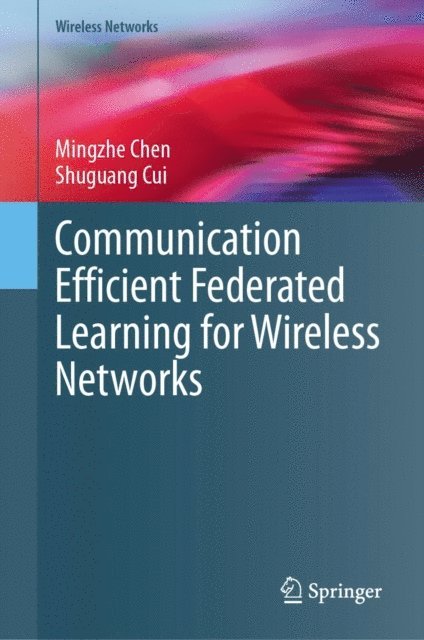
This book provides a comprehensive study of Federated Learning (FL) over wireless networks. It consists of three main parts: (a) Fundamentals and preliminaries of FL, (b) analysis and optimization of FL over wireless networks, and (c) applications of wireless FL for Internet-of-Things systems. In particular, in the first part, the authors provide a detailed overview on widely-studied FL framework. In the second part of this book, the authors comprehensively discuss three key wireless techniques including wireless resource management, quantization, and over-the-air computation to support the deployment of FL over realistic wireless networks. It also presents several solutions based on optimization theory, graph theory and machine learning to optimize the performance of FL over wireless networks. In the third part of this book, the authors introduce the use of wireless FL algorithms for autonomous vehicle control and mobile edge computing optimization.
Machine learning and data-driven approaches have recently received considerable attention as key enablers for next-generation intelligent networks. Currently, most existing learning solutions for wireless networks rely on centralizing the training and inference processes by uploading data generated at edge devices to data centers. However, such a centralized paradigm may lead to privacy leakage, violate the latency constraints of mobile applications, or may be infeasible due to limited bandwidth or power constraints of edge devices. To address these issues, distributing machine learning at the network edge provides a promising solution, where edge devices collaboratively train a shared model using real-time generated mobile data. The avoidance of data uploading to a central server not only helps preserve privacy but also reduces network traffic congestion as well as communication cost. Federated learning (FL) is one of most important distributed learning algorithms. In particular, FL enables devices to train a shared machine learning model while keeping data locally. However, in FL, training machine learning models requires communication between wireless devices and edge servers over wireless links. Therefore, wireless impairments such as noise, interference, and uncertainties among wireless channel states will significantly affect the training process and performance of FL. For example, transmission delay can significantly impact the convergence time of FL algorithms. In consequence, it is necessary to optimize wireless network performance for the implementation of FL algorithms.
This book targets researchers and advanced level students in computer science and electrical engineering. Professionals working in signal processing and machine learning will also buy this book.
1 623 kr
Skickas inom 10-15 vardagar
1 338 kr
Skickas inom 10-15 vardagar
1 179 kr
Läs direkt efter köp
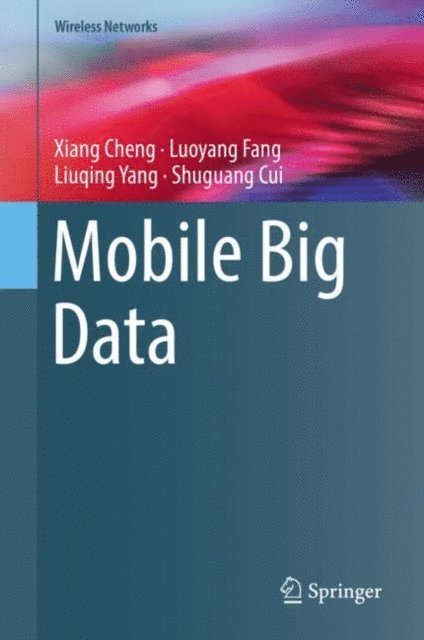
This book provides a comprehensive picture of mobile big data starting from data sources to mobile data driven applications. Mobile Big Data comprises two main components: an overview of mobile big data, and the case studies based on real-world data recently collected by one of the largest mobile network carriers in China.
In the first component, four areas of mobile big data life cycle are surveyed: data source and collection, transmission, computing platform and applications. In the second component, two case studies are provided, based on the signaling data collected in the cellular core network in terms of subscriber privacy evaluation and demand forecasting for network management. These cases respectively give a vivid demonstration of what mobile big data looks like, and how it can be analyzed and mined to generate useful and meaningful information and knowledge.
This book targets researchers, practitioners and professors relevant to this field. Advanced-level students studying computer science and electrical engineering will also be interested in this book as supplemental reading.
949 kr
Tillfälligt slut