Siegfried Bergler – författare
Visar alla böcker från författaren Siegfried Bergler. Handla med fri frakt och snabb leverans.
2 produkter
2 produkter
Del 168 - Wissenschaftliche Monographien zum Alten und Neuen Testament
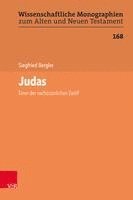
Judas
Einer der nachosterlichen Zwolf
Inbunden, Tyska, 2022
2 054 kr
Skickas inom 11-20 vardagar
Judas is characterized in all the Gospels as "one of the twelve" - not like the others as "one of his disciples". Siegfried Bergler's thesis is that "the disciples" and "the twelve" designate two different groups: the former, in different numbers, were Jesus' disciples; On the other hand, the fixed lists of twelve names testify to a post-Easter body/presbytery of the early Jerusalem community, which, due to a Christophany, saw itself as representing eschatological Israel. Former disciples of Jesus and Judas (also) belonged to this quorum. Hence the title Judas and the post-Easter Twelve. In addition to the exegesis of all Judas appearances, the monograph includes a consideration of all twelve passages in the NT - beginning with 1Cor 15:5 ("appeared to the twelve") to the finding of the logia source ("... sitting on twelve thrones", Matthew 19 .28 par Lk 22.30) up to Apk 21 (twelve cornerstones). There is also a critical appraisal of the ambivalent image of Judas in the Gnostic Gospel of Judas. Judas, who exercised a prominent function in the church (cf. Acts 1:20: "his supervisory office"), may have renounced the belief in Jesus' divine origin or messianship, turned back to Judaism (cf. Joh 6:64,66,71) and thereby contributed to the dissolution of the Twelve. He was demonized, declared dead (cf. the three different "deaths" of the ungodly: Mt 27, Acts 1, Papias) and finally projected back into the Life of Jesus as his "betrayer", correctly: "deliverer". .
E-bok
PDF, Tyska, 20221 625 kr
Läs direkt efter köp
Judas wird in allen Evangelien als "einer der Zwölf" – nicht wie die anderen als "einer seiner Jünger" – charakterisiert. Die These Siegfried Berglers ist, dass "die Jünger" und "die Zwölf" zwei verschiedene Gruppen bezeichneten: Erstgenannte, in unterschiedlicher Zahl, waren Jesu Schüler; hingegen zeugen die festen Zwölf-Namen-Listen von einem nachösterlichen Gremium/Presbyterium der Jerusalemer Urgemeinde, das sich aufgrund einer Christophanie als Repräsentanz des endzeitlichen Israel verstand. Diesem Kollegium gehörten (auch) vormalige Jünger Jesu an – und Judas. Daher der Titel Judas und die nachösterlichen Zwölf.Die Monographie umfasst neben der Exegese sämtlicher Judas-Auftritte eine Betrachtung aller Zwölfer-Stellen im NT – beginnend mit 1Kor 15,5 ("erschienen den Zwölfen") über den Befund der Logienquelle ("...sitzen auf zwölf Thronen", Mt 19,28 par Lk 22,30) bis zu Apk 21 ("zwölf Grundsteine"). Auch erfolgt eine kritische Würdigung des ambivalenten Judas-Bildes im gnostischen Judas-Evangelium.Judas, der in der Gemeinde eine prominente Funktion ausübte (vgl. Apg 1,20: "sein Aufsichtsamt"), dürfte den Glauben an Jesu göttliche Herkunft oder Messianität aufgekündigt, sich zum Judentum zurückgewandt (vgl. Joh 6,64.66.71) und dadurch zur Auflösung des Zwölferkreises beigetragen haben. Man hat ihn verteufelt, für tot erklärt (vgl. die drei verschiedenen "Tode" des Gottlosen: Mt 27, Apg 1, Papias) und schließlich in die Vita Jesu als dessen "Verräter", korrekt: "Auslieferer", zurückprojiziert (retrojiziert).