Sienho Yee – författare
Visar alla böcker från författaren Sienho Yee. Handla med fri frakt och snabb leverans.
6 produkter
International Law in the Post-Cold War World
Essays in Memory of Li Haopei
Av Wang Tieya, Sienho Yee
Inbunden, 2001
3479 kr
Lägg i varukorg
Centering on the theme of 'progressiveness', this powerful volume offers important new perspectives on the history, theory and practice of international law. Covering topics of great contemporary relevance such as the use of force, human rights and sovereignty, this book is of essential interest to …
International Crime and Punishment
Selected Issues, Volume 1
Av Sienho Yee
Häftad, 2003
784 kr
Lägg i varukorg
The research papers in this collection address several important and less-treated questions of international criminal law: International Committee of the Red Cross as a witness before international criminal tribunals; the definition of aggression; mistake of law as a defense; the doctrine of …
International Crime and Punishment
Selected Issues, Volume 2
Av Sienho Yee
Häftad, 2004
719 kr
Lägg i varukorg
This volume consists of research papers written under editor Sienho Yee's supervision at the University of Colorado School of Law. The papers address interesting and difficult issues relating to substantive international crimes and the international regimes of punishment. Issues discussed include …
International Law in the Post-Cold War World
Essays in Memory of Li Haopei
Av Wang Tieya, Sienho Yee
Häftad, 2015
688 kr
Lägg i varukorg
Centering on the theme of 'progressiveness', this powerful volume offers important new perspectives on the history, theory and practice of international law. Covering topics of great contemporary relevance such as the use of force, human rights and sovereignty, this book is of essential interest to …
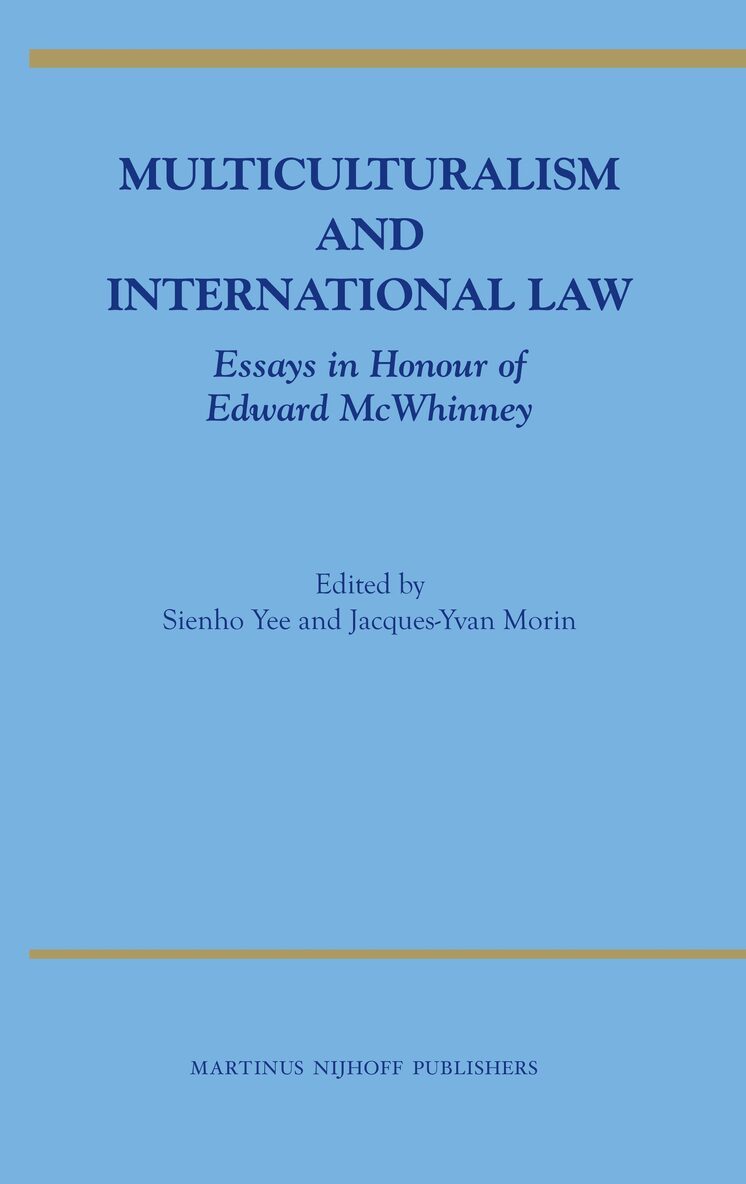
Multiculturalism and International Law
Essays in Honour of Edward McWhinney
Av Sienho Yee, Jacques-Yvan Morin
Inbunden, 2009
4271 kr
Lägg i varukorg
This volume examines the role and influence of multiculturalism in general theories of international law; in the composition and functioning of international organizations such as the ICJ, the ILC, the UN, and the ICC; and in the progressive development of substantive international law regarding …
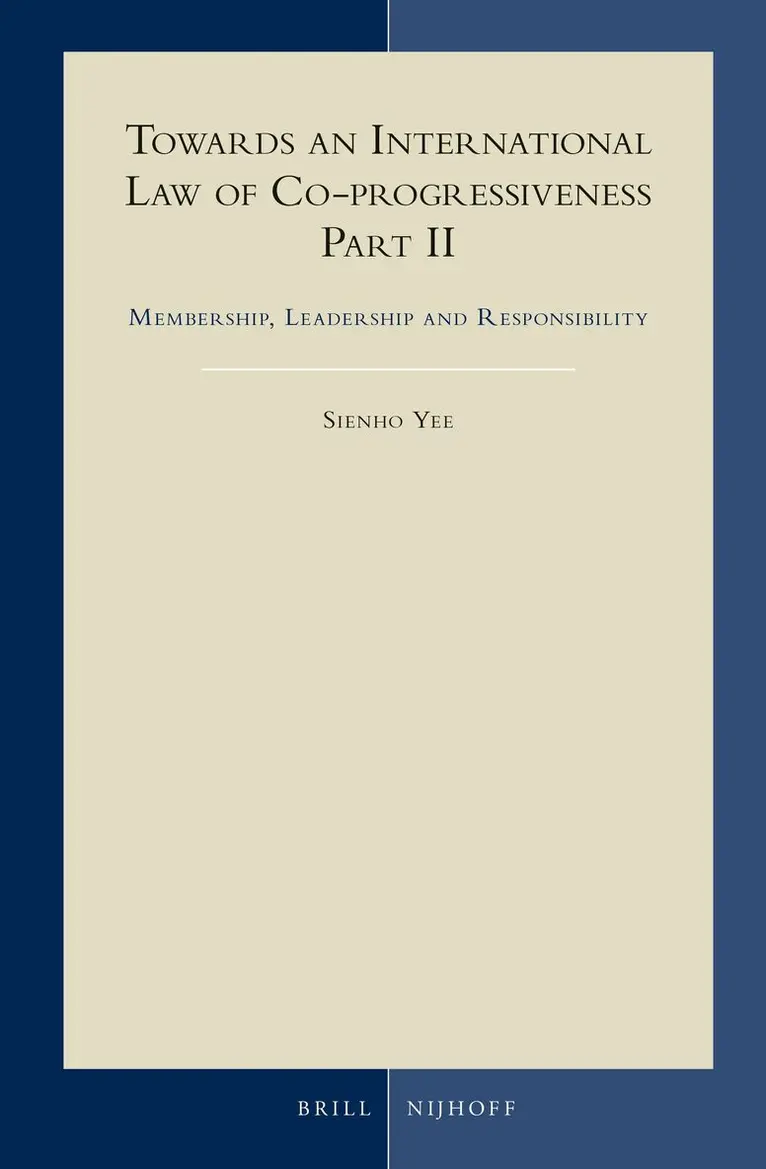
Towards an International Law of Co-progressiveness, Part II
Membership, Leadership and Responsibility
Av Sienho Yee
Inbunden, 2014
2928 kr
Lägg i varukorg
Expanding upon the normative position of co-progressiveness elaborated in Towards an International Law of Co-progressiveness (Martinus Nijhoff, 2004), this volume explores membership, leadership, and responsibility in the international system and how these matters reflect and inform international …