Sigrid Beck – författare
Visar alla böcker från författaren Sigrid Beck. Handla med fri frakt och snabb leverans.
7 produkter
7 produkter
Inbunden, Engelska, 2014
390 kr
Skickas inom 5-8 vardagar
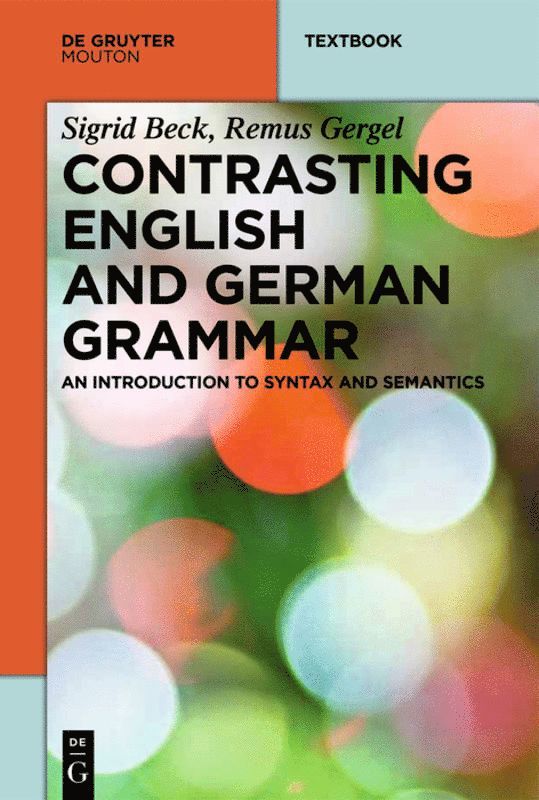
This book offers an introduction to the derivation of meaning that is accessible and worked out to facilite an understanding of key issues in compositional semantics. The syntactic background offered is generative, the major semantic tool used is set theory. These tools are applied step-by-step to develop essential interface topics and a selection of prominent contrastive topics with material from English and German.
E-bok
PDF, Engelska, 2014321 kr
Läs direkt efter köp
This book offers an introduction to the derivation of meaning that is accessible and worked out to facilite an understanding of key issues in compositional semantics. The syntactic background offered is generative, the major semantic tool used is set theory. These tools are applied step-by-step to develop essential interface topics and a selection of prominent contrastive topics with material from English and German.
321 kr
Läs direkt efter köp
This book offers an introduction to the derivation of meaning that is accessible and worked out to facilite an understanding of key issues in compositional semantics. The syntactic background offered is generative, the major semantic tool used is set theory. These tools are applied step-by-step to develop essential interface topics and a selection of prominent contrastive topics with material from English and German.
Inbunden, Engelska, 2020
1 853 kr
Skickas inom 5-8 vardagar
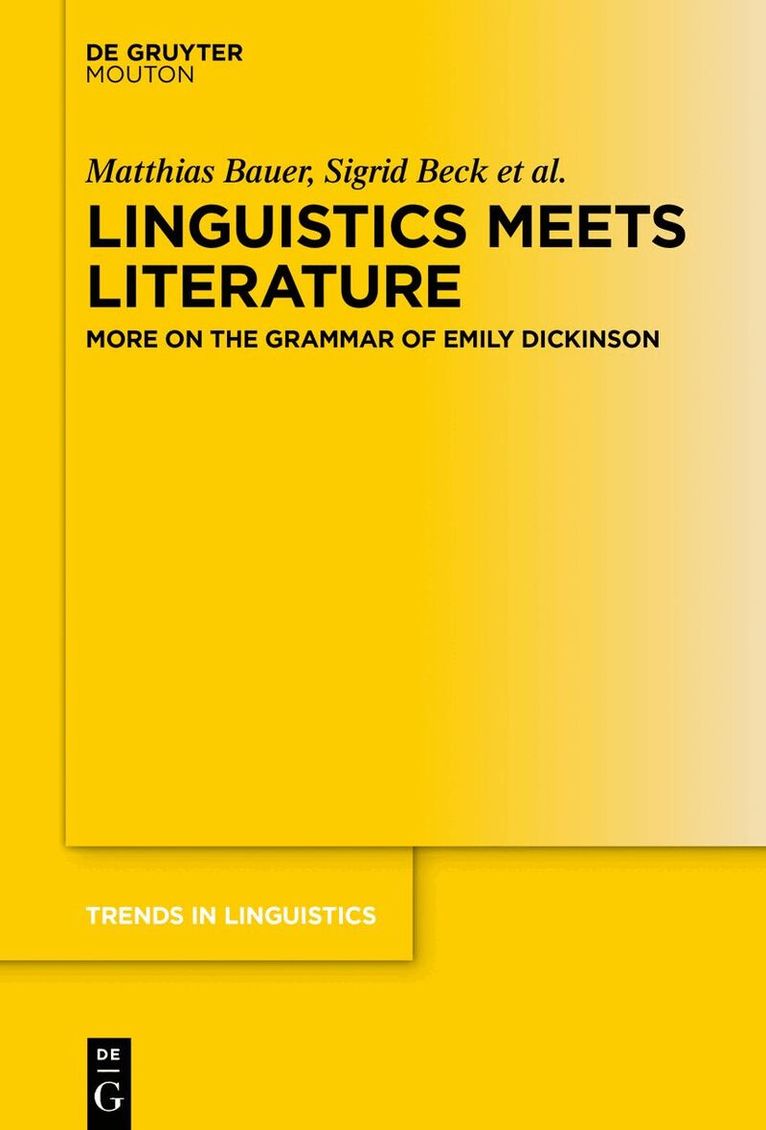
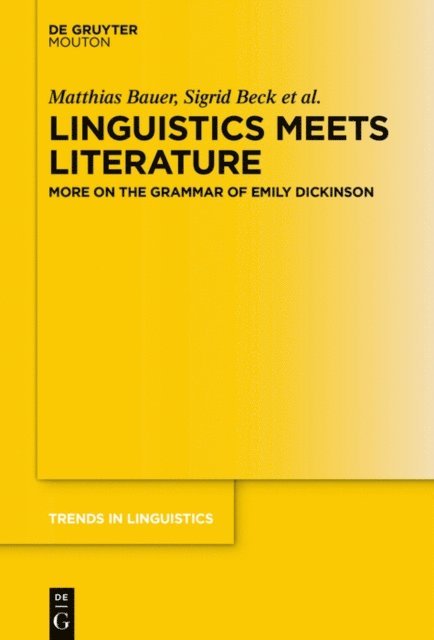
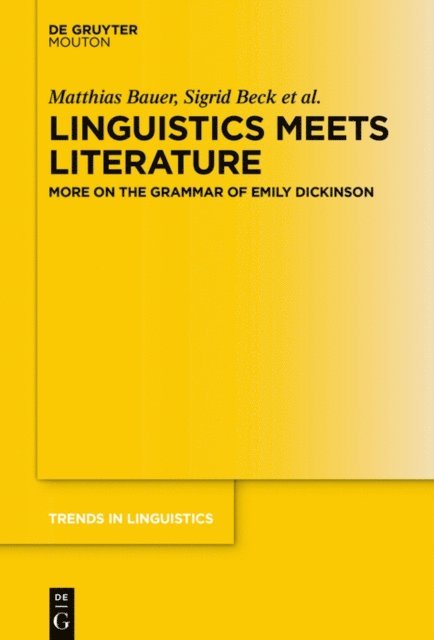
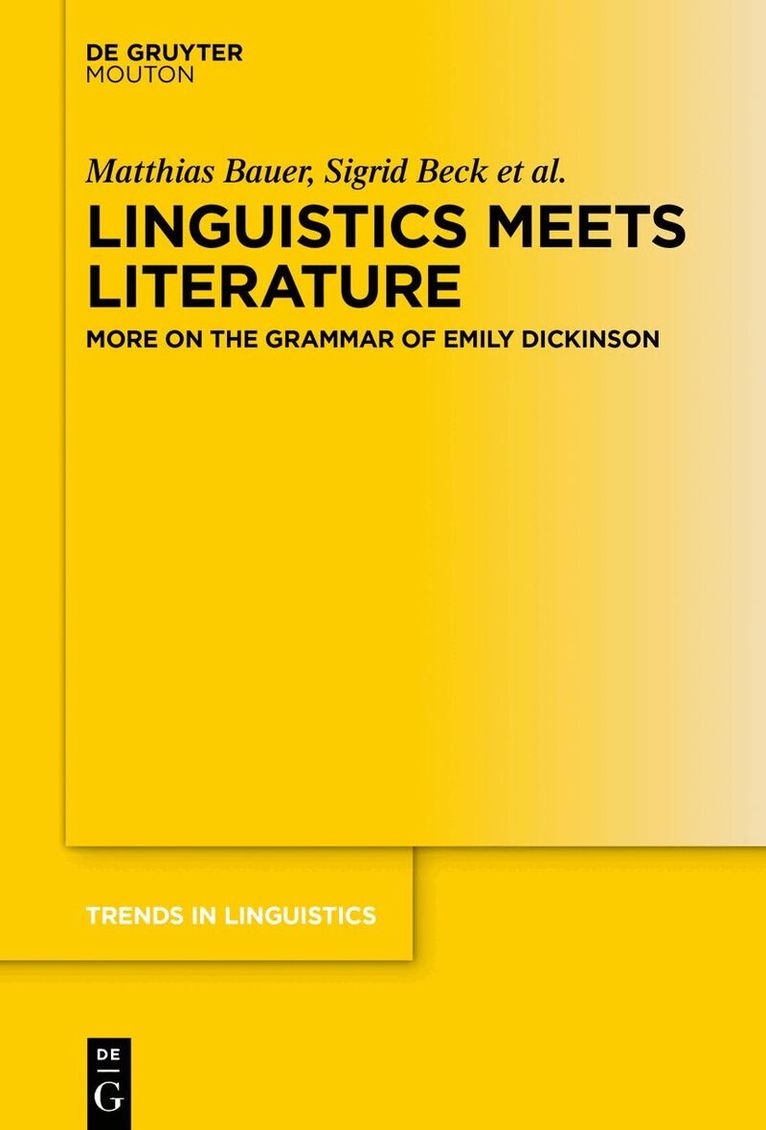
Until recently, collaborative efforts between formal linguistics and literary studies have been relatively sparse; this book is an attempt to bridge this gap and add to the hitherto small pool of studies that combine the two disciplines.Our study concentrates on Emily Dickinson’s poetry, since it displays a highly uncommon and therefore challenging use of language. We argue this to be part of her poetic strategy and consider Dickinson an intuitive linguist: her apparent non-compliance with linguistic rules is a productive exploration of linguistic expression to reveal the flexibility and potential of grammar, leading to complex processes of interpretation. Our study includes a number of in-depth analyses of individual poems, which combine formal linguistic methods and literary scholarship and focus on specific aspects such as ambiguity, reference, and presuppositions. One of our findings concerns the dynamic interpretation of lyrical texts in which the pragmatic step of establishing what a poem means for the reader is postponed to text level.We provide readers with a tool-box of methods for the formal linguistic analysis not just of Emily Dickinson’s poetry but of linguistically complex literary texts in general.
E-bok
Engelska, 20201 761 kr
Läs direkt efter köp
Until recently, collaborative efforts between formal linguistics and literary studies have been relatively sparse; this book is an attempt to bridge this gap and add to the hitherto small pool of studies that combine the two disciplines.Our study concentrates on Emily Dickinson’s poetry, since it displays a highly uncommon and therefore challenging use of language. We argue this to be part of her poetic strategy and consider Dickinson an intuitive linguist: her apparent non-compliance with linguistic rules is a productive exploration of linguistic expression to reveal the flexibility and potential of grammar, leading to complex processes of interpretation. Our study includes a number of in-depth analyses of individual poems, which combine formal linguistic methods and literary scholarship and focus on specific aspects such as ambiguity, reference, and presuppositions. One of our findings concerns the dynamic interpretation of lyrical texts in which the pragmatic step of establishing what a poem means for the reader is postponed to text level.We provide readers with a tool-box of methods for the formal linguistic analysis not just of Emily Dickinson’s poetry but of linguistically complex literary texts in general.
E-bok
PDF, Engelska, 20201 761 kr
Läs direkt efter köp
Until recently, collaborative efforts between formal linguistics and literary studies have been relatively sparse; this book is an attempt to bridge this gap and add to the hitherto small pool of studies that combine the two disciplines.Our study concentrates on Emily Dickinson’s poetry, since it displays a highly uncommon and therefore challenging use of language. We argue this to be part of her poetic strategy and consider Dickinson an intuitive linguist: her apparent non-compliance with linguistic rules is a productive exploration of linguistic expression to reveal the flexibility and potential of grammar, leading to complex processes of interpretation. Our study includes a number of in-depth analyses of individual poems, which combine formal linguistic methods and literary scholarship and focus on specific aspects such as ambiguity, reference, and presuppositions. One of our findings concerns the dynamic interpretation of lyrical texts in which the pragmatic step of establishing what a poem means for the reader is postponed to text level.We provide readers with a tool-box of methods for the formal linguistic analysis not just of Emily Dickinson’s poetry but of linguistically complex literary texts in general.
Häftad, Engelska, 2022
335 kr
Skickas inom 5-8 vardagar
Until recently, collaborative efforts between formal linguistics and literary studies have been relatively sparse; this book is an attempt to bridge this gap and add to the hitherto small pool of studies that combine the two disciplines.Our study concentrates on Emily Dickinson’s poetry, since it displays a highly uncommon and therefore challenging use of language. We argue this to be part of her poetic strategy and consider Dickinson an intuitive linguist: her apparent non-compliance with linguistic rules is a productive exploration of linguistic expression to reveal the flexibility and potential of grammar, leading to complex processes of interpretation. Our study includes a number of in-depth analyses of individual poems, which combine formal linguistic methods and literary scholarship and focus on specific aspects such as ambiguity, reference, and presuppositions. One of our findings concerns the dynamic interpretation of lyrical texts in which the pragmatic step of establishing what a poem means for the reader is postponed to text level.We provide readers with a tool-box of methods for the formal linguistic analysis not just of Emily Dickinson’s poetry but of linguistically complex literary texts in general.