Sigrun Hogetveit Berg – författare
1 442 kr
Läs direkt efter köp
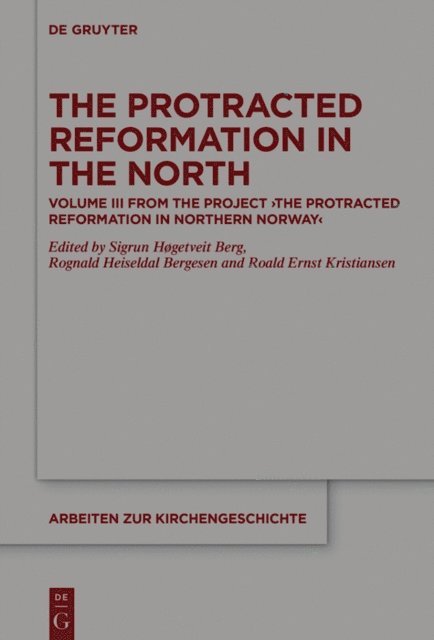
The formation of the European nation states was deeply affected by the Reformation processes during the 16th century. In order to understand today''s Europe, it is necessary to come to terms with the historical processes that shaped these emerging nation states. The book discusses such processes with particular attention to how they affected the northernmost parts of Europe. The book consists of three main parts: 1) Church and State, 2) Interaction and Networks, 3) Ideas and Images. In the first part, the authors examine various aspects of the relationship between the church and the state, and how the Reformation processes contributed to reshape this relationship. In the second part, the development of the social and economic networks among the population of Northern Fennoscandia is mapped, taking account of how such networks were affected by different ethnic groups. The role of the church and the mission in the state integration of the Northern borderless areas is also examined, as well as the new Lutheran clergy and their social and material conditions. In the third part, the visual and material expressions of the Reformation period is analyzed, as well as the encounter between the Catholic, the Lutheran and the Sámi religion.
1 482 kr
Läs direkt efter köp
The formation of the European nation states was deeply affected by the Reformation processes during the 16th century. In order to understand today''s Europe, it is necessary to come to terms with the historical processes that shaped these emerging nation states. The book discusses such processes with particular attention to how they affected the northernmost parts of Europe. The book consists of three main parts: 1) Church and State, 2) Interaction and Networks, 3) Ideas and Images. In the first part, the authors examine various aspects of the relationship between the church and the state, and how the Reformation processes contributed to reshape this relationship. In the second part, the development of the social and economic networks among the population of Northern Fennoscandia is mapped, taking account of how such networks were affected by different ethnic groups. The role of the church and the mission in the state integration of the Northern borderless areas is also examined, as well as the new Lutheran clergy and their social and material conditions. In the third part, the visual and material expressions of the Reformation period is analyzed, as well as the encounter between the Catholic, the Lutheran and the Sámi religion.
1 423 kr
Läs direkt efter köp
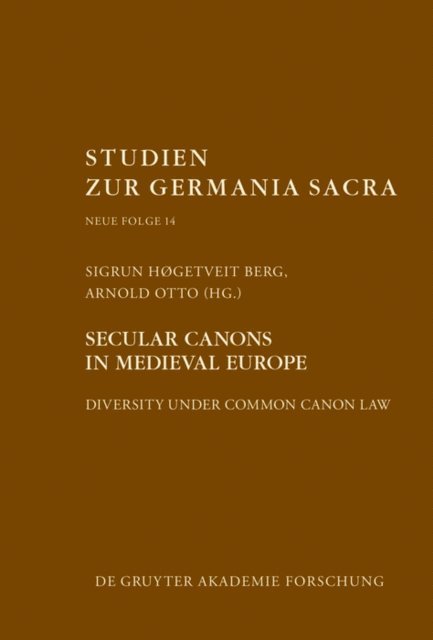
While both regular canons and monasticism with its development into different orders have reached a roughly even level of coverage in research, the history of secular canons is a field which has hitherto been far less in focus of historian scholarship. This might be due to the fact that they did not form orders or congregations offering a systematic approach to their institutions. Hence the pieces of research carried out so far mostly deal with a single cathedral or collegiate chapter and do not expand on the phenomenon in general. Likewise, the present publication may not give a comprehensive survey but yet takes a comparative approach by regarding the establishment of secular canons in a European longitudinal section from the Polar Circle to Southern Italy. In this course, both cathedral and collegiate chapters in Scandinavian, German, Polish and Italian territories and the respective career paths canons took into them will be considered. In this course, the essays take only some brief recourses to the early middle ages, when canons maintained a cloistered vita communis, but rather turn their view to those centuries in the high and later middle ages up to reformation times, when the chapters reached their full implementation.
The essays collected in this volume base on a session series held at the International Medieval Congress 2018 in Leeds. The contributors are renowned historians in this field: Antonio Antonetti (Caserta), Anna Minara Ciardi (Stockholm), Emanuele Curzel (Trento), Sigrun Høgetveit Berg (Tromsø), Jochen Johrendt (Wuppertal), Anna Kowalska-Pietrzak (Łódź), Arnold Otto (Nürnberg), Kirsi Salonen (Turku), Jörg Wunschhofer (Beckum).
1 423 kr
Läs direkt efter köp
While both regular canons and monasticism with its development into different orders have reached a roughly even level of coverage in research, the history of secular canons is a field which has hitherto been far less in focus of historian scholarship. This might be due to the fact that they did not form orders or congregations offering a systematic approach to their institutions. Hence the pieces of research carried out so far mostly deal with a single cathedral or collegiate chapter and do not expand on the phenomenon in general. Likewise, the present publication may not give a comprehensive survey but yet takes a comparative approach by regarding the establishment of secular canons in a European longitudinal section from the Polar Circle to Southern Italy. In this course, both cathedral and collegiate chapters in Scandinavian, German, Polish and Italian territories and the respective career paths canons took into them will be considered. In this course, the essays take only some brief recourses to the early middle ages, when canons maintained a cloistered vita communis, but rather turn their view to those centuries in the high and later middle ages up to reformation times, when the chapters reached their full implementation.
The essays collected in this volume base on a session series held at the International Medieval Congress 2018 in Leeds. The contributors are renowned historians in this field: Antonio Antonetti (Caserta), Anna Minara Ciardi (Stockholm), Emanuele Curzel (Trento), Sigrun Høgetveit Berg (Tromsø), Jochen Johrendt (Wuppertal), Anna Kowalska-Pietrzak (Łódź), Arnold Otto (Nürnberg), Kirsi Salonen (Turku), Jörg Wunschhofer (Beckum).