
Silva N. Daniel Silva – författare
Visar alla böcker från författaren Silva N. Daniel Silva. Handla med fri frakt och snabb leverans.
2 produkter
2 produkter
E-bok
Engelska, 20211 305 kr
Läs direkt efter köp
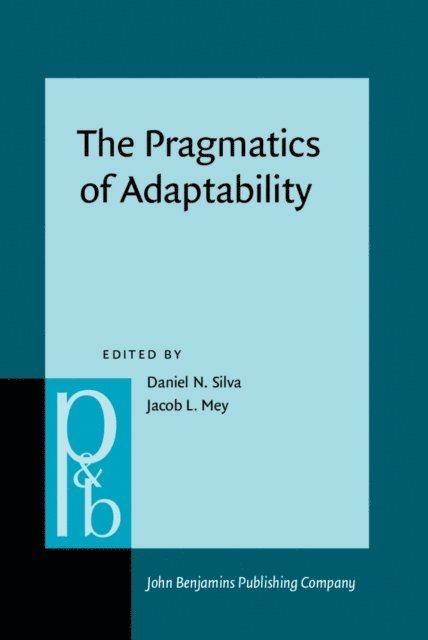
Humans are adaptive beings. Gradually, we have produced the fundamental capacities for our cooperation, recognition of intentions, and interaction which led to the development of language and culture. The present collective volume builds on an orientation to pragmatics as the sustained and principled human adaptability in interaction, form, and meaning. Working on different strands of such a socially oriented pragmatics, the authors gathered in this volume study the adaptability of language as shaped by the conditions of society, culture, and cognition. Grouped in four sections, the book's chapters explore the embedding of adaptability in language ideology, text, communicative practice, and learning. Adopting these various perspectives, the authors gauge how language users navigate the different layers of societal, cognitive, and communicative constraints, while adapting their communicative practices, language ideologies, and technologies of interaction to their everyday living conditions.
E-bok
Engelska, 20171 258 kr
Läs direkt efter köp
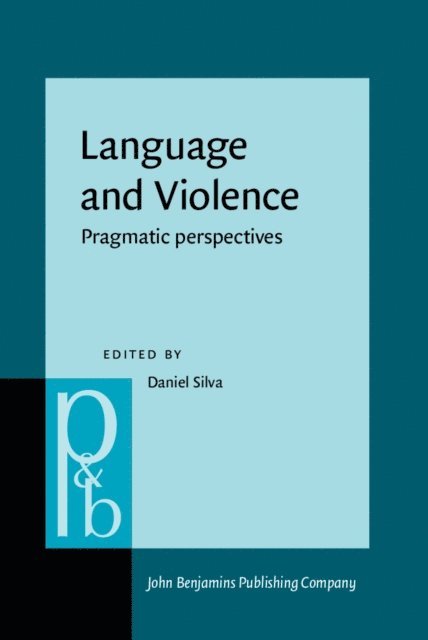
This book combines scholarship in pragmatics, linguistic anthropology, and philosophy to address the problem of violence in language. How do words wound? What is the relation between physical and linguistic violence? How do racial invectives, misogynous language, homophobic slurs, among other forms of hate speech, affect the body and make us vulnerable to conditions of injurability that language brings about? While investigating the limits that violence poses for everyday speech action, understanding, representation, and our shared frameworks of intelligibility, this collective volume theoretically bridges knowledge from canons in linguistic pragmatics, continental philosophy and linguistic/semiotic anthropology and the dialogic perspective of subjects who are located in the peripheries of South America and Europe. The scholarship gathered here intends to offer a perspective on the violence of words that is attentive to practices and sensibilities that do not always fit into hegemonic ideologies of self and language.