Simon Gaisford – författare
962 kr
Skickas inom 10-15 vardagar
1 239 kr
Kommande
Healthcare 4.0: Pharmaceutical Advancement in the Digital Age is a well-structured and easy to understand book that discusses digital health technologies in context of their pharmaceutical applications and the future they hold for this sector. The contents of the book are structured in four parts, covering digital health, software technologies, hardware technologies and the outlook and impact of these innovations to pharmaceutical care. Topics covered include artificial intelligence (AI) and machine learning, blockchain, computational modelling, Telemedicine and Telepharmacy, and virtual/augmented/mixed reality and associated hardware (such as sensors, robotics, smartphones and 3D printing).This book is the perfect resources for academics and corporate researchers in pharmacy, pharmacists, physicians and pharmacy technicians to better understand and position themselves to benefit from the technological developments impacting pharma.
Accessible text that brings the latest scientific discoveries and developmentsConsolidates the current knowledge in the areaProvides real-life examples of how technology is impacting pharmacy and healthcare697 kr
Skickas inom 5-8 vardagar
2 767 kr
Skickas inom 10-15 vardagar
1 177 kr
Läs direkt efter köp
1 955 kr
Läs direkt efter köp
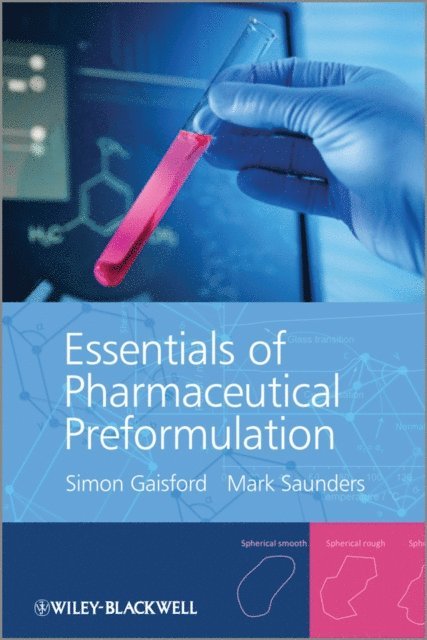
Essentials of Pharmaceutical Preformulation is a study guide which describes the basic principles of pharmaceutical physicochemical characterisation. Successful preformulation requires knowledge of fundamental molecular concepts (solubility, ionisation, partitioning, hygroscopicity and stability) and macroscopic properties (physical form, such as the crystalline and amorphous states, hydrates, solvates and co-crystals and powder properties), familiarity with the techniques used to measure them and appreciation of their effect on product performance, recognising that often there is a position of compromise to be reached between product stability and bioavailability.
This text introduces the basic concepts and discusses their wider implication for pharmaceutical development, with reference to many case examples of current drugs and drug products. Special attention is given to the principles and best-practice of the analytical techniques that underpin preformulation (UV spectrophotometry, TLC, DSC, XRPD and HPLC). The material is presented in the typical order that would be followed when developing a medicine and maps onto the indicative pharmacy syllabus of the Royal Pharmaceutical Society of Great Britain
Undergraduate-level pharmacy students and R&D / analytical scientists working in the pharmaceutical sector (with or without a pharmaceutical background) will find this text easy to follow with relevant pharmaceutical examples.
Essential study guide for pharmacy and pharmaceutical science students Covers the pharmaceutical preformulation components of the Royal Pharmaceutical Society of Great Britain’s indicative syllabus Easy to follow text highlighted with relevant pharmaceutical examples Self-assessment assignments in a variety of formats Written by authors with both academic and industrial experience Companion website with further information to maximise learning798 kr
Läs direkt efter köp
Essentials of Pharmaceutical Preformulation is a study guide which describes the basic principles of pharmaceutical physicochemical characterisation. Successful preformulation requires knowledge of fundamental molecular concepts (solubility, ionisation, partitioning, hygroscopicity and stability) and macroscopic properties (physical form, such as the crystalline and amorphous states, hydrates, solvates and co-crystals and powder properties), familiarity with the techniques used to measure them and appreciation of their effect on product performance, recognising that often there is a position of compromise to be reached between product stability and bioavailability.
This text introduces the basic concepts and discusses their wider implication for pharmaceutical development, with reference to many case examples of current drugs and drug products. Special attention is given to the principles and best-practice of the analytical techniques that underpin preformulation (UV spectrophotometry, TLC, DSC, XRPD and HPLC). The material is presented in the typical order that would be followed when developing a medicine and maps onto the indicative pharmacy syllabus of the Royal Pharmaceutical Society of Great Britain
Undergraduate-level pharmacy students and R&D / analytical scientists working in the pharmaceutical sector (with or without a pharmaceutical background) will find this text easy to follow with relevant pharmaceutical examples.
Essential study guide for pharmacy and pharmaceutical science students Covers the pharmaceutical preformulation components of the Royal Pharmaceutical Society of Great Britain’s indicative syllabus Easy to follow text highlighted with relevant pharmaceutical examples Self-assessment assignments in a variety of formats Written by authors with both academic and industrial experience Companion website with further information to maximise learning1 177 kr
Läs direkt efter köp
648 kr
Skickas inom 5-8 vardagar
570 kr
Läs direkt efter köp
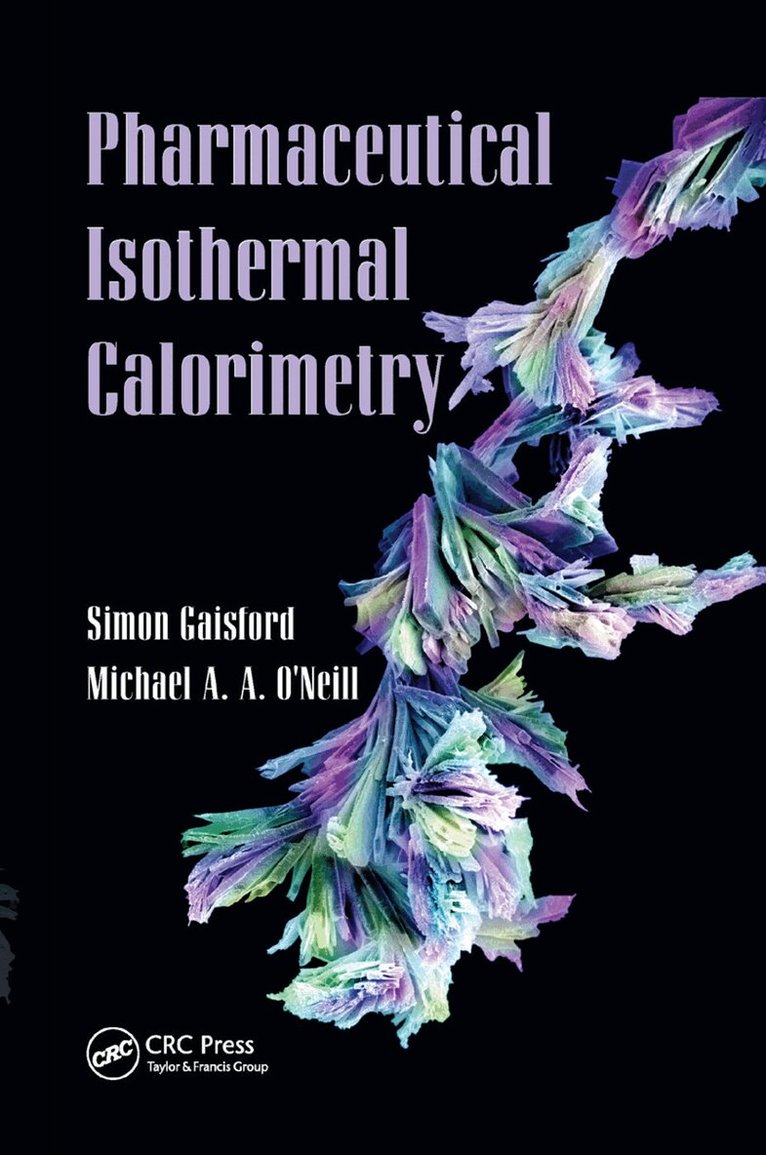
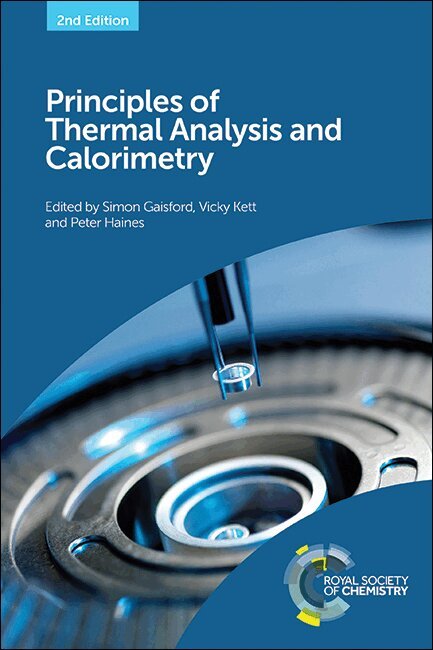
The use of thermal and calorimetric methods has shown rapid growth over the past few decades, in an increasingly wide range of applications. The original text was published in 2001; since then there have been significant advances in various analytical techniques and their applications. This second edition supplies an up to date, concise and readable account of the principles, experimental apparatus and practical procedures used in thermal analysis and calorimetric methods of analysis. Written by experts in their field, brief accounts of the basic theory are reinforced with detailed technical advances and contemporary developments. Where appropriate, applications are used to highlight particular operating principles or methods of interpretation.
As an important source of information for many levels of readership in a variety of areas, this book will be an aid for students and lecturers through to industrial and laboratory staff and consultants.
1 885 kr
Skickas inom 10-15 vardagar
1 885 kr
Skickas inom 10-15 vardagar
2 436 kr
Läs direkt efter köp
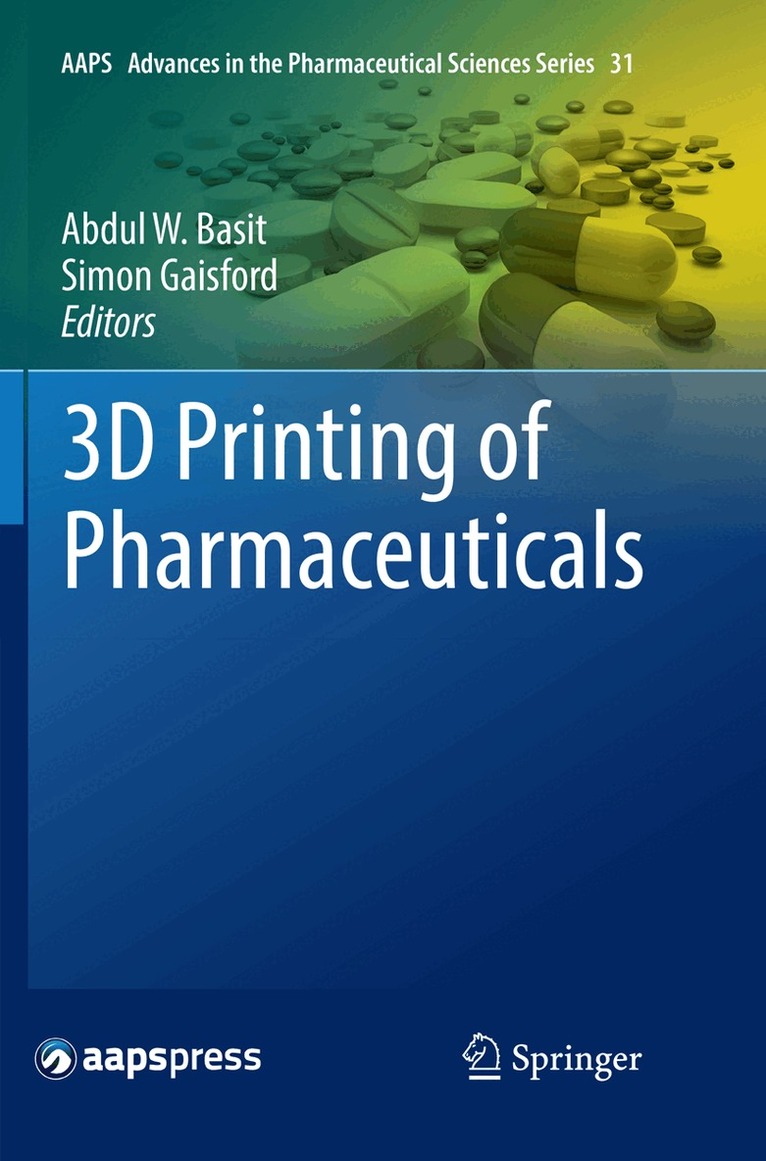
3D printing is forecast to revolutionise the pharmaceutical sector, changing the face of medicine development, manufacture and use. Potential applications range from pre-clinical drug development and dosage form design through to the fabrication of functionalised implants and regenerative medicine. Within clinical pharmacy practice, printing technologies may finally lead to the concept of personalised medicines becoming a reality. This volume aims to be the definitive resource for anyone thinking of developing or using 3D printing technologies in the pharmaceutical sector, with a strong focus on the translation of printing technologies to a clinical setting. This text brings together leading experts to provide extensive information on an array of 3D printing techniques, reviewing the current printing technologies in the pharmaceutical manufacturing supply chain, in particular, highlighting the state-of-the-art applications in medicine and discussing modern drug product manufacture from a regulatory perspective. This book is a highly valuable resource for a range of demographics, including academic researchers and the pharmaceutical industry, providing a comprehensive inventory detailing the current and future applications of 3D printing in pharmaceuticals.
Abdul W. Basit is Professor of Pharmaceutics at the UCL School of Pharmacy, University College London. Abdul’s research sits at the interface between pharmaceutical science and gastroenterology, forging links between basic science and clinical outcomes. He leads a large and multidisciplinary research group, and the goal of his work is to further the understanding of gastrointestinal physiology by fundamental research.So far, this knowledge has been translated into the design of new technologies and improved disease treatments, many of which are currently in late-stage clinical trials. He has published over 350 papers, book chapters and abstracts and delivered more than 250 invited research presentations. Abdul is also a serial entrepreneur and has filed 25 patents and founded 3 pharmaceutical companies (Kuecept, Intract Pharma, FabRx).
Abdul is a frequent speaker at international conferences, serves as a consultant to many pharmaceutical companies and is on the advisory boards of scientific journals, healthcare organisations and charitable bodies. He is the European Editor of the International Journal of Pharmaceutics.
Abdul was the recipient of the Young Investigator Award in Pharmaceutics and Pharmaceutical Technology from the American Association of Pharmaceutical Scientists (AAPS) and is the only non-North American scientist to receive this award. He was also the recipient of the Academy of Pharmaceutical Sciences (APS) award.
Simon Gaisford holds a Chair in Pharmaceutics and is Head of the Department of Pharmaceutics at the UCL School of Pharmacy, University College London. He has published 110 papers, 8 book chapters and 4 authored books. His research is focused on novel technologies for manufacturing medicines, particularly using ink-jet printing and 3D printing, and he is an expert in the physico-chemical characterisation of compounds and formulations with thermal methods and calorimetry.