Simon J.G. Burton – författare
Visar alla böcker från författaren Simon J.G. Burton. Handla med fri frakt och snabb leverans.
2 produkter
2 produkter
E-bok
PDF, Engelska, 20221 719 kr
Läs direkt efter köp
Closely entwined with the educational revolution of early modernity, the Reformation transformed the pedagogical landscape and culture of the sixteenth and seventeenth centuries. Embracing a broad understanding of the Reformation this volume examines the confessional dynamics which shaped the educational transformations of early modernity, including Calvinists, Lutherans, Anabaptists and Roman Catholics in its scope. Going beyond conventional emphases on the role of the printing press and theological education of clergy in university settings, it also explores the education of laity in academies, schools and the home in all manner of topics including theology, history, natural philosophy and ethics. More well-known figures like John Calvin and Philipp Melanchthon are examined alongside less-well known but important figures like Caspar Coolhaes and Lukas Osiander. Likewise, more prominent centres of reform including Switzerland, Germany and the Netherlands are considered together with often overlooked locations like the Czech Republic and Denmark.
Del 57 - Brill's Series in Church History
Hallowing of Logic
The Trinitarian Method of Richard Baxter's Methodus Theologiae
Inbunden, Engelska, 2012
2 369 kr
Skickas inom 5-8 vardagar
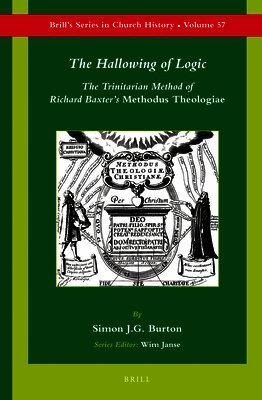
While Richard Baxter (1615-91) has been called the ‘chief of English Protestant schoolmen’, few studies of his theology exist, and none of his major systematic work the Methodus Theologiae (1681). Through examining the scriptural and metaphysical foundations of his exemplaristic logic, and engaging extensively with his medieval and early modern sources, this study presents Baxter’s understanding of method as the unfolding of the believer’s relation with the Triune God through salvation history, revealing his profound debt to Scotist and Nominalist thought. In tracing the manifold ramifications of this method it offers a fresh reading of Baxter’s soteriology, countering the charges of moralism and rationalism often levelled at him, and placing his thought within a scholastic paradigm of ‘faith seeking understanding’.