Simon Joyce - Böcker
Visar alla böcker från författaren Simon Joyce. Handla med fri frakt och snabb leverans.
8 produkter
8 produkter
1 438 kr
Skickas inom 7-10 vardagar
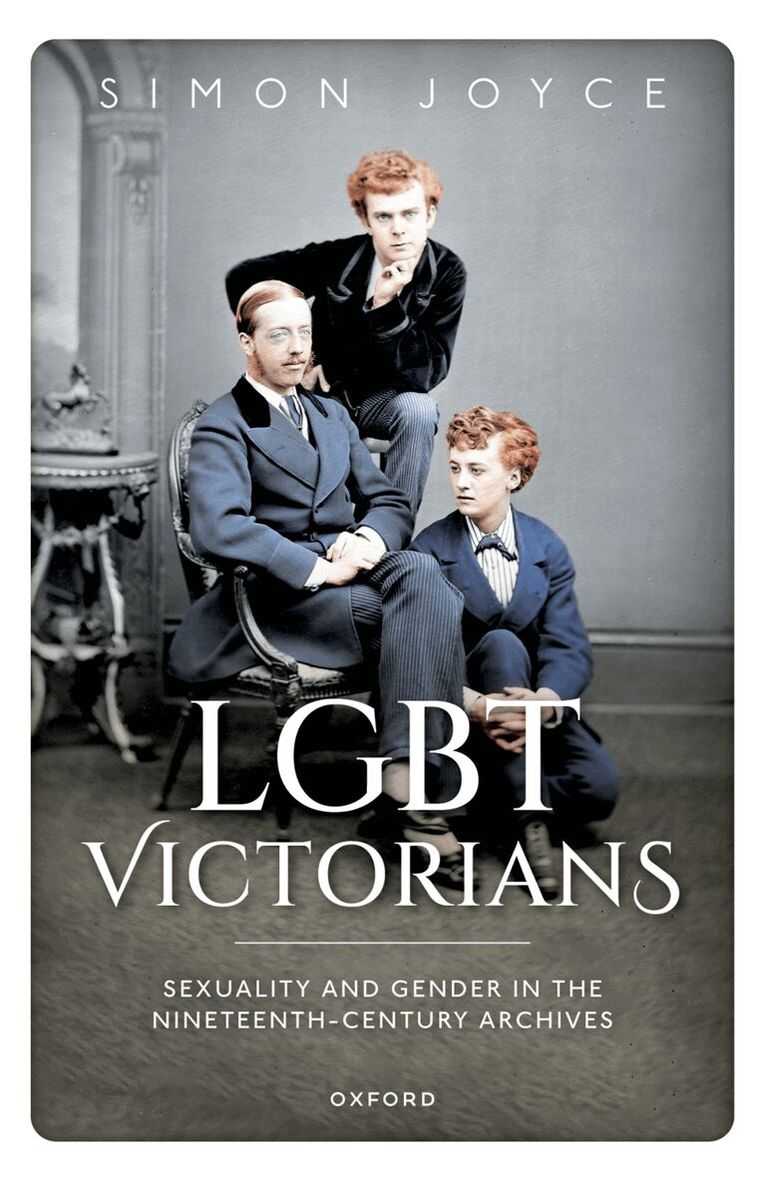
It has been decades since Michel Foucault urged us to rethink "the repressive hypothesis" and see new forms of sexual discourse as coming into being in the nineteenth century, yet the term "Victorian" still has largely negative connotations. LGBT Victorians argues for re-visiting the period's thinking about gender and sexual identity at a time when our queer alliances are fraying. We think of those whose primary self-definition is in terms of sexuality (lesbians, gay men, bisexuals) and those for whom it is gender identity (intersex and transgender people, genderqueers) as simultaneously in coalition and distinct from each other, on the assumption that gender and sexuality are independent aspects of self-identification. Re-examining how the Victorians considered such identity categories to have produced and shaped each other can ground a more durable basis for strengthening our present LGBTQ+ coalition.LGBT Victorians draws on scholarship reconsidering the significance of sexology and efforts to retrospectively discover transgender people in historical archives, particularly in the gap between what the nineteenth century termed the sodomite and the hermaphrodite. It highlights a broad range of individuals (including Anne Lister, and the defendants in the "Fanny and Stella" trial of the 1870s), key thinkers and activists (including Karl-Heinrich Ulrichs and Edward Carpenter), and writers such as Walt Whitman and John Addington Symonds to map the complicated landscape of gender and sexuality in the Victorian period. In the process, it decenters Oscar Wilde and his imprisonment from our historical understanding of sexual and gender nonconformity.
426 kr
Skickas inom 5-8 vardagar
LGBT Victorians argues for re-visiting the Victorian era's thinking about gender and sexual identity. We think of those whose primary self-definition is in terms of sexuality (lesbians, gay men, bisexuals) and those for whom it is gender identity (intersex and transgender people, genderqueers) as simultaneously in coalition and distinct from each other. Re-examining how the Victorians considered such identity categories to have produced and shaped each other can ground a more durable basis for strengthening our present LGBTQ+ coalition.LGBT Victorians reconsiders the significance of sexology and efforts to retrospectively discover transgender people in historical archives, particularly in the gap between what the nineteenth century termed the sodomite and the hermaphrodite. It highlights a broad range of individuals (including Anne Lister, and the defendants in the "Fanny and Stella" trial of the 1870s), key thinkers and activists (including Karl-Heinrich Ulrichs and Edward Carpenter), and writers such as Walt Whitman and John Addington Symonds to map the complicated landscape of gender and sexuality in the Victorian period.
847 kr
Skickas inom 10-15 vardagar
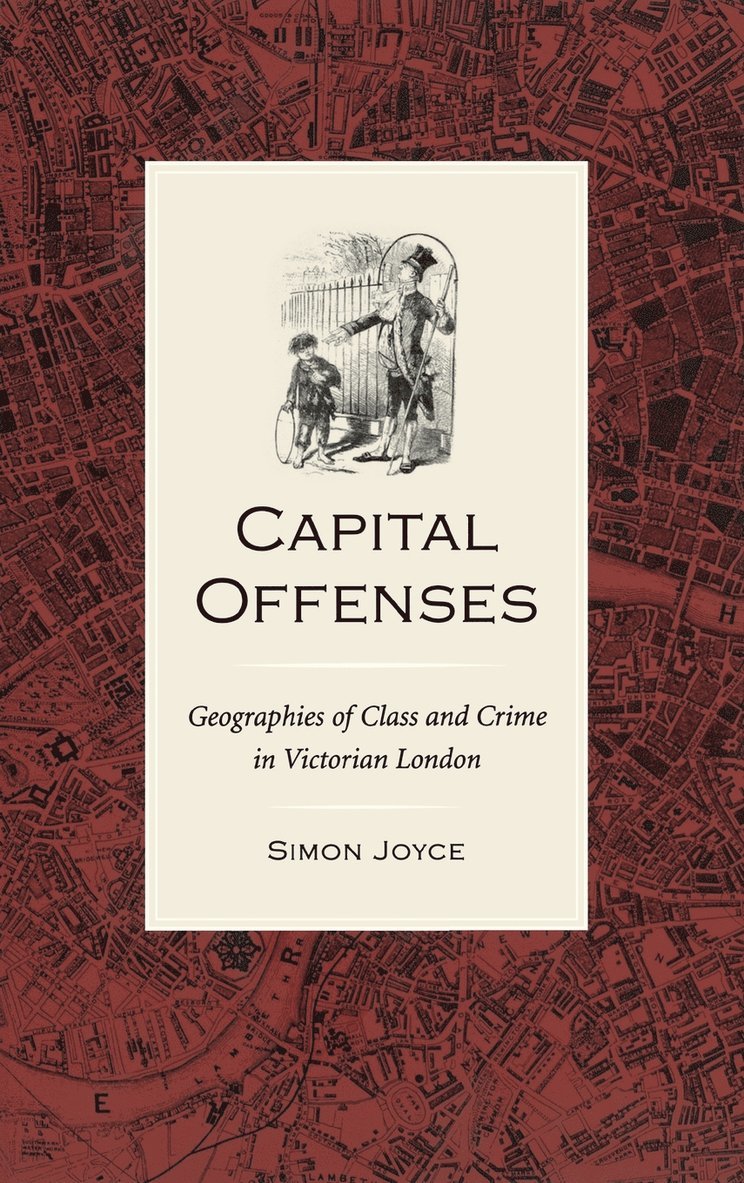
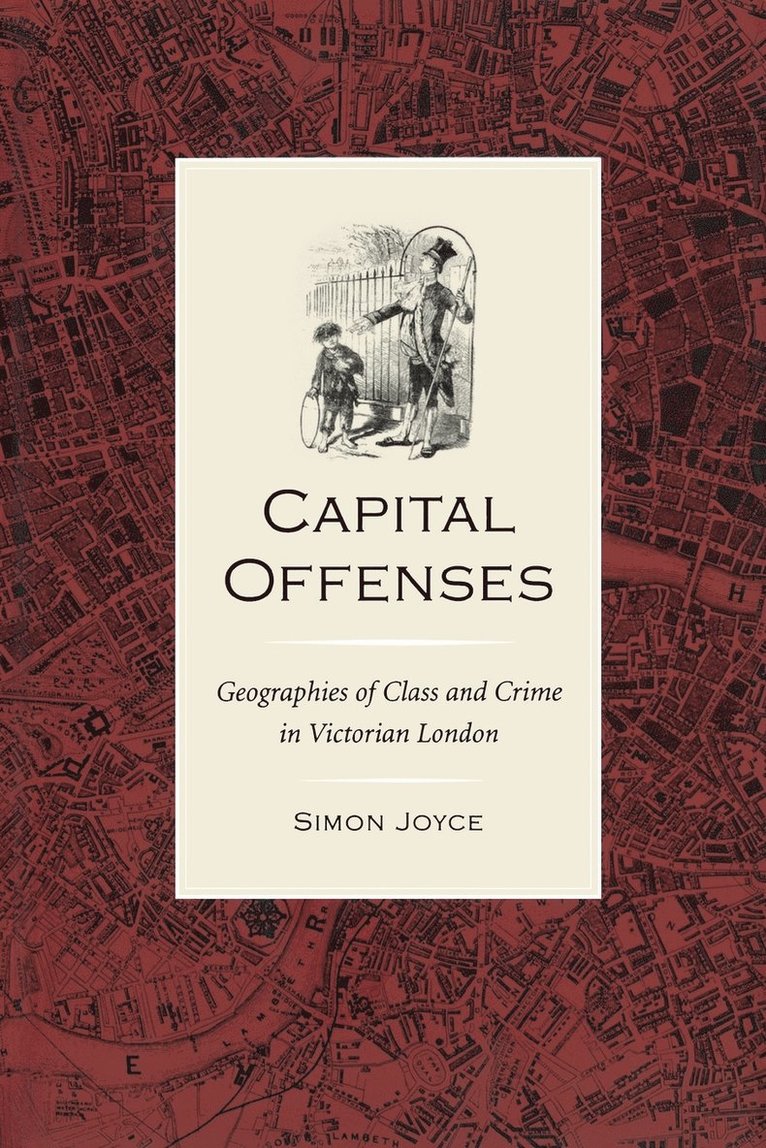
As London became the first major city of the 19th century, new models of representation emerged in the journalism, poetry, fiction and social commentary of the period. Simon Joyce argues that such writing reflected a persistant worry about the problem of crime but was never able to contain it. Such commentators as Wordsworth, Dickens, Mayhew, Stevenson, Conan Doyle, Booth and Wilde all struggled with the same questions about how to represent London and the relations among its varied populations, yet their accounts often undermined one another. Whereas Victorian social science presumed a correlation between criminal activity, geographical residence and social class, the popular literature of the period often sought just as strenuously to deny the link, giving rise to privileged and pathological offenders like Dorian Gray and Dr Jekyll. This is turn shifted attention away from the urban slums that had been the setting for the so-called Newgate novels of the 1830s and 1840s. By 1900, crime appears as a distinctively modern problem, requiring large-scale solutions and government intervention in place of an older approach that was rooted in personal morality or philanthropic paternalism. Illustrating ""literary geography"" - in which physical space is not merely a backdrop for the plot but an integral element in shaping textual meaning - this work reveals how certain geographical patterns can not only give weight to interpretive meanings already suggested in the texts but also enable us to read them in a new and surprising light.
481 kr
Skickas inom 10-15 vardagar
As London became the first major city of the nineteenth century, new models of representation emerged in the journalism, poetry, fiction, and social commentary of the period. Simon Joyce argues that such writing reflected a persistent worry about the problem of crime but was never able to contain it. Such commentators as Wordsworth, Dickens, Mayhew, Stevenson, Conan Doyle, Booth, and Wilde all struggled with the same questions about how to represent London and the relations among its varied populations, yet their accounts often undermined one another.Whereas Victorian social science presumed a correlation between criminal activity, geographical residence, and social class, the popular literature of the period often sought just as strenuously to deny the link, giving rise to privileged and pathological offenders like Dorian Gray and Dr. Jekyll. This in turn shifted attention away from the urban slums that had been the setting for the so-called Newgate novels of the 1830s and 1840s. By 1900, crime appears as a distinctively modern problem, requiring large-scale solutions and government intervention in place of an older approach that was rooted in personal morality or philanthropic paternalism.Illustrating ""literary geography""?in which physical space is not merely a backdrop for the plot but an integral element in shaping textual meaning?Simon Joyce’s Capital Offenses reveals how certain geographical patterns can not only give weight to interpretive meanings already suggested in the texts but also enable us to read them in a new and surprising light.
600 kr
Skickas inom 7-10 vardagar
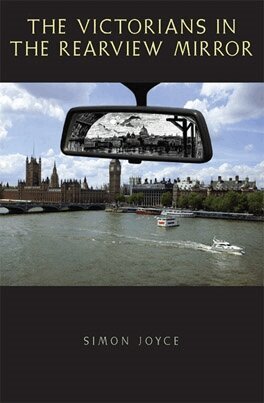
When Margaret Thatcher called in 1979 for a return to Victorian values such as hard work, self-reliance, thrift, and national pride, Labour Party leader Neil Kinnock responded that "Victorian values" also included "cruelty, misery, drudgery, squalor, and ignorance."The Victorians in the Rearview Mirror is an in-depth look at the ways that the twentieth century reacted to and reimagined its predecessor. It considers how the Victorian inheritance has been represented in literature, politics, film, and visual culture; the ways in which modernists and progressives have sought to differentiate themselves from an image of the Victorian; and how conservatives (and some liberals) have sought to revive elements of nineteenth-century life. Nostalgic and critical impulses combine to fix an understanding of the Victorians in the popular imagination.Simon Joyce examines heritage culture, contemporary politics, and the "neo-Dickensian" novel to offer a more affirmative assessment of the Victorian legacy, one that lets us imagine a model of social interconnection and interdependence that has come under threat in today's politics and culture.Although more than one hundred years have passed since the death of Queen Victoria, the impact of her time is still fresh. The Victorians in the Rearview Mirror speaks to diverse audiences in literary and cultural studies, in addition to those interested in visual culture and contemporary politics, and situates detailed close readings of literary and cinematic texts in the context of a larger argument about the legacies of an era not as distant as we might like to think.
321 kr
Skickas inom 10-15 vardagar
When Margaret Thatcher called in 1979 for a return to Victorian values such as hard work, self-reliance, thrift, and national pride, Labour Party leader Neil Kinnock responded that "Victorian values" also included "cruelty, misery, drudgery, squalor, and ignorance."The Victorians in the Rearview Mirror is an in-depth look at the ways that the twentieth century reacted to and reimagined its predecessor. It considers how the Victorian inheritance has been represented in literature, politics, film, and visual culture; the ways in which modernists and progressives have sought to differentiate themselves from an image of the Victorian; and how conservatives (and some liberals) have sought to revive elements of nineteenth-century life. Nostalgic and critical impulses combine to fix an understanding of the Victorians in the popular imagination.Simon Joyce examines heritage culture, contemporary politics, and the "neo-Dickensian" novel to offer a more affirmative assessment of the Victorian legacy, one that lets us imagine a model of social interconnection and interdependence that has come under threat in today's politics and culture.Although more than one hundred years have passed since the death of Queen Victoria, the impact of her time is still fresh. The Victorians in the Rearview Mirror speaks to diverse audiences in literary and cultural studies, in addition to those interested in visual culture and contemporary politics, and situates detailed close readings of literary and cinematic texts in the context of a larger argument about the legacies of an era not as distant as we might like to think.
1 371 kr
Skickas inom 7-10 vardagar
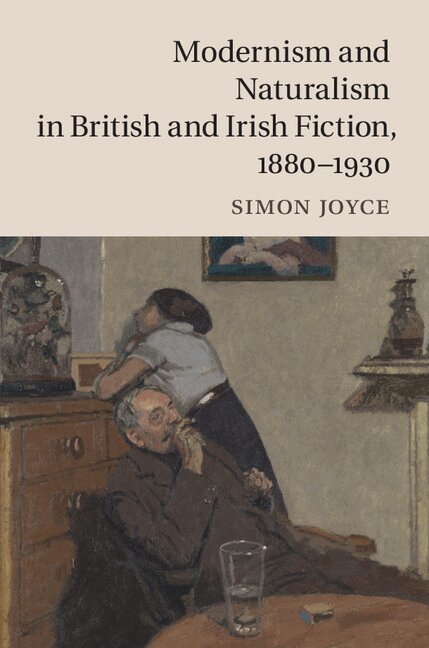
This book argues that the history of literary modernism is inextricably connected with naturalism. Simon Joyce traces a complex response among aesthetes to the work of Émile Zola at the turn of the century, recovering naturalism's assumed compatibility with impressionism as a central cause of their ambivalence. Highlighting a little-studied strain of reflexive naturalism in which Zola's mode of analytical observation is turned upon the authors themselves, Joyce suggests that the confluence of naturalism and impressionism formed the precondition for so-called stream-of-consciousness writing. This style served to influence not only the work of canonical modernists such as Joyce and Woolf, but also that of lesser-known writers such as George Moore, Sarah Grand, and George Egerton.
493 kr
Skickas inom 7-10 vardagar
This book argues that the history of literary modernism is inextricably connected with naturalism. Simon Joyce traces a complex response among aesthetes to the work of Émile Zola at the turn of the century, recovering naturalism's assumed compatibility with impressionism as a central cause of their ambivalence. Highlighting a little-studied strain of reflexive naturalism in which Zola's mode of analytical observation is turned upon the authors themselves, Joyce suggests that the confluence of naturalism and impressionism formed the precondition for so-called stream-of-consciousness writing. This style served to influence not only the work of canonical modernists such as Joyce and Woolf, but also that of lesser-known writers such as George Moore, Sarah Grand, and George Egerton.