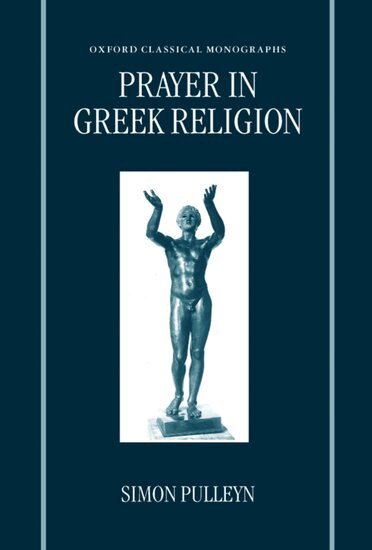
In this, the first book-length study of Greek prayer to appear in English, Simon Pulleyn presents a comprehensive treatment of an aspect of religion which together with sacrifice was at the centre of Greek cult. Through a full examination of all the relevant literary and epigraphic material available from the archaic and classical periods, Pulleyn seeks both to describe the ancient practices and explain their significance. Great stress is laid on the central role of reciprocity in Greek relations with the gods, and the various ways in which they addressed the gods are shown to be related to strategies used in dealing with each other. The book also features an examination of the language used in prayer, e.g. formulae, and rhetorical structures, and draws on Indo-European comparative material.
Iliad I provides the commentary and student aids lacking in larger volumes of Homer's work. It contains a full Introduction designed to highlight the most important features of the text. There are sections on the Iliad and its qualities, the Homeric question, dating, oriental influences, style, gods, men, the transmission of the text, the scholia, the epic dialect, and metre. The Commentary, as well as containing material addressed to advanced readers, is also designed to be accessible to those who are new to Homer. To this end, Greek quotations in the Introduction and Commentary are translated, and technical discussions are marked off in square brackets (beginners may pass over them if they wish). The Greek text of Iliad I is printed with a facing English translation of a literal kind, primarily intended to help beginners to construe the Greek and there is also a full vocabulary list.
Since their composition almost 3,000 years ago the Homeric epics have lost none of their power to grip audiences and fire the imagination: with their stories of life and death, love and loss, war and peace they continue to speak to us at the deepest level about who we are across the span of generations. That being said, the world of Homer is in many ways distant from that in which we live today, with fundamental differences not only in language, social order, and religion, but in basic assumptions about the world and human nature. This volume offers a detailed yet accessible introduction to ancient Greek culture through the lens of Book One of the Odyssey, covering all of these aspects and more in a comprehensive Introduction designed to orient students in their studies of Greek literature and history. The full Greek text is included alongside a facing English translation which aims to reproduce as far as feasible the word order and sound play of the Greek original and is supplemented by a Glossary of Technical Terms and a full vocabulary keyed to the specific ways that words are used in Odyssey I. At the heart of the volume is a full-length line-by-line commentary, the first in English since the 1980s and updated to bring the latest scholarship to bear on the text: focusing on philological and linguistic issues, its close engagement with the original Greek yields insights that will be of use to scholars and advanced students as well as to those coming to the text for the first time.
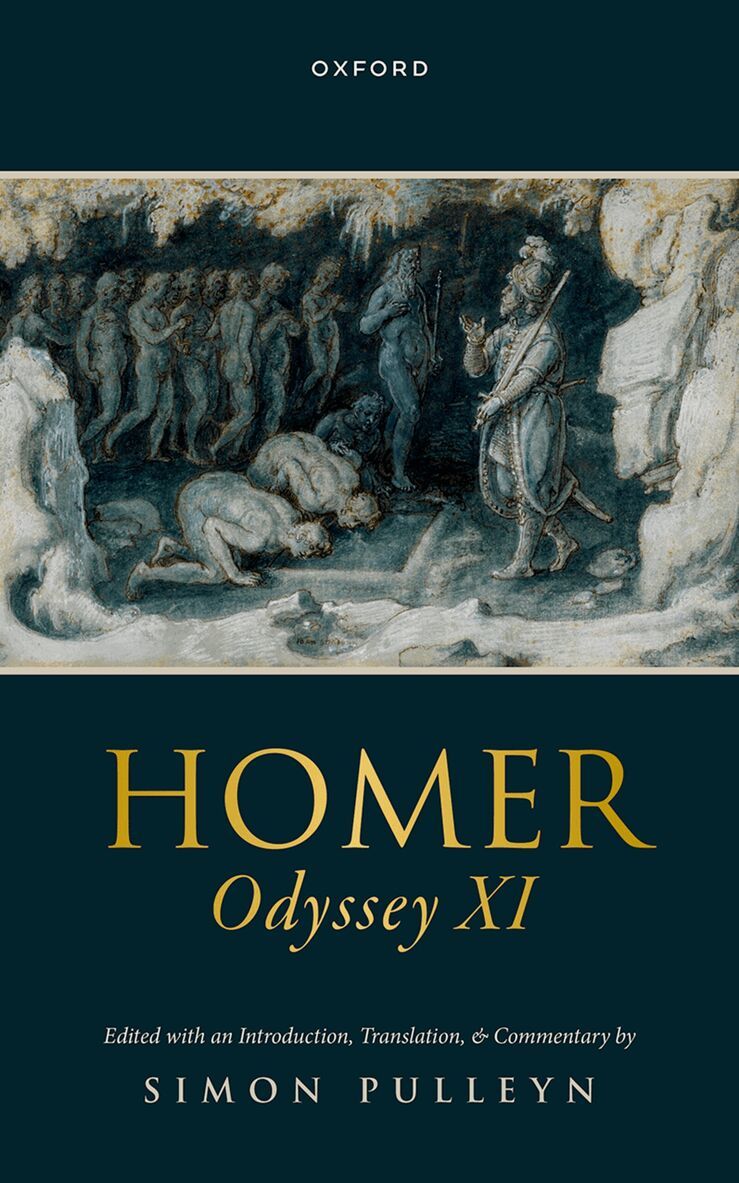
Odyssey XI deals with Odysseus' visit to the world of the dead, a pivotal episode of stunning virtuosity within the poem and one with a huge later influence on writers such as Vergil and Dante. This is the longest and most detailed standalone edition in English. The text of this part of the poem is particularly rich in detail and dense in allusiveness so that practically every word calls for comment elucidating questions such as dialect, metre, style, myth, cult, genealogy, and geography. There is extensive discussion of parallels from other literatures. The editor's approach is not only to pay close attention to questions of traditional referentiality within epic but also to unearth how older connotations of words linger beneath surface phrasing, thus casting light on its relationship to the broader Indo-European poetic tradition. As one might expect from earlier works by the same editor, close attention is paid throughout to religious matters. Likewise, the book goes into particular detail on linguistic matters within Homeric Greek, a kind of language which is superficially apt to seem relatively simple on account of its paratactic syntax, but which is often found, on closer investigation, to be less than straightforward.
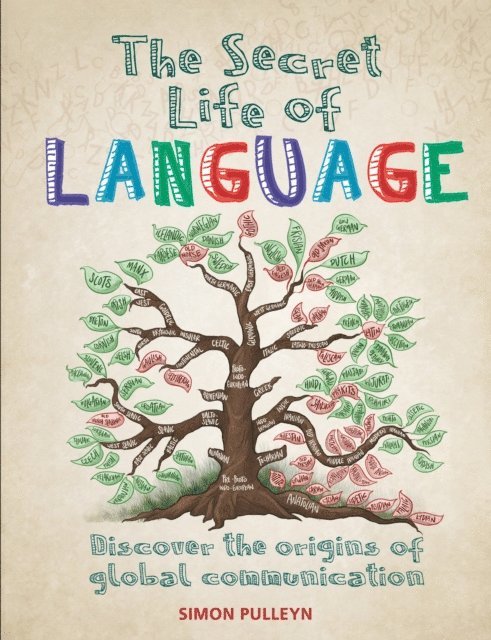
This book looks at how language has evolved around the globe from ancestral proto-languages to our recognisable modern tongues. It demonstrates how language has been shaped by social and cultural influences, and even explains how our anatomy affects the articulation, and therefore evolution, of words. Discover the surprising stories behind theorigin of the written word, the difficulties of decipherment and the challenge of inventing from scratch languages such as Dothraki.Combining expert analysis with accessible narrative and fun illustrations, The Secret Life of Language makes even the complex topics of philology, morphology and phonology easy to understand.