Simon Serfaty – författare
Visar alla böcker från författaren Simon Serfaty. Handla med fri frakt och snabb leverans.
18 produkter
18 produkter
Inbunden, Engelska, 1997
840 kr
Skickas inom 10-15 vardagar
Serfaty argues that U.S. interests in Europe have become so significant as to create an increasingly common Euro-Atlantic space from which disentanglement is no longer possible. The reality of this space does not mean an Americanization of Europe any more than it does the Europeanization of America. Serfaty points to the ways the United States is connected to Europe, the areas of friction, and the outlook for future common interests and joint approaches to challenges throughout the world.By pointing to the ways the United States is connected to Europe, by examining the areas of friction, and projecting future common interests and joint approaches to challenges throughout the world, Serfaty shows why staying the course is vital to European as well as American interests. A significant analysis for scholars, researchers, and policy makers concerned with contemporary American and European foreign policy and relations.
Häftad, Engelska, 1997
490 kr
Skickas inom 10-15 vardagar
Serfaty argues that U.S. interests in Europe have become so significant as to create an increasingly common Euro-Atlantic space from which disentanglement is no longer possible. The reality of this space does not mean an Americanization of Europe any more than it does the Europeanization of America. Serfaty points to the ways the United States is connected to Europe, the areas of friction, and the outlook for future common interests and joint approaches to challenges throughout the world.By pointing to the ways the United States is connected to Europe, by examining the areas of friction, and projecting future common interests and joint approaches to challenges throughout the world, Serfaty shows why staying the course is vital to European as well as American interests. A significant analysis for scholars, researchers, and policy makers concerned with contemporary American and European foreign policy and relations.
Inbunden, Engelska, 1980
1 048 kr
Skickas inom 10-15 vardagar
Inbunden, Engelska, 2019
2 193 kr
Skickas inom 10-15 vardagar
This volume examines the economic and political circumstances in Portugal since the 1974 revolution. A succinct analysis of the central themes of Portuguese politics (drawing on public opinion surveys conducted in Portugal) is followed by a framework for analyzing the economic consequences of the coup. The authors then assess the influence of the I
Häftad, Engelska, 2021
642 kr
Skickas inom 10-15 vardagar
This volume examines the economic and political circumstances in Portugal since the 1974 revolution. A succinct analysis of the central themes of Portuguese politics (drawing on public opinion surveys conducted in Portugal) is followed by a framework for analyzing the economic consequences of the coup. The authors then assess the influence of the I
Häftad, Engelska, 2021
642 kr
Skickas inom 10-15 vardagar
The essays included in this volume were written for a series of seminars which took place at the Washington Center of Foreign Policy Research of the Johns Hopkins School of Advanced International Studies. Held at a time when a victory of the Left was widely expected in the legislative elections of March 12 and 19, 1978, the series reflected the Center's continuing interest in the changing international environment of American foreign policy. As it is well known, such predictions did not come to pass. Yet, these essays, revised and updated, remain eminently useful for reasons which should become all too evident in the pages that follow.
E-bok
Engelska, 2013943 kr
Läs direkt efter köp
The commencement of war in Iraq in 2003 was met with a variety of reactions around the globe. In Architects of Delusion, Simon Serfaty presents a historical analysis of how and why the decision to wage war was endorsed by some of America's main European allies, especially Britain, and opposed by others, especially France and Germany.Tony Blair, George W. Bush, Jacques Chirac, and Gerhard Schroeder were, Serfaty argues, the architects of one of the most serious crises in postwar transatlantic relations. These four heads of state were the victims not only of their personal delusions but also of those of the nations they led. They all played the hand that their countries had dealt them-the forceful hand of a righteous America, the principled acquiescence of a faithful Britain, the determined intransigence of a quarrelsome France, and the ambiguous "new way" of a recast Germany.Serfaty's deft interweaving of the political histories and cultures of the four countries and the personalities of their leaders transcends the Europe-bashing debate sparked by the Iraq invasion. He contends that not one of these four leaders was entirely right or entirely wrong in his approach to the others or to the issues, before and during the war. For the resulting wounds to heal, though, and for the continuity of transatlantic relations, he reminds us that the United States and France must end their estrangement, France and Britain must resolve their differences, Germany must carry its weight relative to both France and Britain, and the United States must exert the same visionary leadership for the twenty-first century that it showed during its rise to preeminence in the twentieth century.
Inbunden, Engelska, 2007
690 kr
Skickas inom 10-15 vardagar
The commencement of war in Iraq in 2003 was met with a variety of reactions around the globe. In Architects of Delusion, Simon Serfaty presents a historical analysis of how and why the decision to wage war was endorsed by some of America's main European allies, especially Britain, and opposed by others, especially France and Germany.Tony Blair, George W. Bush, Jacques Chirac, and Gerhard Schroeder were, Serfaty argues, the architects of one of the most serious crises in postwar transatlantic relations. These four heads of state were the victims not only of their personal delusions but also of those of the nations they led. They all played the hand that their countries had dealt them-the forceful hand of a righteous America, the principled acquiescence of a faithful Britain, the determined intransigence of a quarrelsome France, and the ambiguous "new way" of a recast Germany.Serfaty's deft interweaving of the political histories and cultures of the four countries and the personalities of their leaders transcends the Europe-bashing debate sparked by the Iraq invasion. He contends that not one of these four leaders was entirely right or entirely wrong in his approach to the others or to the issues, before and during the war. For the resulting wounds to heal, though, and for the continuity of transatlantic relations, he reminds us that the United States and France must end their estrangement, France and Britain must resolve their differences, Germany must carry its weight relative to both France and Britain, and the United States must exert the same visionary leadership for the twenty-first century that it showed during its rise to preeminence in the twentieth century.
E-bok
PDF, Engelska, 2019730 kr
Läs direkt efter köp
The essays included in this volume were written for a series of seminars which took place at the Washington Center of Foreign Policy Research of the Johns Hopkins School of Advanced International Studies. Held at a time when a victory of the Left was widely expected in the legislative elections of March 12 and 19, 1978, the series reflected the Center''s continuing interest in the changing international environment of American foreign policy. As it is well known, such predictions did not come to pass. Yet, these essays, revised and updated, remain eminently useful for reasons which should become all too evident in the pages that follow.
E-bok
PDF, Engelska, 2019730 kr
Läs direkt efter köp
This volume examines the economic and political circumstances in Portugal since the 1974 revolution. A succinct analysis of the central themes of Portuguese politics (drawing on public opinion surveys conducted in Portugal) is followed by a framework for analyzing the economic consequences of the coup. The authors then assess the influence of the I
E-bok
Engelska, 2019757 kr
Läs direkt efter köp
The essays included in this volume were written for a series of seminars which took place at the Washington Center of Foreign Policy Research of the Johns Hopkins School of Advanced International Studies. Held at a time when a victory of the Left was widely expected in the legislative elections of March 12 and 19, 1978, the series reflected the Center''s continuing interest in the changing international environment of American foreign policy. As it is well known, such predictions did not come to pass. Yet, these essays, revised and updated, remain eminently useful for reasons which should become all too evident in the pages that follow.
E-bok
Engelska, 2019730 kr
Läs direkt efter köp
This volume examines the economic and political circumstances in Portugal since the 1974 revolution. A succinct analysis of the central themes of Portuguese politics (drawing on public opinion surveys conducted in Portugal) is followed by a framework for analyzing the economic consequences of the coup. The authors then assess the influence of the I
E-bok
Engelska, 2012729 kr
Läs direkt efter köp
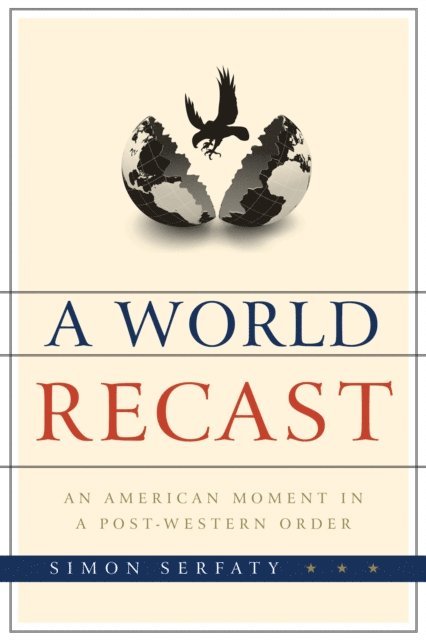
The end of the unipolar moment completes the passing of a Western era that was prolonged for half a century when the United States took over for a defeated and exhausted group of European states after World War II. Distinguished scholar Simon Serfaty vigorously argues that while it is possible, and even desirable, to acknowledge the passing of the Western era, it is exaggerated to present it as an irreversible decline of the West relative to an irresistible rise of the Rest. Rather, he shows that the unfolding post-Western moment will be messy. In addition to the United States and the states of Europe as a Union, the new cast of significant powers will involve a dozen or more countries: emerging powers like China and India, postimperial powers such as Japan and Russia, new influentials like Brazil and Turkey, pivot states like Egypt and Pakistan, nuisance states like Iran, failed or failing states like North Korea and Sudan, and others. Echoes of a Sarajevo moment played out this time in the greater Middle East, the new global Balkans for the twenty-first century. But Serfaty convincingly contends that even during a zero-polar moment of geopolitical transition, American power remains superior, and thus indispensable though no longer decisive; Western power stands on top and thus is inescapable though no longer exclusive; and even as the Rest gains broadly in stature and reach it is unlikely to achieve preponderance any time soon. This powerful and provocative book should be read by all who share a deep concern for the future of America—and a recast world.
Häftad, Engelska, 2021
314 kr
Skickas inom 10-15 vardagar
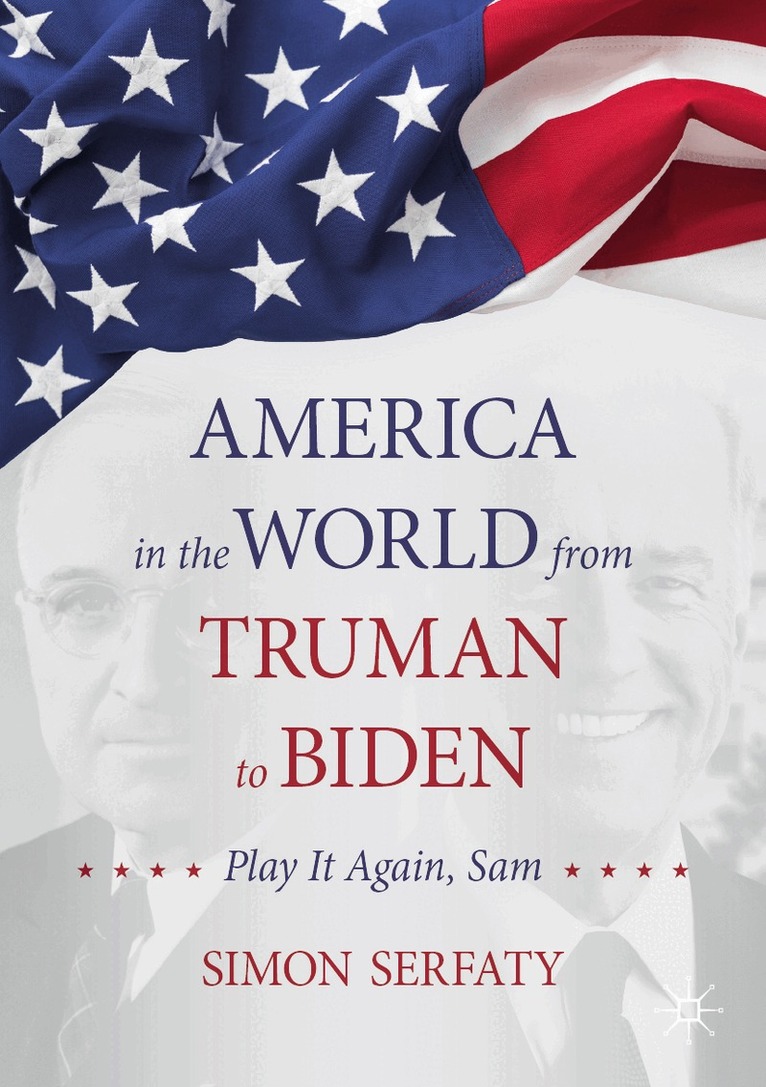
Does America still count in the world? Can the world still count on America? In raising such questions halfway into a series of systemic shocks that began in September 2001, Simon Serfaty, a long-time scholar of international politics, reminds Americans that their country’s well-being and that of the world are intertwined. Play it again, Sam: History is in a foul mood again, and this is no time to come home and leave behind an unfinished European Union facing the ghosts of a revanchist Russia still claiming the Old World as its own; a strategic dark hole in the Greater Middle East, on the eve of a global Sarajevo moment; and China’s surging hegemonic power in a continent fraught with too much history and too little geography. Admittedly, what is good for America may no longer be best for all the West, and what is good for the West may no longer be good for much of the Rest: the unipolar moment is irreversibly over. Yet, writing in an elegant style and with muchhistorical insight, Serfaty argues that even with the old power map irreversibly gone, mainly to the benefit of the non-Western world, a new world order for the twenty-first century will remain dependent on the U.S. role, its capabilities and its efficacy, as well as its leadership and its purpose.
E-bok
Engelska, 2021385 kr
Läs direkt efter köp
Does America still count in the world? Can the world still count on America? In raising such questions halfway into a series of systemic shocks that began in September 2001, Simon Serfaty, a long-time scholar of international politics, reminds Americans that their country’s well-being and that of the world are intertwined. Play it again, Sam: History is in a foul mood again, and this is no time to come home and leave behind an unfinished European Union facing the ghosts of a revanchist Russia still claiming the Old World as its own; a strategic dark hole in the Greater Middle East, on the eve of a global Sarajevo moment; and China’s surging hegemonic power in a continent fraught with too much history and too little geography. Admittedly, what is good for America may no longer be best for all the West, and what is good for the West may no longer be good for much of the Rest: the unipolar moment is irreversibly over. Yet, writing in an elegant style and with muchhistorical insight, Serfaty argues that even with the old power map irreversibly gone, mainly to the benefit of the non-Western world, a new world order for the twenty-first century will remain dependent on the U.S. role, its capabilities and its efficacy, as well as its leadership and its purpose.
Häftad, Engelska, 1985
255 kr
Tillfälligt slut
To find more information about Rowman & Littlefield titles please visit us at www.rowmanlittlefield.com.
Inbunden, Engelska, 1989
1 102 kr
Tillfälligt slut
How can the United States best take advantage of the new atmosphere in US-Soviet relations to build a more durable co-operative relationship with their principal adversary? What lessons can be drawn from other experiments with detente? By what means, and with what restrictions, should they engage their Soviet competitors to exploit developing opportunities while minimizing attendant risks? And, specifically, what kinds of concrete American initiatives are likely to nourish the growing Soviet appetite for contact, cooperation, and inclusion with the West? These are some of the questions that were examined in a project launched by the Johns Hopkins Foreign Policy Institute School of Advanced International Studies, of which this volume is the end result.
Häftad, Engelska, 1989
534 kr
Tillfälligt slut