Simon Stoddart – författare
Visar alla böcker från författaren Simon Stoddart. Handla med fri frakt och snabb leverans.
9 produkter
9 produkter
Inbunden, Engelska, 2020
1 378 kr
Skickas inom 7-10 vardagar
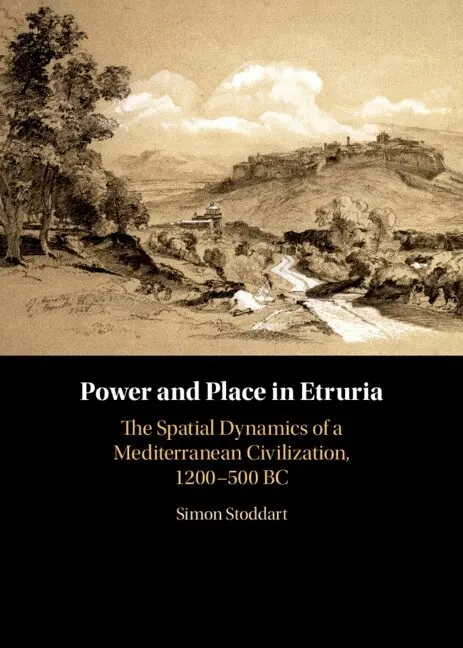
This volume fills a gap in the study of an important, yet neglected case of state formation, by taking a landscape perspective to Etruria. Simon Stoddart examines the infrastructure, hierarchy/heterarchy and spatial patterns of the Etruscans over time to investigate their political development from a new perspective. The analysis both crosses the divide from prehistory to history and applies a scaled analysis to the whole region between the Tyrrhenian Sea and the Arno and Tiber rivers, with special focus on the neglected region between Populonia on the coast and Perugia and the north Umbrian region adjoining the Apennines. Stoddart uncovers the powerful places that were in dynamic tension not only between themselves, but also with the internal structure constituted by the descent groups that peopled them. He unravels the dynamically changing landscape of changing boundaries and buffer zones which contained robust urbanism, as well as less centralized, polyfocal nucleations.
Häftad, Engelska, 1985
1 270 kr
Skickas inom 5-8 vardagar
Häftad, Engelska, 1985
1 221 kr
Skickas inom 5-8 vardagar
Del 245 - BAR International Series
Papers in Italian Archaeology IV
The Cambridge Conference. Part iii: Patterns in Protohistory
Häftad, Engelska, 1985
1 514 kr
Skickas inom 5-8 vardagar
Häftad, Engelska, 1985
1 194 kr
Skickas inom 5-8 vardagar
E-bok
Engelska, 20201 613 kr
Läs direkt efter köp
This volume fills a gap in the study of an important, yet neglected case of state formation, by taking a landscape perspective to Etruria. Simon Stoddart examines the infrastructure, hierarchy/heterarchy and spatial patterns of the Etruscans over time to investigate their political development from a new perspective. The analysis both crosses the divide from prehistory to history and applies a scaled analysis to the whole region between the Tyrrhenian Sea and the Arno and Tiber rivers, with special focus on the neglected region between Populonia on the coast and Perugia and the north Umbrian region adjoining the Apennines. Stoddart uncovers the powerful places that were in dynamic tension not only between themselves, but also with the internal structure constituted by the descent groups that peopled them. He unravels the dynamically changing landscape of changing boundaries and buffer zones which contained robust urbanism, as well as less centralized, polyfocal nucleations.
E-bok
PDF, Engelska, 20201 613 kr
Läs direkt efter köp
This volume fills a gap in the study of an important, yet neglected case of state formation, by taking a landscape perspective to Etruria. Simon Stoddart examines the infrastructure, hierarchy/heterarchy and spatial patterns of the Etruscans over time to investigate their political development from a new perspective. The analysis both crosses the divide from prehistory to history and applies a scaled analysis to the whole region between the Tyrrhenian Sea and the Arno and Tiber rivers, with special focus on the neglected region between Populonia on the coast and Perugia and the north Umbrian region adjoining the Apennines. Stoddart uncovers the powerful places that were in dynamic tension not only between themselves, but also with the internal structure constituted by the descent groups that peopled them. He unravels the dynamically changing landscape of changing boundaries and buffer zones which contained robust urbanism, as well as less centralized, polyfocal nucleations.
E-bok
Engelska, 2021123 kr
Läs direkt efter köp
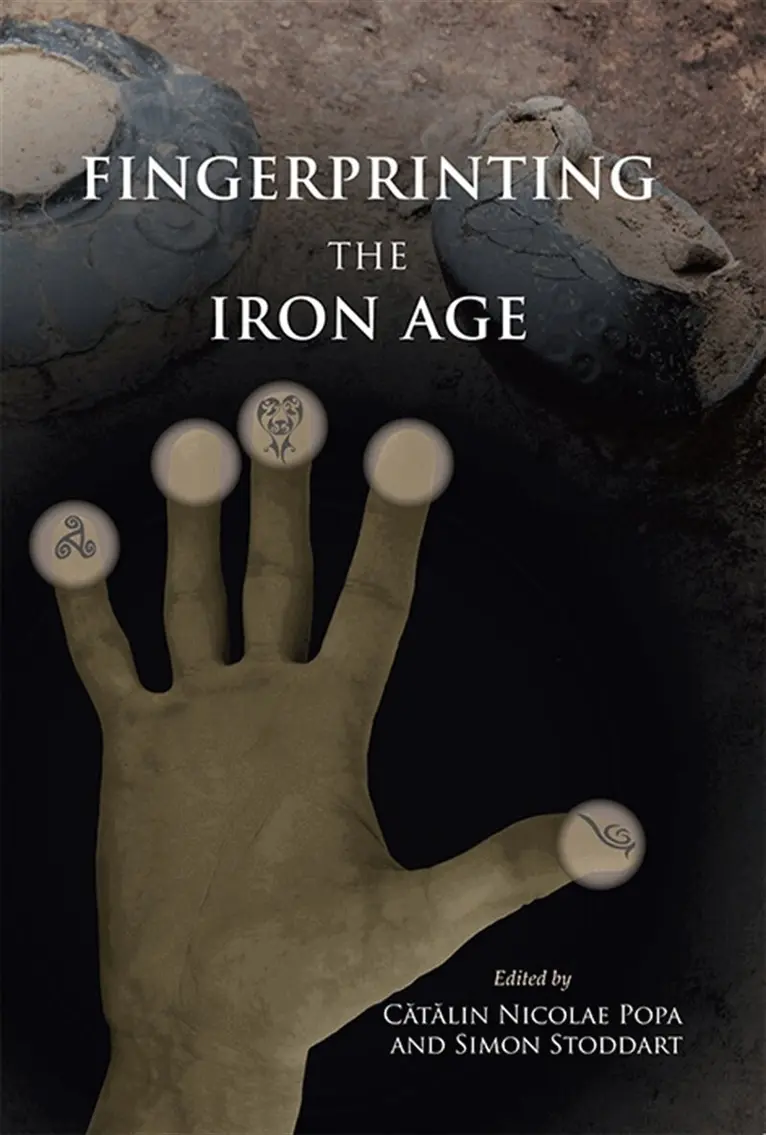
Archaeology has long dealt with issues of identity, and especially with ethnicity, with modern approaches emphasising dynamic and fluid social construction. The archaeology of the Iron Age in particular has engendered much debate on the topic of ethnicity, fuelled by the first availability of written sources alongside the archaeological evidence which has led many researchers to associate the features they excavate with populations named by Greek or Latin writers. Some archaeological traditions have had their entire structure built around notions of ethnicity, around the relationships existing between large groups of people conceived together as forming unitary ethnic units. On the other hand, partly influenced by anthropological studies, other scholars have written forcefully against Iron Age ethnic constructions, such as the Celts.The 24 contributions to this volume focus on the south east Europe, where the Iron Age has, until recently, been populated with numerous ethnic groups with which specific material culture forms have been associated. The first section is devoted to the core geographical area of south east Europe: Bulgaria, Croatia, Romania, Serbia and Slovenia, as well as Albania and the Former Yugoslav Republic of Macedonia. The following three sections allow comparison with regions further to the west and the south west with contributions on central and western Europe, the British Isles and the Italian peninsula. The volume concludes with four papers which provide more synthetic statements that cut across geographical boundaries, the final contributions bringing together some of the key themes of the volume. The wide array of approaches to identity presented here reflects the continuing debate on how to integrate material culture, protohistoric evidence (largely classical authors looking in on first millennium BC societies) and the impact of recent nationalistic agendas.
Inbunden, Engelska, 2023
908 kr
Skickas