Simon Winchester – författare
Visar alla böcker från författaren Simon Winchester. Handla med fri frakt och snabb leverans.
84 produkter
84 produkter
Häftad, Engelska, 1999
149 kr
Skickas
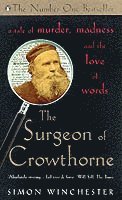
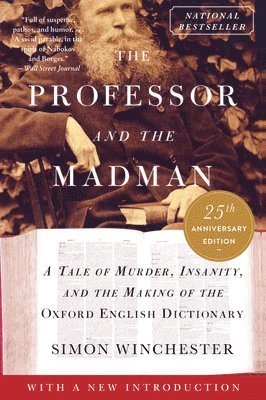
BESTSELLING NARRATIVE NON-FICTIONAn extraordinary tale of madness, genius and obsession, discover the true story of the two remarkable men that led to the making of the Oxford English Dictionary - and literary history!The compilation of the Oxford English Dictionary, begun in 1857, was one of the most ambitious projects ever undertaken. As definitions were collected, the overseeing committee, led by Professor James Murray, discovered that one man, Dr. W. C. Minor, had submitted more than ten thousand of those words.But when the committee insisted on honouring him, a shocking truth came to light: Dr. Minor, a millionaire and American Civil War veteran, was also an inmate at an asylum for the criminally insane . . . charged with murder!_____________________'A weird and wonderful story of an eccentric friendship, and a slice of history' Sunday Times'What a revelation. Beautifully told and awe-inspiring' Daily Mail'Simon Winchester could not have told it better . . . a splendid book' Economist 'Masterful . . . one of those rare stories that combine human drama and historical significance' Independent
Häftad, Engelska, 2025
216 kr
Skickas
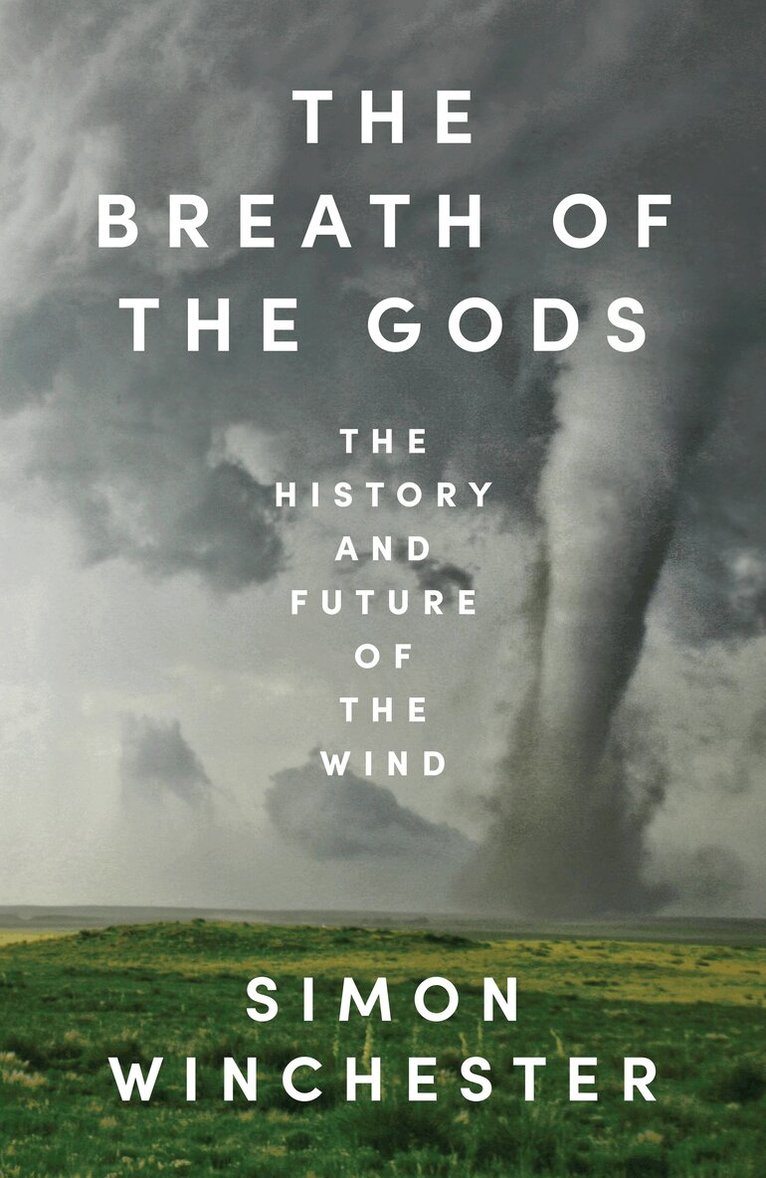
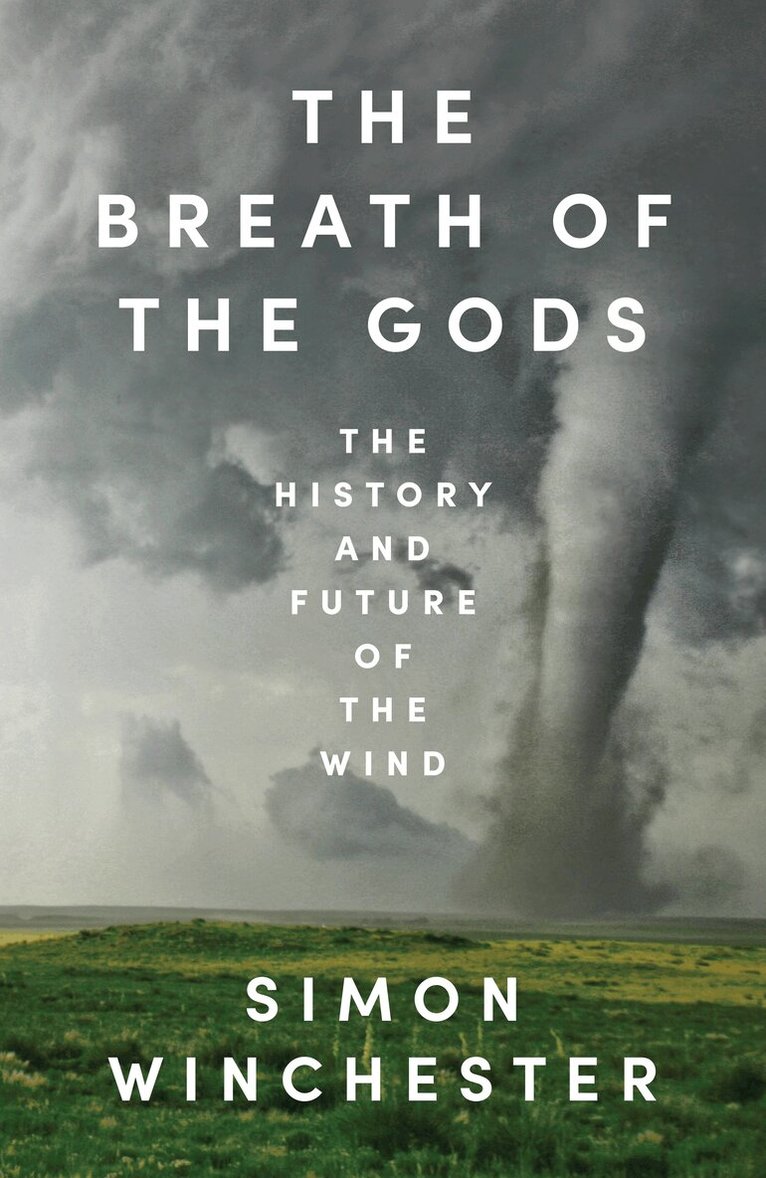
‘Very entertaining’ SUNDAY TIMES‘A thoroughly enjoyable book, brimming over with historical nuggets and contemplations about the future’ NEW YORK TIMES Sunday Times bestselling author Simon Winchester returns with a thought-provoking history of the wind, written in his edifying and entertaining style. What is going on with our atmosphere? The headlines are filled with news of devastating hurricanes, murderous tornadoes, and cataclysmic fires. Gale force advisories are issued on a regular basis by weather services around the world.Atmospheric scientists are warning that winds – the force at the centre of all these dangerous natural events – are expected to steadily increase in the years ahead, strengthening in power, speed, and frequency. While this prediction worried the insurance industry, governmental leaders, scientists, and conscientious citizens, one particular segment of society received it with unbridled enthusiasm. To the energy industry, rising wind strength and speeds as an unalloyed boon for humankind – a vital source of clean and ‘safe’ power.Between these two poles – wind as a malevolent force, and wind as saviour of our planet – lies a world of fascination, history, literature, science, poetry, and engineering which Simon Winchester explores with the curiosity and Vigor that are the hallmarks of his bestselling works. In The Breath of the Gods, he explains how wind plays a part in our everyday lives, from airplane or car travel to the ‘natural disasters’ that are becoming more frequent and regular.The Breath of the Gods is an urgently-needed portrait across time of that unseen force – unseen but not unfelt – that respects no national borders and no vessel or structure in its path. Wind, the movement of the air, is seen by so many as a heavenly creation and generally a thing of essential goodness. But when it flexes its invisible muscles, all should take care and be very afraid.
Häftad, Engelska, 2004
156 kr
Skickas
'Bracingly apocalyptic stuff: atmospheric, chock-full of information and with a constantly escalating sense of pace and tension' Sunday TelegraphSimon Winchester's brilliant chronicle of the destruction of the Indonesian island of Krakatoa in 1883 charts the birth of our modern world. He tells the story of the unrecognized genius who beat Darwin to the discovery of evolution; of Samuel Morse, his code and how rubber allowed the world to talk; of Alfred Wegener, the crack-pot German explorer and father of geology. In breathtaking detail he describes how one island and its inhabitants were blasted out of existence and how colonial society was turned upside-down in a cataclysm whose echoes are still felt to this day.
Häftad, Engelska, 2020
216 kr
Skickas inom 3-6 vardagar
Inbunden, Svenska, 2020
258 kr
Skickas
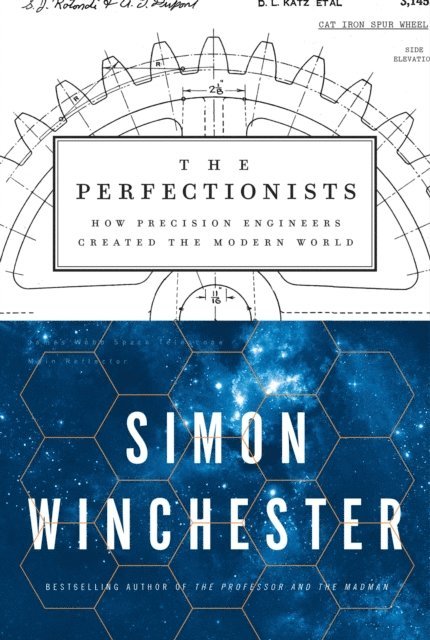
NOMINERAD TILL ROYAL SOCIETY SCIENCE BOOK PRICE 2018»Prosan är elegant och historien om precision är berättad med stor skicklighet. ... Överlag är detta en strålande bok som förtjänas att läsas av alla med intresse för hur teknik och vetenskap danat vårt samhälle. Helhetsbetyg: 5/5.» /Bibliotekstjänst»Boken är intressant, informativ, spännande … Och är man det minsta intresserad av hur de maskiner vi omger oss med fungerar, är den en riktig upplevelse.» /Roma Agrawal i New York TimesOm man talar om precision i tekniska sammanhang tänker många kanske på urverk: små kugghjul som driver andra små kugghjul i ett oöverskådligt gytter. Men det var som bekant länge sedan den mest avancerade tekniken befann sig på kugghjulsnivå. Idag kan det till och med handla om molekyler istället för kuggar.Vetenskapsjournalisten Simon Winchester skildrar i "Perfektionisterna" precisionens historia under de senaste århundradena och fram till vår tids hisnande datorutveckling och nanoteknologiska experiment. Men ökad precision förutsätter ökad mätbarhet, så precisionens historia är också mätbarhetens. Felmarginalerna blir ständigt mindre på båda håll. "Perfektionisterna" visar pedagogiskt vilket intrikat teoretiskt och praktiskt samspel som ligger bakom båda gammal och ny teknologi. Men boken problematiserar samtidigt en teknisk förfining som ibland kan tyckas självgående. Hur smart behöver en smart telefon egentligen vara?Boken handlar också, som titeln antyder, om människorna bakom tekniken. Somliga av dem, som sjuttonhundratalsingenjören och obotlige järnfantasten John Wilkinson, som med sin precisionsborrade cylinder gjorde James Watts ångmaskin praktiskt möjlig, skulle mycket väl kunna kallas kufar, andra gör ett mindre färgstarkt intryck. Men också här har det handlat om ett intrikat samspel mellan olika faktorer – och om ett och annat lyckligt sammanträffande, rätt personer på rätt plats i rätt ögonblick, om man så vill mänsklig precision.Simon Winchester är författare och journalist. Han har skrivit över tjugo böcker och varit verksam i bland andra "The Guardian" och "National Geographic".
Häftad, Engelska, 2023
260 kr
Skickas inom 3-6 vardagar
E-bok
Engelska, 2011128 kr
Läs direkt efter köp
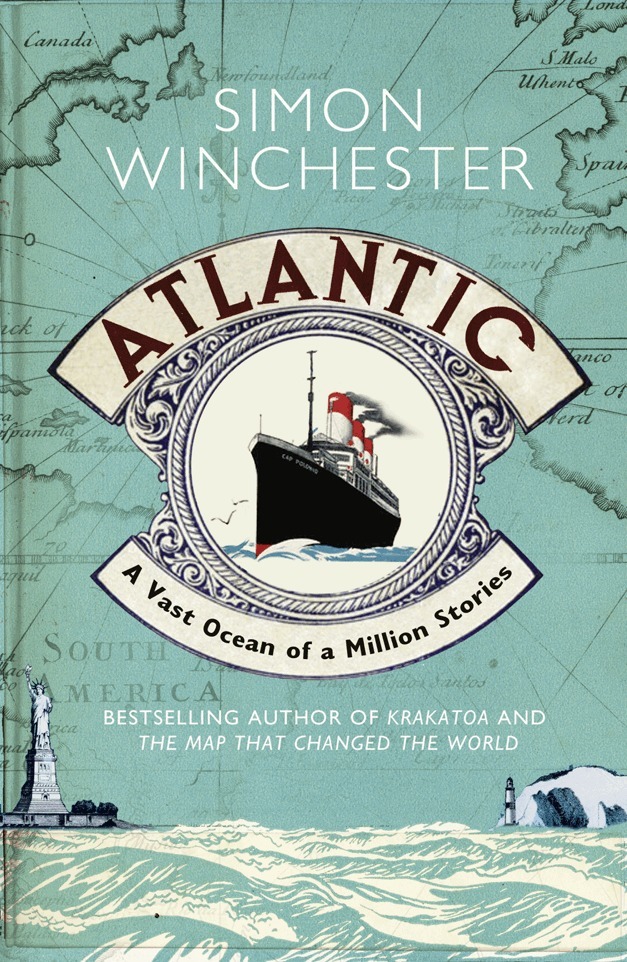
The epic life story of the Atlantic Ocean from the bestselling author, Simon WinchesterIn a narrative tour de force, Simon Winchester dramatises the life story of the Atlantic Ocean, from its birth in the farther recesses of geological time to its eventual extinction millions of years in the future.At the core of the book is the story of mankind's complex relationship with this immense sea, which stretches for 9,000 miles from pole to pole. The Atlantic has profoundly influenced the lives of those who have lived along its shores, from hardscrabble pioneers in windswept locations such as the Aran Islands and Newfoundland, to the inhabitants of the great port cities of Lisbon, Rio, London and New York.`Atlantic’ brings to life key episodes in this compelling human drama - the age of exploration and the subsequent colonisation of the Americas; the flourishing of transatlantic commerce and the rise and fall of the slave trade; extraordinary tales of sea-borne emigration during the nineteenth century; and the great naval battles that have left an indelible imprint on Atlantic history.Travelling by small sailing craft, container ship and general cargo vessel, Simon Winchester will journey around the edges and across the vast expanse of the ocean to report from the places that encapsulate its most fascinating stories. It is an enthralling mixture of history, science and reportage from a master of narrative non-fiction, and the definitive account of this magnificent body of water.
Häftad, Engelska, 2011
187 kr
Skickas
The definitive biography of the world's most important body of water – the Atlantic.One hundred and ninety million years ago, the shifting of two of the world's tectonic plates led to the creation of an immense chasm. This giant gash in the flanks of the planet slowly opened up and eventually evolved into the most important and most travelled ocean in our world.In this utterly original biography, Simon Winchester explores the life of the Atlantic; it's birth, its relationship with mankind, and what lies in store for it once man has left the stage. He charts the development of the first settlements by the Oceanside – the communities of Celts and Vikings and whose lives depended on the sea – and delves into the age of exploration, venturing to forgotten worlds. The building of some of the world's most beautiful port cities – London, Rio de Janeiro, New York, Casablanca – is also examined, along with the creation of settlements and colonies in and around the sea.Completely unique and highly readable, Atlantic takes its reader on a wonderful journey through time, along the waves of our planet's most significant ocean.
E-bok
Engelska, 2013109 kr
Läs direkt efter köp
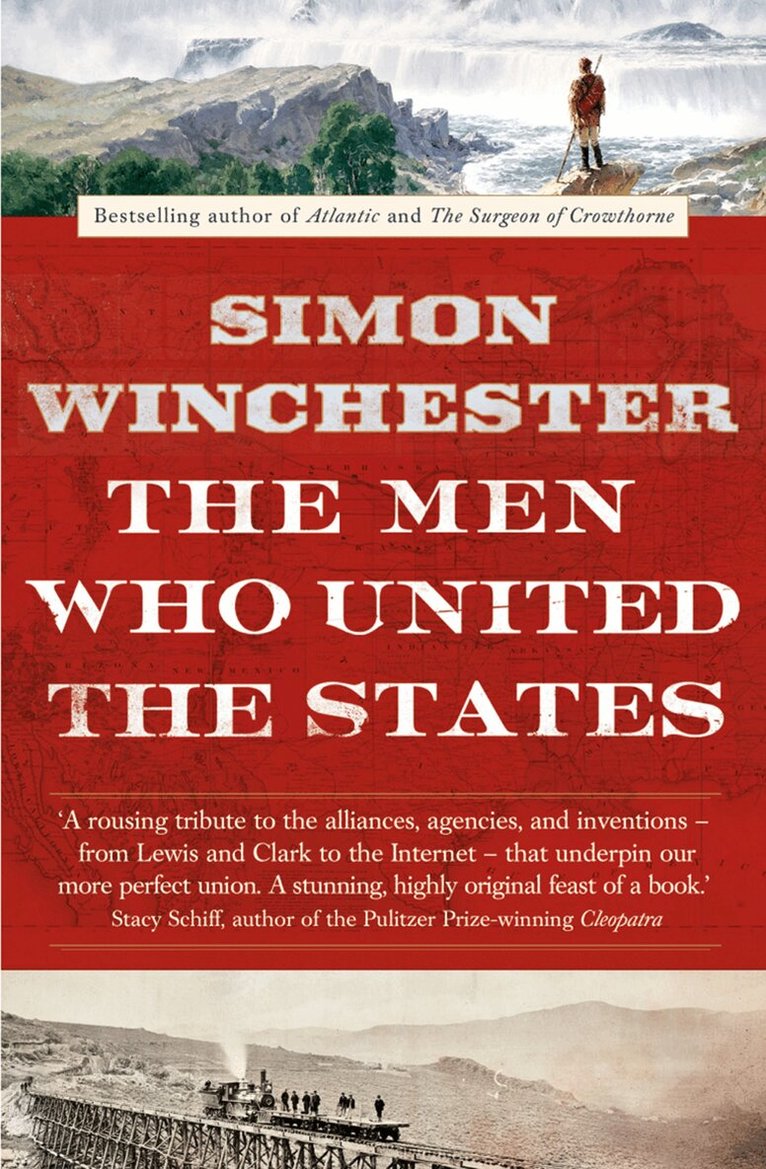
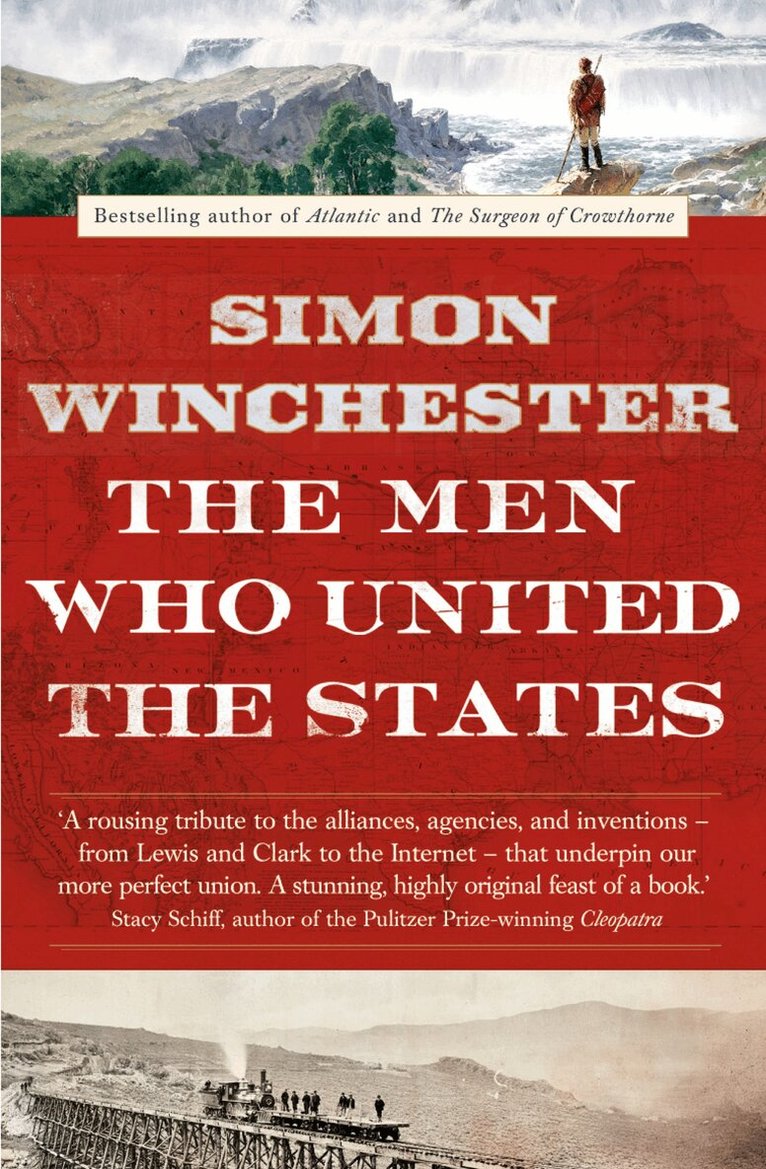
From bestselling author Simon Winchester, the extraordinary story of how America was united into a single nation.For more than two centuries, E pluribus unum – out of many, one – has been featured on America’s official government seals and stamped on its currency. But how did America become `one nation, indivisible’? In this monumental history, Simon Winchester addresses this question, introducing the fearless trailblazers whose achievements forged and unified America.Winchester follows in the footsteps of America’s most essential explorers, thinkers, and innovators. He treks vast swaths of territory, introducing these fascinating pioneers – some, such as Washington and Jefferson, Lewis and Clark being familiar, some forgotten, some hardly known – who played a pivotal role in creating today’s United States. Throughout, he ponders whether the historic work of uniting the States has succeeded, and to what degree.`The Men Who United the States’ is a fresh, lively, and erudite look at the way in which the most powerful nation on earth came together, from one of our most entertaining, probing, and insightful observers.
Häftad, Engelska, 2014
160 kr
Skickas
From bestselling author Simon Winchester, the extraordinary story of how America was united into a single nation.For more than two centuries, E pluribus unum – out of many, one – has been featured on America’s official government seals and stamped on its currency. But how did America become ‘one nation, indivisible’? In this monumental history, Simon Winchester addresses this question, introducing the fearless trailblazers whose achievements forged and unified America.Winchester follows in the footsteps of America’s most essential explorers, thinkers, and innovators. He treks vast swaths of territory, introducing these fascinating pioneers – some, such as Washington and Jefferson, Lewis and Clark being familiar, some forgotten, some hardly known – who played a pivotal role in creating today’s United States. Throughout, he ponders whether the historic work of uniting the States has succeeded, and to what degree.‘The Men Who United the States’ is a fresh, lively, and erudite look at the way in which the most powerful nation on earth came together, from one of our most entertaining, probing, and insightful observers.
Häftad, Engelska, 2016
156 kr
Skickas
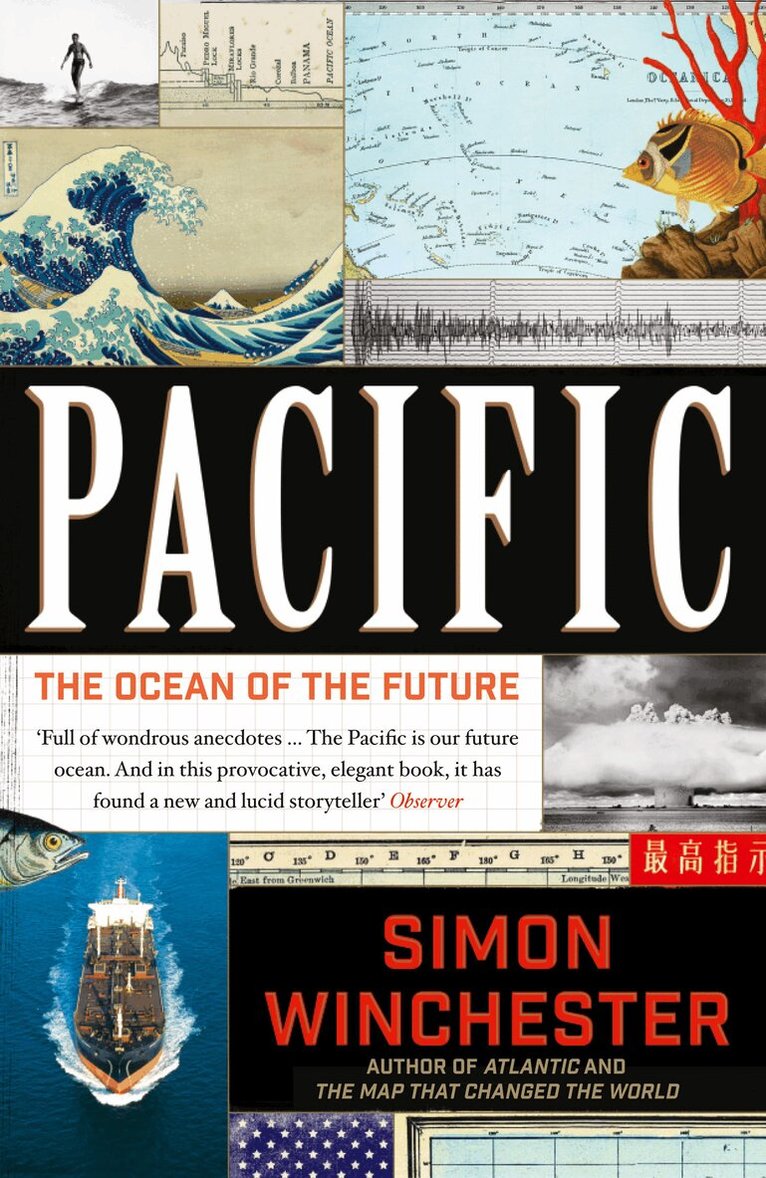
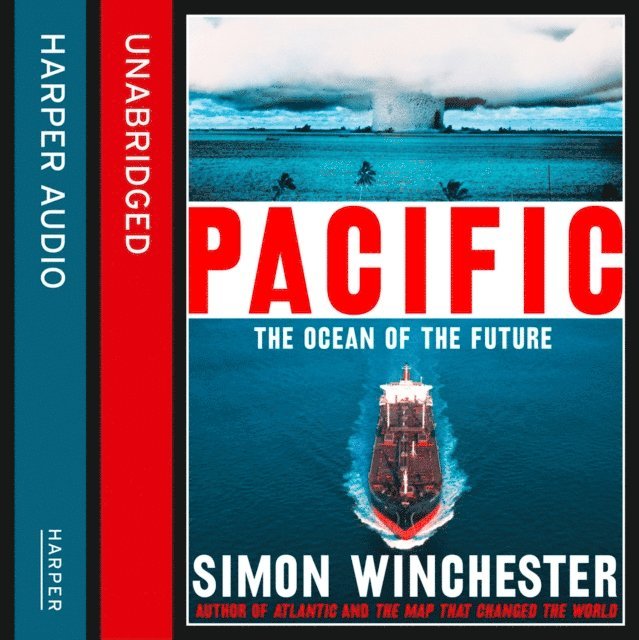
Travelling the circumference of the truly gigantic Pacific, Simon Winchester tells the story of the world’s largest body of water, and – in matters economic, political and military – the ocean of the future.The Pacific is a world of tsunamis and Magellan, of the Bounty mutiny and the Boeing Company. It is the stuff of the towering Captain Cook and his wide-ranging network of exploring voyages, Robert Louis Stevenson and Admiral Halsey. It is the place of Paul Gauguin and the explosion of the largest-ever American atomic bomb, on Bikini atoll, in 1951. It has an astonishing recent past, an uncertain present and a hugely important future.The ocean and its peoples are the new lifeblood, fizz and thrill of America – which draws so many of its minds and so much of its manners from the sea – while the inexorable rise of the ancient center of the world, China, is a fixating fascination. The presence of rogue states – North Korea most notoriously today – suggest that the focus of the responsible world is shifting away from the conventional post-war obsessions with Europe and the Middle East, and towards a new set of urgencies. Navigating the newly evolving patterns of commerce and trade, the world’s most violent weather and the fascinating histories, problems and potentials of the many Pacific states, Simon Winchester’s thrilling journey is a grand depiction of the future ocean.
E-bok
Engelska, 2015114 kr
Läs direkt efter köp
Travelling the circumference of the truly gigantic Pacific, Simon Winchester tells the story of the world’s largest body of water, and – in matters economic, political and military – the ocean of the future.The Pacific is a world of tsunamis and Magellan, of the Bounty mutiny and the Boeing Company. It is the stuff of the towering Captain Cook and his wide-ranging network of exploring voyages, Robert Louis Stevenson and Admiral Halsey. It is the place of Paul Gauguin and the explosion of the largest-ever American atomic bomb, on Bikini atoll, in 1951. It has an astonishing recent past, an uncertain present and a hugely important future.The ocean and its peoples are the new lifeblood, fizz and thrill of America – which draws so many of its minds and so much of its manners from the sea – while the inexorable rise of the ancient center of the world, China, is a fixating fascination. The presence of rogue states – North Korea most notoriously today – suggest that the focus of the responsible world is shifting away from the conventional post-war obsessions with Europe and the Middle East, and towards a new set of urgencies. Navigating the newly evolving patterns of commerce and trade, the world’s most violent weather and the fascinating histories, problems and potentials of the many Pacific states, Simon Winchester’s thrilling journey is a grand depiction of the future ocean.
Häftad, Engelska, 2019
163 kr
Skickas
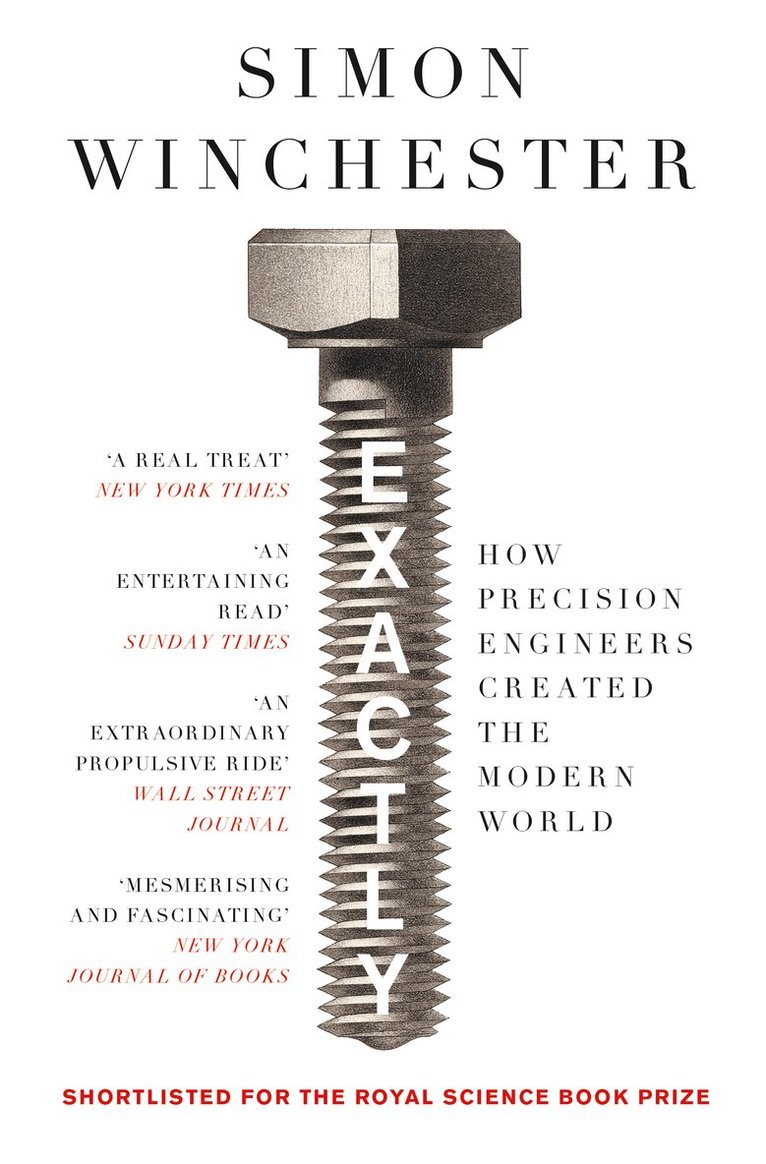
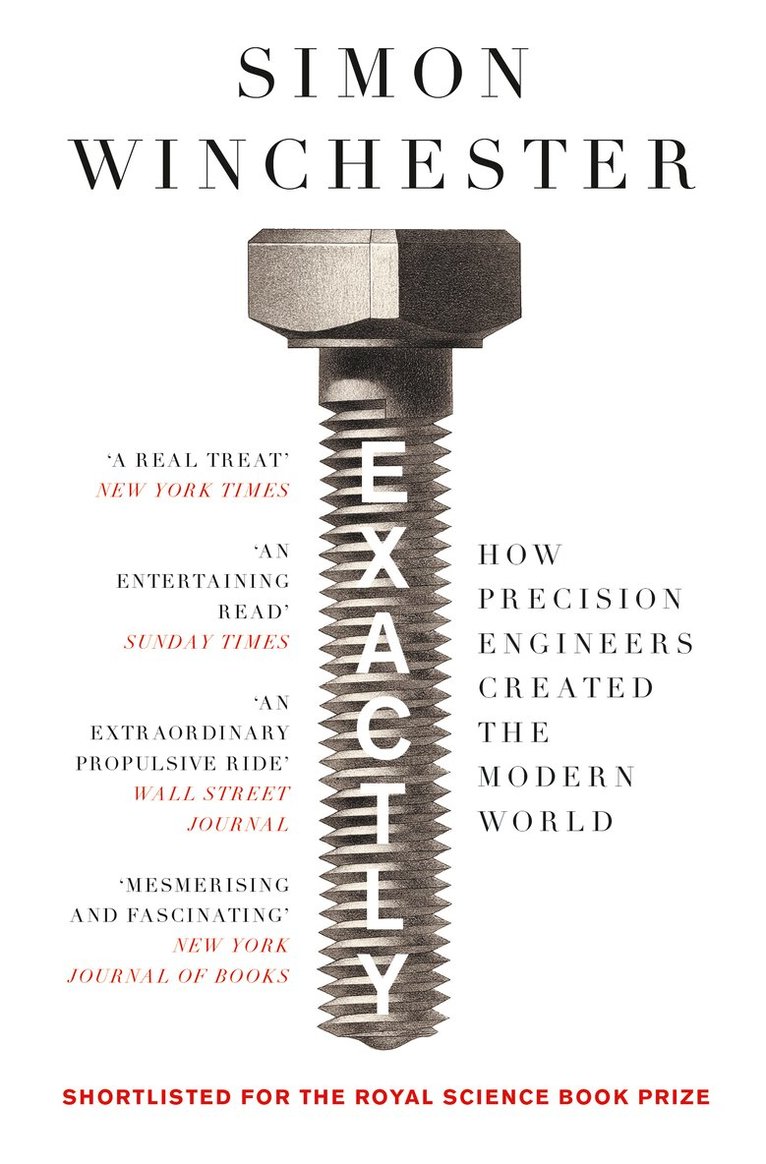
SHORTLISTED FOR THE ROYAL SOCIETY SCIENCE BOOK PRIZE 2018 Bestselling author Simon Winchester writes a magnificent history of the pioneering engineers who developed precision machinery to allow us to see as far as the moon and as close as the Higgs boson. Precision is the key to everything. It is an integral, unchallenged and essential component of our modern social, mercantile, scientific, mechanical and intellectual landscapes. The items we value in our daily lives – a camera, phone, computer, bicycle, car, a dishwasher perhaps – all sport components that fit together with precision and operate with near perfection. We also assume that the more precise a device the better it is. And yet whilst we live lives peppered and larded with precision, we are not, when we come to think about it, entirely sure what precision is, or what it means. How and when did it begin to build the modern world?Simon Winchester seeks to answer these questions through stories of precision’s pioneers. Exactly takes us back to the origins of the Industrial Age, to Britain where he introduces the scientific minds that helped usher in modern production: John ‘Iron-Mad’ Wilkinson, Henry Maudslay, Joseph Bramah, Jesse Ramsden, and Joseph Whitworth. Thomas Jefferson exported their discoveries to the United States as manufacturing developed in the early twentieth century, with Britain’s Henry Royce developing the Rolls Royce and Henry Ford mass producing cars, Hattori’s Seiko and Leica lenses, to today’s cutting-edge developments from Europe, Asia and North America.As he introduces the minds and methods that have changed the modern world, Winchester explores fundamental questions. Why is precision important? What are the different tools we use to measure it? Who has invented and perfected it? Has the pursuit of the ultra-precise in so many facets of human life blinded us to other things of equal value, such as an appreciation for the age-old traditions of craftsmanship, art, and high culture? Are we missing something that reflects the world as it is, rather than the world as we think we would wish it to be? And can the precise and the natural co-exist in society?
E-bok
Engelska, 201896 kr
Läs direkt efter köp
SHORTLISTED FOR THE ROYAL SOCIETY SCIENCE BOOK PRIZE 2018 Bestselling author Simon Winchester writes a magnificent history of the pioneering engineers who developed precision machinery to allow us to see as far as the moon and as close as the Higgs boson. Precision is the key to everything. It is an integral, unchallenged and essential component of our modern social, mercantile, scientific, mechanical and intellectual landscapes. The items we value in our daily lives – a camera, phone, computer, bicycle, car, a dishwasher perhaps – all sport components that fit together with precision and operate with near perfection. We also assume that the more precise a device the better it is. And yet whilst we live lives peppered and larded with precision, we are not, when we come to think about it, entirely sure what precision is, or what it means. How and when did it begin to build the modern world?Simon Winchester seeks to answer these questions through stories of precision’s pioneers. Exactly takes us back to the origins of the Industrial Age, to Britain where he introduces the scientific minds that helped usher in modern production: John ‘Iron-Mad’ Wilkinson, Henry Maudslay, Joseph Bramah, Jesse Ramsden, and Joseph Whitworth. Thomas Jefferson exported their discoveries to the United States as manufacturing developed in the early twentieth century, with Britain’s Henry Royce developing the Rolls Royce and Henry Ford mass producing cars, Hattori’s Seiko and Leica lenses, to today’s cutting-edge developments from Europe, Asia and North America.As he introduces the minds and methods that have changed the modern world, Winchester explores fundamental questions. Why is precision important? What are the different tools we use to measure it? Who has invented and perfected it? Has the pursuit of the ultra-precise in so many facets of human life blinded us to other things of equal value, such as an appreciation for the age-old traditions of craftsmanship, art, and high culture? Are we missing something that reflects the world as it is, rather than the world as we think we would wish it to be? And can the precise and the natural co-exist in society?
Inbunden, Engelska, 2021
293 kr
Skickas
E-bok
Engelska, 2021127 kr
Läs direkt efter köp
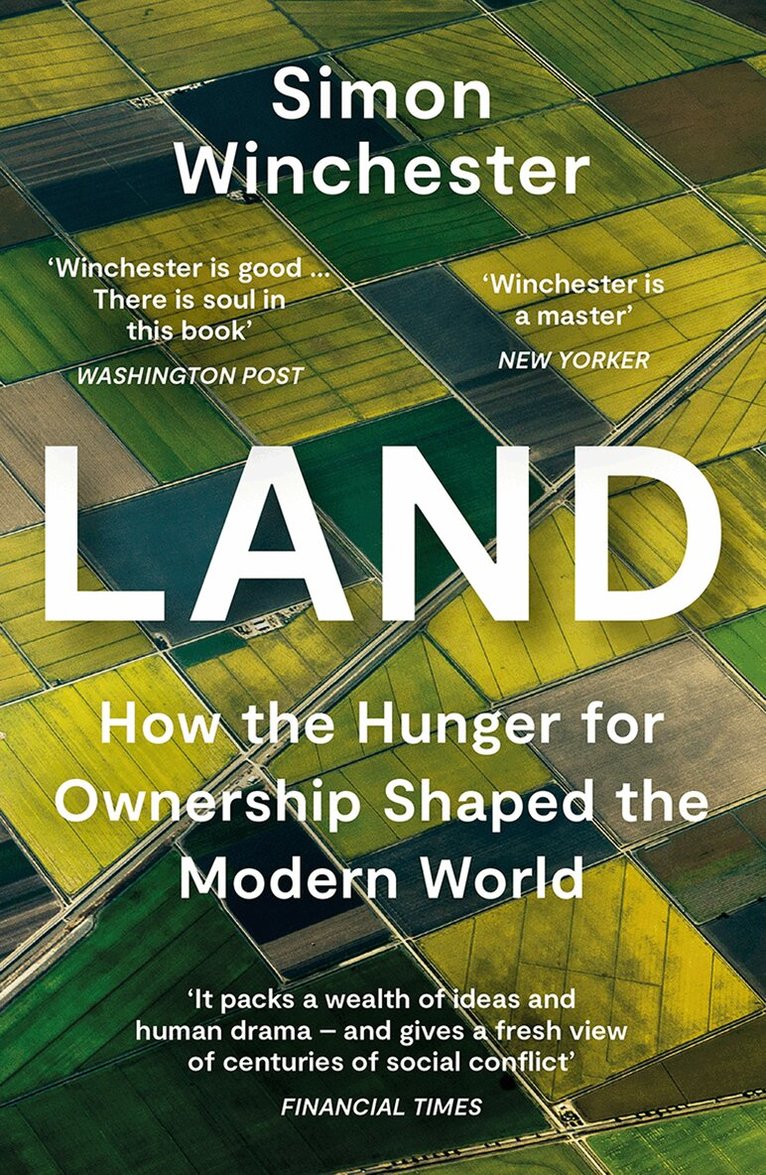
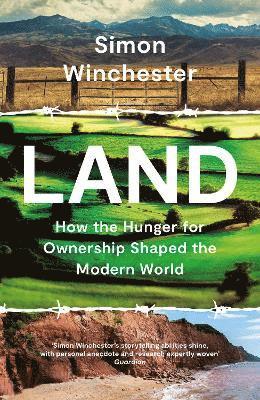
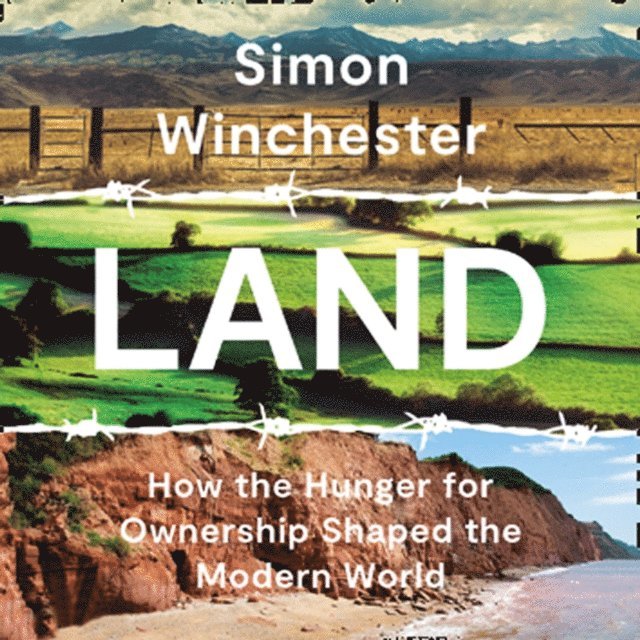
From the bestselling author Simon Winchester, a human history of land around the world: who mapped it, owned it, stole it, cared for it, fought for it and gave it back. In 1889, thousands of hopeful people raced southward from the Kansas state line and westward from the Arkansas boundary to stake claims on the thousands of acres of unclaimed pastures and meadows. Across the twentieth century, water was dammed and drained in Holland so that a new province, Flevoland, rose up, unchartered and requiring new thinking. In 1850, California legislated the theft of land from Native Americans. An apology came in 2019 from the governor, but what of the call for reparations or return? What of government confiscation of land in India, or questions of fairness when it comes to New Zealand’s Maori population and the legacy of settlers?The ownership of land has always been complicated, opaque, and more than a little anarchic when viewed from the outside. In this book, Simon Winchester explores the the stewardship of land, the ways it is delineated and changes hands, the great disputes, and the questions of restoration – particularly in the light of climate change and colonialist reparation.A global study, this is an exquisite exploration of what the ownership of land might really mean – not in dry-as-dust legal terms, but for the people who live on it.
Häftad, Engelska, 2022
167 kr
Skickas inom 5-8 vardagar
From the bestselling author Simon Winchester, a human history of land around the world: who mapped it, owned it, stole it, cared for it, fought for it and gave it back. In 1889, thousands of hopeful people raced southward from the Kansas state line and westward from the Arkansas boundary to stake claims on the thousands of acres of unclaimed pastures and meadows. Across the twentieth century, water was dammed and drained in Holland so that a new province, Flevoland, rose up, unchartered and requiring new thinking. In 1850, California legislated the theft of land from Native Americans. An apology came in 2019 from the governor, but what of the call for reparations or return? What of government confiscation of land in India, or questions of fairness when it comes to New Zealand’s Maori population and the legacy of settlers?The ownership of land has always been complicated, opaque, and more than a little anarchic when viewed from the outside. In this book, Simon Winchester explores the the stewardship of land, the ways it is delineated and changes hands, the great disputes, and the questions of restoration – particularly in the light of climate change and colonialist reparation.A global study, this is an exquisite exploration of what the ownership of land might really mean – not in dry-as-dust legal terms, but for the people who live on it.
Inbunden, Engelska, 2023
284 kr
Skickas
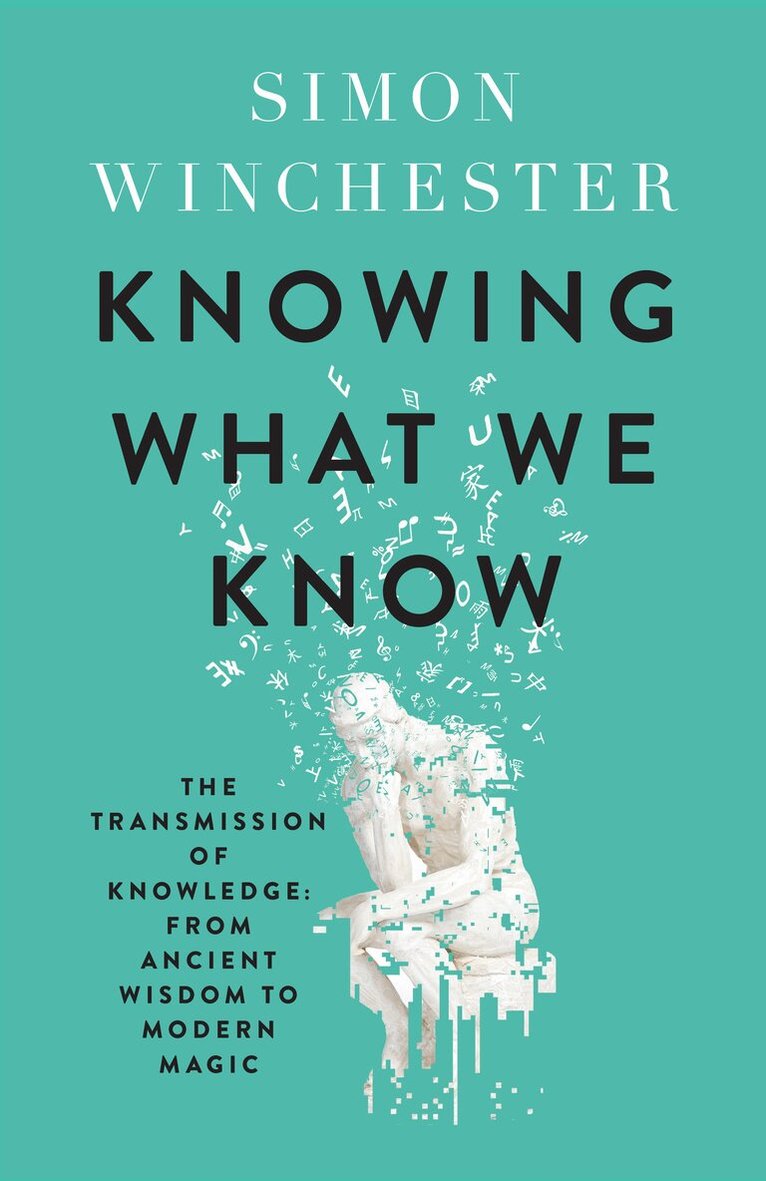
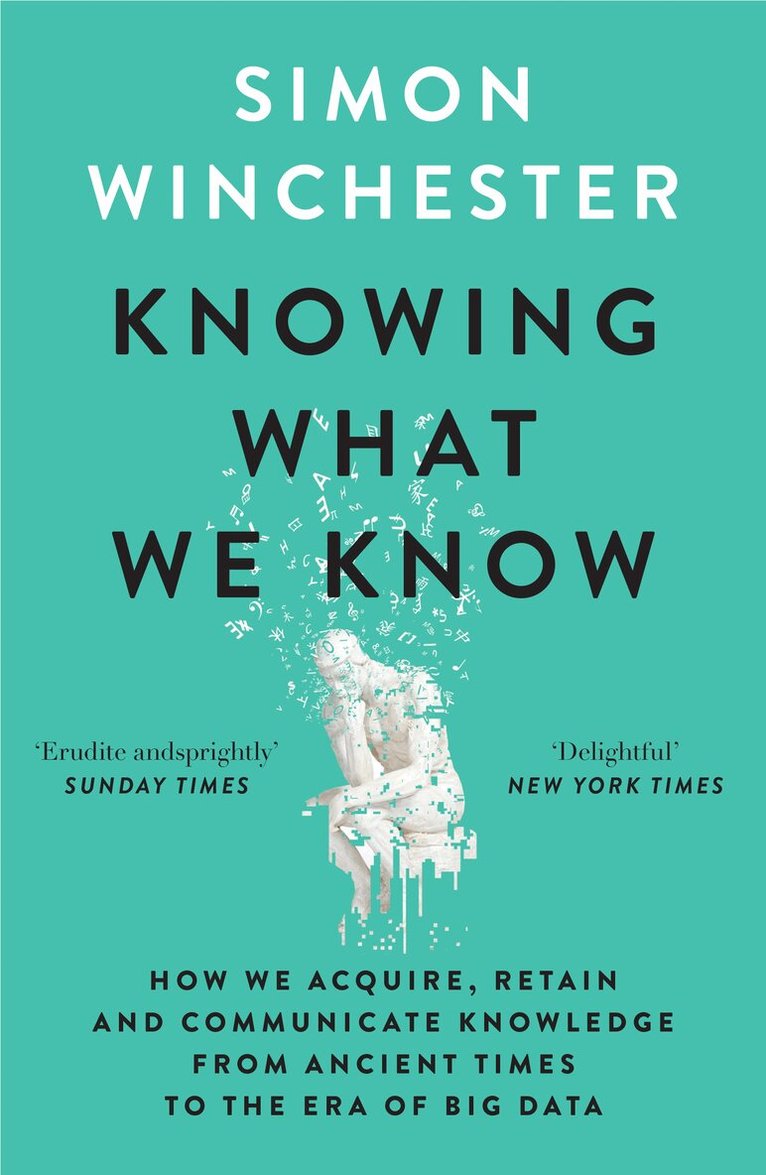
‘A delightful compendium of the kind of facts you immediately want to share with anyone you encounter’ New York Times ‘An ebullient, irrepressible spirit invests this book. It is erudite and sprightly’Sunday Times From the creation of the first encyclopedia to Wikipedia, from ancient museums to modern kindergarten classes—here is award-winning writer Simon Winchester’s brilliant and all-encompassing look at how humans acquire, retain, and pass on information and data, and how technology continues to change our lives and our minds.With the advent of the internet, any topic we want to know about is instantly available with the touch of a smartphone button. With so much knowledge at our fingertips, what is there left for our brains to do? At a time when we seem to be stripping all value from the idea of knowing things – no need for maths, no need for map reading, no need for memorisation – are we risking our ability to think? As we empty our minds, will we one day be incapable of thoughtfulness?Addressing these questions, Simon Winchester explores how humans have attained, stored and disseminated knowledge. Examining such disciplines as education, journalism, encyclopedia creation, museum curation, photography and broadcasting, he looks at a whole range of knowledge diffusion – from the cuneiform writings of Babylon to the machine-made genius of artificial intelligence, by way of Gutenberg, Google and Wikipedia to the huge Victorian assemblage of the Mundaneum, the collection of everything ever known, currently stored in a damp basement in northern Belgium.Studded with strange and fascinating details, Knowing What We Know is a deep dive into learning and the human mind. Throughout this fascinating tour, Winchester forces us to ponder what rational humans are becoming. What good is all this knowledge if it leads to lack of thought? What is information without wisdom? Does René Descartes’ ‘Cogito, ergo sum’—'I think, therefore I am’, the foundation for human knowledge widely accepted since the Enlightenment—still hold?And what will the world be like if no one in it is wise?
E-bok
Engelska, 202381 kr
Läs direkt efter köp
‘A delightful compendium of the kind of facts you immediately want to share with anyone you encounter’ New York Times ‘An ebullient, irrepressible spirit invests this book. It is erudite and sprightly’Sunday Times From the creation of the first encyclopedia to Wikipedia, from ancient museums to modern kindergarten classes—here is award-winning writer Simon Winchester’s brilliant and all-encompassing look at how humans acquire, retain, and pass on information and data, and how technology continues to change our lives and our minds.With the advent of the internet, any topic we want to know about is instantly available with the touch of a smartphone button. With so much knowledge at our fingertips, what is there left for our brains to do? At a time when we seem to be stripping all value from the idea of knowing things – no need for maths, no need for map reading, no need for memorisation – are we risking our ability to think? As we empty our minds, will we one day be incapable of thoughtfulness?Addressing these questions, Simon Winchester explores how humans have attained, stored and disseminated knowledge. Examining such disciplines as education, journalism, encyclopedia creation, museum curation, photography and broadcasting, he looks at a whole range of knowledge diffusion – from the cuneiform writings of Babylon to the machine-made genius of artificial intelligence, by way of Gutenberg, Google and Wikipedia to the huge Victorian assemblage of the Mundaneum, the collection of everything ever known, currently stored in a damp basement in northern Belgium.Studded with strange and fascinating details, Knowing What We Know is a deep dive into learning and the human mind. Throughout this fascinating tour, Winchester forces us to ponder what rational humans are becoming. What good is all this knowledge if it leads to lack of thought? What is information without wisdom? Does René Descartes’ ‘Cogito, ergo sum’—'I think, therefore I am’, the foundation for human knowledge widely accepted since the Enlightenment—still hold?And what will the world be like if no one in it is wise?
Häftad, Engelska, 2024
125 kr
Skickas
‘A delightful compendium of the kind of facts you immediately want to share with anyone you encounter’ New York Times ‘An ebullient, irrepressible spirit invests this book. It is erudite and sprightly’Sunday Times From the creation of the first encyclopedia to Wikipedia, from ancient museums to modern kindergarten classes—here is award-winning writer Simon Winchester’s brilliant and all-encompassing look at how humans acquire, retain, and pass on information and data, and how technology continues to change our lives and our minds.With the advent of the internet, any topic we want to know about is instantly available with the touch of a smartphone button. With so much knowledge at our fingertips, what is there left for our brains to do? At a time when we seem to be stripping all value from the idea of knowing things – no need for maths, no need for map reading, no need for memorisation – are we risking our ability to think? As we empty our minds, will we one day be incapable of thoughtfulness?Addressing these questions, Simon Winchester explores how humans have attained, stored and disseminated knowledge. Examining such disciplines as education, journalism, encyclopedia creation, museum curation, photography and broadcasting, he looks at a whole range of knowledge diffusion – from the cuneiform writings of Babylon to the machine-made genius of artificial intelligence, by way of Gutenberg, Google and Wikipedia to the huge Victorian assemblage of the Mundaneum, the collection of everything ever known, currently stored in a damp basement in northern Belgium.Studded with strange and fascinating details, Knowing What We Know is a deep dive into learning and the human mind. Throughout this fascinating tour, Winchester forces us to ponder what rational humans are becoming. What good is all this knowledge if it leads to lack of thought? What is information without wisdom? Does René Descartes’ ‘Cogito, ergo sum’—'I think, therefore I am’, the foundation for human knowledge widely accepted since the Enlightenment—still hold?And what will the world be like if no one in it is wise?
Inbunden, Engelska, 2025
293 kr
Skickas
‘Very entertaining’ SUNDAY TIMES‘A thoroughly enjoyable book, brimming over with historical nuggets and contemplations about the future’ NEW YORK TIMES Sunday Times bestselling author Simon Winchester returns with a thought-provoking history of the wind, written in his edifying and entertaining style. What is going on with our atmosphere? The headlines are filled with news of devastating hurricanes, murderous tornadoes, and cataclysmic fires. Gale force advisories are issued on a regular basis by weather services around the world.Atmospheric scientists are warning that winds – the force at the centre of all these dangerous natural events – are expected to steadily increase in the years ahead, strengthening in power, speed, and frequency. While this prediction worried the insurance industry, governmental leaders, scientists, and conscientious citizens, one particular segment of society received it with unbridled enthusiasm. To the energy industry, rising wind strength and speeds as an unalloyed boon for humankind – a vital source of clean and ‘safe’ power.Between these two poles – wind as a malevolent force, and wind as saviour of our planet – lies a world of fascination, history, literature, science, poetry, and engineering which Simon Winchester explores with the curiosity and Vigor that are the hallmarks of his bestselling works. In The Breath of the Gods, he explains how wind plays a part in our everyday lives, from airplane or car travel to the ‘natural disasters’ that are becoming more frequent and regular.The Breath of the Gods is an urgently-needed portrait across time of that unseen force – unseen but not unfelt – that respects no national borders and no vessel or structure in its path. Wind, the movement of the air, is seen by so many as a heavenly creation and generally a thing of essential goodness. But when it flexes its invisible muscles, all should take care and be very afraid.
E-bok
Engelska, 2025184 kr
Läs direkt efter köp
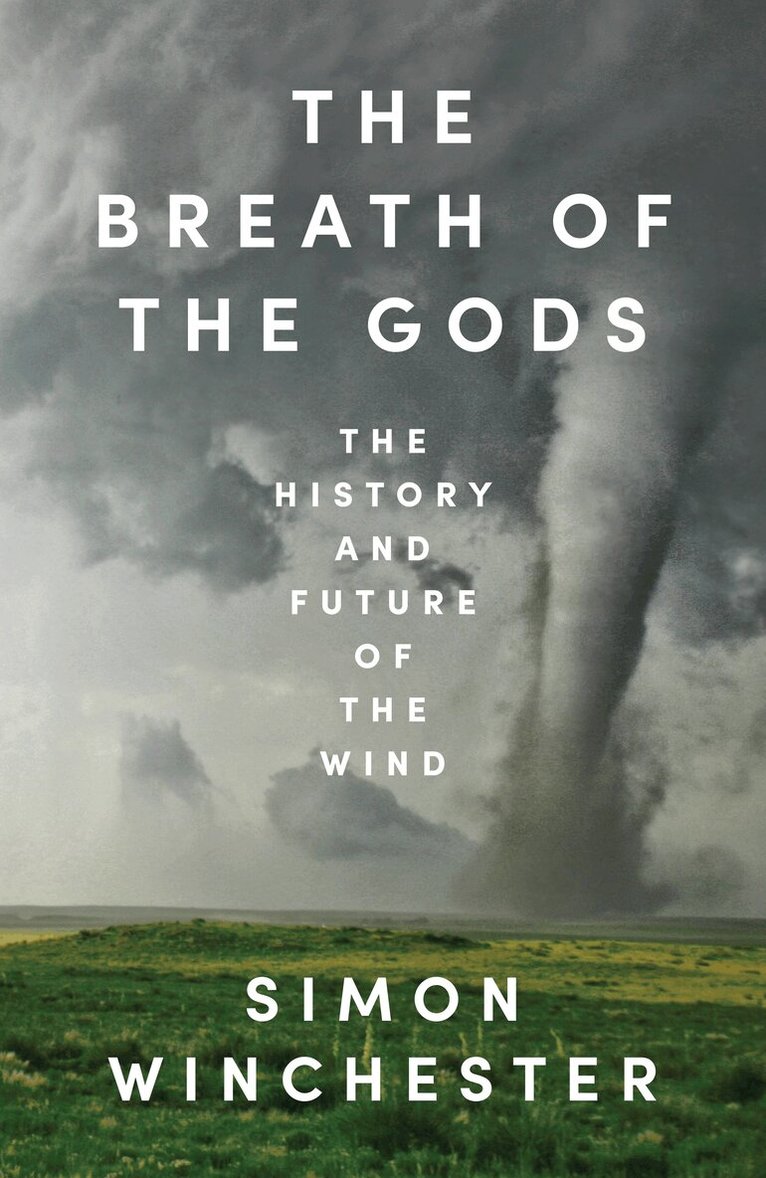
‘Very entertaining’ SUNDAY TIMES‘A thoroughly enjoyable book, brimming over with historical nuggets and contemplations about the future’ NEW YORK TIMES Sunday Times bestselling author Simon Winchester returns with a thought-provoking history of the wind, written in his edifying and entertaining style. What is going on with our atmosphere? The headlines are filled with news of devastating hurricanes, murderous tornadoes, and cataclysmic fires. Gale force advisories are issued on a regular basis by weather services around the world.Atmospheric scientists are warning that winds – the force at the centre of all these dangerous natural events – are expected to steadily increase in the years ahead, strengthening in power, speed, and frequency. While this prediction worried the insurance industry, governmental leaders, scientists, and conscientious citizens, one particular segment of society received it with unbridled enthusiasm. To the energy industry, rising wind strength and speeds as an unalloyed boon for humankind – a vital source of clean and ‘safe’ power.Between these two poles – wind as a malevolent force, and wind as saviour of our planet – lies a world of fascination, history, literature, science, poetry, and engineering which Simon Winchester explores with the curiosity and Vigor that are the hallmarks of his bestselling works. In The Breath of the Gods, he explains how wind plays a part in our everyday lives, from airplane or car travel to the ‘natural disasters’ that are becoming more frequent and regular.The Breath of the Gods is an urgently-needed portrait across time of that unseen force – unseen but not unfelt – that respects no national borders and no vessel or structure in its path. Wind, the movement of the air, is seen by so many as a heavenly creation and generally a thing of essential goodness. But when it flexes its invisible muscles, all should take care and be very afraid.
Häftad, Engelska, 2026
131 kr
Kommande
‘Very entertaining’ SUNDAY TIMES‘A thoroughly enjoyable book, brimming over with historical nuggets and contemplations about the future’ NEW YORK TIMES Sunday Times bestselling author Simon Winchester returns with a thought-provoking history of the wind, written in his edifying and entertaining style. What is going on with our atmosphere? The headlines are filled with news of devastating hurricanes, murderous tornadoes, and cataclysmic fires. Gale force advisories are issued on a regular basis by weather services around the world.Atmospheric scientists are warning that winds – the force at the centre of all these dangerous natural events – are expected to steadily increase in the years ahead, strengthening in power, speed, and frequency. While this prediction worried the insurance industry, governmental leaders, scientists, and conscientious citizens, one particular segment of society received it with unbridled enthusiasm. To the energy industry, rising wind strength and speeds as an unalloyed boon for humankind – a vital source of clean and ‘safe’ power.Between these two poles – wind as a malevolent force, and wind as saviour of our planet – lies a world of fascination, history, literature, science, poetry, and engineering which Simon Winchester explores with the curiosity and Vigor that are the hallmarks of his bestselling works. In The Breath of the Gods, he explains how wind plays a part in our everyday lives, from airplane or car travel to the ‘natural disasters’ that are becoming more frequent and regular.The Breath of the Gods is an urgently-needed portrait across time of that unseen force – unseen but not unfelt – that respects no national borders and no vessel or structure in its path. Wind, the movement of the air, is seen by so many as a heavenly creation and generally a thing of essential goodness. But when it flexes its invisible muscles, all should take care and be very afraid.
Häftad, Engelska, 2006
279 kr
Skickas inom 3-6 vardagar
Häftad, Engelska, 2024
280 kr
Skickas inom 3-6 vardagar
Häftad, Engelska, 2005
264 kr
Skickas inom 3-6 vardagar
Häftad, Engelska, 2005
270 kr
Skickas inom 3-6 vardagar
Häftad, Engelska, 2009
269 kr
Skickas inom 3-6 vardagar
Häftad, Engelska, 2000
250 kr
Skickas inom 3-6 vardagar
Häftad, Engelska, 2011
248 kr
Skickas inom 3-6 vardagar