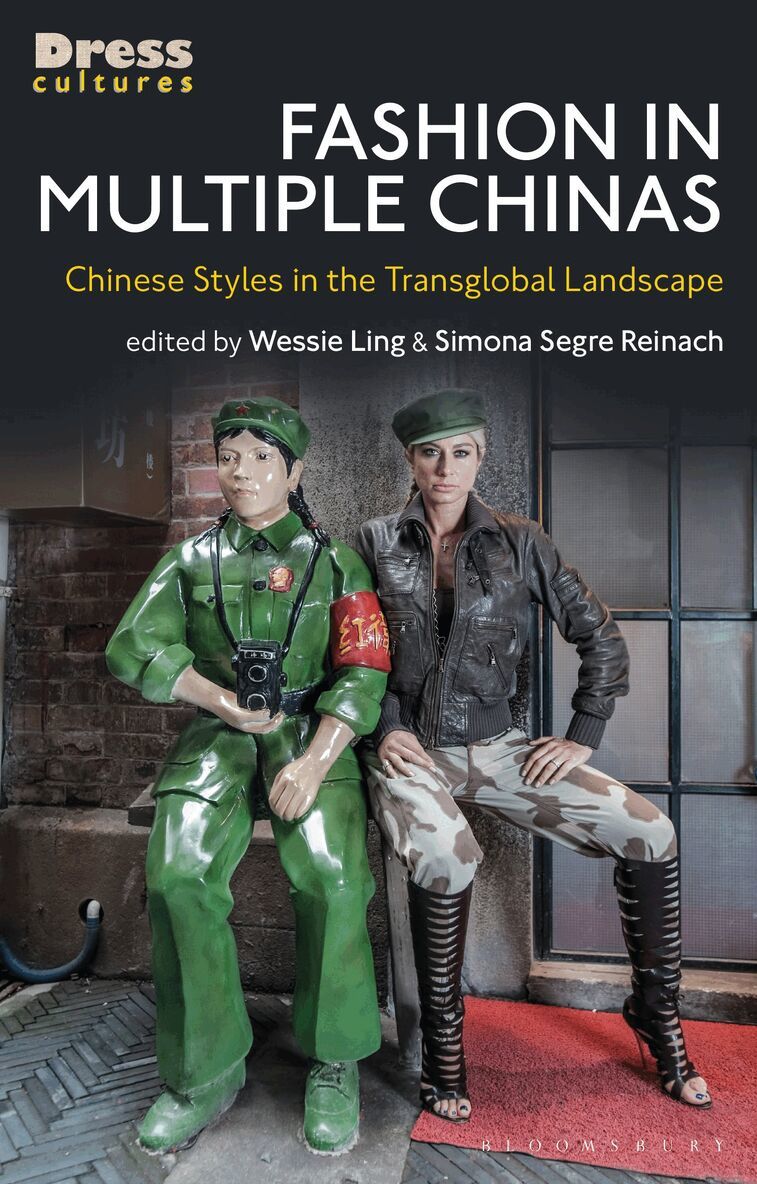
The transformation of China from a major site for clothing manufacture to an intensely fashion consuming society has been widely documented. Less has been written about the making of Chinese fashion. In Fashion in Multiple Chinas, expert authors explore how a multitude of Chinese fashions operate across the widespread, fragmented and diffused Chinese diaspora. They challenge the idea of Chinese nationalism as 'one nation', as well as of China as a single reality, revealing the realities of Chinese fashion as diverse and comprising multiple practices. They also demonstrate how the making of Chinese fashion is composed of numerous layers, often involving a web of global entanglements between manufacturing and circulation, retailing and branding. Chapters cover the mechanics of the PRC fashion industry, the creative economy of Chinese fashion, its retail and branding, and the cultural identity of Chinese fashion from the diasporas comprising the transglobal landscape of fashion production.
The fashion industry has long exploited animals for their materials, whether fur, leather, silk, wool or feathers – so how can we find other ways of working with, or without, animals in the production of clothing? This volume in the Fashion in Action series of short books, which champion change on global issues in fashion, introduces and challenges our problematic reliance on animal products in fashion, calling for more caring practices that work towards post-animal fashion.Simona Segre-Reinach argues that fashion, with its far-reaching influence and power to communicate, can lead other industries toward genuinely inclusive sustainability. Divided into three sections, the book first looks at the fashion system’s entrenched use of animal-based materials in garment production. Section two explores pathways to kinder, next-generation materials that break away from animal exploitation. The final section advocates for a complete reimagining of fashion through a lens of empathy and respect for all beings.Featuring practices and ideas from around the globe and with views from philosophers, animal rights activists, scientists and artists intersecting with designers, stylists, companies and consumers, this book inspires a shift towards a sustainable future that respects life in all its forms.
The fashion industry has long exploited animals for their materials, whether fur, leather, silk, wool or feathers so how can we find other ways of working with, or without, animals in the production of clothing? This volume in the Fashion in Action series of short books, which champion change on global issues in fashion, introduces and challenges our problematic reliance on animal products in fashion, calling for more caring practices that work towards post-animal fashion.Simona Segre-Reinach argues that fashion, with its far-reaching influence and power to communicate, can lead other industries toward genuinely inclusive sustainability. Divided into three sections, the book first looks at the fashion system's entrenched use of animal-based materials in garment production. Section two explores pathways to kinder, next-generation materials that break away from animal exploitation. The final section advocates for a complete reimagining of fashion through a lens of empathy and respect for all beings.Featuring practices and ideas from around the globe and with views from philosophers, animal rights activists, scientists and artists intersecting with designers, stylists, companies and consumers, this book inspires a shift towards a sustainable future that respects life in all its forms.
Much has been written about the transformation of China from being a clothing-manufacturing site to a fast-rate fashion consuming society. Less, however, has been written on the process of making Chinese fashion. The expert contributors to Fashion in Multiple Chinas explore how the many Chinese fashions operate across the widespread, fragmented and diffused, Chinese diaspora. They confront the idea of Chinese nationalism as `one nation', as well as of China as a single reality, in revealing the realities of Chinese fashion as diverse and comprising multiple practices. They also demonstrate how the making of Chinese fashion is composed of numerous layers, often involving a web of global entanglements between manufacturing and circulation, retailing and branding. They cover the mechanics of the PRC fashion industry, the creative economy of Chinese fashion, its retail and branding, and the cultural identity of Chinese fashion from the diasporas comprising the transglobal landscape of fashion production.
At the end of the last century, the so-called "new technologies" started to question the process of design, production, sales and consumption through a radical change, which today re-defines many concepts both in industry and every-day life. The notion of "size" – a cross-cutting term in the cultural and creative sector – has gone through a phase of crisis from which it is now re-emerging, enriched with new meanings and possibilities. To re-define this complex term, the authors of the book have observed the path of audiovisual products and social media, fashion, everyday objects, architectures and cities, and identified in each of these fields elements of continuity, breaking points with the past as well as future alternatives. In this collection of essays, the authors adopt an interdisciplinary approach overcoming the boundaries of their discipline. Through different perspectives this volume presents and develops new paradigms that explain the complexities of the contemporary era and its new "sizes".