Sinan Richards – författare
Visar alla böcker från författaren Sinan Richards. Handla med fri frakt och snabb leverans.
6 produkter
6 produkter
1 395 kr
Skickas inom 10-15 vardagar
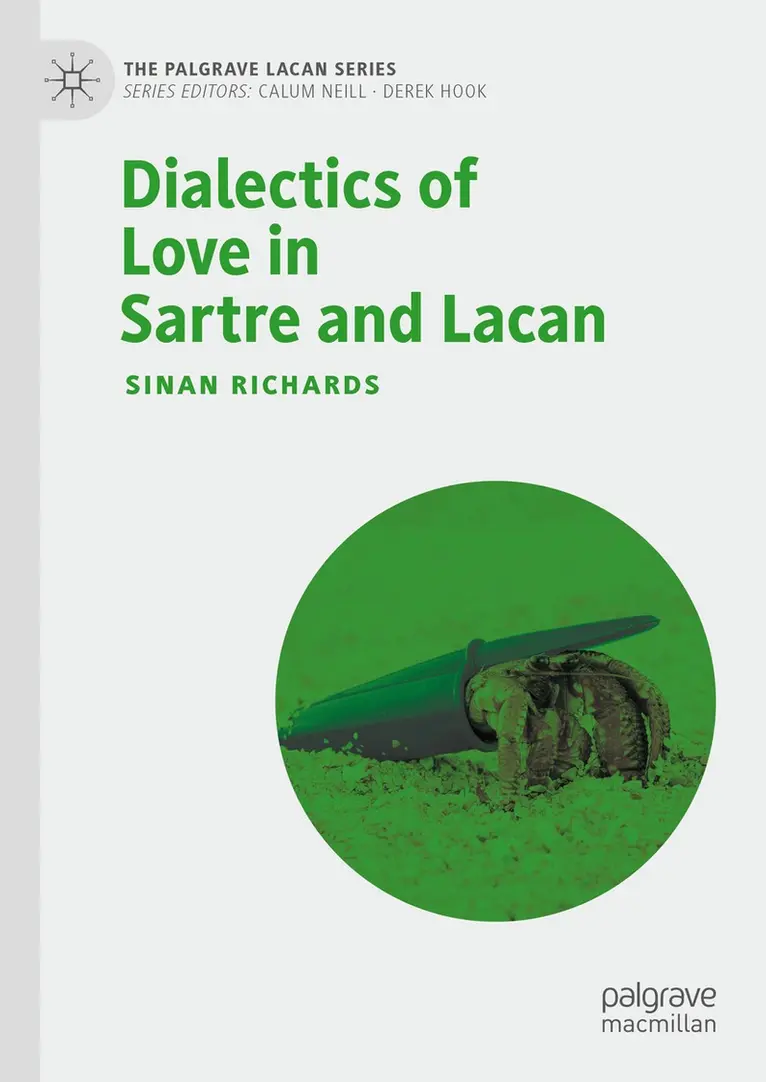
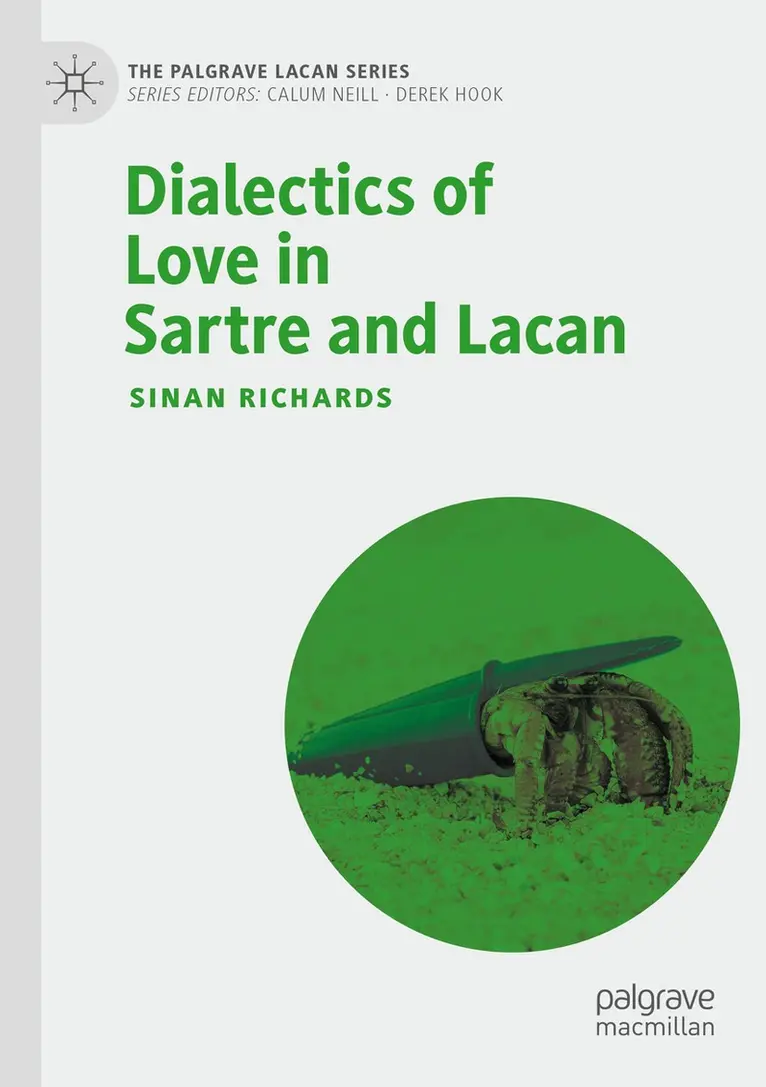
What is love for Sartre and Lacan? In Dialectics of Love in Sartre and Lacan, Sinan Richards examines Sartre’s and Lacan’s writings on love to draw out a distinctly Lacanian conception of love and subjectivity. Richards begins by demonstrating how Sartre’s in itself for itself is a convincing shorthand for Lacan’s central object of study, before presenting and explaining the various aspects of Lacan’s psychophilosophical project to show how, for Lacan, the subject is marked by various pathologies. He argues that, for Lacan, as for Sartre and Schelling before him, the subject is ontologically sick, and, by its very structure, the Oedipus complex produces subjects that are prey to a mental collapse at any moment. As a result, for Lacan, the subject has no choice but to identify with their potential madness, a constitutive aspect of their subjectivity. He concludes by making a compelling case that love in the Lacanian schema is the subject’s mad wish to reunite in itself with for itself, which is an always impossible yet necessary aspect of subjectivity. The book presents fresh insights on Lacan and Sartre that will appeal to students and scholars of psychoanalysis, philosophy, comparative literature and critical theory.
528 kr
Kommande
Fanon and Lacan: Decolonial Psychoanalysis explores the influence of psychoanalysis on Frantz Fanon’s thought and delves into Fanon’s innovative use of psychoanalysis as a way of diagnosing and addressing the socio-psychological traumas of colonialism and racialised structures of power.The contributors in this volume highlight how, by engaging with Lacanian concepts such as the mirror stage, the imago, and the body-in-pieces, Fanon rearticulated psychoanalysis into a vernacular form responsive to the dilemmas of racism and colonial violence. Beginning with a comparative historical investigation of Fanon and Lacan’s works, the book goes on to query the role played by key figures – Octave Mannoni, Maurice Merleau-Ponty, François Tosquelles, and others – in establishing points of connection between the respective decolonial and clinical projects of Fanon and Lacan. Readers will uncover how Fanon’s critical dialogue with Lacan and Francophone psychoanalysis more broadly opens new pathways for confronting the unconscious foundations of racism and exclusion, while offering tools for exploring disalienation and liberation.Ideal for scholars, students, and practitioners in psychoanalysis, the history of psychoanalysis, postcolonial studies and critical theory, this book is essential for anyone seeking to understand the intersection of colonialism, race and the psyche.
2 238 kr
Kommande
Fanon and Lacan: Decolonial Psychoanalysis explores the influence of psychoanalysis on Frantz Fanon’s thought and delves into Fanon’s innovative use of psychoanalysis as a way of diagnosing and addressing the socio-psychological traumas of colonialism and racialised structures of power.The contributors in this volume highlight how, by engaging with Lacanian concepts such as the mirror stage, the imago, and the body-in-pieces, Fanon rearticulated psychoanalysis into a vernacular form responsive to the dilemmas of racism and colonial violence. Beginning with a comparative historical investigation of Fanon and Lacan’s works, the book goes on to query the role played by key figures – Octave Mannoni, Maurice Merleau-Ponty, François Tosquelles, and others – in establishing points of connection between the respective decolonial and clinical projects of Fanon and Lacan. Readers will uncover how Fanon’s critical dialogue with Lacan and Francophone psychoanalysis more broadly opens new pathways for confronting the unconscious foundations of racism and exclusion, while offering tools for exploring disalienation and liberation.Ideal for scholars, students, and practitioners in psychoanalysis, the history of psychoanalysis, postcolonial studies and critical theory, this book is essential for anyone seeking to understand the intersection of colonialism, race and the psyche.
1 395 kr
Skickas inom 10-15 vardagar
What is love for Sartre and Lacan? In Dialectics of Love in Sartre and Lacan, Sinan Richards examines Sartre’s and Lacan’s writings on love to draw out a distinctly Lacanian conception of love and subjectivity. Richards begins by demonstrating how Sartre’s in itself for itself is a convincing shorthand for Lacan’s central object of study, before presenting and explaining the various aspects of Lacan’s psychophilosophical project to show how, for Lacan, the subject is marked by various pathologies. He argues that, for Lacan, as for Sartre and Schelling before him, the subject is ontologically sick, and, by its very structure, the Oedipus complex produces subjects that are prey to a mental collapse at any moment. As a result, for Lacan, the subject has no choice but to identify with their potential madness, a constitutive aspect of their subjectivity. He concludes by making a compelling case that love in the Lacanian schema is the subject’s mad wish to reunite in itself with for itself, which is an always impossible yet necessary aspect of subjectivity. The book presents fresh insights on Lacan and Sartre that will appeal to students and scholars of psychoanalysis, philosophy, comparative literature and critical theory.
650 kr
Kommande
1 328 kr
Skickas inom 10-15 vardagar
Presents the most wide-ranging and in-depth exploration of the influence of modernist art and literature on Jacques Lacan, emphasizing the valences of Lacanian psychoanalysis for interpretations of modernism.A notorious presence in French intellectual circles throughout the 20th century, Lacan was personal friends with modernists such as André Breton and Salvador Dalí, and in 1923 was present at the legendary reading of Ulysses at the Shakespeare and Company bookshop by James Joyce, to whom Lacan would devote a year of his seminar in 1975-76. Lacan also contributed to several Surrealist publications, including the famous magazine Minotaure, the inaugural edition of which featured special mention of Lacan's early work on psychosis. However, despite his affinity with early 20th-century modernism, Lacan's name is still more routinely associated with the category of so-called "postmodernism," thus rendering the question of style and periodization somewhat out of focus.Understanding Lacan, Understanding Modernism asks and responds to a series of questions, including: Is Lacan a modernist or a postmodernist, and what is the difference? How significant was the influence of modernist literature and art on the development of Lacan's ideas? How does our understanding of modernism change when viewed through a Lacanian lens?The final section identifies key Lacaninan concepts, offering context and a discussion of their usage and relevance in current thought.