Siniša Malešević - Böcker
Visar alla böcker från författaren Siniša Malešević. Handla med fri frakt och snabb leverans.
11 produkter
11 produkter
980 kr
Skickas inom 7-10 vardagar
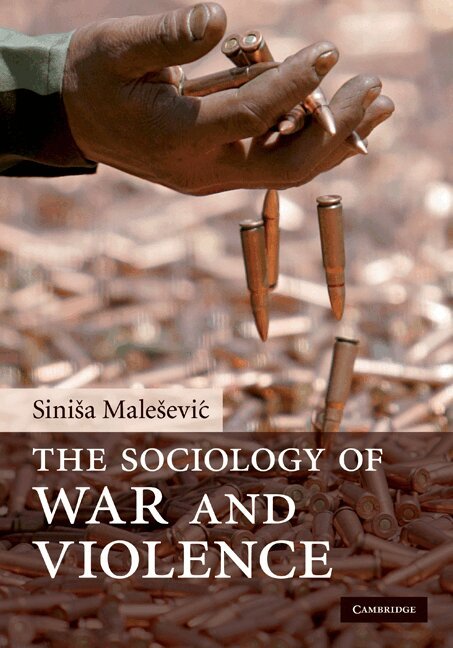
War is a highly complex and dynamic form of social conflict. This book demonstrates the importance of using sociological tools to understand the changing character of war and organised violence. The author offers an original analysis of the historical and contemporary impact that coercion and warfare have on the transformation of social life, and vice versa. Although war and violence were decisive components in the formation of modernity most analyses tend to shy away from the sociological study of the gory origins of contemporary social life. In contrast, this book brings the study of organised violence to the fore by providing a wide-ranging sociological analysis that links classical and contemporary theories with specific historical and geographical contexts. Topics covered include violence before modernity, warfare in the modern age, nationalism and war, war propaganda, battlefield solidarity, war and social stratification, gender and organised violence, and the new wars debate.
487 kr
Skickas inom 7-10 vardagar
War is a highly complex and dynamic form of social conflict. This book demonstrates the importance of using sociological tools to understand the changing character of war and organised violence. The author offers an original analysis of the historical and contemporary impact that coercion and warfare have on the transformation of social life, and vice versa. Although war and violence were decisive components in the formation of modernity most analyses tend to shy away from the sociological study of the gory origins of contemporary social life. In contrast, this book brings the study of organised violence to the fore by providing a wide-ranging sociological analysis that links classical and contemporary theories with specific historical and geographical contexts. Topics covered include violence before modernity, warfare in the modern age, nationalism and war, war propaganda, battlefield solidarity, war and social stratification, gender and organised violence, and the new wars debate.
1 100 kr
Skickas inom 7-10 vardagar
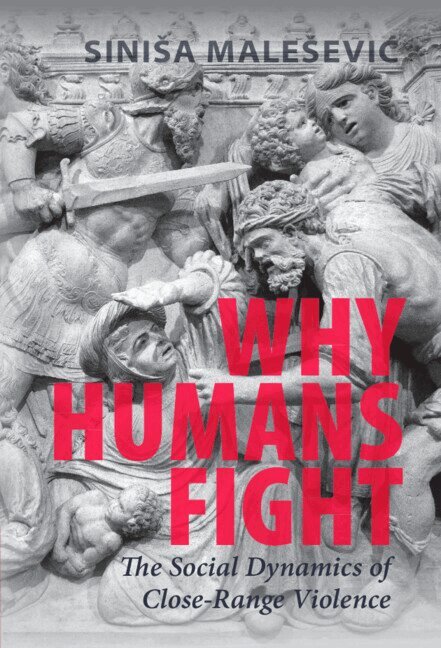
Malešević offers a novel sociological answer to the age-old question: 'Why do humans fight?'. Instead of focusing on the motivations of solitary individuals, he emphasises the centrality of the social and historical contexts that make fighting possible. He argues that fighting is not an individual attribute, but a social phenomenon shaped by one's relationships with other people. Drawing on recent scholarship across a variety of academic disciplines as well as his own interviews with the former combatants, Malešević shows that one's willingness to fight is a contextual phenomenon shaped by specific ideological and organisational logic. This book explores the role biology, psychology, economics, ideology, and coercion play in one's experience of fighting, emphasising the cultural and historical variability of combativeness. By drawing from numerous historical and contemporary examples from all over the world, Malešević demonstrates how social pugnacity is a relational and contextual phenomenon that possesses autonomous features.
360 kr
Skickas inom 7-10 vardagar
Malešević offers a novel sociological answer to the age-old question: 'Why do humans fight?'. Instead of focusing on the motivations of solitary individuals, he emphasises the centrality of the social and historical contexts that make fighting possible. He argues that fighting is not an individual attribute, but a social phenomenon shaped by one's relationships with other people. Drawing on recent scholarship across a variety of academic disciplines as well as his own interviews with the former combatants, Malešević shows that one's willingness to fight is a contextual phenomenon shaped by specific ideological and organisational logic. This book explores the role biology, psychology, economics, ideology, and coercion play in one's experience of fighting, emphasising the cultural and historical variability of combativeness. By drawing from numerous historical and contemporary examples from all over the world, Malešević demonstrates how social pugnacity is a relational and contextual phenomenon that possesses autonomous features.
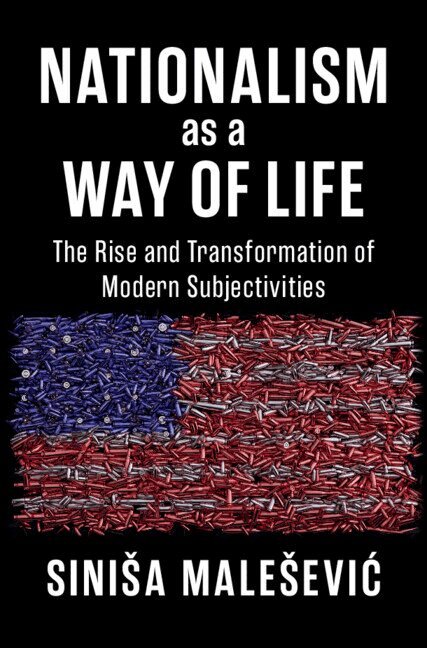
Nationalism as a Way of Life
The Rise and Transformation of Modern Subjectivities
Inbunden, Engelska, 2025
448 kr
Skickas inom 7-10 vardagar
While nationalism is a term that is often associated with instability, violence, extremism, terrorism, wars and even genocide, in fact most forms of nationalism are nonviolent. Beyond politics, it is a set of discourses and practices that shape economic, social, legal, and cultural life all over the globe. This book explores the global rise and transformation of nationalism and analyses the organisational, ideological, and micro-interactional mechanisms that have made it the dominant way of life in the twenty-first century. In a series of case studies across time and space, the book zooms in on three key forms of lived experience: how nationalism operates as a multi-faceted meta-ideology, how national categories have become organisationally embedded in everyday practices and why nationalism has become the dominant form of modern subjectivity. The book is aimed at readers interested in understanding how nation-states and nationalisms have attained such influence in contemporary world.
771 kr
Skickas inom 7-10 vardagar
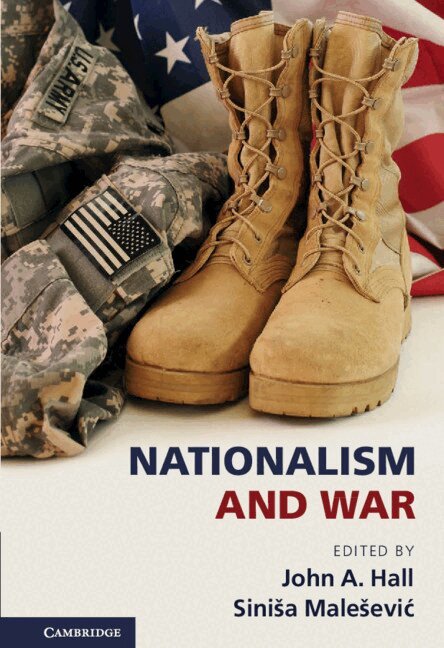
Has the emergence of nationalism made warfare more brutal? Does strong nationalist identification increase efficiency in fighting? Is nationalism the cause or the consequence of the breakdown of imperialism? What is the role of victories and defeats in the formation of national identities? The relationship between nationalism and warfare is complex, and it changes depending on which historical period and geographical context is in question. In 'Nationalism and War', some of the world's leading social scientists and historians explore the nature of the connection between the two. Through empirical studies from a broad range of countries, they explore the impact that imperial legacies, education, welfare regimes, bureaucracy, revolutions, popular ideologies, geopolitical change, and state breakdowns have had in the transformation of war and nationalism.
929 kr
Skickas inom 7-10 vardagar
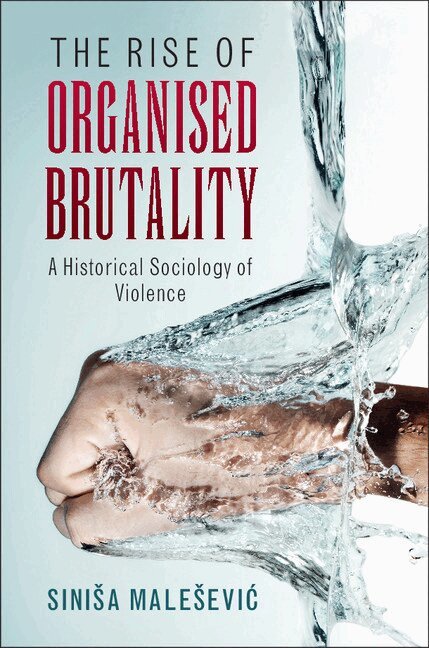
Challenging the prevailing belief that organised violence is experiencing historically continuous decline, this book provides an in-depth sociological analysis that shows organised violence is, in fact, on the rise. Malešević demonstrates that violence is determined by organisational capacity, ideological penetration and micro-solidarity, rather than biological tendencies, meaning that despite pre-modern societies being exposed to spectacles of cruelty and torture, such societies had no organisational means to systematically slaughter millions of individuals. Malešević suggests that violence should not be analysed as just an event or process, but also via changing perceptions of those events and processes, and by linking this to broader social transformations on the inter-polity and inter-group levels he makes his key argument that organised violence has proliferated. Focusing on wars, revolutions, genocides and terrorism, this book shows how modern social organisations utilise ideology and micro-solidarity to mobilise public support for mass scale violence.
344 kr
Skickas inom 7-10 vardagar
Challenging the prevailing belief that organised violence is experiencing historically continuous decline, this book provides an in-depth sociological analysis that shows organised violence is, in fact, on the rise. Malešević demonstrates that violence is determined by organisational capacity, ideological penetration and micro-solidarity, rather than biological tendencies, meaning that despite pre-modern societies being exposed to spectacles of cruelty and torture, such societies had no organisational means to systematically slaughter millions of individuals. Malešević suggests that violence should not be analysed as just an event or process, but also via changing perceptions of those events and processes, and by linking this to broader social transformations on the inter-polity and inter-group levels he makes his key argument that organised violence has proliferated. Focusing on wars, revolutions, genocides and terrorism, this book shows how modern social organisations utilise ideology and micro-solidarity to mobilise public support for mass scale violence.
309 kr
Skickas inom 7-10 vardagar
Has the emergence of nationalism made warfare more brutal? Does strong nationalist identification increase efficiency in fighting? Is nationalism the cause or the consequence of the breakdown of imperialism? What is the role of victories and defeats in the formation of national identities? The relationship between nationalism and warfare is complex, and it changes depending on which historical period and geographical context is in question. In 'Nationalism and War', some of the world's leading social scientists and historians explore the nature of the connection between the two. Through empirical studies from a broad range of countries, they explore the impact that imperial legacies, education, welfare regimes, bureaucracy, revolutions, popular ideologies, geopolitical change, and state breakdowns have had in the transformation of war and nationalism.
1 311 kr
Skickas inom 7-10 vardagar
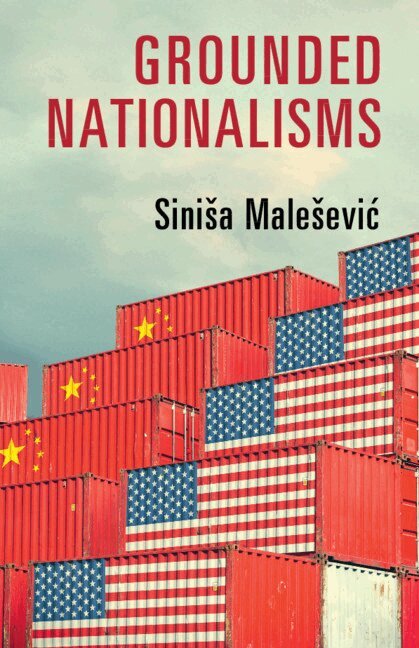
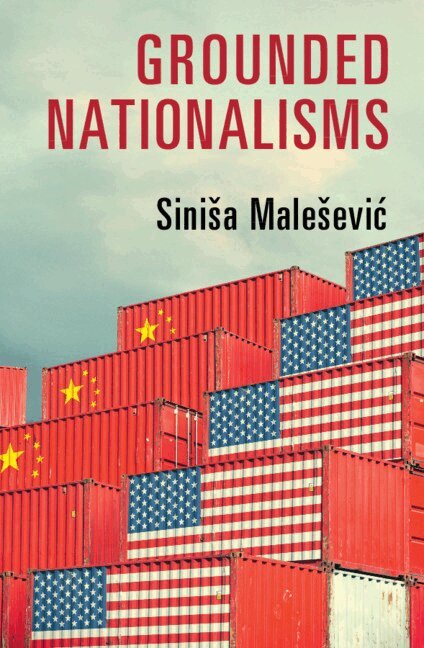
Globalisation is not the enemy of nationalism; instead, as this book shows, the two forces have developed together through modern history. Malešević challenges dominant views which see nationalism as a declining social force. He explains why the recent escalations of populist nationalism throughout the world do not represent a social anomaly but are, in fact, a historical norm. By focusing on ever-increasing organisational capacity, greater ideological penetration and networks of micro-solidarity, Malešević shows how and why nationalism has become deeply grounded in the everyday life of modern human beings. The author explores the social dynamics of these grounded nationalisms via an analysis of varied contexts, from Ireland to the Balkans. His findings show that increased ideological diffusion and the rising coercive capacities of states and other organisations have enabled nationalism to expand and establish itself as the dominant operative ideology of modernity.
360 kr
Skickas inom 7-10 vardagar
Globalisation is not the enemy of nationalism; instead, as this book shows, the two forces have developed together through modern history. Malešević challenges dominant views which see nationalism as a declining social force. He explains why the recent escalations of populist nationalism throughout the world do not represent a social anomaly but are, in fact, a historical norm. By focusing on ever-increasing organisational capacity, greater ideological penetration and networks of micro-solidarity, Malešević shows how and why nationalism has become deeply grounded in the everyday life of modern human beings. The author explores the social dynamics of these grounded nationalisms via an analysis of varied contexts, from Ireland to the Balkans. His findings show that increased ideological diffusion and the rising coercive capacities of states and other organisations have enabled nationalism to expand and establish itself as the dominant operative ideology of modernity.