
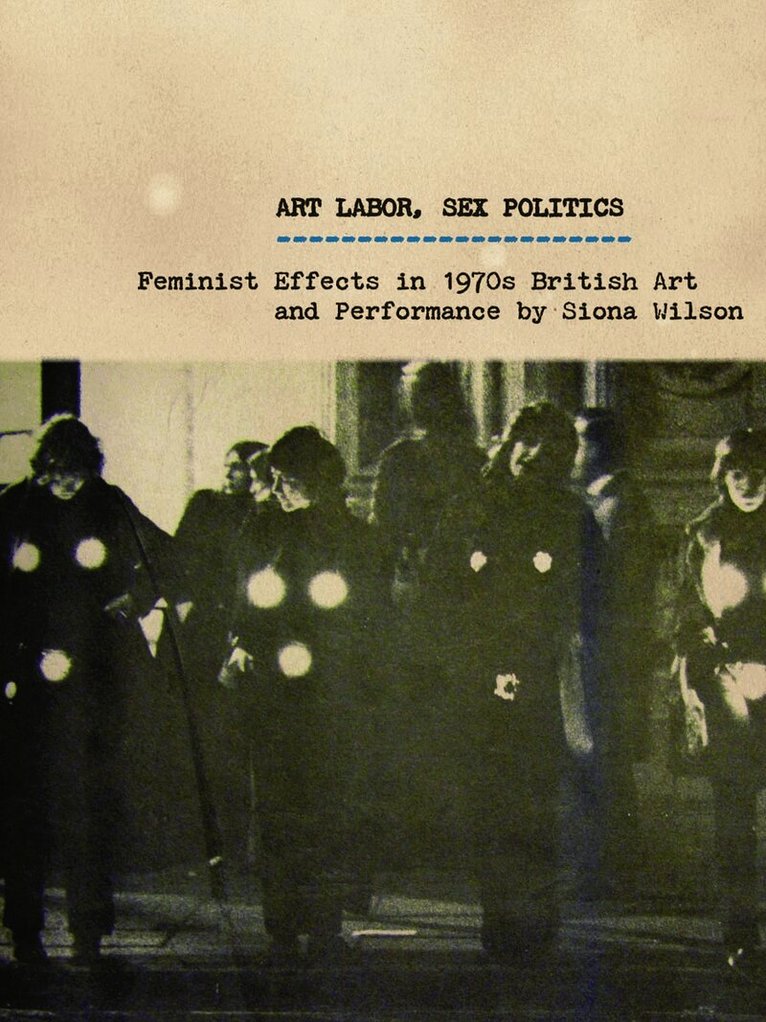
Contrary to critics who have called it the “undecade,” the 1970s were a time of risky, innovative art-and nowhere more so than in Britain, where the forces of feminism and labor politics merged in a radical new aesthetic. In Art Labor, Sex Politics Siona Wilson investigates the charged relationship of sex and labor politics as it played out in the making of feminist art in 1970s Britain. Her sustained exploration of works of experimental film, installation, performance, and photography maps the intersection of feminist and leftist projects in the artistic practices of this heady period.Collective practice, grassroots activism, and iconoclastic challenges to society’s sexual norms are all fundamental elements of this theoretically informed history. The book provides fresh assessments of key feminist figures and introduces readers to less widely known artists such as Jo Spence and controversial groups like COUM Transmissions. Wilson’s interpretations of two of the best-known (and infamous) exhibitions of feminist art-Mary Kelly’s Post-Partum Document and COUM Transmissions’ Prostitution-supply a historical context that reveals these works anew. Together these analyses demonstrate that feminist attention to sexual difference, sex, and psychic formation reconfigures received categories of labor and politics.How-and how much-do sexual politics transform our approach to aesthetic debates? What effect do the tropes of sexual difference and labor have on the very conception of the political within cultural practice? These are the questions that animate Art Labor, Sex Politics as it illuminates an intense and influential decade of intellectual and artistic experimentation.
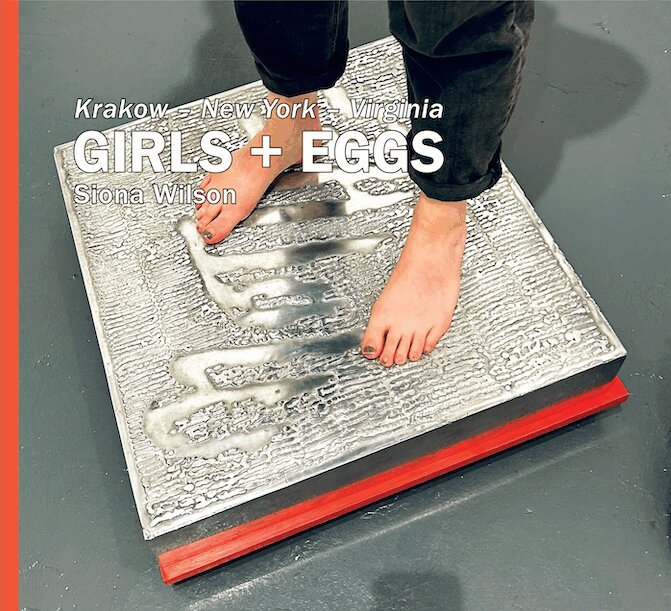
Girls Eggs is a work of poor curating in the form of a feminist road trip. Originating in Krakow, Poland, the contributors traveled between continents, arriving on Staten Island, New York City, then moving on to Duke Gallery of Fine Art in Virginia, the only Southern state that has not increased restrictions on abortions since the overturning of Roe v. Wade legislation. The project included a diverse range of artists working in feminist solidarity and fury in response to widespread attacks on reproductive rights and sexual citizenship. Engaging women, men, transgender, nonbinary, queer, lesbian, and cisgender individuals, mothers, fathers, the child-free, dog lovers, and feminists, Girls Eggs includes a world of individuals, characters, thoughts, and fragments from those repressed by and resisting the return to old world patriarchal norms. This catalog of the exhibition includes four texts and a principal essay on contemporary art and reproductive justice, particularly in relation to recent near-total bans on access to abortion.Featured ArtistsMichael Biber Martyna Borowiecka Danni O’Brien Magda Buczek Kat Chamberlin Moyra Davey Piotr Dłużniewski Monika Drożyńska Pippa Garner Jakub HoŠek Maria Kniaginin-Ciszewska Maja Krysiak Bartek Arobal Kociemba Oskar KorsÁr Peter Kunt Madeline Kuzak Beatrix Reinhardt Mira Schor Agnieszka SzostekDistributed for the Duke Gallery at James Madison University
Contrary to critics who have called it the “undecade,” the 1970s were a time of risky, innovative art-and nowhere more so than in Britain, where the forces of feminism and labor politics merged in a radical new aesthetic. In Art Labor, Sex Politics Siona Wilson investigates the charged relationship of sex and labor politics as it played out in the making of feminist art in 1970s Britain. Her sustained exploration of works of experimental film, installation, performance, and photography maps the intersection of feminist and leftist projects in the artistic practices of this heady period.Collective practice, grassroots activism, and iconoclastic challenges to society’s sexual norms are all fundamental elements of this theoretically informed history. The book provides fresh assessments of key feminist figures and introduces readers to less widely known artists such as Jo Spence and controversial groups like COUM Transmissions. Wilson’s interpretations of two of the best-known (and infamous) exhibitions of feminist art-Mary Kelly’s Post-Partum Document and COUM Transmissions’ Prostitution-supply a historical context that reveals these works anew. Together these analyses demonstrate that feminist attention to sexual difference, sex, and psychic formation reconfigures received categories of labor and politics.How-and how much-do sexual politics transform our approach to aesthetic debates? What effect do the tropes of sexual difference and labor have on the very conception of the political within cultural practice? These are the questions that animate Art Labor, Sex Politics as it illuminates an intense and influential decade of intellectual and artistic experimentation.
Girls Eggs is a work of poor curating in the form of a feminist road trip. Originating in Krakow, Poland, the contributors traveled between continents, arriving on Staten Island, New York City, then moving on to Duke Gallery of Fine Art in Virginia, the only Southern state that has not increased restrictions on abortions since the overturning of Roe v. Wade legislation. The project included a diverse range of artists working in feminist solidarity and fury in response to widespread attacks on reproductive rights and sexual citizenship. Engaging women, men, transgender, nonbinary, queer, lesbian, and cisgender individuals, mothers, fathers, the child-free, dog lovers, and feminists, Girls Eggs includes a world of individuals, characters, thoughts, and fragments from those repressed by and resisting the return to old world patriarchal norms. This catalog of the exhibition includes four texts and a principal essay on contemporary art and reproductive justice, particularly in relation to recent near-total bans on access to abortion.Featured ArtistsMichael Biber Martyna Borowiecka Danni O’Brien Magda Buczek Kat Chamberlin Moyra Davey Piotr Dłużniewski Monika Drożyńska Pippa Garner Jakub HoŠek Maria Kniaginin-Ciszewska Maja Krysiak Bartek Arobal Kociemba Oskar KorsÁr Peter Kunt Madeline Kuzak Beatrix Reinhardt Mira Schor Agnieszka SzostekDistributed for the Duke Gallery at James Madison University