Sir Lawrence Freedman – författare
Visar alla böcker från författaren Sir Lawrence Freedman. Handla med fri frakt och snabb leverans.
8 produkter
8 produkter
E-bok
PDF, Engelska, 2013165 kr
Läs direkt efter köp
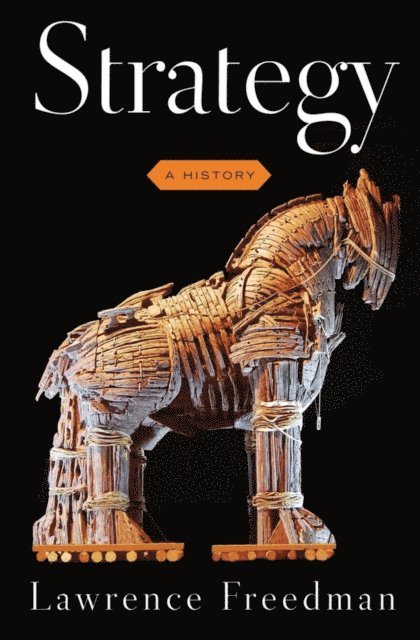
Selected as a Financial Times Best Book of 2013In Strategy: A History, Sir Lawrence Freedman, one of the world''s leading authorities on war and international politics, captures the vast history of strategic thinking, in a consistently engaging and insightful account of how strategy came to pervade every aspect of our lives. The range of Freedman''s narrative is extraordinary, moving from the surprisingly advanced strategy practiced in primate groups, to the opposing strategies of Achilles and Odysseus in The Iliad, the strategic advice of Sun Tzu and Machiavelli, the great military innovations of Baron Henri de Jomini and Carl von Clausewitz, the grounding of revolutionary strategy in class struggles by Marx, the insights into corporate strategy found in Peter Drucker and Alfred Sloan, and the contributions of the leading social scientists working on strategy today. The core issue at the heart of strategy, the author notes, is whether it is possible to manipulate and shape our environment rather than simply become the victim of forces beyond one''s control. Time and again, Freedman demonstrates that the inherent unpredictability of this environment-subject to chance events, the efforts of opponents, the missteps of friends-provides strategy with its challenge and its drama. Armies or corporations or nations rarely move from one predictable state of affairs to another, but instead feel their way through a series of states, each one not quite what was anticipated, requiring a reappraisal of the original strategy, including its ultimate objective. Thus the picture of strategy that emerges in this book is one that is fluid and flexible, governed by the starting point, not the end point. A brilliant overview of the most prominent strategic theories in history, from David''s use of deception against Goliath, to the modern use of game theory in economics, this masterful volume sums up a lifetime of reflection on strategy.
E-bok
Engelska, 2013165 kr
Läs direkt efter köp
Selected as a Financial Times Best Book of 2013In Strategy: A History, Sir Lawrence Freedman, one of the world''s leading authorities on war and international politics, captures the vast history of strategic thinking, in a consistently engaging and insightful account of how strategy came to pervade every aspect of our lives. The range of Freedman''s narrative is extraordinary, moving from the surprisingly advanced strategy practiced in primate groups, to the opposing strategies of Achilles and Odysseus in The Iliad, the strategic advice of Sun Tzu and Machiavelli, the great military innovations of Baron Henri de Jomini and Carl von Clausewitz, the grounding of revolutionary strategy in class struggles by Marx, the insights into corporate strategy found in Peter Drucker and Alfred Sloan, and the contributions of the leading social scientists working on strategy today. The core issue at the heart of strategy, the author notes, is whether it is possible to manipulate and shape our environment rather than simply become the victim of forces beyond one''s control. Time and again, Freedman demonstrates that the inherent unpredictability of this environment-subject to chance events, the efforts of opponents, the missteps of friends-provides strategy with its challenge and its drama. Armies or corporations or nations rarely move from one predictable state of affairs to another, but instead feel their way through a series of states, each one not quite what was anticipated, requiring a reappraisal of the original strategy, including its ultimate objective. Thus the picture of strategy that emerges in this book is one that is fluid and flexible, governed by the starting point, not the end point. A brilliant overview of the most prominent strategic theories in history, from David''s use of deception against Goliath, to the modern use of game theory in economics, this masterful volume sums up a lifetime of reflection on strategy.
Häftad, Engelska, 2013
545 kr
Skickas inom 10-15 vardagar
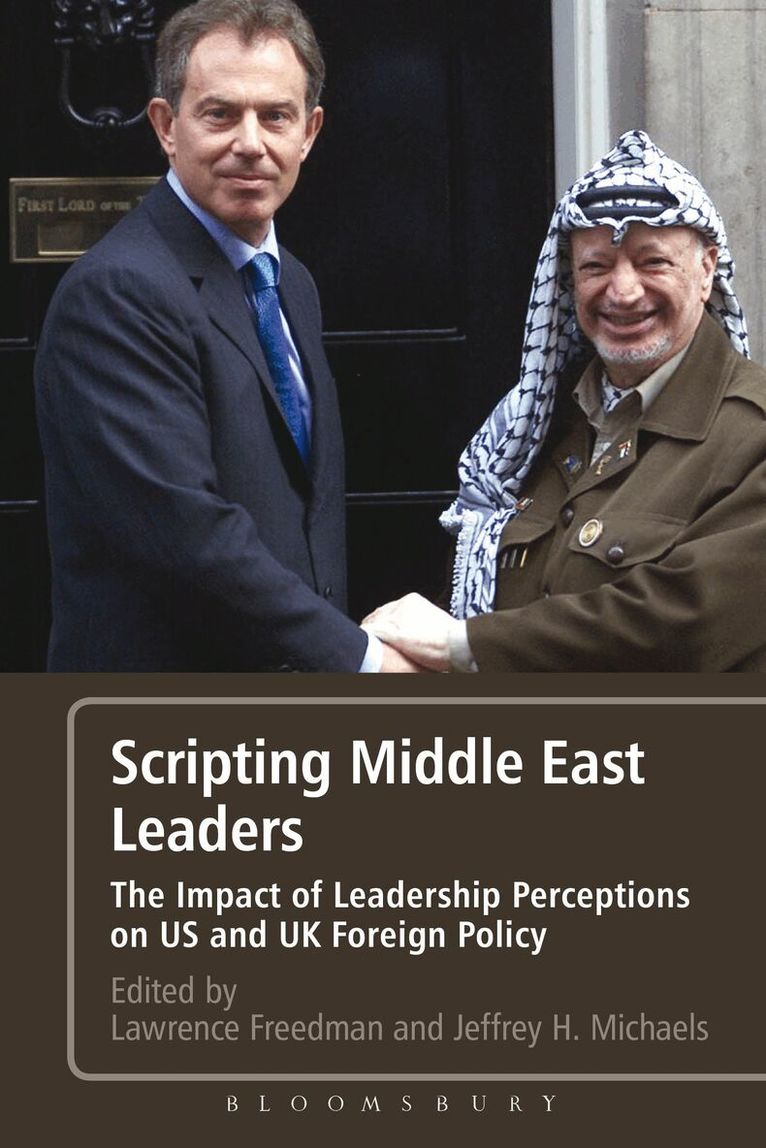
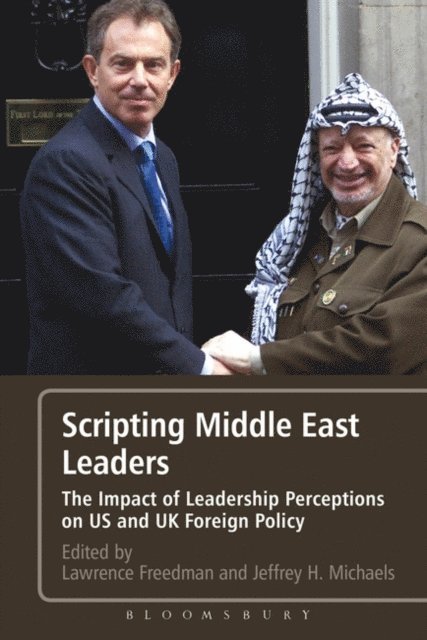
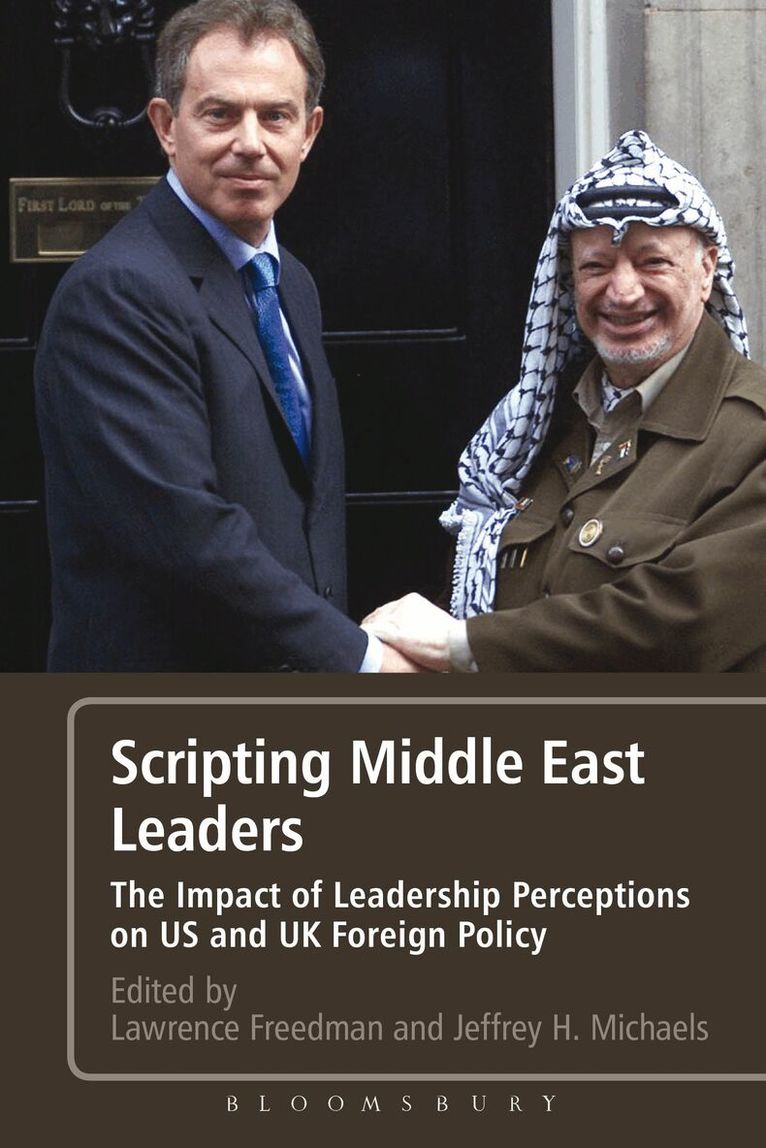
Both the US and the UK seemed caught off-guard by the uprisings in Libya and Egypt and policymakers had to deal with leaders that switched from being allies to "pariahs." This collection of essays, written by leading scholars, examines the evolution of British and American perceptions of "adversaries" in the Middle East since the Cold War. It traces the evolution of how leaders have been perceived, what determined such perceptions, and how they can change over time. It shows that in many cases the beliefs held by policymakers have influenced their policies and the way they adapted during crisis. Each essay focuses on a Middle East leader, such as Nasser, Assad, Hussein, or Ahmadinejad, discussing what these leaders' objectives were perceived to be, the assessments of their willingness to take risks or negotiate, and how such assessments changed overtime and were evaluated in retrospect. This groundbreaking contribution to the literature on leadership attitudes and perceptions in policymaking toward the Middle East will appeal to anyone studying foreign policy, Middle East politics and political psychology.
E-bok
PDF, Engelska, 2012570 kr
Läs direkt efter köp
Both the US and the UK seemed caught off-guard by the uprisings in Libya and Egypt and policymakers had to deal with leaders that switched from being allies to "pariahs." This collection of essays, written by leading scholars, examines the evolution of British and American perceptions of "adversaries" in the Middle East since the Cold War. It traces the evolution of how leaders have been perceived, what determined such perceptions, and how they can change over time. It shows that in many cases the beliefs held by policymakers have influenced their policies and the way they adapted during crisis. Each essay focuses on a Middle East leader, such as Nasser, Assad, Hussein, or Ahmadinejad, discussing what these leaders' objectives were perceived to be, the assessments of their willingness to take risks or negotiate, and how such assessments changed overtime and were evaluated in retrospect. This groundbreaking contribution to the literature on leadership attitudes and perceptions in policymaking toward the Middle East will appeal to anyone studying foreign policy, Middle East politics and political psychology.
E-bok
Engelska, 2012570 kr
Läs direkt efter köp
Both the US and the UK seemed caught off-guard by the uprisings in Libya and Egypt and policymakers had to deal with leaders that switched from being allies to "pariahs." This collection of essays, written by leading scholars, examines the evolution of British and American perceptions of "adversaries" in the Middle East since the Cold War. It traces the evolution of how leaders have been perceived, what determined such perceptions, and how they can change over time. It shows that in many cases the beliefs held by policymakers have influenced their policies and the way they adapted during crisis. Each essay focuses on a Middle East leader, such as Nasser, Assad, Hussein, or Ahmadinejad, discussing what these leaders' objectives were perceived to be, the assessments of their willingness to take risks or negotiate, and how such assessments changed overtime and were evaluated in retrospect. This groundbreaking contribution to the literature on leadership attitudes and perceptions in policymaking toward the Middle East will appeal to anyone studying foreign policy, Middle East politics and political psychology.
Inbunden, Engelska, 2013
2 075 kr
Skickas inom 10-15 vardagar
Both the US and the UK seemed caught off-guard by the uprisings in Libya and Egypt and policymakers had to deal with leaders that switched from being allies to "pariahs." This collection of essays, written by leading scholars, examines the evolution of British and American perceptions of "adversaries" in the Middle East since the Cold War. It traces the evolution of how leaders have been perceived, what determined such perceptions, and how they can change over time. It shows that in many cases the beliefs held by policymakers have influenced their policies and the way they adapted during crisis. Each essay focuses on a Middle East leader, such as Nasser, Assad, Hussein, or Ahmadinejad, discussing what these leaders' objectives were perceived to be, the assessments of their willingness to take risks or negotiate, and how such assessments changed overtime and were evaluated in retrospect. This groundbreaking contribution to the literature on leadership attitudes and perceptions in policymaking toward the Middle East will appeal to anyone studying foreign policy, Middle East politics and political psychology.
Häftad, Engelska, 2023
84 kr
Skickas
E-bok
Engelska, 2023115 kr
Läs direkt efter köp
More than any other modern war, the fight between Russia and Ukraine has been a tough testing ground for modern weapons and operational concepts.Drawing on extensive research into the conduct of the war during its first year, Sir Lawrence Freedman assesses the contrasting strategies of the two sides. Ukraine has fought along classical lines, seeking victory through battle. Russia has adopted a more total approach, combining conventional battles with attacks on Ukraine’s socio-economic structure. Freedman explains why the apparently superior Russian force has been unable to defeat and subjugate Ukraine.