S.K. Jain - Böcker
Visar alla böcker från författaren S.K. Jain. Handla med fri frakt och snabb leverans.
7 produkter
7 produkter
2 541 kr
Skickas inom 5-8 vardagar
This unique and comprehensive volume provides an up-to-date account of the literature on the subject of determining the structure of rings over which cyclic modules or proper cyclic modules have a finiteness condition or a homological property. The finiteness conditions and homological properties are closely interrelated in the sense that either hypothesis induces the other in some form. This is the first book to bring all of this important material on the subject together.Over the last 25 years or more numerous mathematicians have investigated rings whose factor rings or factor modules have a finiteness condition or a homological property. They made important contributions leading to new directions and questions, which are listed at the end of each chapter for the benefit of future researchers. There is a wealth of material on the topic which is combined in this book, it contains more than 200 references and is not claimed to be exhaustive. This book will appeal to graduate students, researchers, and professionals in algebra with a knowledge of basic noncommutative ring theory, as well as module theory and homological algebra, equivalent to a one-year graduate course in the theory of rings and modules.
1 577 kr
Skickas inom 10-15 vardagar
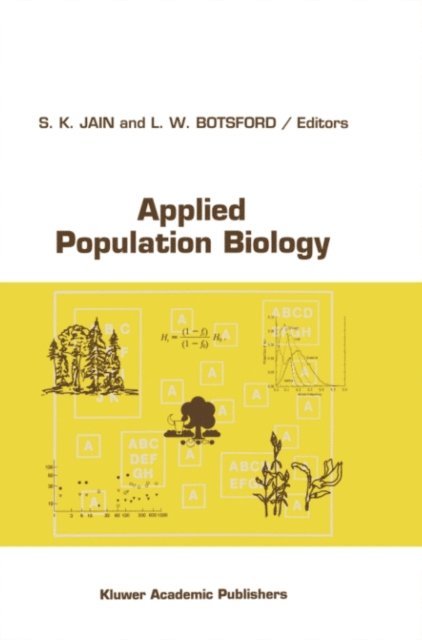
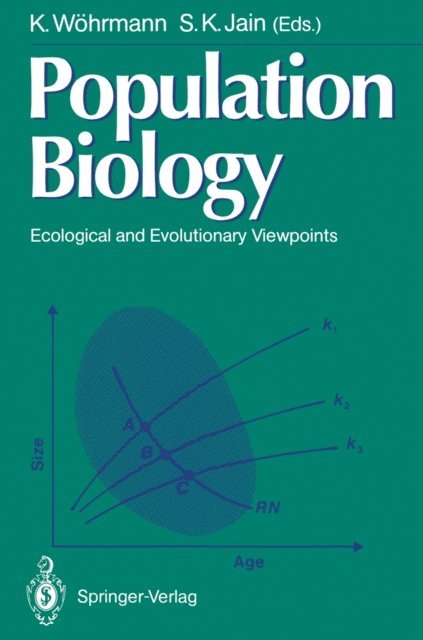
An increasing variety of biological problems involving resurce management, conservation and environmental quality have been dealt with using the principles of population biology (defined to include population dynamics, genetics and certain aspects of community ecology). There appears to be a mixed record of successes and failures and almost no critical synthesis or reviews that have attempted to discuss the reasons and ways in which population biology, with its theoretical as well as experimental advances, could find more useful application in agriculture, forestry, fishery, medicine and resource and environmental management. This book provides examples of applications by a distinguished group of researchers in several fields. The diversity of topics illustrates the scientific and economic breadth of their discussions as well as epistemological and comparative analyses by the authors and editors. Several principles and common themes are emphasized and both strengths and potential sources of uncertainty in applications are discussed. This volume aims to stimulate new interdisciplinary avenues of problem-solving research.
535 kr
Skickas inom 10-15 vardagar
This volume is an outcomeof invited lecturesdelivered at the Ring Theory Section of the 23rd Ohio State-DenisonConferencein May 1996. It also contains articles by some invited mathematicianswho could not attend the conference. These peer-refereedarticles showcasethe latest developmentsand trends in classicalRing Theory, highlighting the cro- fertilization of new techniquesand ideaswith the existing ones. Providing a wide variety of methodologies,this volume should be valuable both to graduatestudentsas well as to specialistsin Ring Theory. We would like to thank our colleagueswho investeda lot of their time to make the conferencea great success. In particular, our thanks go to ProfessorsTom Dowling, Dan Sanders,SurinderSehgal,Ron Solomonand Sergio R. L6pez-Permouthfor their help. The financial support for the Conference,provided by the Departmentof Mathematics,The Ohio State University, and MathematicsResearchInstitute, Columbus, is gratefully acknowleged. Many thanksgo to Dean Violet I. Meek for her commitment to the promotion of researchby her continuousencouragement of such efforts and for providing financial support from the Lima campusof The Ohio StateUniversity.We havereceivedimmensecooperationfrom all the refereeswho, meticulouslyand in a very short time, provided us with their reports in spite of their busy schedules. We expressour sincerethanks to all of them. Finally, we thank Ms. Cindy White for her excellent job in typing parts of this volume. We are pleasedto dedicatethis volume to ProfessorBruno J. Miiller on the occasionof his retirementfor his many contributionsto the Theory of Rings and Modules. As this volume was going to presswe have learned that ProfessorCarl Faith is retiring this year.
535 kr
Skickas inom 10-15 vardagar
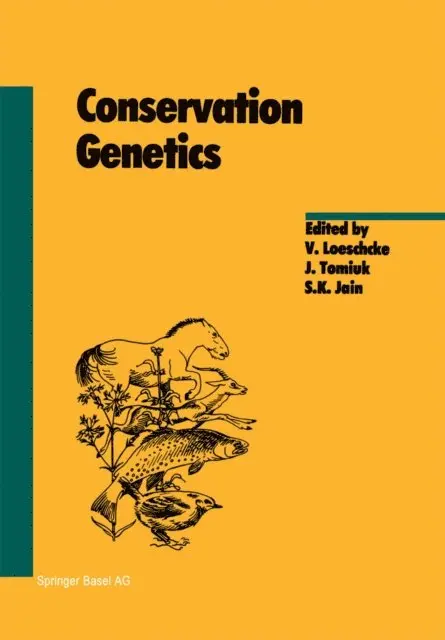
It follows naturally from the widely accepted Darwinian dictum that failures of populations or of species to adapt and to evolve under changing environments will result in their extinction. Population geneti cists have proclaimed a centerstage role in developing conservation biology theory and applications. However, we must critically reexamine what we know and how we can make rational contributions. We ask: Is genetic variation really important for the persistence of species? Has any species become extinct because it ran out of genetic variation or because of inbreeding depression? Are demographic and environmental stochas ticity by far more important for the fate of a population or species than genetic stochasticity (genetic drift and inbreeding)? Is there more to genetics than being a tool for assessing reproductive units and migration rates? Does conventional wisdom on inbreeding and "magic numbers" or rules of thumb on critical effective population sizes (MVP estimators) reflect any useful guidelines in conservation biology? What messages or guidelines from genetics can we reliably provide to those that work with conservation in practice? Is empirical work on numerous threatened habitats and taxa gathering population genetic information that we can use to test these guidelines? These and other questions were raised in the invitation to a symposium on conservation genetics held in May 1993 in pleasant surroundings at an old manor house in southern Jutland, Denmark.
1 064 kr
Skickas inom 10-15 vardagar
Fascinated by the diversity of living organisms, humans have always been curious about its origin. Darwin was the first to provide the scholary and persuasive thesis for gradual evolution and speciation under natural selection. Although we now have much information on evolution, we still don't understand it in detail. Many questions still remain open due to the complexity and multiplicity of interacting factors. Several approaches mainly arising from population ecology and genetics are presented in this book in order to help understand genetic variation and evolution.
277 kr
Tillfälligt slut
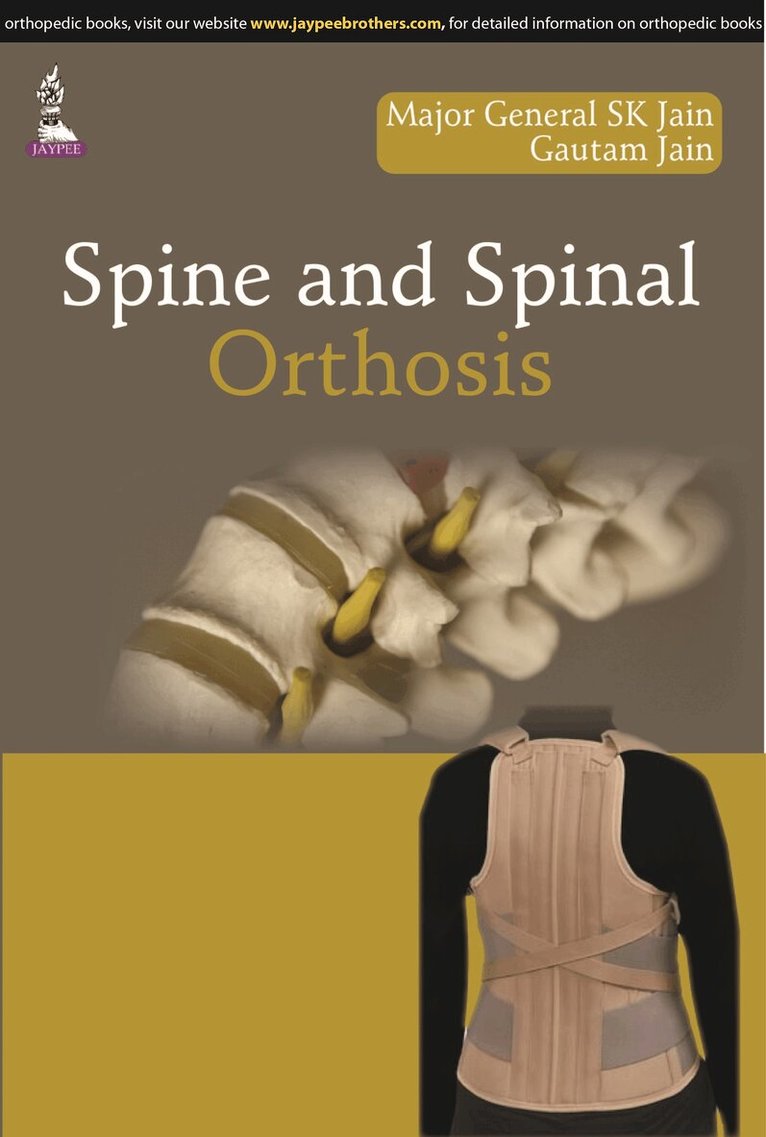
Orthosis has emerged as a promising way of treating spinal disorders in recent years. There have been few publications, however, on the orthotic management of spinal conditions. Spine and Spinal Orthosis is a compilation of anatomy, biomechanics, pathological conditions of spine and their orthotic management.This handbook describes the complicated aspects of orthotic management of spinal disorders in a concise and comprehensible manner. Essential, evidence based guidelines on orthotic and prosthetic prescription are also provided.Spine and Spinal Orthosis also includes 136 illustrations and a description of the pathological conditions of the spine.Spine and Spinal Orthosis will assist clinicians, rehabilitation medicine consultants and orthopaedic surgeons in choosing the method of orthotic management, most suitable for their patients.Key PointsConcise guide to emerging treatment for spinal disordersIncludes chapters on anatomy, biomechanics of spine, spinal disorders and checkout procedures136 illustrations
1 577 kr
Skickas inom 10-15 vardagar
An increasing variety of biological problems involving resource management, conservation and environmental quality have been dealt with using the principles of population biology (defined to include population dynamics, genetics and certain aspects of community ecology). There appears to be a mixed record of successes and failures and almost no critical synthesis or reviews that have attempted to discuss the reasons and ways in which population biology, with its remarkable theoretical as well as experimental advances, could find more useful application in agriculture, forestry, fishery, medicine and resource and environmental management. This book provides examples of state-of-the-art applications by a distinguished group of researchers in several fields. The diversity of topics richly illustrates the scientific and economic breadth of their discussions as well as epistemological and comparative analyses by the authors and editors. Several principles and common themes are emphasized and both strengths and potential sources of uncertainty in applications are discussed. This volume will hopefully stimulate new interdisciplinary avenues of problem-solving research.