Sladja Blažan – författare
Visar alla böcker från författaren Sladja Blažan. Handla med fri frakt och snabb leverans.
6 produkter
6 produkter
Inbunden, Engelska, 2024
1 469 kr
Skickas inom 10-15 vardagar
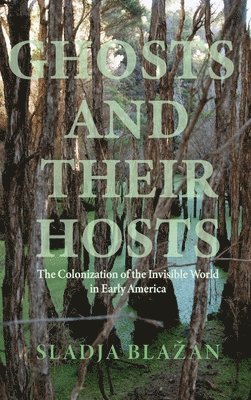
Ghost stories as a window on the American settler psycheIn this innovative book, Sladja Blažan explains the foundational role of ghost stories in fostering the cultural imaginary, offering a literal medium for framing political ideologies, philosophical thought, racial anxieties, and social concerns. Ghosts and Their Hosts analyzes American ghost stories, considering their role as a settler colonial tool that emerged to help justify land appropriation and human labor exploitation. Blažan breaks with the long tradition of reading ghosts as harbingers of justice, arguing that early American ghost stories worked instead to suppress the presence of non-Europeans through fantasies of European transcultural incorporation. Images of sentient forests and nature possessed by spirits helped develop fixed racial, gendered, and sexualized categories, while authors used ghosts to affirm existing hierarchies and establish new ones. Focusing on the cultural exchanges between Germany, England, France, and the United States around the turn of the nineteenth century, Blažan deploys a groundbreaking ecocritical and comparative approach to shed light on this haunting subject.
Häftad, Engelska, 2024
484 kr
Skickas inom 10-15 vardagar
Ghost stories as a window on the American settler psycheIn this innovative book, Sladja Blažan explains the foundational role of ghost stories in fostering the cultural imaginary, offering a literal medium for framing political ideologies, philosophical thought, racial anxieties, and social concerns. Ghosts and Their Hosts analyzes American ghost stories, considering their role as a settler colonial tool that emerged to help justify land appropriation and human labor exploitation. Blažan breaks with the long tradition of reading ghosts as harbingers of justice, arguing that early American ghost stories worked instead to suppress the presence of non-Europeans through fantasies of European transcultural incorporation. Images of sentient forests and nature possessed by spirits helped develop fixed racial, gendered, and sexualized categories, while authors used ghosts to affirm existing hierarchies and establish new ones. Focusing on the cultural exchanges between Germany, England, France, and the United States around the turn of the nineteenth century, Blažan deploys a groundbreaking ecocritical and comparative approach to shed light on this haunting subject.
607 kr
Läs direkt efter köp
Ghost stories as a window on the American settler psyche In this innovative book, Sladja Blažan explains the foundational role of ghost stories in fostering the cultural imaginary, offering a medium for framing political ideologies, philosophical thought, racial anxieties, and social concerns. Ghosts and Their Hosts analyzes American ghost stories, considering their role as a settler colonial tool that emerged to help justify land appropriation and human labor exploitation. Blažan breaks with the long tradition of reading ghosts as harbingers of justice, arguing that early American ghost stories worked instead to suppress the presence of non-Europeans through fantasies of European transcultural incorporation. Images of sentient forests and nature possessed by spirits helped develop fixed racial, gendered, and sexualized categories, while authors used ghosts to affirm existing hierarchies and establish new ones. Focusing on the cultural exchanges between Germany, England, France, and the United States around the turn of the nineteenth century, Blažan deploys a groundbreaking ecocritical and comparative approach to shed light on this haunting subject.
Inbunden, Engelska, 2021
1 314 kr
Skickas inom 10-15 vardagar
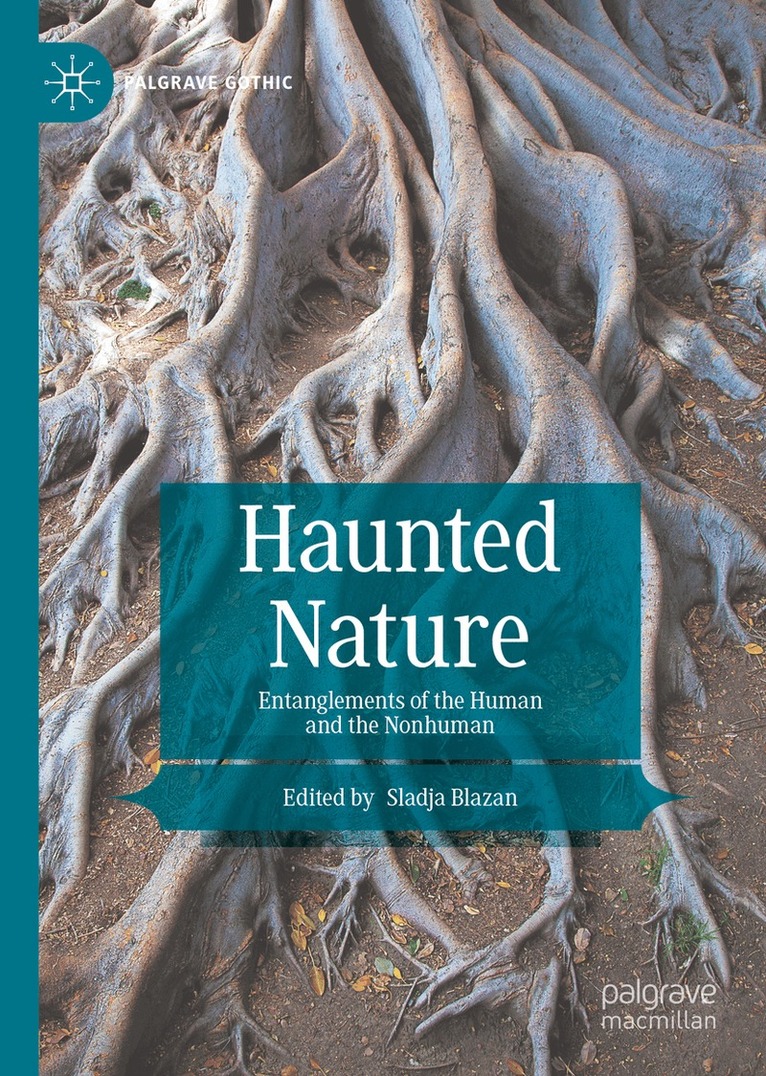
This volume is a study of human entanglements with Nature as seen through the mode of haunting. As an interruption of the present by the past, haunting can express contemporary anxieties concerning our involvement in the transformation of natural environments and their ecosystems, and our complicity in their collapse. It can also express a much-needed sense of continuity and relationality. The complexity of the question—who and what gets to be called human with respect to the nonhuman—is reflected in these collected chapters, which, in their analysis of cinematic and literary representations of sentient Nature within the traditional gothic trope of haunting, bring together history, race, postcolonialism, and feminism with ecocriticism and media studies. Given the growing demand for narratives expressing our troubled relationship with Nature, it is imperative to analyze this contested ground.“Chapter 6” is available open access under a Creative Commons Attribution 4.0 International License via link.springer.com.
E-bok
Engelska, 20211 664 kr
Läs direkt efter köp
This volume is a study of human entanglements with Nature as seen through the mode of haunting. As an interruption of the present by the past, haunting can express contemporary anxieties concerning our involvement in the transformation of natural environments and their ecosystems, and our complicity in their collapse. It can also express a much-needed sense of continuity and relationality. The complexity of the question—who and what gets to be called human with respect to the nonhuman—is reflected in these collected chapters, which, in their analysis of cinematic and literary representations of sentient Nature within the traditional gothic trope of haunting, bring together history, race, postcolonialism, and feminism with ecocriticism and media studies. Given the growing demand for narratives expressing our troubled relationship with Nature, it is imperative to analyze this contested ground.“Chapter 6” is available open access under a Creative Commons Attribution 4.0 International License via link.springer.com.
Häftad, Engelska, 2022
1 314 kr
Skickas inom 10-15 vardagar
This volume is a study of human entanglements with Nature as seen through the mode of haunting. As an interruption of the present by the past, haunting can express contemporary anxieties concerning our involvement in the transformation of natural environments and their ecosystems, and our complicity in their collapse. It can also express a much-needed sense of continuity and relationality. The complexity of the question—who and what gets to be called human with respect to the nonhuman—is reflected in these collected chapters, which, in their analysis of cinematic and literary representations of sentient Nature within the traditional gothic trope of haunting, bring together history, race, postcolonialism, and feminism with ecocriticism and media studies. Given the growing demand for narratives expressing our troubled relationship with Nature, it is imperative to analyze this contested ground.“Chapter 6” is available open access under a Creative Commons Attribution 4.0 International License via link.springer.com.