Slim Abdennadher - Böcker
Visar alla böcker från författaren Slim Abdennadher. Handla med fri frakt och snabb leverans.
5 produkter
5 produkter
1 642 kr
Skickas inom 10-15 vardagar
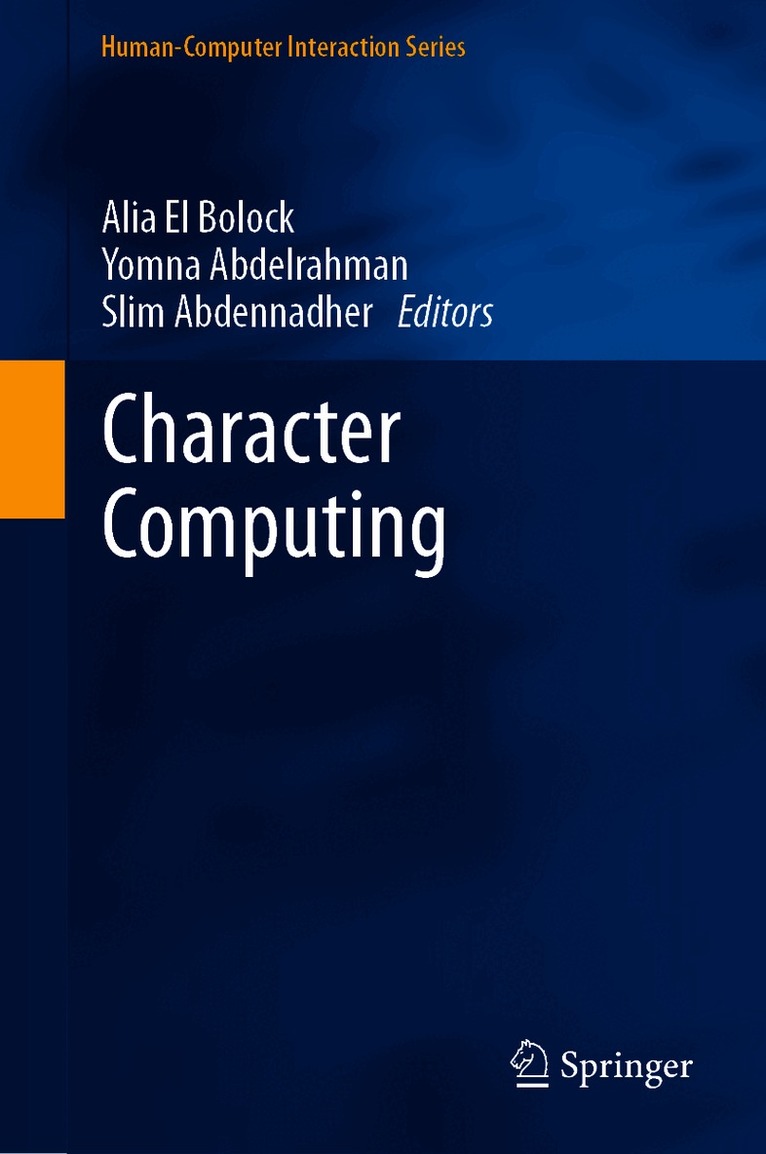
The book gives an introduction into the theory and practice of the transdisciplinary field of Character Computing, introduced by Alia El Bolock.The latest scientific findings indicate that “One size DOES NOT fit all” in terms of how to design interactive systems and predict behavior to tailor the interaction experience. Emotions are one of the essential factors that influence people’s daily experiences; they influence decision making and how different emotions are interpreted by different individuals. For example, some people may perform better under stress and others may break.Building upon Rosalind Picard’s vision, if we want computers to be genuinely intelligent and to interact naturally with us, we must give computers the ability to recognize, understand, even to have and express emotions and how different characters perceive and react to these emotions, hence having richer and truly tailored interaction experiences.Psychological processes or personality traits are embedded in the existing fields of Affective and Personality Computing. However, this book is the first that systematically addresses this including the whole human character; namely our stable personality traits, our variable affective, cognitive and motivational states as well as our morals, beliefs and socio-cultural embedding. The book gives an introduction into the theory and practice of the transdisciplinary field of Character Computing. The emerging field leverages Computer Science and Psychology to extend technology to include the whole character of humans and thus paves the way for researchers to truly place humans at the center of any technological development.Character Computing is presented from three main perspectives:● Profiling and sensing the character● Leveraging characters to build ubiquitous character-aware systems ● Investigating how to extend Artificial Intelligence to create artificial characters
1 642 kr
Skickas inom 10-15 vardagar
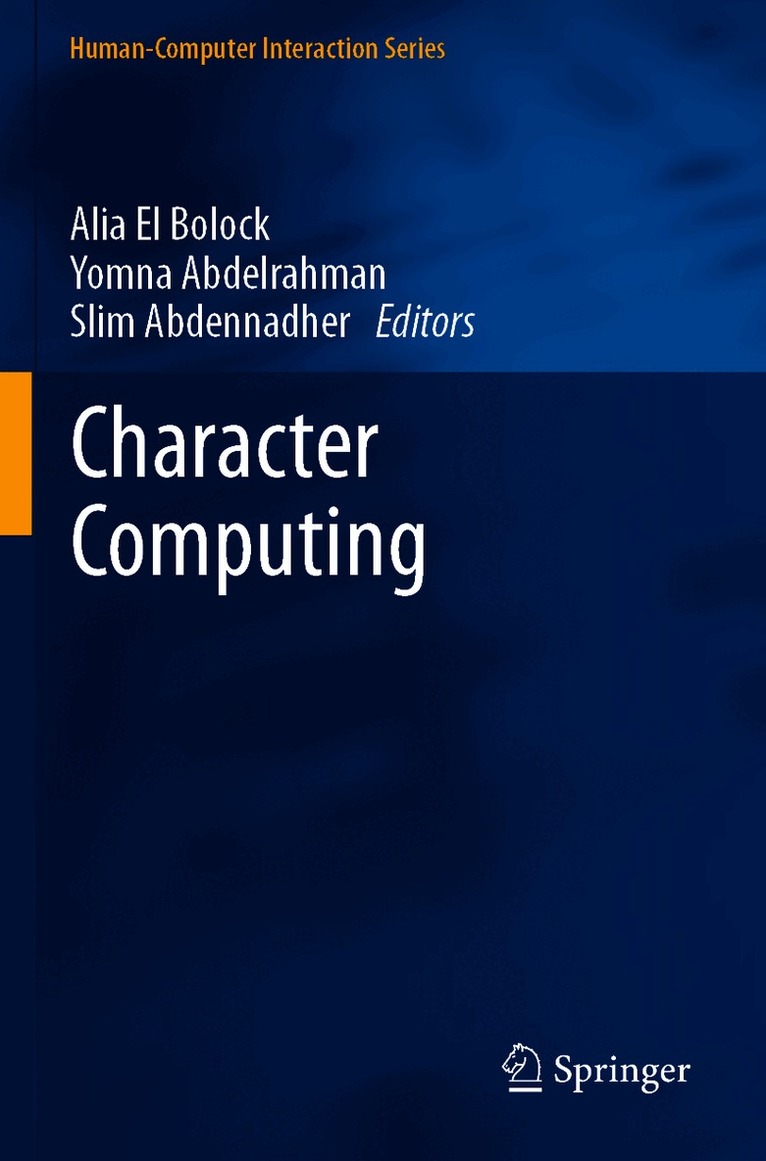
The book gives an introduction into the theory and practice of the transdisciplinary field of Character Computing, introduced by Alia El Bolock.The latest scientific findings indicate that “One size DOES NOT fit all” in terms of how to design interactive systems and predict behavior to tailor the interaction experience. Emotions are one of the essential factors that influence people’s daily experiences; they influence decision making and how different emotions are interpreted by different individuals. For example, some people may perform better under stress and others may break.Building upon Rosalind Picard’s vision, if we want computers to be genuinely intelligent and to interact naturally with us, we must give computers the ability to recognize, understand, even to have and express emotions and how different characters perceive and react to these emotions, hence having richer and truly tailored interaction experiences.Psychological processes or personality traits are embedded in the existing fields of Affective and Personality Computing. However, this book is the first that systematically addresses this including the whole human character; namely our stable personality traits, our variable affective, cognitive and motivational states as well as our morals, beliefs and socio-cultural embedding. The book gives an introduction into the theory and practice of the transdisciplinary field of Character Computing. The emerging field leverages Computer Science and Psychology to extend technology to include the whole character of humans and thus paves the way for researchers to truly place humans at the center of any technological development.Character Computing is presented from three main perspectives:● Profiling and sensing the character● Leveraging characters to build ubiquitous character-aware systems ● Investigating how to extend Artificial Intelligence to create artificial characters
235 kr
Skickas inom 10-15 vardagar
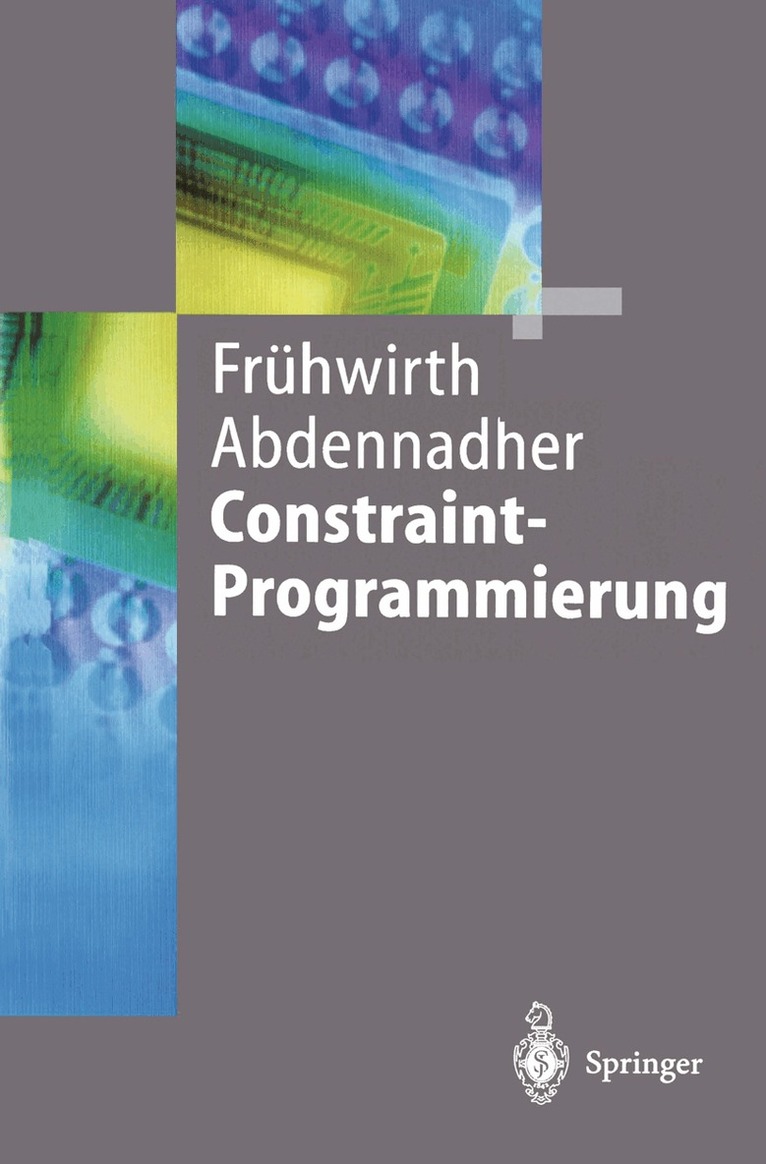
Das Buch gibt einen kompakten, aber umfassenden Überblick über das Problemlösen und Programmieren mit "Constraints" (Randbedingungen). Diese aktuelle Programmiermethodik ermöglicht es, Aufgaben direkt zu formulieren und effizient zu lösen. Sie gewinnt zusehends Bedeutung in Anwendungsbereichen wie Kombinatorische Suchprobleme (z.B. Zeitplanen, Layout-Optimierung), Berechnungen (Finanzanalyse), Simulation (Hardware-Verifikation) oder allgemein Schließen und Rechnen mit ungenauer oder unvollständiger Information (z.B. Kostenschätzung). Die theoretisch fundierte Darstellung mit Aufgaben und Anwendungsbeispielen aus der Praxis ist in der Lehre erprobt, aber auch für Forscher und Praktiker von Nutzen.
554 kr
Skickas inom 10-15 vardagar
The book is a short, concise and complete presentation of constraint programming and reasoning. The use of constraints had its scientific and commercial breakthrough in the 1990s. Programming with constraints makes it possible to model and solve problems with uncertain, incomplete information and combinatorial problems, as they are abundant in industry and commerce, such as scheduling, planning, transportation, resource allocation, layout, design and analysis. The theoretically well-founded presentation includes application examples from real life. It introduces the common classes of constraint programming languages and constraint systems in a uniform way. Constraint solving algorithms are specified and implemented in the constraint handling rules language (CHR).This book is ideally suited as a textbook for graduate students and as a resource for researchers and practitioners. The Internet support includes teaching material, software, latest news and online use and examples of the CHR language.
554 kr
Skickas inom 10-15 vardagar
The book is a short, concise and complete presentation of constraint programming and reasoning. The use of constraints had its scientific and commercial breakthrough in the 1990s. Programming with constraints makes it possible to model and solve problems with uncertain, incomplete information and combinatorial problems, as they are abundant in industry and commerce, such as scheduling, planning, transportation, resource allocation, layout, design and analysis. The theoretically well-founded presentation includes application examples from real life. It introduces the common classes of constraint programming languages and constraint systems in a uniform way. Constraint solving algorithms are specified and implemented in the constraint handling rules language (CHR). This book is ideally suited as a textbook for graduate students and as a resource for researchers and practitioners. The Internet support includes teaching material, software, latest news and online use and examples of the CHR language.