Snehasish Mishra - Böcker
Visar alla böcker från författaren Snehasish Mishra. Handla med fri frakt och snabb leverans.
4 produkter
4 produkter
2 692 kr
Skickas inom 10-15 vardagar
Biogas is a renewable energy resource that can be an alternative solution for the world’s insatiable energy demands while helping in managing waste and reducing the greenhouse gas (GHG) emissions. It is also regarded as carbon neutral as the carbon in biogas comes from organic matter (feedstock) that captured this carbon from atmospheric CO2 over a relatively short timescale. This book has been written and compiled to collate latest information on biogas technology to help readers to understand the fruitful exploitation of the process.Note: T&F does not sell or distribute the Hardback in India, Pakistan, Nepal, Bhutan, Bangladesh and Sri Lanka. This title is co-published with New India Publishing Agency.
1 243 kr
Skickas inom 7-10 vardagar
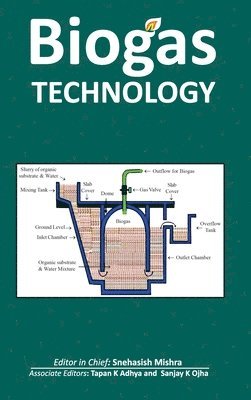
Biogas is a renewable energy source that can help meet global energy demands while also managing waste and reducing greenhouse gas emissions. It is considered carbon neutral because the carbon in biogas originates from organic matter (feedstock) that absorbed atmospheric CO2 over a relatively short period of time.This book has been written and compiled to provide the latest information on biogas technology, with the goal of helping readers, researchers, and extension workers understand the processs benefits. It contains fourteen chapters, primarily divided into three major categories: 01. The first category covers the fundamental aspects of the biomethanation process, including ecology, microbiology, biochemistry, and molecular biology. 02. The second category discusses the evolution of the technology in the Indian and global context, from the laboratory to the field. 03. The final category examines the economics of the technology. Experts in the field have contributed to the books chapters.The Annexures provide additional useful information, including a model bankable scheme for biogas commercialization, frequently asked questions about adopting biogas technology, common terminologies in biogas research, a glossary of abbreviations and symbols used in biogas research, and prominent global entities involved in biogas R&D and commercialization.
3 067 kr
Skickas inom 7-10 vardagar
Vaccines act as a cornerstone of public health and form an essential defence against infectious diseases. Vaccines have played a crucial role in eradicating diseases such as smallpox over the past two centuries and have significantly reduced the impact of polio, highlighting their essential role in combating vaccine-preventable infectious diseases. As the most potent defence to prevent the rapid spread of pathogens and mitigate the severity of outbreaks, vaccines effectively manage pandemics. Vaccinology has evolved greatly with time, especially during the recent pandemic. This Edited Volume of the compiled chapters is a thorough exploration of the various aspects of vaccinology, its historical evolution, current advancements, the socioeconomic implications and future directions. The work traces the history of vaccination, from the early variolation techniques to the cutting-edge molecular platforms, illustrating the profound effect of biotechnological progress on vaccine development. COVID-19 pandemic served as a triggering point to showcase the global collective strength and expedited the unprecedented global efforts to design, develop and deploy vaccines in alarming situations. The chapters highlight the rapid evolution of vaccine technologies during the pandemic, with mRNA vaccines emerging as a transformative tool. Many authorised mRNA vaccines to combat SARS-CoV-2 demonstrated remarkable flexibility and efficacy, opening new vistas to address other neglected and reemerging diseases. The technical challenges of mRNA vaccine production including issues surrounding storage, delivery mechanisms, and equitable distribution, especially in low- and middle-income countries are also covered. In addition to the technical advancements, the work examines the challenges in mRNA vaccine production, like the logistics challenges of storage, delivery and equitable distribution in resource-limited areas. Supported by artificial intelligence (AI) and machine learning (ML), reverse vaccinology is revolutionising and accelerating antigen discovery by squeezing the vaccine development timeline. AI and ML facilitate identifying novel antiviral candidates by using bigdata that is essential to timely and effectively counter the mutating pathogens like SARS-CoV-2. Vaccination campaigns protect the vulnerable population by promoting herd immunity and reduce strain on the healthcare systems. The chapters underscore the need for timely vaccine development and deployment as critical to reduce the socioeconomic impact of pandemics and safeguarding the global public health. The chapters collection also delves into the One Health paradigm that emphasises the interconnectedness of human, animal and the environmental health to address zoonotic and reverse zoonotic diseases which are becoming more prevalent. This holistic approach expands vaccination strategies to encompass animals, particularly the disease reservoirs, and stresses the need for a coordinated, equitable vaccination effort for human and animal populations to prevent future pandemics.The socioeconomic impacts of vaccination are analysed in detail, highlighting its role in reducing the healthcare and hospitalisation costs, and saving precious lives. Despite these advantages, challenges such as vaccine hesitancy, misinformation and inequitable access continue to persist. The chapters explore the disparities between high-income and low- and middle-income countries in vaccine access, advocating for scalable production models and global distribution strategies to ensure broader immunisation coverage. The benefits of booster dose are assessed in light of waning immunity and emerging viral variants. The influence of stimuli like circadian rhythms on vaccine efficacy and the role of boosters in public healthcare strategies are considered crucial in optimising immunisation efforts. Emphasising enhanced immunity and extending protection against severe disease outcomes as necessary, this dedicated chapter discusses the biological and economic implications of booster vaccination. India significant contribution to global vaccine diplomacy is highlighted as a key case study. India rapid and large-scale vaccine production during the COVID-19 pandemic demonstrated its capacity to greatly influence global healthcare as demonstrated through its vaccine diplomacy. Indian vaccine manufacturers played a vital role in providing affordable and effective vaccines, supporting equitable distribution policies and fostering international cooperation. These efforts underscored India strategic position in global vaccine landscape and its commitment to advancing community healthcare initiatives.This collection of chapters offers a comprehensive understanding of the scientific, technological and socioeconomic dimensions of vaccine development. It presents a narrative of resilience and innovation, illustrating the ability of the global community to respond to emergency health situations while emphasising the importance of continued investment in research, infrastructure, and equitable healthcare practices. This work would serve as a useful resource for researchers, policymakers and healthcare professionals, providing critical insights into the challenges and opportunities in vaccinology and shaping a roadmap to address future global health challenges.
3 067 kr
Skickas inom 7-10 vardagar
Biogas, a renewable energy source, presents a potential alternative to meet global energy demands while simultaneously managing waste and reducing greenhouse gas emissions. It is considered carbon neutral as the carbon in biogas originates from organic matter, also known as feedstock, which absorbed CO2 from the atmosphere over a relatively brief period of time.This book has been meticulously curated to provide the latest information on biogas technology. Comprised of fourteen chapters, the content is primarily divided into three key sections: 01. The first section delves into the fundamental aspects of the biomethanation process, including its ecology, microbiology, biochemistry, and molecular biology. 02. The second section offers insights into the evolution of the technology in both the Indian and global contexts, tracing its development from the laboratory to large-scale implementation. 03. The final section focuses on the economics of the technology. Renowned experts in the field have contributed their expertise to ensure the accuracy and relevance of the content.The books usefulness is further enhanced by the inclusion of annexes, which provide additional resources such as a model bankable scheme for biogas commercialization, frequently asked questions about adopting biogas technology, a list of common terminologies in biogas research, a glossary of abbreviations and symbols commonly used in biogas research, and an overview of prominent global entities involved in biogas research and development.