Sonia Stefanizzi – författare
Visar alla böcker från författaren Sonia Stefanizzi. Handla med fri frakt och snabb leverans.
4 produkter
4 produkter
Inbunden, Engelska, 2007
1 090 kr
Skickas inom 10-15 vardagar
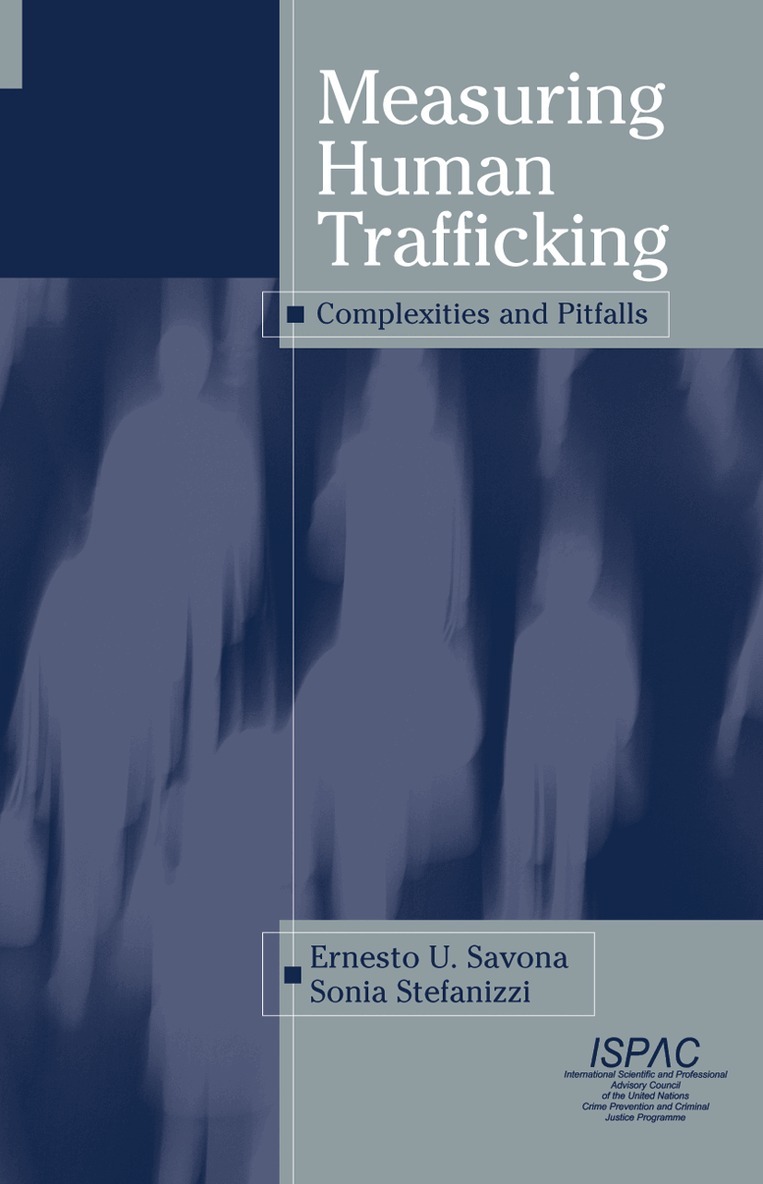
Ernesto U. Savona and Sonia Stefanizzi The need to tackle the phenomenon of trafficking in human beings and, as part of this, the sexual exploitation of foreign women and children, has been increasingly recognized in recent years by many institutional, international and national agencies - as the copious documentation on the subject demonstrates. Yet, beyond all the interventions and provisions that have been made, the links: prostitution-migration, poor countri- rich countries, demand for sex from men in rich countries met by women from poor countries, still exist in all their starkness despite all counter-measures. These measures include, among others, information and prevention campaigns, enhanced co-operation between the various national and international police forces to combat the criminal organi- tions and the promulgation and implementation of new legislative pro- sions. Any analysis of the phenomenon shows with increasing clarity that even if the terms “clandestine immigration” and “trafficking in human beings” define in principle two different activities, each of them cons- tently becomes closely intertwined with the other. They are both, in fact, segments of a new immense area of criminal activity, generated by the migrants’ aspirations for a better life for themselves and their families, on one hand, and the obstacles which the immigration authorities put in the way of their realization, on the other.
E-bok
PDF, Engelska, 20071 367 kr
Läs direkt efter köp
Ernesto U. Savona and Sonia Stefanizzi The need to tackle the phenomenon of trafficking in human beings and, as part of this, the sexual exploitation of foreign women and children, has been increasingly recognized in recent years by many institutional, international and national agencies - as the copious documentation on the subject demonstrates. Yet, beyond all the interventions and provisions that have been made, the links: prostitution-migration, poor countri- rich countries, demand for sex from men in rich countries met by women from poor countries, still exist in all their starkness despite all counter-measures. These measures include, among others, information and prevention campaigns, enhanced co-operation between the various national and international police forces to combat the criminal organi- tions and the promulgation and implementation of new legislative pro- sions. Any analysis of the phenomenon shows with increasing clarity that even if the terms “clandestine immigration” and “trafficking in human beings” define in principle two different activities, each of them cons- tently becomes closely intertwined with the other. They are both, in fact, segments of a new immense area of criminal activity, generated by the migrants’ aspirations for a better life for themselves and their families, on one hand, and the obstacles which the immigration authorities put in the way of their realization, on the other.
E-bok
PDF, Engelska, 19991 142 kr
Läs direkt efter köp
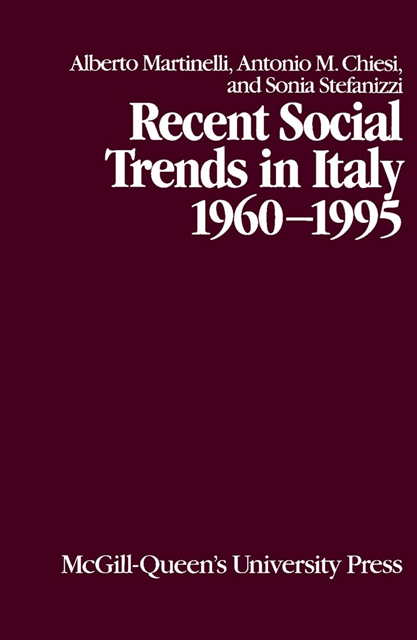
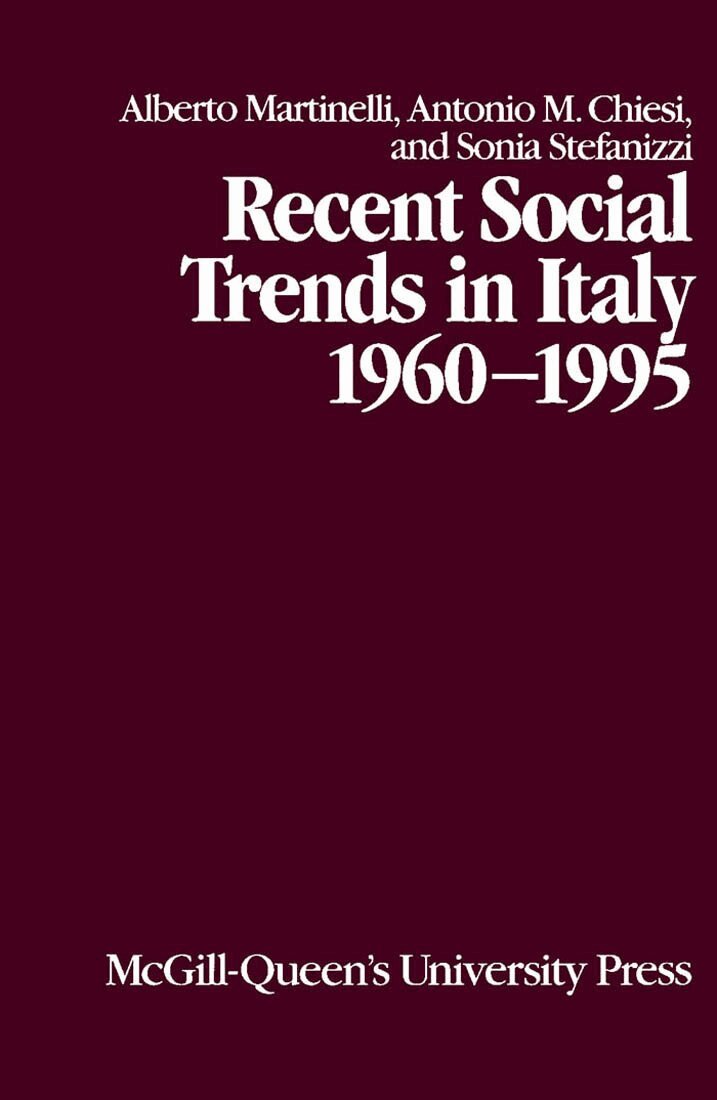
Italy remains an enigma for many observers. Recent Social Trends in Italy, 1960-1995, the sixth volume from the international Comparative Charting of Social Change program, provides a new and convincing schema for its comprehension. It shows that three essential institutions have structured and unified Italian society: the family, the church, and political parties. While the state remains a weak institution, it is important as a regulator of the economy and of society through the welfare state. The book, which contains a long introduction by Alberto Martinelli on the uneven modernization of Italy, shows the usefulness of analysing social change through study of a series of macro-social trends. These trends range from life-style structures to fertility, leisure, consumption, inequality, religion, and family, among others. This sixth national profile provides more arguements in favour of a hypothesis of diversification, rather than convergence, of modern societies. As Henri Mendras writes in the preface of the book, "The more we change, the more we remain ourselves: that is the conclusion of our comparative research, and the Italian study provides further ample proof of it."
Häftad, Engelska, 2010
1 090 kr
Skickas inom 10-15 vardagar
Ernesto U. Savona and Sonia Stefanizzi The need to tackle the phenomenon of trafficking in human beings and, as part of this, the sexual exploitation of foreign women and children, has been increasingly recognized in recent years by many institutional, international and national agencies - as the copious documentation on the subject demonstrates. Yet, beyond all the interventions and provisions that have been made, the links: prostitution-migration, poor countri- rich countries, demand for sex from men in rich countries met by women from poor countries, still exist in all their starkness despite all counter-measures. These measures include, among others, information and prevention campaigns, enhanced co-operation between the various national and international police forces to combat the criminal organi- tions and the promulgation and implementation of new legislative pro- sions. Any analysis of the phenomenon shows with increasing clarity that even if the terms “clandestine immigration” and “trafficking in human beings” define in principle two different activities, each of them cons- tently becomes closely intertwined with the other. They are both, in fact, segments of a new immense area of criminal activity, generated by the migrants’ aspirations for a better life for themselves and their families, on one hand, and the obstacles which the immigration authorities put in the way of their realization, on the other.