Sonja Boos - Böcker
Visar alla böcker från författaren Sonja Boos. Handla med fri frakt och snabb leverans.
4 produkter
4 produkter
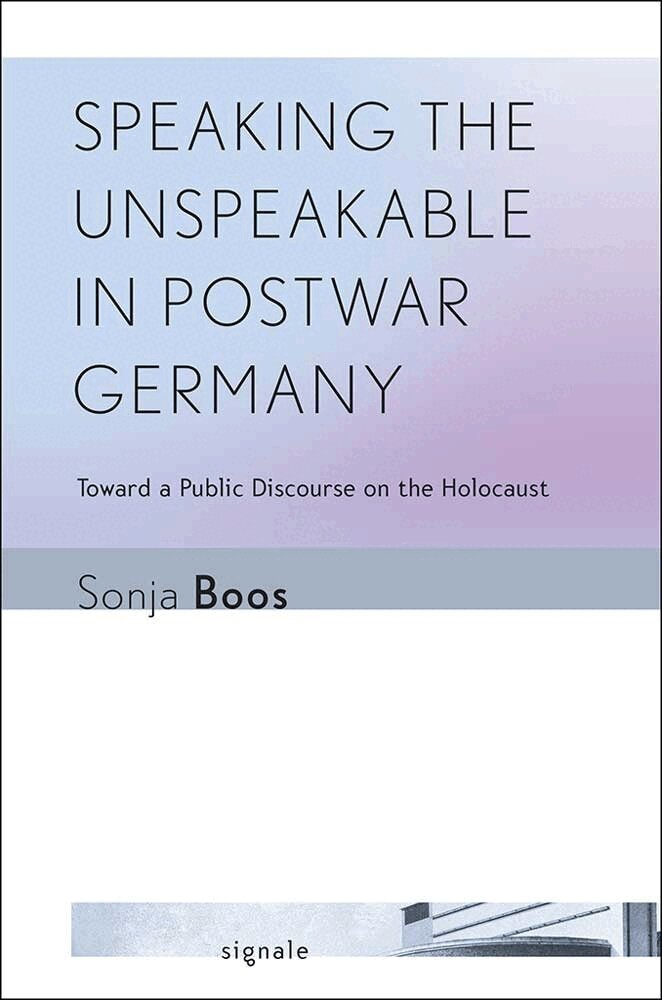
Speaking the Unspeakable in Postwar Germany
Toward a Public Discourse on the Holocaust
Inbunden, Engelska, 2014
1 604 kr
Skickas inom 10-15 vardagar
Speaking the Unspeakable in Postwar Germany is an interdisciplinary study of a diverse set of public speeches given by major literary and cultural figures in the 1950s and 1960s. Through close readings of canonical speeches by Hannah Arendt, Theodor W. Adorno, Ingeborg Bachmann, Martin Buber, Paul Celan, Uwe Johnson, Peter Szondi, and Peter Weiss, Sonja Boos demonstrates that these speakers both facilitated and subverted the construction of a public discourse about the Holocaust in postwar West Germany. The author's analysis of original audio recordings of the speech events (several of which will be available on a companion website) improves our understanding of the spoken, performative dimension of public speeches. Speaking the Unspeakable in Postwar Germany emphasizes the social constructedness of discourse, experience, and identity, but does not neglect the pragmatic conditions of aesthetic and intellectual production—most notably, the felt need to respond to the breach in tradition caused by the Holocaust. The book thereby illuminates the process by which a set of writers and intellectuals, instead of trying to mend what they perceived as a radical break in historical continuity or corroborating the myth of a "new beginning," searched for ways to make this historical rupture rhetorically and semantically discernible and literally audible.
Speaking the Unspeakable in Postwar Germany
Toward a Public Discourse on the Holocaust
Häftad, Engelska, 2014
448 kr
Skickas inom 10-15 vardagar
Speaking the Unspeakable in Postwar Germany is an interdisciplinary study of a diverse set of public speeches given by major literary and cultural figures in the 1950s and 1960s. Through close readings of canonical speeches by Hannah Arendt, Theodor W. Adorno, Ingeborg Bachmann, Martin Buber, Paul Celan, Uwe Johnson, Peter Szondi, and Peter Weiss, Sonja Boos demonstrates that these speakers both facilitated and subverted the construction of a public discourse about the Holocaust in postwar West Germany. The author's analysis of original audio recordings of the speech events (several of which will be available on a companion website) improves our understanding of the spoken, performative dimension of public speeches. Speaking the Unspeakable in Postwar Germany emphasizes the social constructedness of discourse, experience, and identity, but does not neglect the pragmatic conditions of aesthetic and intellectual production—most notably, the felt need to respond to the breach in tradition caused by the Holocaust. The book thereby illuminates the process by which a set of writers and intellectuals, instead of trying to mend what they perceived as a radical break in historical continuity or corroborating the myth of a "new beginning," searched for ways to make this historical rupture rhetorically and semantically discernible and literally audible.
1 394 kr
Skickas inom 10-15 vardagar
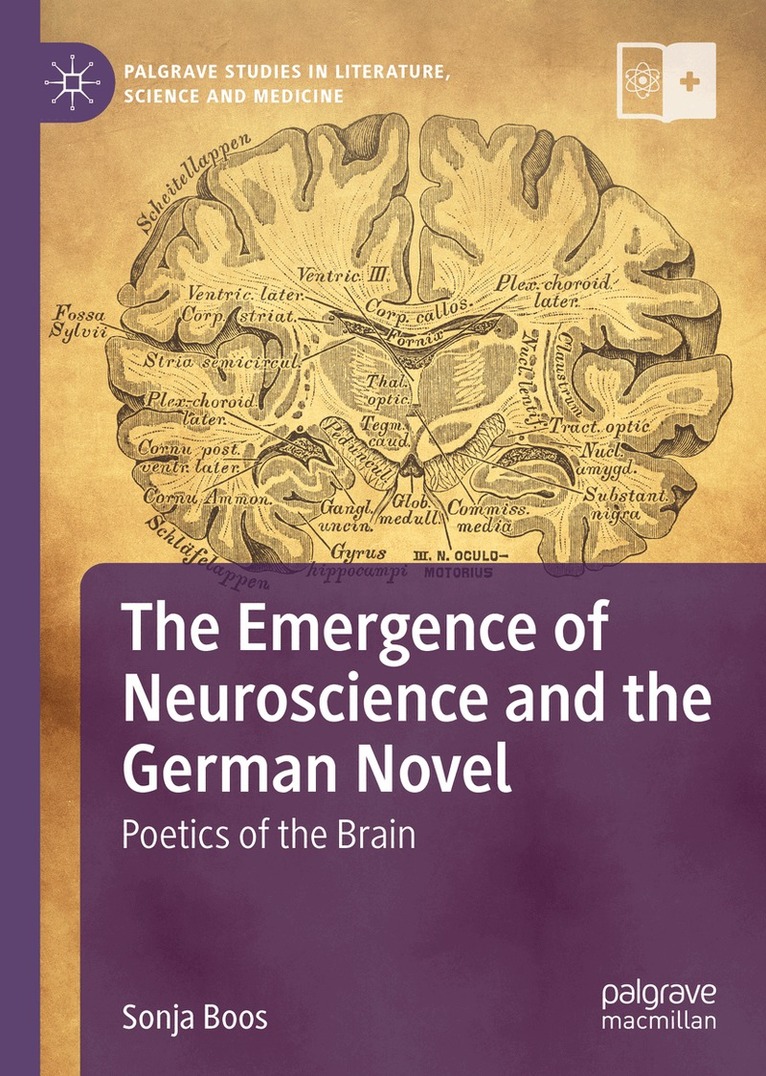
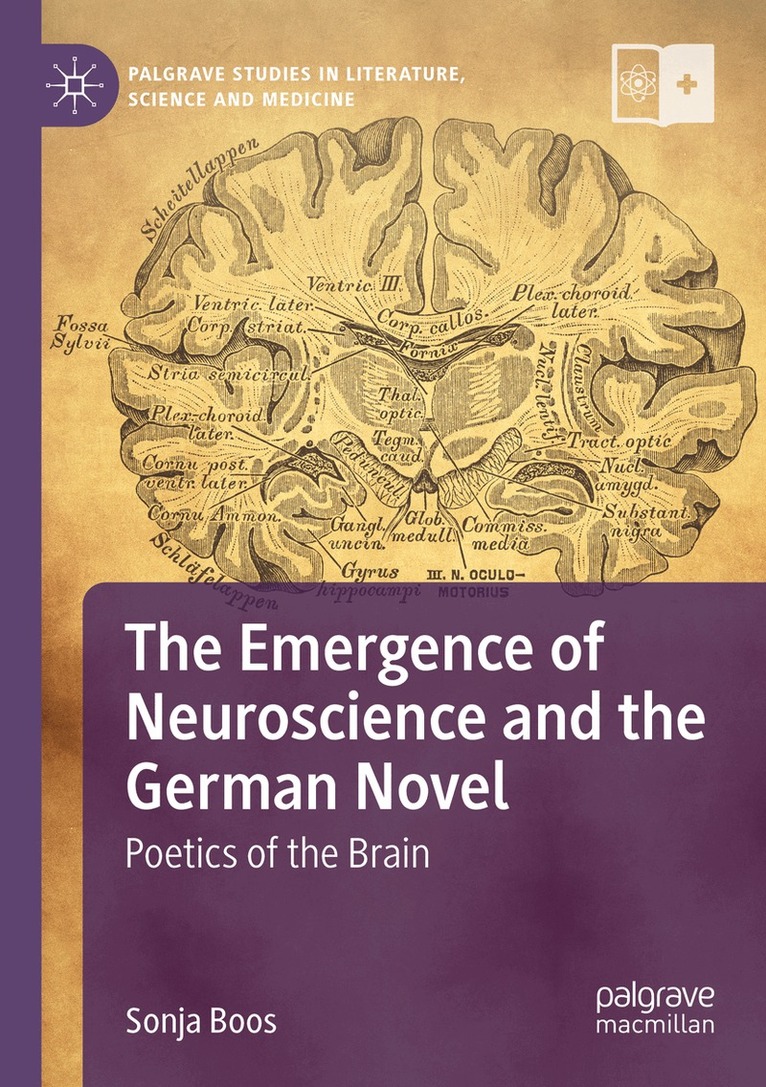
The Emergence of Neuroscience and the German Novel: Poetics of the Brain revises the dominant narrative about the distinctive psychological inwardness and introspective depth of the German novel by reinterpreting the novel’s development from the perspective of the nascent discipline of neuroscience, the emergence of which is coterminous with the rise of the novel form. In particular, it asks how the novel’s formal properties—stylistic, narrative, rhetorical, and figurative—correlate with the formation of a neuroscientific discourse, and how the former may have assisted, disrupted, and/or intensified the medical articulation of neurological concepts. This study poses the question: how does this rapidly evolving field emerge in the context of nineteenth century cultural practices and what were the conditions for its emergence in the German-speaking world specifically? Where did neuroscience begin and how did it broaden in scope? And most crucially, to what degree does it owe its existence to literature?
1 394 kr
Skickas inom 10-15 vardagar
The Emergence of Neuroscience and the German Novel: Poetics of the Brain revises the dominant narrative about the distinctive psychological inwardness and introspective depth of the German novel by reinterpreting the novel’s development from the perspective of the nascent discipline of neuroscience, the emergence of which is coterminous with the rise of the novel form. In particular, it asks how the novel’s formal properties—stylistic, narrative, rhetorical, and figurative—correlate with the formation of a neuroscientific discourse, and how the former may have assisted, disrupted, and/or intensified the medical articulation of neurological concepts. This study poses the question: how does this rapidly evolving field emerge in the context of nineteenth century cultural practices and what were the conditions for its emergence in the German-speaking world specifically? Where did neuroscience begin and how did it broaden in scope? And most crucially, to what degree does it owe its existence to literature?