1 005 kr
Läs direkt efter köp
1 005 kr
Läs direkt efter köp
1 005 kr
Läs direkt efter köp
1 506 kr
Skickas inom 5-8 vardagar
750 kr
Skickas inom 10-15 vardagar
3 725 kr
Skickas inom 10-15 vardagar
881 kr
Läs direkt efter köp
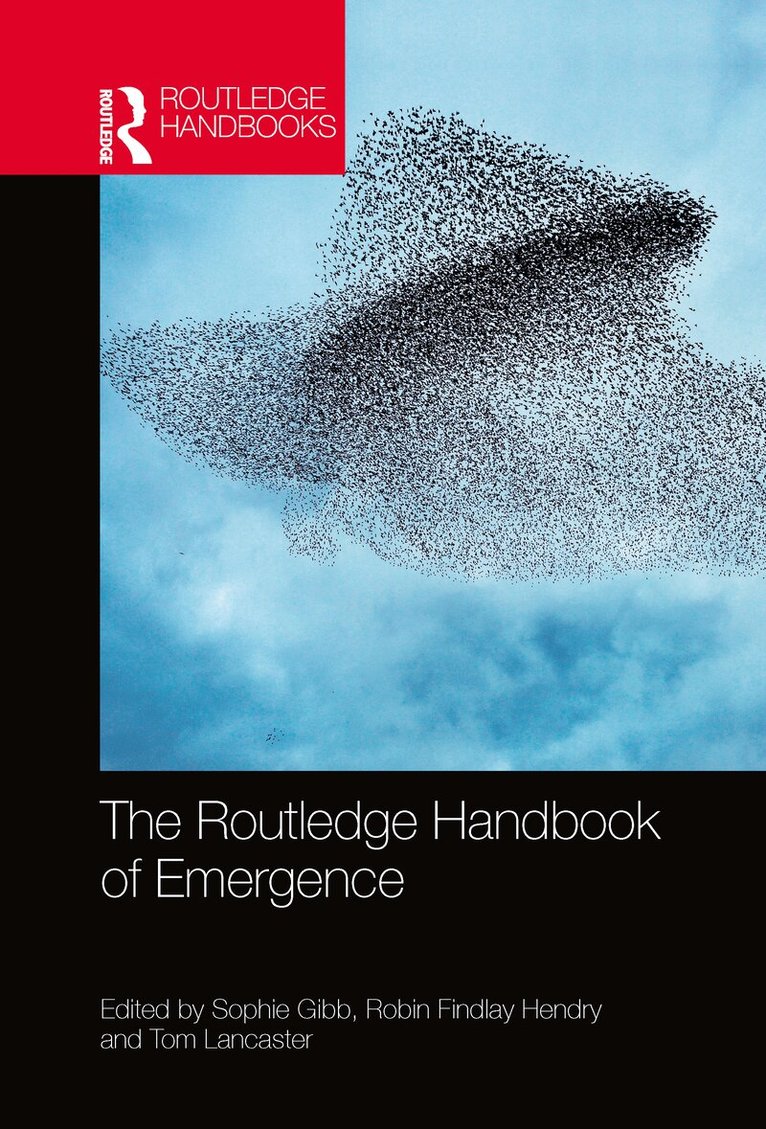
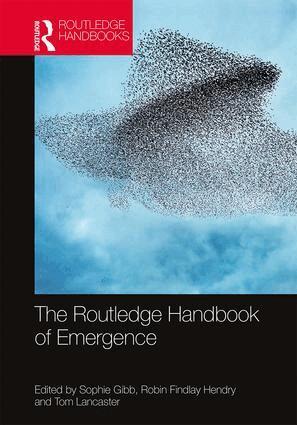
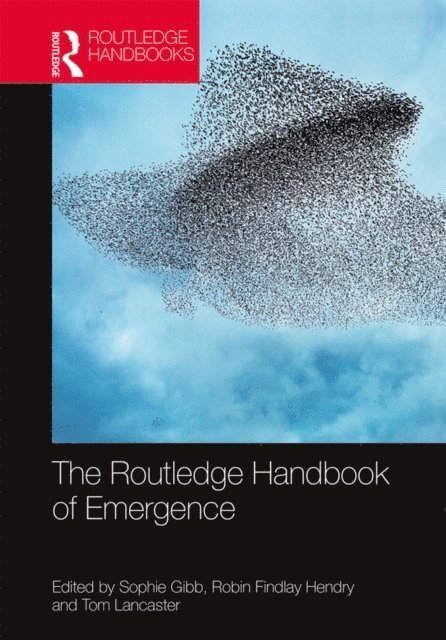
Emergence is often described as the idea that the whole is greater than the sum of the parts: interactions among the components of a system lead to distinctive novel properties. It has been invoked to describe the flocking of birds, the phases of matter and human consciousness, along with many other phenomena. Since the nineteenth century, the notion of emergence has been widely applied in philosophy, particularly in contemporary philosophy of mind, philosophy of science and metaphysics. It has more recently become central to scientists’ understanding of phenomena across physics, chemistry, complexity and systems theory, biology and the social sciences.
The Routledge Handbook of Emergence is an outstanding reference source and exploration of the concept of emergence, and is the first collection of its kind. Thirty-two chapters by an international team of contributors are organised into four parts:
Foundations of emergence Emergence and mind Emergence and physics Emergence and the special sciences
Within these sections important topics and problems in emergence are explained, including the British Emergentists; weak vs. strong emergence; emergence and downward causation; dependence, complexity and mechanisms; mental causation, consciousness and dualism; quantum mechanics, soft matter and chemistry; and evolution, cognitive science and social sciences.
Essential reading for students and researchers in philosophy of mind, philosophy of science and metaphysics, The Routledge Handbook of Emergence will also be of interest to those studying foundational issues in biology, chemistry, physics and psychology.
872 kr
Läs direkt efter köp
Emergence is often described as the idea that the whole is greater than the sum of the parts: interactions among the components of a system lead to distinctive novel properties. It has been invoked to describe the flocking of birds, the phases of matter and human consciousness, along with many other phenomena. Since the nineteenth century, the notion of emergence has been widely applied in philosophy, particularly in contemporary philosophy of mind, philosophy of science and metaphysics. It has more recently become central to scientists’ understanding of phenomena across physics, chemistry, complexity and systems theory, biology and the social sciences.
The Routledge Handbook of Emergence is an outstanding reference source and exploration of the concept of emergence, and is the first collection of its kind. Thirty-two chapters by an international team of contributors are organised into four parts:
Foundations of emergence Emergence and mind Emergence and physics Emergence and the special sciences
Within these sections important topics and problems in emergence are explained, including the British Emergentists; weak vs. strong emergence; emergence and downward causation; dependence, complexity and mechanisms; mental causation, consciousness and dualism; quantum mechanics, soft matter and chemistry; and evolution, cognitive science and social sciences.
Essential reading for students and researchers in philosophy of mind, philosophy of science and metaphysics, The Routledge Handbook of Emergence will also be of interest to those studying foundational issues in biology, chemistry, physics and psychology.
542 kr
Skickas inom 3-6 vardagar
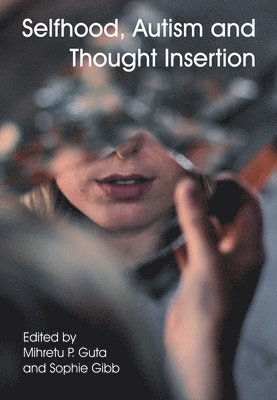
This book, a reprint of a special issue of the Journal of Consciousness Studies, presents engaging and informative analysis of three interrelated notions, namely: selfhood, the first-person pronoun 'I', and the first-person perspective. Philosophers have long debated about these notions on non-empirical grounds, often focusing on the question of whether the first-person pronoun 'I', beyond its role as a grammatical term, has an underlying implication for the ontology of selfhood. Philosophers continuously grapple with whether the first-person pronoun ‘I’ is a referring expression and, if it is, what its referent is or could be. To give an adequate treatment of such questions, philosophers have begun working across the relevant disciplines. This book highlights some excellent examples of the complex nature of first-person thoughts as they figure in linguistics, autism, thought insertion in schizophrenia, and the phenomenon of mental autonomy. In Selfhood, Autism and Thought Insertion, many of the leading philosophers working on this issue, as well as a few emerging scholars, have written 12 new essays addressing questions besetting the ontology of selfhood. The essays address topics as diverse as reflections on E.J. Lowe’s non-Cartesian substance dualism, physical determinism, the metaphysics and anti-metaphysics of the self, animalism, neo-Lockean persons, rationality and the first person, whether the first person is essentially a linguistic concept, first-person and third-person perspectives and autism, consciousness, the first-person perspective and neuroimaging, thought insertion, and mental autonomy. The contributors to this volume do not agree in all of the details associated with the notion of selfhood, yet they all have a common conviction that the central questions besetting it must be taken seriously.
1 005 kr
Läs direkt efter köp
1 005 kr
Läs direkt efter köp
1 506 kr
Skickas inom 5-8 vardagar
750 kr
Skickas inom 10-15 vardagar
3 725 kr
Skickas inom 10-15 vardagar
881 kr
Läs direkt efter köp
Emergence is often described as the idea that the whole is greater than the sum of the parts: interactions among the components of a system lead to distinctive novel properties. It has been invoked to describe the flocking of birds, the phases of matter and human consciousness, along with many other phenomena. Since the nineteenth century, the notion of emergence has been widely applied in philosophy, particularly in contemporary philosophy of mind, philosophy of science and metaphysics. It has more recently become central to scientists’ understanding of phenomena across physics, chemistry, complexity and systems theory, biology and the social sciences.
The Routledge Handbook of Emergence is an outstanding reference source and exploration of the concept of emergence, and is the first collection of its kind. Thirty-two chapters by an international team of contributors are organised into four parts:
Foundations of emergence Emergence and mind Emergence and physics Emergence and the special sciences
Within these sections important topics and problems in emergence are explained, including the British Emergentists; weak vs. strong emergence; emergence and downward causation; dependence, complexity and mechanisms; mental causation, consciousness and dualism; quantum mechanics, soft matter and chemistry; and evolution, cognitive science and social sciences.
Essential reading for students and researchers in philosophy of mind, philosophy of science and metaphysics, The Routledge Handbook of Emergence will also be of interest to those studying foundational issues in biology, chemistry, physics and psychology.
872 kr
Läs direkt efter köp
Emergence is often described as the idea that the whole is greater than the sum of the parts: interactions among the components of a system lead to distinctive novel properties. It has been invoked to describe the flocking of birds, the phases of matter and human consciousness, along with many other phenomena. Since the nineteenth century, the notion of emergence has been widely applied in philosophy, particularly in contemporary philosophy of mind, philosophy of science and metaphysics. It has more recently become central to scientists’ understanding of phenomena across physics, chemistry, complexity and systems theory, biology and the social sciences.
The Routledge Handbook of Emergence is an outstanding reference source and exploration of the concept of emergence, and is the first collection of its kind. Thirty-two chapters by an international team of contributors are organised into four parts:
Foundations of emergence Emergence and mind Emergence and physics Emergence and the special sciences
Within these sections important topics and problems in emergence are explained, including the British Emergentists; weak vs. strong emergence; emergence and downward causation; dependence, complexity and mechanisms; mental causation, consciousness and dualism; quantum mechanics, soft matter and chemistry; and evolution, cognitive science and social sciences.
Essential reading for students and researchers in philosophy of mind, philosophy of science and metaphysics, The Routledge Handbook of Emergence will also be of interest to those studying foundational issues in biology, chemistry, physics and psychology.
542 kr
Skickas inom 3-6 vardagar
This book, a reprint of a special issue of the Journal of Consciousness Studies, presents engaging and informative analysis of three interrelated notions, namely: selfhood, the first-person pronoun 'I', and the first-person perspective. Philosophers have long debated about these notions on non-empirical grounds, often focusing on the question of whether the first-person pronoun 'I', beyond its role as a grammatical term, has an underlying implication for the ontology of selfhood. Philosophers continuously grapple with whether the first-person pronoun ‘I’ is a referring expression and, if it is, what its referent is or could be. To give an adequate treatment of such questions, philosophers have begun working across the relevant disciplines. This book highlights some excellent examples of the complex nature of first-person thoughts as they figure in linguistics, autism, thought insertion in schizophrenia, and the phenomenon of mental autonomy. In Selfhood, Autism and Thought Insertion, many of the leading philosophers working on this issue, as well as a few emerging scholars, have written 12 new essays addressing questions besetting the ontology of selfhood. The essays address topics as diverse as reflections on E.J. Lowe’s non-Cartesian substance dualism, physical determinism, the metaphysics and anti-metaphysics of the self, animalism, neo-Lockean persons, rationality and the first person, whether the first person is essentially a linguistic concept, first-person and third-person perspectives and autism, consciousness, the first-person perspective and neuroimaging, thought insertion, and mental autonomy. The contributors to this volume do not agree in all of the details associated with the notion of selfhood, yet they all have a common conviction that the central questions besetting it must be taken seriously.