Sophie Hermans - Böcker
Visar alla böcker från författaren Sophie Hermans. Handla med fri frakt och snabb leverans.
3 produkter
3 produkter
2 101 kr
Skickas inom 10-15 vardagar
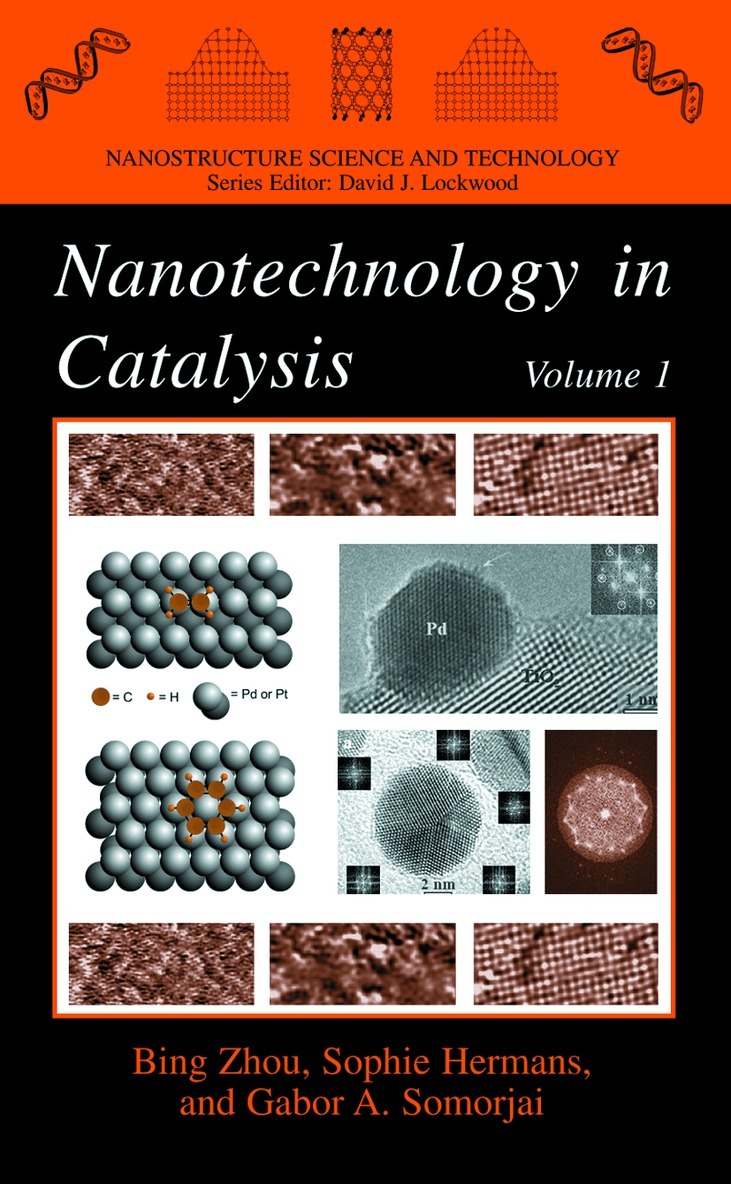
Catalysts, heterogeneous, homogeneous and enzyme, are usually nanoparticles. These are of vital for the functioning of the human body, for photosynthesis, and for producing fuels and chemicals in the petroleum and chemical industries. Interest in nanoscience and in nanotechnology in recent years focused attention on the opportunity to develop catalysts that exhibit 100% selectivity for a desired product, thus removing byproducts and eliminating waste. This type of selective process is often called green chemistry or green technology. This book is mainly based on the first and second symposia on Nanotechnology 51 in Catalysis which were held in spring 2001 at the ACS 221 National Meeting in San Diego, CA, and in fall 2002 at the ACS 2241h National Meeting in Boston, MA, respectively. We also extended our invitation to those who did not attend the meetings to contribute chapters where we saw a need to round out the scope of the topic. All chapters were peer-reviewed prior to final acceptance. We believe that the additional chapters and the peer-review significantly improved the quality of the book. In the summer of 2000 when we first proposed to organize a symposium on Nanotechnology in Catalysis to the ACS Secretariat of Catalysis and Surface Science (CATL), we received strong support from Dr. Nancy B. Jackson, then General Secretary of CATL. The symposium was enthusiastically received by the catalysis community. On the first day of the symposium, the conference room could not hold all the attendees.
2 101 kr
Skickas inom 10-15 vardagar
Catalysts, heterogeneous, homogeneous and enzyme, are usually nanoparticles. These are of vital for the functioning of the human body, for photosynthesis, and for producing fuels and chemicals in the petroleum and chemical industries. Interest in nanoscience and in nanotechnology in recent years focused attention on the opportunity to develop catalysts that exhibit 100% selectivity for a desired product, thus removing byproducts and eliminating waste. This type of selective process is often called green chemistry or green technology. This book is mainly based on the first and second symposia on Nanotechnology 51 in Catalysis which were held in spring 2001 at the ACS 221 National Meeting in San Diego, CA, and in fall 2002 at the ACS 2241h National Meeting in Boston, MA, respectively. We also extended our invitation to those who did not attend the meetings to contribute chapters where we saw a need to round out the scope of the topic. All chapters were peer-reviewed prior to final acceptance. We believe that the additional chapters and the peer-review significantly improved the quality of the book. In the summer of 2000 when we first proposed to organize a symposium on Nanotechnology in Catalysis to the ACS Secretariat of Catalysis and Surface Science (CATL), we received strong support from Dr. Nancy B. Jackson, then General Secretary of CATL. The symposium was enthusiastically received by the catalysis community. On the first day of the symposium, the conference room could not hold all the attendees.
2 461 kr
Tillfälligt slut
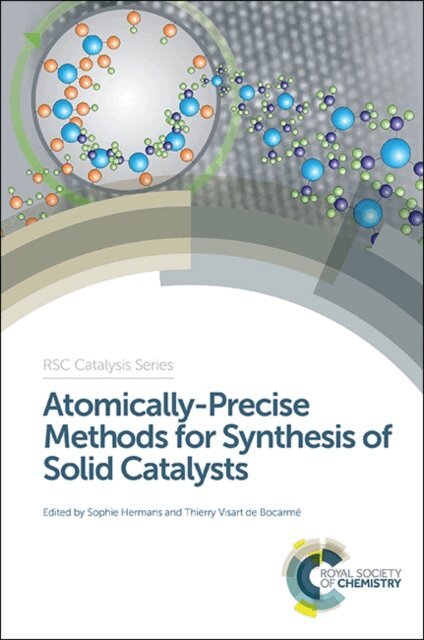
There is much interest in preparing catalysts with specific structures for a desired catalytic activity. Although there has been a great amount of research into correlating particles sizes and microstructure to catalytic activity, knowledge about practical catalysts still remain ill-defined. The current challenge is now to understand atomic control.Atomically-Precise Methods for Synthesis of Solid Catalysts provides an overview of recent developments in heterogeneous catalysts preparation which aim at controlling the microstructure of such catalysts at the atomic scale. Each chapter provides a different synthetic approach to achieve atomic-scale control along techniques to characterize the atomically-precise solids. Topics covered include bimetallic supported catalysts from single-source precursors zeolite-supported molecular metal complex catalyst, surface organometallic chemistry, atomic layer deposition and electron microscopy of catalysts.Edited by active researchers in the area, the book aims to bridge the gap between surface science and heterogeneous catalysis. The book is suitable for graduate students as well as researchers in academia in industry from various disciplines including engineering, inorganic/organometallic chemistry, surface science and physical chemistry interested in catalyst design.