Sotirios Paraschas – författare
Visar alla böcker från författaren Sotirios Paraschas. Handla med fri frakt och snabb leverans.
7 produkter
7 produkter
Häftad, Engelska, 2020
753 kr
Skickas inom 10-15 vardagar
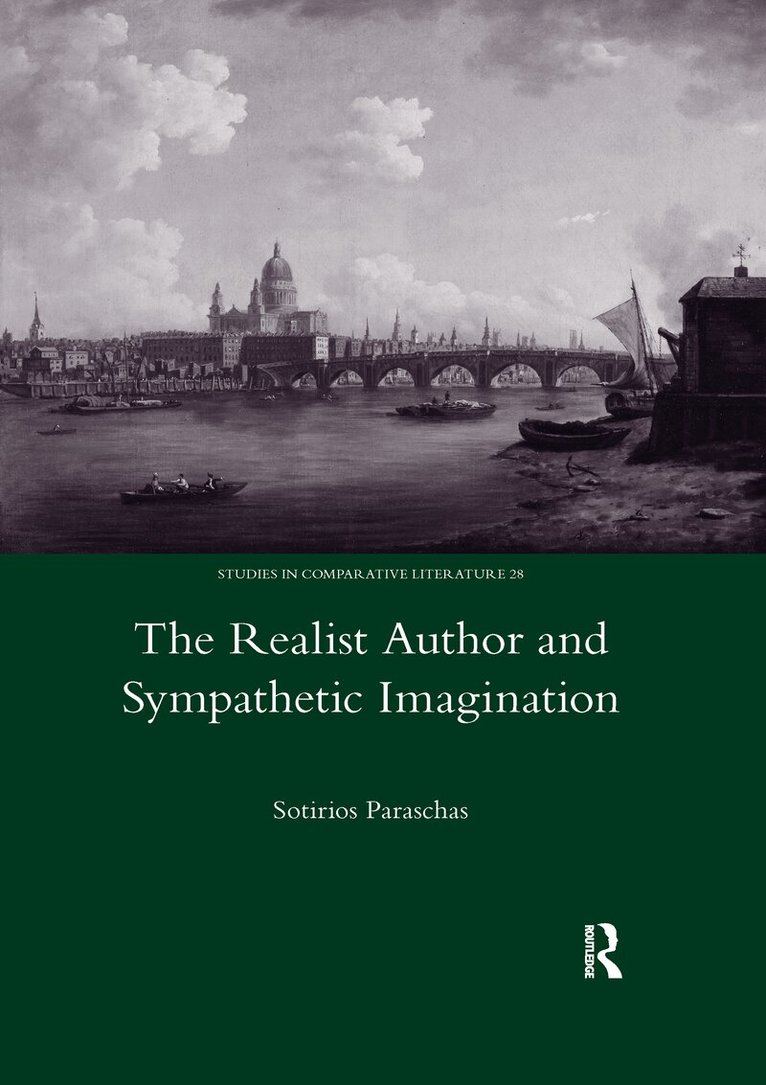
This book draws on the assumption of certain essential continuities between Romanticism and realism, both in the way realist authors imagine their relation to reality and in the way they stage their own authorial images, examining the role of the sympathetic imagination.
E-bok
Engelska, 2017858 kr
Läs direkt efter köp
"The nineteenth century realist author was a contradictory figure. He was the focus of literary criticism, but obscured his creative role by insisting on presenting his works as ''copies'' of reality. He was a celebrity who found himself subservient to publishers and the public, in a newly-industrialised literary marketplace. He was the owner of his work who was divested of his property by imperfect copyright laws, playwrights who adapted his novels for the stage, and sequel-writers. This combination of a conspicuous yet precarious status with a self-effacing attitude was expressed by an image of the author as a plural, Protean subject, possessing the faculty of sympathetic imagination - which the realists incorporated in their works in the form of a series of fictional characters who functioned as ''doubles'' of the author. Paraschas focuses on two realists, Honorede Balzac and George Eliot, and traces this authorial scenario from its origins in the late eighteenth century to its demise in the early twentieth century, examining its presence in the works of E.T.A. Hoffmann, Friedrich Schlegel, Charles Baudelaire and Andre Gide."
E-bok
PDF, Engelska, 2017858 kr
Läs direkt efter köp
"The nineteenth century realist author was a contradictory figure. He was the focus of literary criticism, but obscured his creative role by insisting on presenting his works as ''copies'' of reality. He was a celebrity who found himself subservient to publishers and the public, in a newly-industrialised literary marketplace. He was the owner of his work who was divested of his property by imperfect copyright laws, playwrights who adapted his novels for the stage, and sequel-writers. This combination of a conspicuous yet precarious status with a self-effacing attitude was expressed by an image of the author as a plural, Protean subject, possessing the faculty of sympathetic imagination - which the realists incorporated in their works in the form of a series of fictional characters who functioned as ''doubles'' of the author. Paraschas focuses on two realists, Honorede Balzac and George Eliot, and traces this authorial scenario from its origins in the late eighteenth century to its demise in the early twentieth century, examining its presence in the works of E.T.A. Hoffmann, Friedrich Schlegel, Charles Baudelaire and Andre Gide."
Inbunden, Engelska, 2013
1 539 kr
Skickas inom 5-8 vardagar
This book draws on the assumption of certain essential continuities between Romanticism and realism, both in the way realist authors imagine their relation to reality and in the way they stage their own authorial images, examining the role of the sympathetic imagination.
Häftad, Engelska, 2019
1 196 kr
Skickas inom 10-15 vardagar
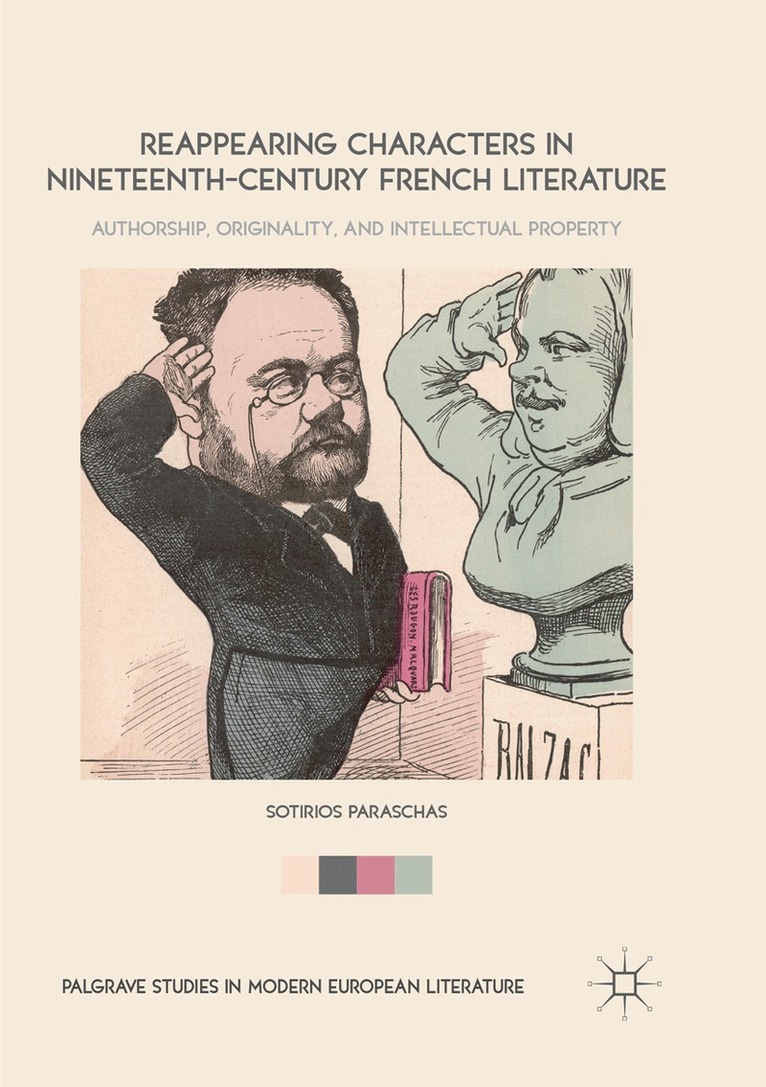
This book examines the phenomenon of the reappearance of characters in nineteenth-century French fiction. It approaches this from a hitherto unexplored perspective: that of the twin history of the aesthetic notion of originality and the legal notion of literary property. While the reappearance of characters in the works of canonical authors such as Honoré de Balzac and Émile Zola is usually seen as a device which transforms the individual works of an author into a coherent whole, this book argues that the unprecedented systematisation of the reappearance of characters in the nineteenth century has to be seen within a wider cultural, economic, and legal context. While fictional characters are seen as original creations by their authors, from a legal point of view they are considered to be ‘ideas’ which are not protected and can be appropriated by anyone. By co-examining the reappearance of characters in the work of canonical authors and their reappearances in unauthorised appropriations, such as stage adaptations and sequels, this book discusses a series of issues that have shaped our understanding of authorship, originality, and property.
Inbunden, Engelska, 2018
1 196 kr
Skickas inom 10-15 vardagar
This book examines the phenomenon of the reappearance of characters in nineteenth-century French fiction. It approaches this from a hitherto unexplored perspective: that of the twin history of the aesthetic notion of originality and the legal notion of literary property. While the reappearance of characters in the works of canonical authors such as Honoré de Balzac and Émile Zola is usually seen as a device which transforms the individual works of an author into a coherent whole, this book argues that the unprecedented systematisation of the reappearance of characters in the nineteenth century has to be seen within a wider cultural, economic, and legal context. While fictional characters are seen as original creations by their authors, from a legal point of view they are considered to be ‘ideas’ which are not protected and can be appropriated by anyone. By co-examining the reappearance of characters in the work of canonical authors and their reappearances in unauthorised appropriations, such as stage adaptations and sequels, this book discusses a series of issues that have shaped our understanding of authorship, originality, and property.
E-bok
Engelska, 20181 497 kr
Läs direkt efter köp
This book examines the phenomenon of the reappearance of characters in nineteenth-century French fiction. It approaches this from a hitherto unexplored perspective: that of the twin history of the aesthetic notion of originality and the legal notion of literary property. While the reappearance of characters in the works of canonical authors such as Honoré de Balzac and Émile Zola is usually seen as a device which transforms the individual works of an author into a coherent whole, this book argues that the unprecedented systematisation of the reappearance of characters in the nineteenth century has to be seen within a wider cultural, economic, and legal context. While fictional characters are seen as original creations by their authors, from a legal point of view they are considered to be ‘ideas’ which are not protected and can be appropriated by anyone. By co-examining the reappearance of characters in the work of canonical authors and their reappearances in unauthorised appropriations, such as stage adaptations and sequels, this book discusses a series of issues that have shaped our understanding of authorship, originality, and property.