Soviet General Staff – författare
Visar alla böcker från författaren Soviet General Staff. Handla med fri frakt och snabb leverans.
13 produkter
13 produkter
Inbunden, Engelska, 2025
390 kr
Skickas
Inbunden, Engelska, 2025
390 kr
Skickas
Inbunden, Engelska, 2025
390 kr
Skickas
Inbunden, Engelska, 2025
466 kr
Skickas
Inbunden, Engelska, 2025
393 kr
Skickas
Inbunden, Engelska, 2026
466 kr
Skickas
E-bok
Engelska, 2021123 kr
Läs direkt efter köp
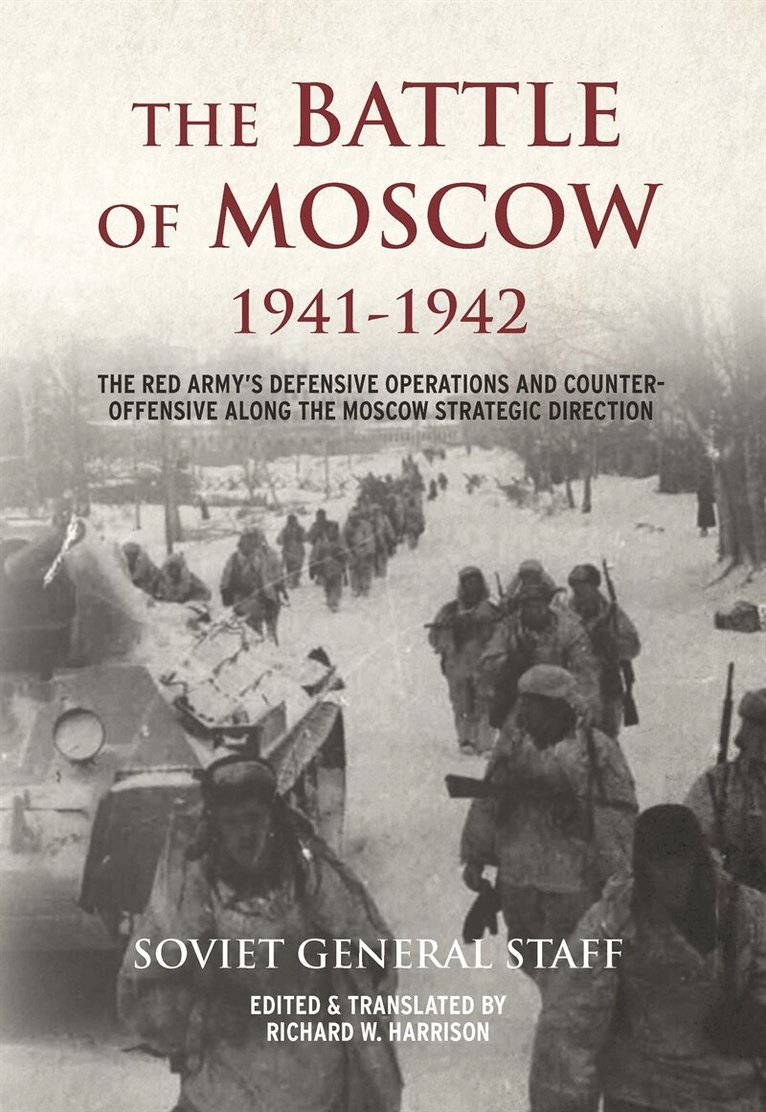
"The Battle of Moscow, 1941–1942: The Red Army’s Defensive Operations and Counteroffensive Along the Moscow Strategic Direction" is a detailed examination of one of the major turning points of World War II, as seen from the Soviet side. The Battle of Moscow marked the climax of Hitler’s “Operation Barbarossa,” which sought to destroy the Soviet Union in a single campaign and ensure German hegemony in Europe. The failure to do so condemned Germany to a prolonged war it could not win.This work originally appeared in 1943, under the title "Razgrom Nemetskikh Voisk pod Moskvoi" (The Rout of the German Forces Around Moscow). The work was produced by the Red Army General Staff’s military-historical section, which was charged with collecting and analyzing the war’s experience and disseminating it to the army’s higher echelons. This was a collective effort, featuring many different contributors, with Marshal Boris Mikhailovich Shaposhnikov, former chief of the Red Army General Staff and then head of the General Staff Academy, serving as general editor.The book is divided into three parts, each dealing with a specific phase of the battle. The first traces the Western Front’s defensive operations along the Moscow direction during Army Group Center’s final push toward the capital in November–December, 1941. The study pays particular attention to the Red Army’s resistance to the Germans’ attempts to outflank Moscow from the north. Equally important were the defensive operations to the south of Moscow, where the Germans sought to push forward their other encircling flank.The second part deals with the first phase of the Red Army’s counteroffensive, which was aimed at pushing back the German pincers and removing the immediate threat to Moscow. Here the Soviets were able to throw the Germans back and flatten both salients, particularly in the south, where they were able to make deep inroads into the enemy front to the west and northwest.The final section examines the further development of the counteroffensive until the end of January 1942. This section highlights the Soviet advance all along the front and their determined but unsuccessful attempts to cut off the Germans’ Rzhev–Vyaz’ma salient. It is from this point that the front essentially stabilized, after which events shifted to the south.This new translation into English makes available to a wider readership this valuable study.EPUB3: Reflowable
E-bok
Engelska, 2021123 kr
Läs direkt efter köp
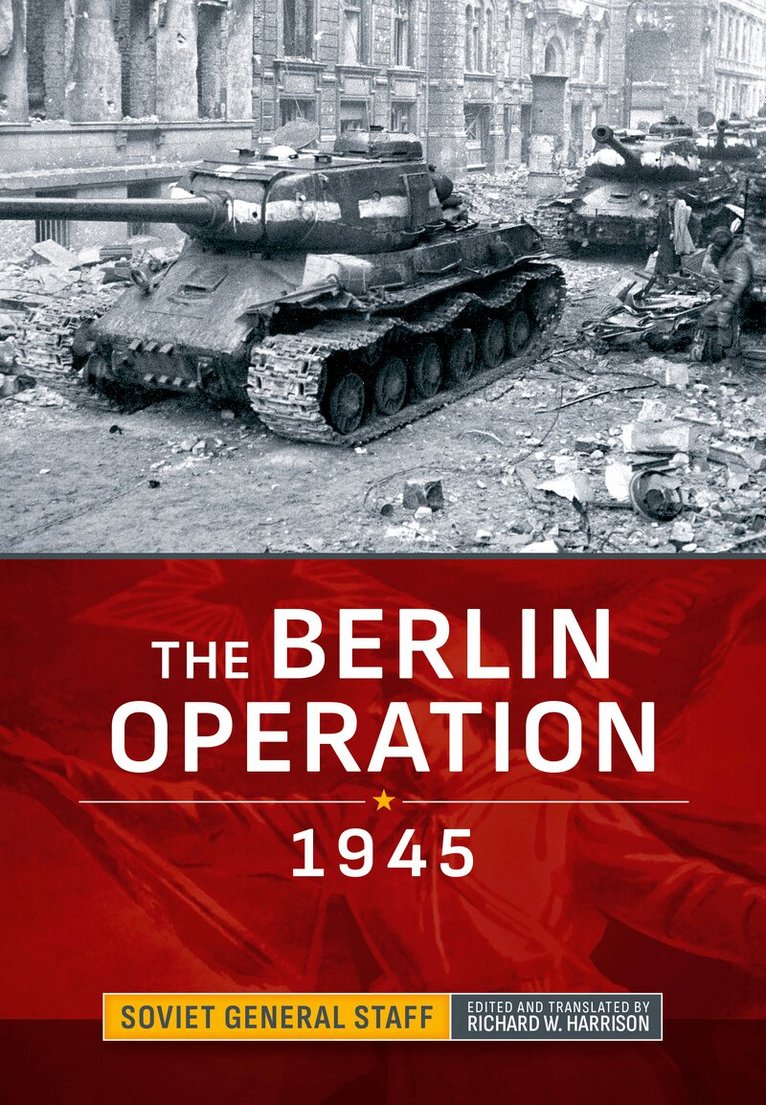
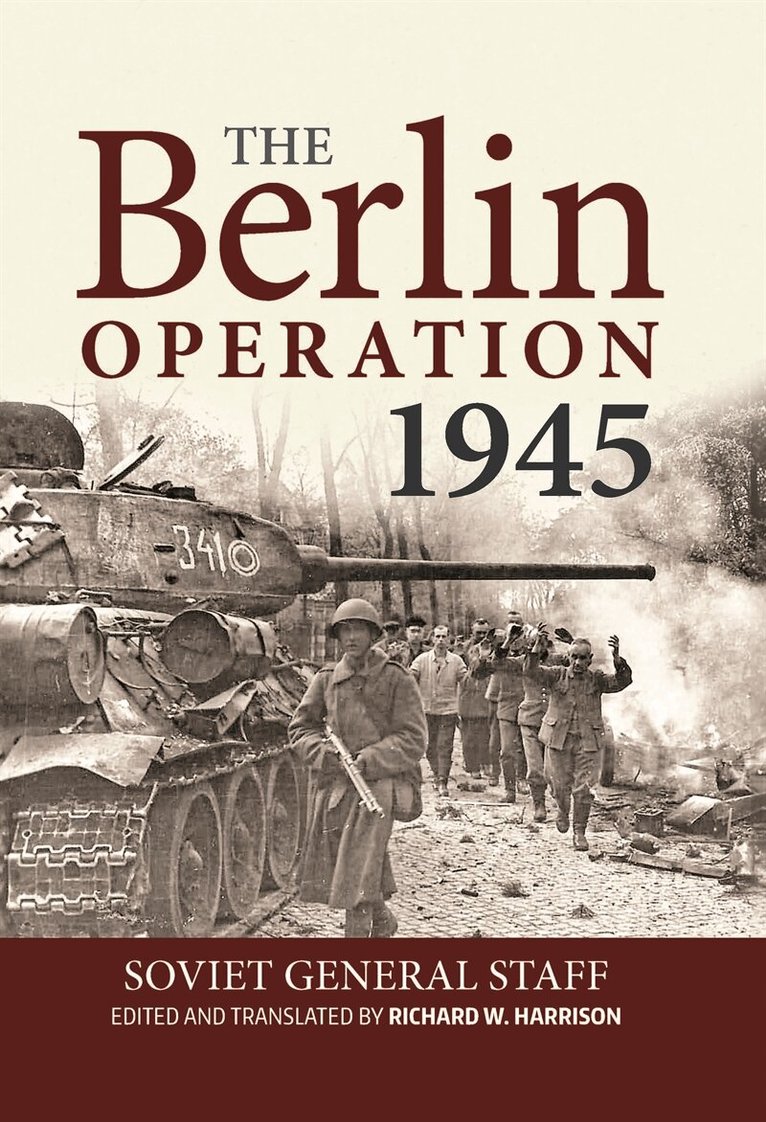
Berlin Operation, 1945, tells the story of the Red Army’s penultimate offensive operation in the war in Europe. Here the forces of three fronts (Second and First Belorussian and First Ukrainian) forced the Oder River and surrounded the defenders of the German capital, reduced the city and drove westward to link up with the Western allies in central Germany. This is another in a series of studies compiled by the Soviet Army General Staff, which during the postwar years set itself the task of gathering and generalizing the experience of the war for the purpose of training the armed forces’ higher staffs in the conduct of large-scale offensive operations. The study is divided into three parts. The first contains a brief strategic overview of the situation, as it existed by the spring of 1945, with special emphasis on German preparations to meet the inevitable Soviet attack. This section also includes an examination of the decisions by the Stavka of the Supreme High Command on the conduct of the operation. As usual, the fronts’ materiel-technical and other preparations for the offensive are covered in great detail. These include plans for artillery, artillery and engineer support, as well as the work of the rear services and political organs and the strengths, capabilities and tasks of the individual armies. Part two deals with the Red Army’s breakthrough of the Germans’ Oder defensive position up to the encirclement of the Berlin garrison. This covers the First Belorussian Front’s difficulty in overcoming the defensive along the Seelow Heights along the direct path to Berlin, as well as the First Ukrainian Front’s easier passage over the Oder and its secondary attack along the Dresden axis. The Second Belorussian Front’s breakthrough and its sweep through the Baltic littoral is also covered. Part three covers the intense fighting to reduce the city’s defenders from late April until the garrison’s surrender on 2 May, as well as operations in the area up to the formal German capitulation. This section contains a number of detailed descriptions of urban fighting at the battalion and regimental level. It closes with conclusions about the role of the various combat arms in the operation.EPUB3: Reflowable
Häftad, Engelska, 2019
466 kr
Skickas
Häftad, Engelska, 2023
313 kr
Tillfälligt slut
Inbunden, Engelska, 2017
466 kr
Tillfälligt slut
Inbunden, Engelska, 2018
466 kr
Tillfälligt slut
Häftad, Engelska, 2022
364 kr
Tillfälligt slut