S.P. Lyon – författare
Visar alla böcker från författaren S.P. Lyon. Handla med fri frakt och snabb leverans.
3 produkter
3 produkter
Inbunden, Engelska, 1992
1 631 kr
Skickas inom 10-15 vardagar
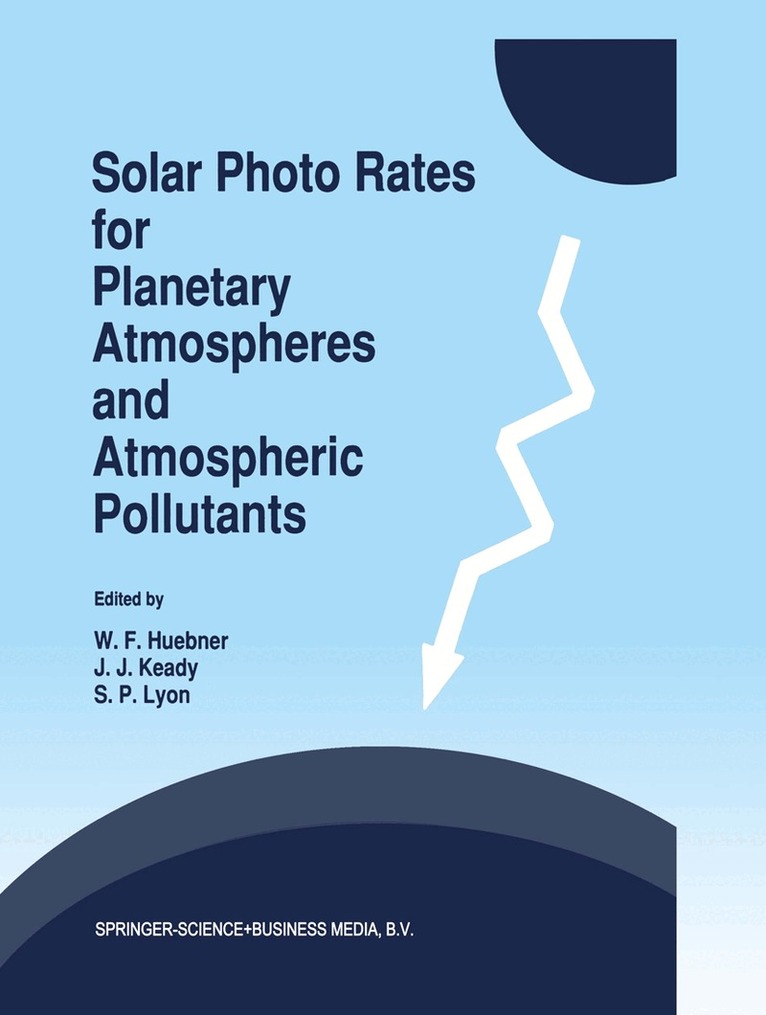
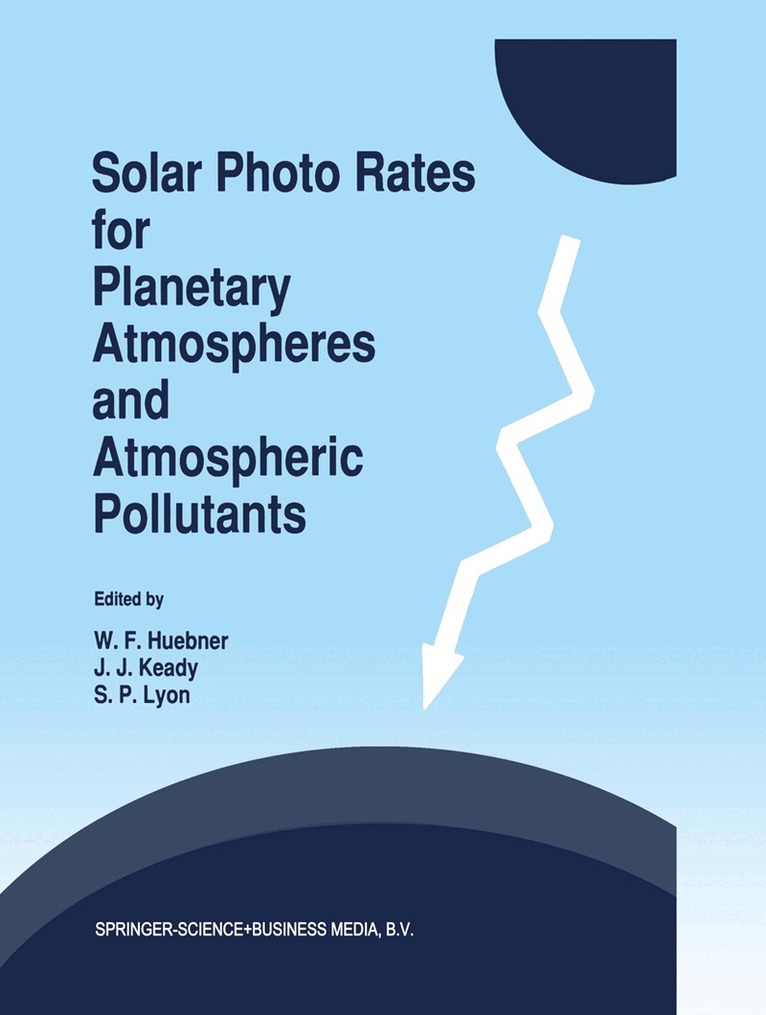
Unattenuated solar photo rate coefficients and excess energies for dissociation, ionization, and dissociative ionization are needed for atomic and molecular species that have been identified or are suspected to exist in the atmosphere of planets, satellites (moons), comets, or as pollutants in the Earth atmosphere. This book presents the branching ratios and cross sections with resonances and have been tabulated to the greatest detail possible and the rate coefficients and excess energies have been calculated from them on a grid of small wavelength bins for the quiet and the active Sun at 1 AU heliocentric distance.
Häftad, Engelska, 2010
1 631 kr
Skickas inom 10-15 vardagar
A quantitative measure of the accuracy of the rate coefficients and the excess energies is a desirable goal of this analysis. There are two major sources of uncertainties: The atomic and molecular data and the solar irradiance. The cross sections and branching ratios used in this analysis come from many different sources; many of them without any error indications. For this reason, we must confine ourselves to a qualitative indication of the reliability of the results. Specifically we give a quality scale in Table II for the data of each mother molecule; A indicating the highest quality of atomic and molecular data and F the lowest quality. The letter B typically means that the threshold is uncertain. For most molecules the cross section at threshold is very small and the rate coefficient for these molecules is therefore not influenced by this uncertainty. For atomic species the cross section is usually large near threshold, but for these species the threshold is known quite accurately. The letter B, therefore, indicates that the rate coefficient is most likely quite accurate, but the excess energy is less accurately known. The letter C usually means that the branching ratios are not well known. This means that the total rate coefficient is very good, but the rate coefficients and the excess energies for the individual branches are less accurate.
E-bok
PDF, Engelska, 20131 977 kr
Läs direkt efter köp
A quantitative measure of the accuracy of the rate coefficients and the excess energies is a desirable goal of this analysis. There are two major sources of uncertainties: The atomic and molecular data and the solar irradiance. The cross sections and branching ratios used in this analysis come from many different sources; many of them without any error indications. For this reason, we must confine ourselves to a qualitative indication of the reliability of the results. Specifically we give a quality scale in Table II for the data of each mother molecule; A indicating the highest quality of atomic and molecular data and F the lowest quality. The letter B typically means that the threshold is uncertain. For most molecules the cross section at threshold is very small and the rate coefficient for these molecules is therefore not influenced by this uncertainty. For atomic species the cross section is usually large near threshold, but for these species the threshold is known quite accurately. The letter B, therefore, indicates that the rate coefficient is most likely quite accurate, but the excess energy is less accurately known. The letter C usually means that the branching ratios are not well known. This means that the total rate coefficient is very good, but the rate coefficients and the excess energies for the individual branches are less accurate.