Sreenath Nair – författare
Visar alla böcker från författaren Sreenath Nair. Handla med fri frakt och snabb leverans.
2 produkter
2 produkter
Häftad, Engelska, 2015
586 kr
Skickas inom 5-8 vardagar
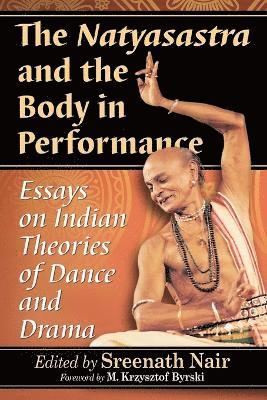
The Natyasastra is the deep repository of Indian performance studies. It embodies centuries of performance knowledge developed in South Asia on a range of conceptual issues and practical methodologies of the body. The composition of the Natyasastra is attributed to Sage Bharatha, and dates back to between 200 BC and AD 200. Written in Sanskrit, the text contains 6000 verse stanzas integrated in 36 chapters discussing a wide range of issues in theatre arts, including dramatic composition; construction of the playhouse; detailed analysis of the musical scales; body movements; various types of acting; directing; division of stage space; costumes; make-up; properties and musical instruments.As a discourse on performance, the Natyasastra is an extensive documentation of terminologies, concepts and methodologies. This book presents 14 scholarly essays exploring the Natyasastra from the multiple perspectives of Indian performance studies--epistemological, aesthetic, scientific, religious, ethnological and practical.
Del 9 - Consciousness, Literature and the Arts
Restoration of Breath
Consciousness and Performance
Häftad, Engelska, 2007
1 044 kr
Skickas inom 3-6 vardagar
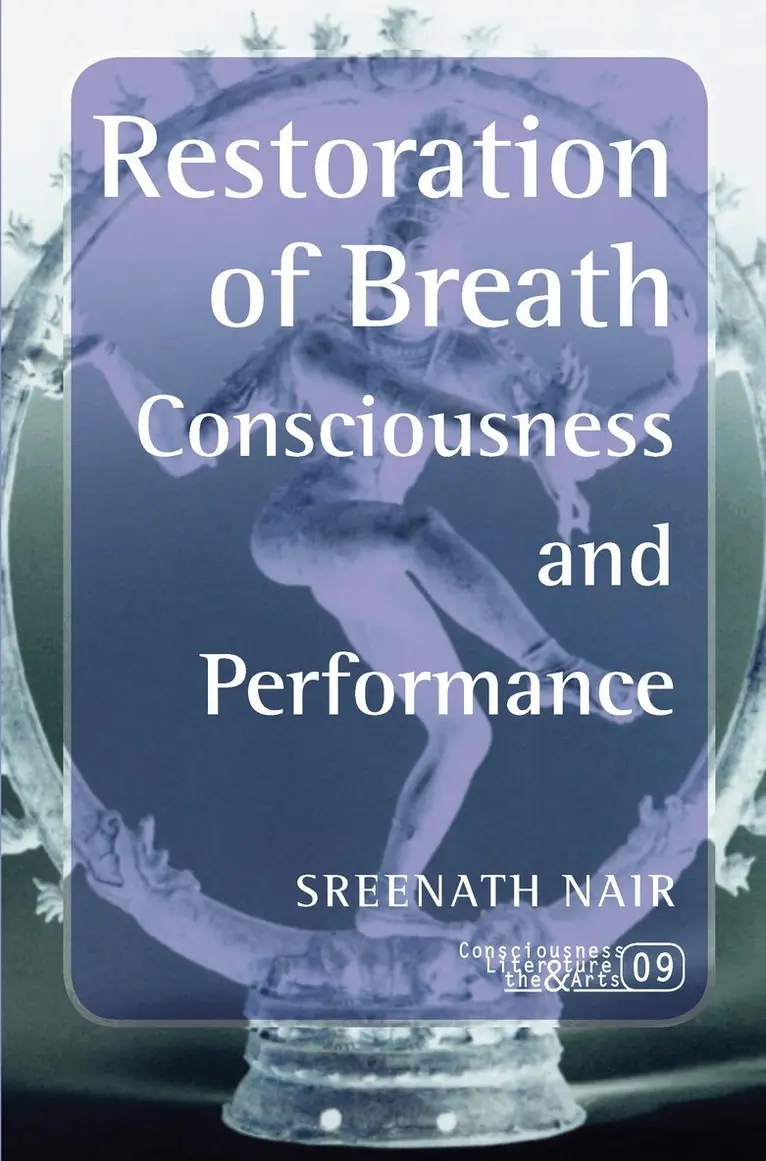
Breath is the flow of air between life and death. Breathing is an involuntary action that functions as the basis of all human activities, intellectual, artistic, emotional and physical. Breathing is the first autonomous individual action that brings life into being and the end of breathing is the definitive sign of disappearance. Starting from the question how breathing affects the body, levels of consciousness, perception and meaning, this book, for the first time, investigates through a variety of philosophical, critical and practical models, directly and indirectly related to breath, aiming to establish breath as a category in the production and reception of meaning within the context of theatre. It also explores the epistemological, psycho-physical and consciousness-related implications of breath. Aristotle dedicated a volume to breath exploring and enquiring in to its presocratic roots. For Heidegger, breath is “the temporal extension” of Being. Artaud’s theatricality is not representational but rather rooted in the actor’s breathing. Jacques Derrida and Luce Irigaray investigate the phenomenon of breath in order to explain the nature of human consciousness. Breath as a philosophical concept and as a system of practice is central to Indian thoughts, performance, medicine, martial arts and spirituality. As the book argues, individual consciousness is a temporal experience and breath is the material presence of time in the body. Cessation of breath, on the contrary, creates pause in this flow of the endless identification of signifiers. When breath stops time stops. When time stops there is a ‘gap’ in the chain of the presence of signifiers and this ‘gap’ is a different perceptual modality, which is neutral in Zero velocity. Restoration of Breath is a practical approach to this psychophysical experience of consciousness in which time exists only in eternity and void beyond memory and meaning.