Stanislas Breton - Böcker
Visar alla böcker från författaren Stanislas Breton. Handla med fri frakt och snabb leverans.
5 produkter
5 produkter
948 kr
Skickas inom 7-10 vardagar
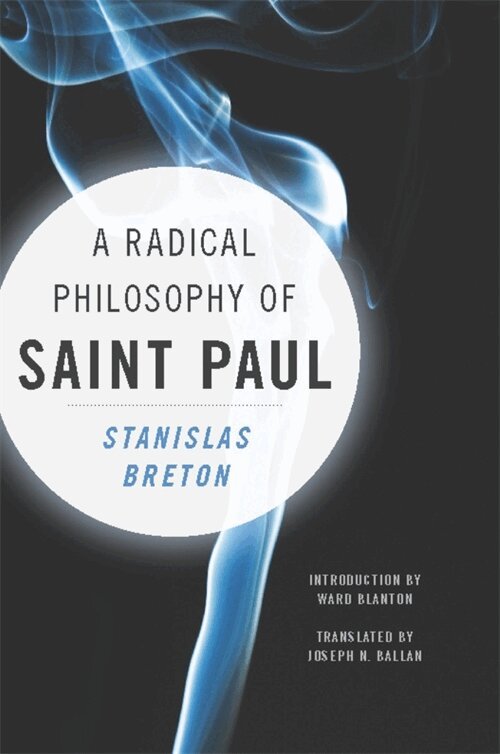
Stanislas Breton's A Radical Philosophy of Saint Paul, which focuses on the political implications of the apostle's writings, was an instrumental text in Continental philosophy's contemporary "turn to religion." Reading Paul's work against modern thought and history, Breton helped launch a reassessment of Marxism, introduce secular interpretations of biblical and theological traditions, develop "radical negativity" as a critical category, and rework modern political ideas through a theoretical lens. Newly translated and critically situated, this edition takes a fresh approach to Breton's classic work, reacquainting readers with the remarkable ways in which an ancient apostle can reset our understanding of the political. Breton begins with Paul's biography and the texts of his conversion, which challenge common conceptions of identity. He broaches the question of allegory and divine predestination, introduces the idea of subjectivity as an effect of power, and confronts Paul's critique of Law, which leads to an exploration of the logics and limits of agency and power.Breton develops these and other insights in relation to Paul's subversive reflections on the crucified messiah, which challenge meaning and reason and upend our current world order. Neither a coherent theologian nor a stable humanist, Breton's Paul becomes a fascinating figure of excess and madness, experiencing a kind of being that transcends philosophy, secularity, and religion.
258 kr
Skickas inom 7-10 vardagar
Stanislas Breton's A Radical Philosophy of Saint Paul, which focuses on the political implications of the apostle's writings, was an instrumental text in Continental philosophy's contemporary "turn to religion." Reading Paul's work against modern thought and history, Breton helped launch a reassessment of Marxism, introduce secular interpretations of biblical and theological traditions, develop "radical negativity" as a critical category, and rework modern political ideas through a theoretical lens. Newly translated and critically situated, this edition takes a fresh approach to Breton's classic work, reacquainting readers with the remarkable ways in which an ancient apostle can reset our understanding of the political. Breton begins with Paul's biography and the texts of his conversion, which challenge common conceptions of identity. He broaches the question of allegory and divine predestination, introduces the idea of subjectivity as an effect of power, and confronts Paul's critique of Law, which leads to an exploration of the logics and limits of agency and power.Breton develops these and other insights in relation to Paul's subversive reflections on the crucified messiah, which challenge meaning and reason and upend our current world order. Neither a coherent theologian nor a stable humanist, Breton's Paul becomes a fascinating figure of excess and madness, experiencing a kind of being that transcends philosophy, secularity, and religion.
365 kr
Skickas inom 10-15 vardagar
In times that have challenged contemporary illusions, many seek to recover the Christian vocabulary of suffering, the cross, and a hope freed of triumphalism and exclusivity. Stanislas Breton presents the "nothingness" of the cross in its infirmity and paradoxical power. Blending the poetic with the philosophical, faith with interrogation, mystical and practical, ancient and new, he seeks to lift the cross from its imprisonment in ontologies of abundance and in a history of compromise. The Word and the Cross distills the meditation of a thinker in his prime on the possibility of the Christian and Christianity to find within a principle of a critique and source of renewal.Breton draws first upon Scripture, examining the way in which the cross has been present in our world, beginning with Paul's preaching of it as Logos, folly (moria), and power (dunamis). In a startlingly original interpretation, Breton first interrogates the emergence of the cross as Sign of Contradiction in the world of Greek and Jew and then traces its destiny in politics, in theology and in the poignant theater of "the fools of Christ." Enriching scriptural exegesis with allusions to neoplatonism, Sufi mysticism, and diverse theologies, Breton offers a more profound understanding of kenosis that privileges the language of service and engagement. Passing beyond philosophies of dissonance and even the via negativa, he argues for a commitment to evangelical justice and human community that demands of the Christian and Christianity, as of all systems and religions, an inner principle of renewal and self-critique.The cross, as a Sign of Contradiction, functions as such a principle. Breton presents it on many levels: spiritual, philosophic, linguistic and poetic. With modesty and power, he focuses upon this "mark of interrogation," preparing the way of the Word in our world. The Word and the Cross is the first translation in the United States of this major contemporary French thinker, introducing rich resources for further exploration.
1 209 kr
Skickas inom 10-15 vardagar
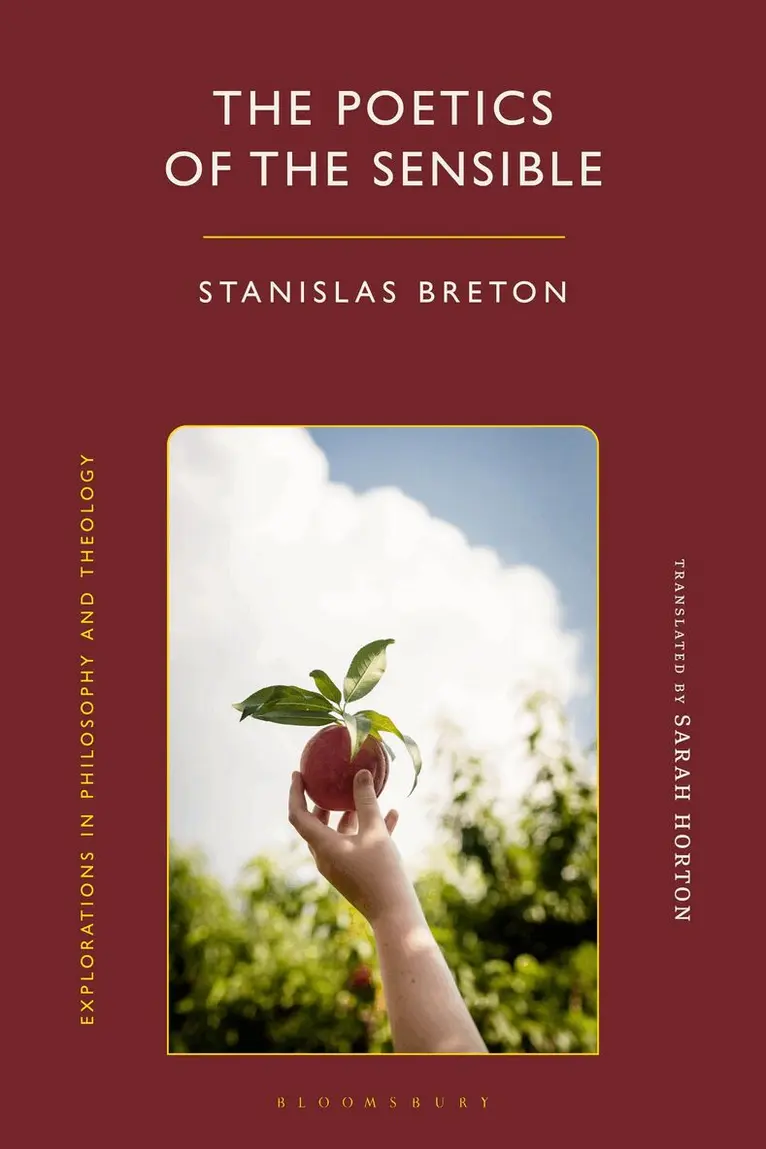
In the first English language translation of this classic late 20th-century text within French Catholic thought, Poetics of the Sensible brings together insights from Neoplatonism and phenomenology with a distinctive and innovative approach. Taking a stance within the generative conception of human language represented by continental thinkers such as Humboldt and Herder and powerfully articulated today by Charles Taylor, Stanislas Breton expands the sense of the “poetic”—the constructive meaning-bearing capacity that is a core characteristic of humanity—to include the body and its senses phenomenologically intertwined with the world. Defying Heidegger’s prohibition on the question of God alongside contemporary thinkers such as Jean-Luc Marion, Jean-Louis Chrétien and Emmanuel Falque, he boldly writes of God, of the angel, of the icon, and of prayer in a refusal to bracket his religious faith. Against a Neoplatonic backdrop, Breton promotes the dense material dimensions of embodied signification as paradoxically harbouring meaning that is greater than that of conceptual abstraction alone. Illuminating Breton’s poetic and allusive discourse, Poetics of the Sensible showcases his unique voice in French philosophy, phenomenology and the philosophy of religion and is essential reading for scholars and students alike.
394 kr
Skickas inom 10-15 vardagar
In the first English language translation of this classic late 20th-century text within French Catholic thought, Poetics of the Sensible brings together insights from Neoplatonism and phenomenology with a distinctive and innovative approach. Taking a stance within the generative conception of human language represented by continental thinkers such as Humboldt and Herder and powerfully articulated today by Charles Taylor, Stanislas Breton expands the sense of the “poetic”—the constructive meaning-bearing capacity that is a core characteristic of humanity—to include the body and its senses phenomenologically intertwined with the world. Defying Heidegger’s prohibition on the question of God alongside contemporary thinkers such as Jean-Luc Marion, Jean-Louis Chrétien and Emmanuel Falque, he boldly writes of God, of the angel, of the icon, and of prayer in a refusal to bracket his religious faith. Against a Neoplatonic backdrop, Breton promotes the dense material dimensions of embodied signification as paradoxically harbouring meaning that is greater than that of conceptual abstraction alone. Illuminating Breton’s poetic and allusive discourse, Poetics of the Sensible showcases his unique voice in French philosophy, phenomenology and the philosophy of religion and is essential reading for scholars and students alike.