639 kr
Skickas inom 10-15 vardagar
639 kr
Skickas inom 10-15 vardagar
2 229 kr
Skickas inom 10-15 vardagar
614 kr
Skickas inom 10-15 vardagar
725 kr
Läs direkt efter köp
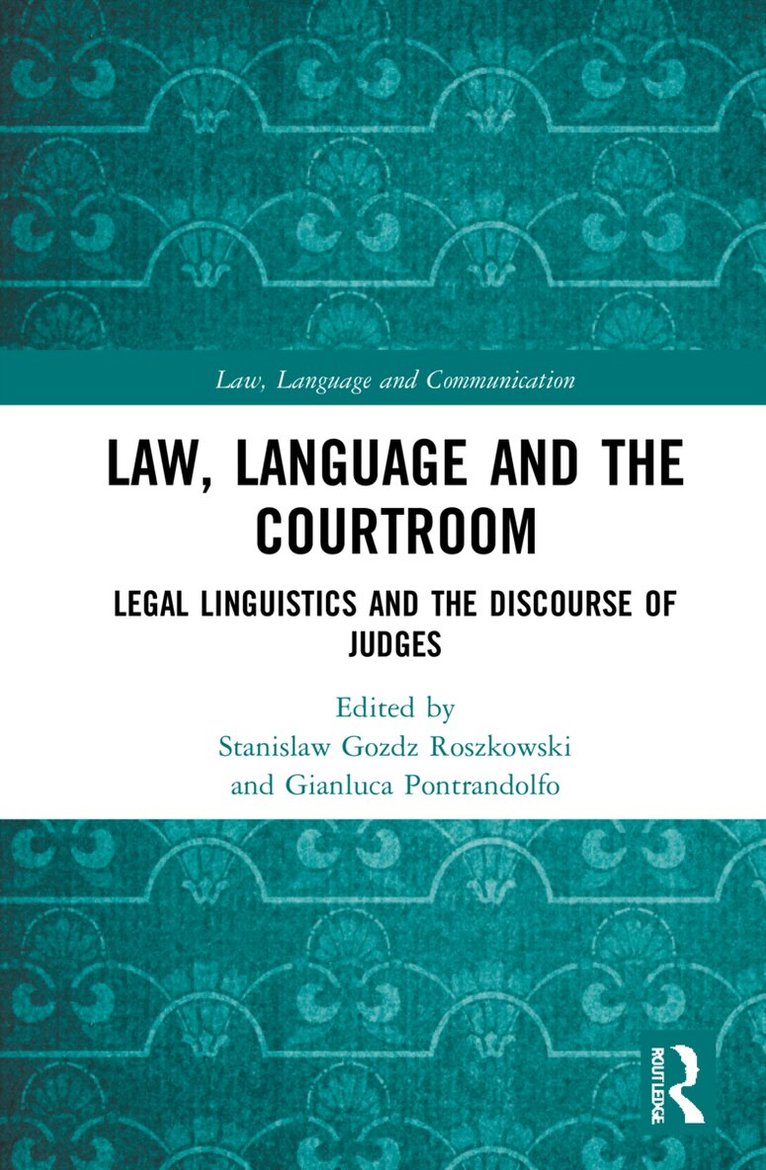
This book explores the language of judges. It is concerned with understanding how language works in judicial contexts. Using a range of disciplinary and methodological perspectives, it looks in detail at the ways in which judicial discourse is argued, constructed, interpreted and perceived. Focusing on four central themes - constructing judicial discourse and judicial identities, judicial argumentation and evaluative language, judicial interpretation, and clarity in judicial discourse - the book’s ultimate goal is to provide a comprehensive and in-depth analysis of current critical issues of the role of language in judicial settings. Contributors include legal linguists, lawyers, legal scholars, legal practitioners, legal translators and anthropologists, who explore patterns of linguistic organisation and use in judicial institutions and analyse language as an instrument for understanding both the judicial decision-making process and its outcome.
The book will be an invaluable resource for scholars in legal linguistics and those specialising in judicial argumentation and reasoning ,and forensic linguists interested in the use of language in judicial settings.
725 kr
Läs direkt efter köp
This book explores the language of judges. It is concerned with understanding how language works in judicial contexts. Using a range of disciplinary and methodological perspectives, it looks in detail at the ways in which judicial discourse is argued, constructed, interpreted and perceived. Focusing on four central themes - constructing judicial discourse and judicial identities, judicial argumentation and evaluative language, judicial interpretation, and clarity in judicial discourse - the book’s ultimate goal is to provide a comprehensive and in-depth analysis of current critical issues of the role of language in judicial settings. Contributors include legal linguists, lawyers, legal scholars, legal practitioners, legal translators and anthropologists, who explore patterns of linguistic organisation and use in judicial institutions and analyse language as an instrument for understanding both the judicial decision-making process and its outcome.
The book will be an invaluable resource for scholars in legal linguistics and those specialising in judicial argumentation and reasoning ,and forensic linguists interested in the use of language in judicial settings.
741 kr
Läs direkt efter köp
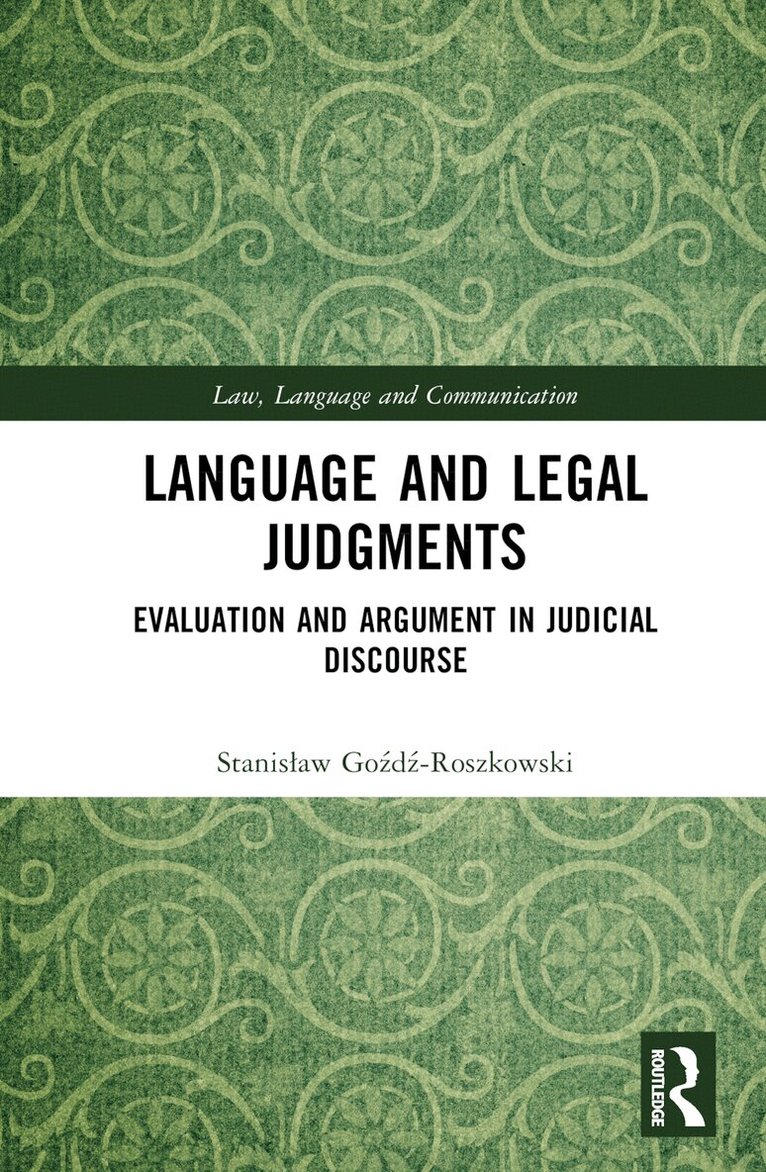
Integrating research methods from linguistics with contemporary legal argumentation theory, this book highlights the complexities of legal justification by focusing on the role of value-laden language in argument construction and use. The combination of linguistic analysis and the pragma-dialectic approach to legal argumentation yields a new way of perceiving and understanding the phenomenon of evaluation, one that offers theoretical and practical gains. Analyzing a vast corpus of judicial opinions from the US Supreme Court and Poland’s Constitutional Tribunal, the book paints a clear picture of complex linguistic choices made by judges to assess and support arguments in the justifications of their decisions. The book will be of interest to scholars in Law, Linguistics and Rhetoric, as well as to judges and practicing lawyers engaged in the art of argumentation.
741 kr
Läs direkt efter köp
Integrating research methods from linguistics with contemporary legal argumentation theory, this book highlights the complexities of legal justification by focusing on the role of value-laden language in argument construction and use. The combination of linguistic analysis and the pragma-dialectic approach to legal argumentation yields a new way of perceiving and understanding the phenomenon of evaluation, one that offers theoretical and practical gains. Analyzing a vast corpus of judicial opinions from the US Supreme Court and Poland’s Constitutional Tribunal, the book paints a clear picture of complex linguistic choices made by judges to assess and support arguments in the justifications of their decisions. The book will be of interest to scholars in Law, Linguistics and Rhetoric, as well as to judges and practicing lawyers engaged in the art of argumentation.
2 229 kr
Skickas inom 10-15 vardagar
627 kr
Skickas inom 10-15 vardagar
2 229 kr
Skickas inom 10-15 vardagar
846 kr
Läs direkt efter köp
This volume presents a comprehensive and up-to-date overview of major developments in the study of how phraseology is used in a wide range of different legal and institutional contexts. This recent interest has been mainly sparked by the development of corpus linguistics research, which has both demonstrated the centrality of phraseological patterns in language and provided researchers with new and powerful analytical tools. However, there have been relatively few empirical studies of word combinations in the domain of law and in the many different contexts where legal discourse is used. This book seeks to address this gap by presenting some of the latest developments in the study of this linguistic phenomenon from corpus-based and interdisciplinary perspectives. The volume draws on current research in legal phraseology from a variety of perspectives: translation, comparative/contrastive studies, terminology, lexicography, discourse analysis and forensic linguistics. It contains contributions from leading experts in the field, focusing on a wide range of issues amply illustrated through in-depth corpus-informed analyses and case studies. Most contributions to this book are multilingual, featuring different legal systems and legal languages.
The volume will be a valuable resource for linguists interested in phraseology as well as lawyers and legal scholars, translators, lexicographers, terminologists and students who wish to pursue research in the area.
846 kr
Läs direkt efter köp
This volume presents a comprehensive and up-to-date overview of major developments in the study of how phraseology is used in a wide range of different legal and institutional contexts. This recent interest has been mainly sparked by the development of corpus linguistics research, which has both demonstrated the centrality of phraseological patterns in language and provided researchers with new and powerful analytical tools. However, there have been relatively few empirical studies of word combinations in the domain of law and in the many different contexts where legal discourse is used. This book seeks to address this gap by presenting some of the latest developments in the study of this linguistic phenomenon from corpus-based and interdisciplinary perspectives. The volume draws on current research in legal phraseology from a variety of perspectives: translation, comparative/contrastive studies, terminology, lexicography, discourse analysis and forensic linguistics. It contains contributions from leading experts in the field, focusing on a wide range of issues amply illustrated through in-depth corpus-informed analyses and case studies. Most contributions to this book are multilingual, featuring different legal systems and legal languages.
The volume will be a valuable resource for linguists interested in phraseology as well as lawyers and legal scholars, translators, lexicographers, terminologists and students who wish to pursue research in the area.
1 355 kr
Skickas inom 3-6 vardagar
1 522 kr
Läs direkt efter köp
842 kr
Tillfälligt slut
A Corpus-Based Study
513 kr
Tillfälligt slut