Stanisław Mazur - Böcker
Visar alla böcker från författaren Stanisław Mazur. Handla med fri frakt och snabb leverans.
9 produkter
9 produkter
2 103 kr
Skickas inom 10-15 vardagar
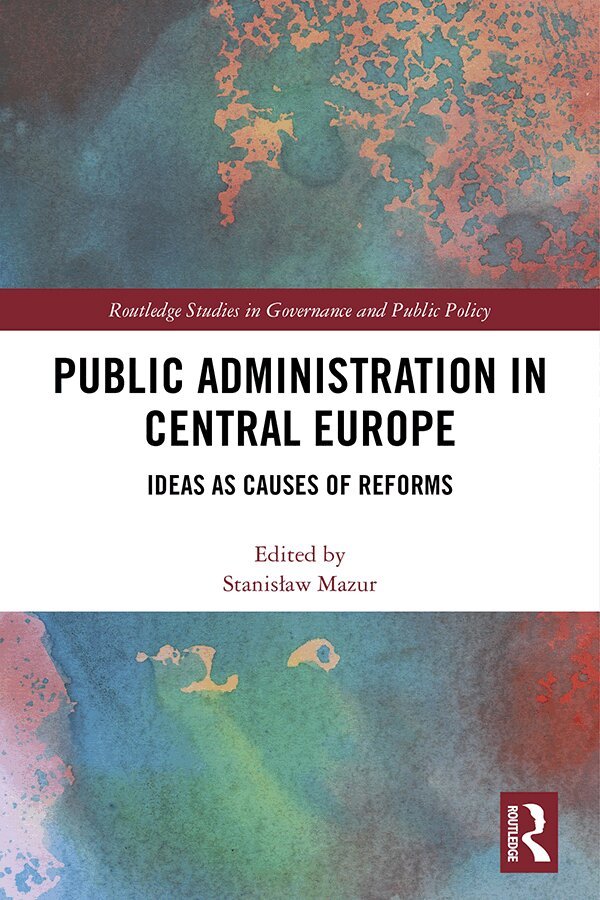
This book examines the extent to which recent transformations of administrative systems and public management mechanisms in Central European (CE) countries serve the purpose of providing effective and efficient public institutions, high quality of public services, respect for the rule of law, and the citizens’ trust in the state. It details the reasons behind the major differences in the modernisation paths followed and their attendant inconsistencies and how, despite the adoption of values and solutions prevailing in the EU upon accession, these countries are shifting, to varying degrees, towards institutional design reminiscent of illiberal democracies. Taking a comparative approach and based on rich original data, it applies theoretical models to explain the nature and implications of the processes under consideration and identifies the determinants that impact upon the transformation of public administration systems and its consequences. This book will be of key interest to scholars and students of public governance, public administration and policy, East European studies, and more broadly politics, law, sociology but also economy.
621 kr
Skickas inom 10-15 vardagar
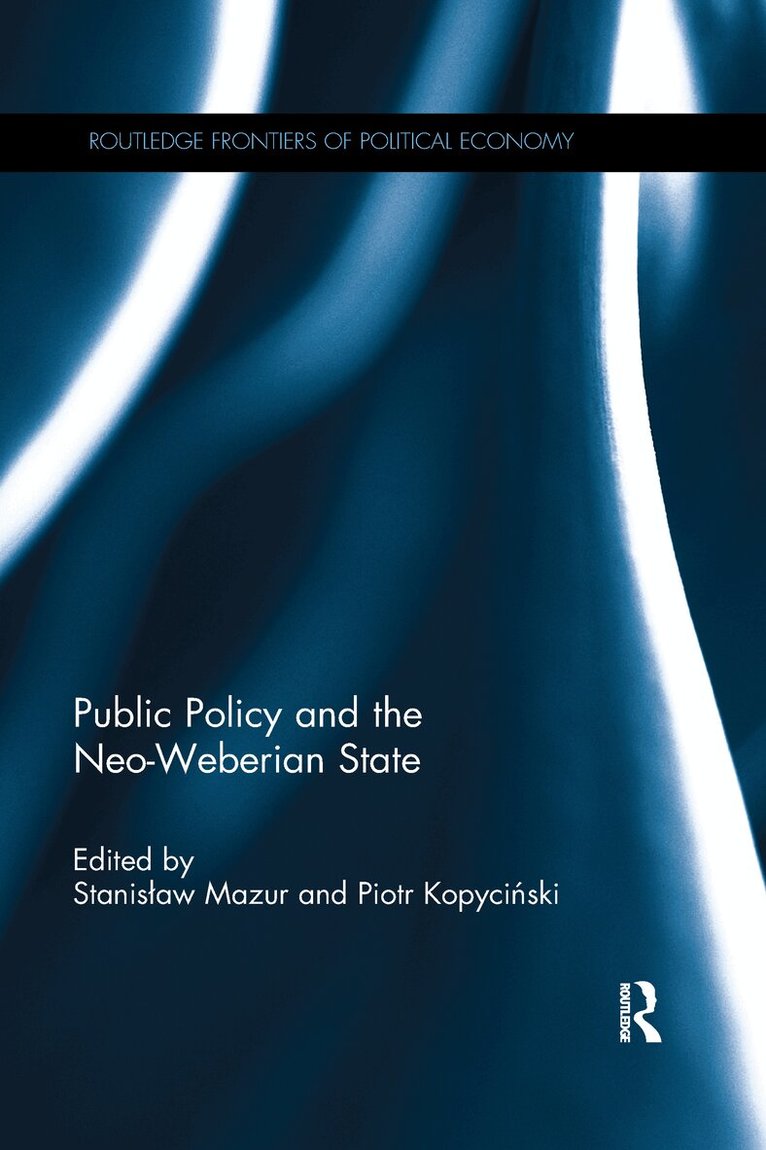
The neo-Weberian state constitutes an attempt to combine the Weberian model of administration with the principles laid down during the retreat from the bureaucratic management paradigm (new public management and public governance). The concept of neo-Weberian state involves changing the model of operation of administrative structures from an inward-oriented one, focused on compliance with internal rules, into a model focused on meeting citizens’ needs (not by resorting to commercialisation, as is the case with new public management, but by building appropriate quality of administration).This book discusses the context of the neo-Weberian approach and its impact on the processes of societal transformation. Further, it identifies and systematises the theoretical and functional elements of the approach under consideration. This volume includes comparative analyses of the neo-Weberian state and public management paradigms. In the empirical part of the work, its authors review selected policies (economic, innovation, industrial, labour, territorial, urban management, and health) from the perspective of tools typical of the neo-Weberian approach. This part also includes a critical scrutiny of changes which have taken place in the framework of selected policies in recent decades. The study assesses the appropriateness of the neo-Weberian approach to the management of public affairs regarding countries which have modernised their public administrations in its spirit. One of the aims of this analysis is to answer the question whether the application of neo-Weberian ideas may result in qualitative changes in the context of public policies. The final part of the book covers implications for public management resulting from the concept of neo-Weberian state.Public Policy and the Neo-Weberian State is suitable for researchers and students who study political economy, public policy and modern political theory.
2 151 kr
Skickas inom 10-15 vardagar
The radical transformations to which the economy and society have been subjected for decades have gained momentum in recent years, not least because of the coronavirus pandemic, the consequences of which are yet to be fully understood. As a result, certain economic models and business practices are becoming less sustainable. One of the reasons for this is the rapid advance of Revolution 4.0. The issues raised in this book are central to understanding the theoretical and practical aspects of the Fourth Industrial Revolution and its overwhelming impact on emerging socio-economic relations. The book addresses the future and flexibility of the labour market in the era of digital transformation; issues related to the emergence of new patterns of production and the distribution of public services. It examines the impact of Revolution 4.0 on the global business services sector and business project management models, in times of increasing complexity. The book covers a broad spectrum of concerns associated with Industry 4.0, such as social, economic, technological, and environmental, making it a comprehensive resource offering state-of-the-art knowledge. Further, it includes a discussion on the perspectives for the development of Revolution 4.0 in the context of the post-pandemic world. This book skillfully combines theoretical considerations with practical applications, offering a valuable, engaging and accessible resource for researchers, scholars, students, policymakers, public decision-makers, and businesspeople alike.
594 kr
Skickas inom 10-15 vardagar
The radical transformations to which the economy and society have been subjected for decades have gained momentum in recent years, not least because of the coronavirus pandemic, the consequences of which are yet to be fully understood. As a result, certain economic models and business practices are becoming less sustainable. One of the reasons for this is the rapid advance of Revolution 4.0. The issues raised in this book are central to understanding the theoretical and practical aspects of the Fourth Industrial Revolution and its overwhelming impact on emerging socio-economic relations. The book addresses the future and flexibility of the labour market in the era of digital transformation; issues related to the emergence of new patterns of production and the distribution of public services. It examines the impact of Revolution 4.0 on the global business services sector and business project management models, in times of increasing complexity. The book covers a broad spectrum of concerns associated with Industry 4.0, such as social, economic, technological, and environmental, making it a comprehensive resource offering state-of-the-art knowledge. Further, it includes a discussion on the perspectives for the development of Revolution 4.0 in the context of the post-pandemic world. This book skillfully combines theoretical considerations with practical applications, offering a valuable, engaging and accessible resource for researchers, scholars, students, policymakers, public decision-makers, and businesspeople alike.
Governance and Leadership in Shrinking Cities
Strategies for Managing Urban Decline
Inbunden, Engelska, 2023
1 954 kr
Skickas inom 10-15 vardagar
The aim of this publication is to look in depth at depopulation - a trend that is affecting an increasing number of cities worldwide. It has recently become a critical issue with a range of detrimental social, economic, spatial, and financial consequences. However, attempts by central and local governments to combat depopulation have yet to yield satisfactory results. Compelling evidence suggests that one of the reasons for this state of affairs is that the role of local (urban) leadership in devising solutions, mobilizing resources, and creating networks to address the problem has been underestimated. Moreover, according to the authors of this monograph, there is a significant positive correlation between urban leadership and the ability to effectively respond to and counteract the negative effects of depopulation. Without an understanding of the impact of urban leadership on the ability to address the negative consequences of urban depopulation, it is impossible to pursue effective public policies in this regard.This book presents a novel approach to explaining the ability of cities to combat depopulation through the prism of urban leadership quality. It compares domestic empirical research findings with international case studies, and offers a comprehensive review of valuable practices to counter urban shrinkage and depopulation, from both academic and practical perspectives. Further, the book provides a new interpretation of the processes associated with these trends.The magnitude of the phenomenon in question, the negative spatial, economic, and social consequences, as well as the relatively low effectiveness of policies aimed at its mitigation, will make this book an invaluable guide for researchers, and students from a wide range of disciplines including urban studies, economics, public management, leadership studies, local government, climate change and energy transition and urban movements. The audience will also comprise of policymakers and urban experts such as sociologists, planners, social geographers, economists, and architects.
Governance and Leadership in Shrinking Cities
Strategies for Managing Urban Decline
Häftad, Engelska, 2024
576 kr
Skickas inom 10-15 vardagar
The aim of this publication is to look in depth at depopulation - a trend that is affecting an increasing number of cities worldwide. It has recently become a critical issue with a range of detrimental social, economic, spatial, and financial consequences. However, attempts by central and local governments to combat depopulation have yet to yield satisfactory results. Compelling evidence suggests that one of the reasons for this state of affairs is that the role of local (urban) leadership in devising solutions, mobilizing resources, and creating networks to address the problem has been underestimated. Moreover, according to the authors of this monograph, there is a significant positive correlation between urban leadership and the ability to effectively respond to and counteract the negative effects of depopulation. Without an understanding of the impact of urban leadership on the ability to address the negative consequences of urban depopulation, it is impossible to pursue effective public policies in this regard.This book presents a novel approach to explaining the ability of cities to combat depopulation through the prism of urban leadership quality. It compares domestic empirical research findings with international case studies, and offers a comprehensive review of valuable practices to counter urban shrinkage and depopulation, from both academic and practical perspectives. Further, the book provides a new interpretation of the processes associated with these trends.The magnitude of the phenomenon in question, the negative spatial, economic, and social consequences, as well as the relatively low effectiveness of policies aimed at its mitigation, will make this book an invaluable guide for researchers, and students from a wide range of disciplines including urban studies, economics, public management, leadership studies, local government, climate change and energy transition and urban movements. The audience will also comprise of policymakers and urban experts such as sociologists, planners, social geographers, economists, and architects.
576 kr
Skickas inom 10-15 vardagar
This book examines the extent to which recent transformations of administrative systems and public management mechanisms in Central European (CE) countries serve the purpose of providing effective and efficient public institutions, high quality of public services, respect for the rule of law, and the citizens’ trust in the state. It details the reasons behind the major differences in the modernisation paths followed and their attendant inconsistencies and how, despite the adoption of values and solutions prevailing in the EU upon accession, these countries are shifting, to varying degrees, towards institutional design reminiscent of illiberal democracies. Taking a comparative approach and based on rich original data, it applies theoretical models to explain the nature and implications of the processes under consideration and identifies the determinants that impact upon the transformation of public administration systems and its consequences. This book will be of key interest to scholars and students of public governance, public administration and policy, East European studies, and more broadly politics, law, sociology but also economy.
2 103 kr
Skickas inom 10-15 vardagar
The neo-Weberian state constitutes an attempt to combine the Weberian model of administration with the principles laid down during the retreat from the bureaucratic management paradigm (new public management and public governance). The concept of neo-Weberian state involves changing the model of operation of administrative structures from an inward-oriented one, focused on compliance with internal rules, into a model focused on meeting citizens’ needs (not by resorting to commercialisation, as is the case with new public management, but by building appropriate quality of administration).This book discusses the context of the neo-Weberian approach and its impact on the processes of societal transformation. Further, it identifies and systematises the theoretical and functional elements of the approach under consideration. This volume includes comparative analyses of the neo-Weberian state and public management paradigms. In the empirical part of the work, its authors review selected policies (economic, innovation, industrial, labour, territorial, urban management, and health) from the perspective of tools typical of the neo-Weberian approach. This part also includes a critical scrutiny of changes which have taken place in the framework of selected policies in recent decades. The study assesses the appropriateness of the neo-Weberian approach to the management of public affairs regarding countries which have modernised their public administrations in its spirit. One of the aims of this analysis is to answer the question whether the application of neo-Weberian ideas may result in qualitative changes in the context of public policies. The final part of the book covers implications for public management resulting from the concept of neo-Weberian state.Public Policy and the Neo-Weberian State is suitable for researchers and students who study political economy, public policy and modern political theory.
Del 18 - Studies in Politics, Security and Society
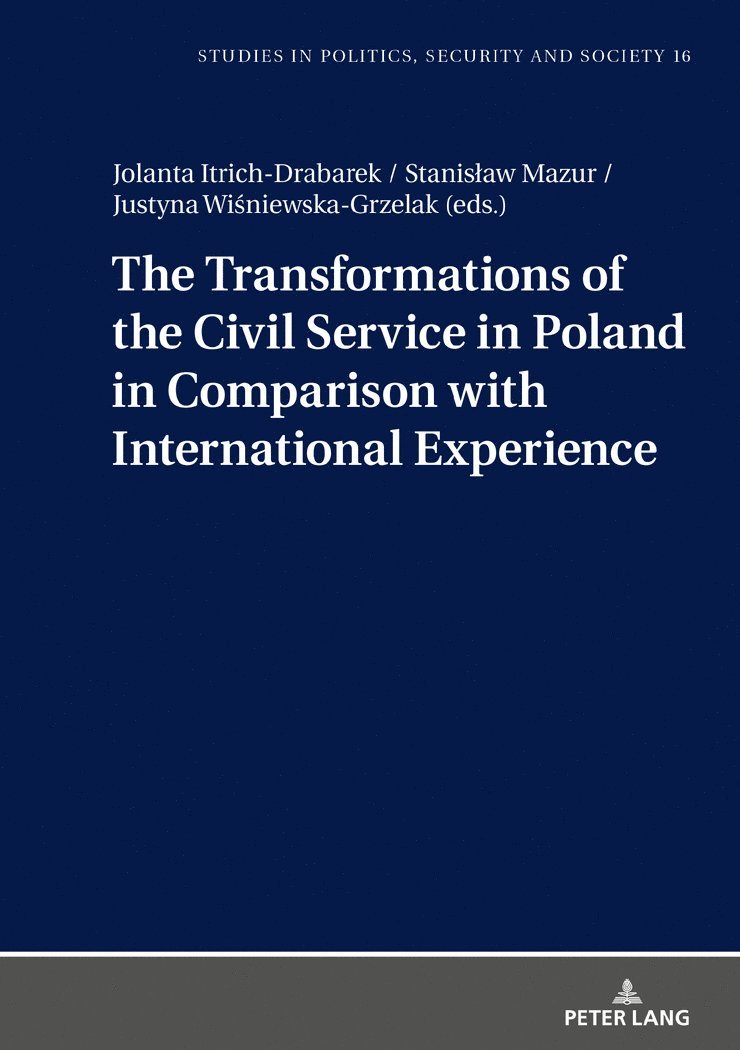
Transformations of the Civil Service in Poland in Comparison with International Experience
Inbunden, Engelska, 2018
613 kr
Skickas inom 5-8 vardagar
This book is the outcome of in-depth academic research on the civil service carried out by acknowledged international and national experts in the field. It brings together papers and speeches presented at the international symposium "The civil service in Poland: 20 years of experience and the outlook for change", which was organized at the University of Warsaw. The authors summarise the studies on the transformations in the civil service systems in European and other countries, especially those pertaining to Anglo-Saxon culture. They also aim to provoke deeper reflections on the process of establishing the civil service in Poland, especially against the background of the legislative changes introduced in late 2015 and early 2016.