Stanley B. Lubman - Böcker
Visar alla böcker från författaren Stanley B. Lubman. Handla med fri frakt och snabb leverans.
6 produkter
6 produkter
886 kr
Skickas inom 3-6 vardagar
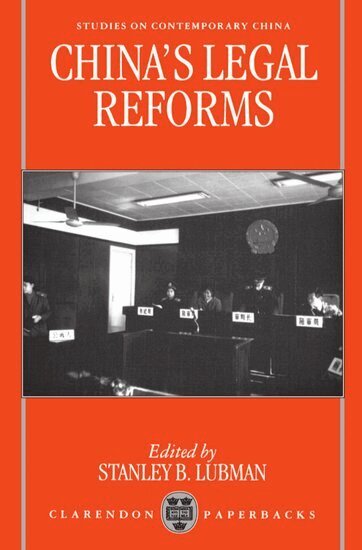
Since the early 1980s, the People's Republic of China has been building legal institutions where no meaningful ones had existed before. This collection of essays by leading international scholars of Chinese law analyses the accomplishments of Chinese law reform and the problems that confront the Chinese leadership and the Chinese people in their struggle to define the role of law in China. Chinese economic reforms have led to a dramatic rate of economic growth, and have also made China the world's leader in attracting foreign capital. A sound legal system is not only essential for continued economic growth and foreign investment, but its future development will express and reflect the evolution of China's post-totalitarian political institutions.These essays focus on the changing Chinese conceptions of the role of law in shaping family relationships; the effectiveness of the courts in civil litigation; the operation of the criminal process; judicial decision-making; the evolution of a legislative process; the growth of a legal profession; the legal framework of foreign direct investment in China; and China's record as a member of the international community. An overview by the editor identifies the emerging functions performed in Chinese society by the new legal institutions and tries to analyse likely major influences on them in the near future, including, among other contradictory forces, increased consciousness of individual rights and a tenacious insistence by the Chinese Communist Party on maintaining its power.
2 116 kr
Skickas inom 7-10 vardagar
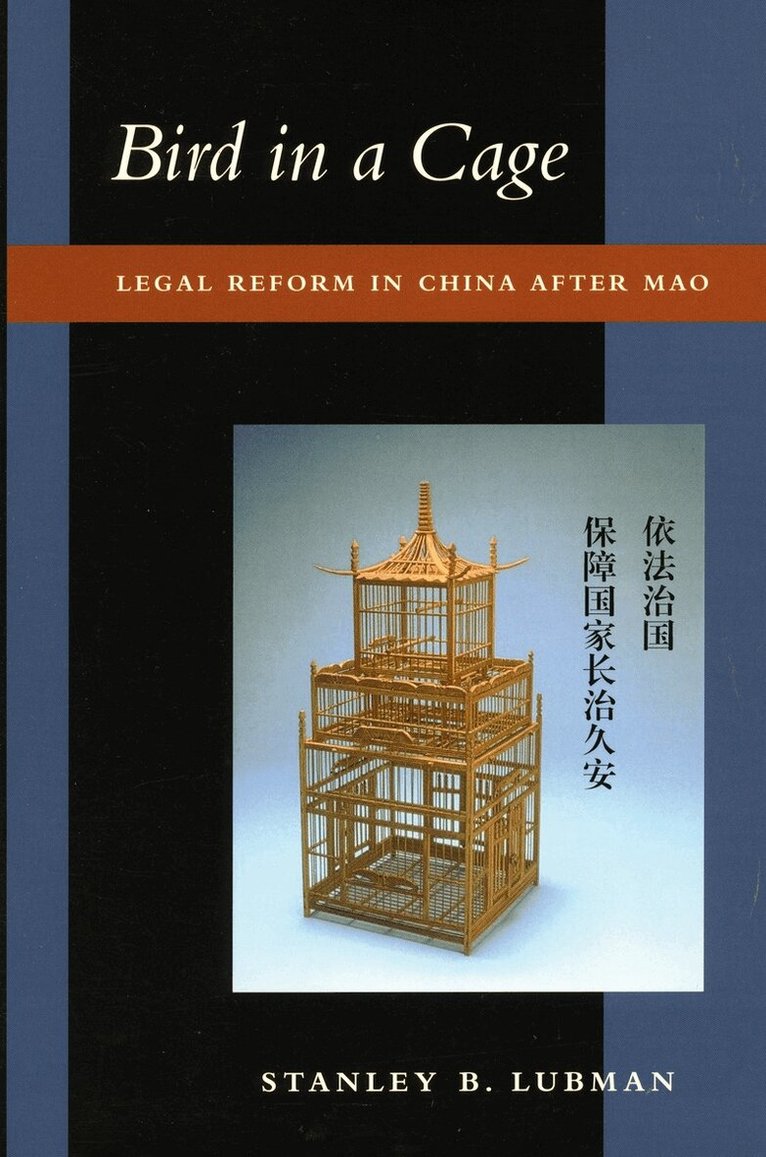
Since 1979, China has been building new legal institutions made necessary by economic reforms that have reduced the role of state planning, and by the decline of Maoist totalitarianism. This book analyzes the principal legal institutions that have emerged and assesses the prospects for increasing the rule of law in China.The book first establishes the cultural and institutional context in which legal reforms take place. It traces the main features of pre-Communist Chinese legal tradition, the drastic impact on law of thirty years of Maoist rule, and the extensive changes throughout Chinese society since Mao’s death, notably the rise of the local party-state at the expense of central government power. The book’s analysis begins with the Chinese leadership’s policy toward law, identifying basic ambivalence toward law that makes the Chinese commitment to legality incomplete. It then surveys major developments, emphasizing the creation of new rights, revision of criminal law and procedure, and construction of a nascent administrative law.The book then examines in detail dispute resolution by extrajudicial mediation and the courts. Although mediation is no longer infused with Maoism, it is still used as an instrument to maintain public order. The study of the courts examines court organization, the selection and training of judges, the rise of litigation, the critical influence of localism, and ongoing conflicts between professionalism and a continuing tendency to view the judge as a soldier of the state. The author suggests that the limited role that Chinese courts are today permitted to play combines with the organization of the judicial process and the mentality of the judiciary to make Chinese adjudication more akin to bureaucratic decision making than judging in the West.How should the accomplishments of legal reform and the continuing obstacles to further reform affect U.S. policy toward China? The book concludes by appraising implications for U.S. policy on such issues as human rights, Chinese involvement with the World Trade Organization, and bilateral relations generally. The author argues that U.S. policy makers must neither moralize about the rule of law nor dismiss it as a concept alien to China. They must also curb both optimism and expectations that legal reform will lead to political reform. Chinese law can only grow slowly, no matter how urgently the West may desire quick progress.
515 kr
Skickas inom 7-10 vardagar
Since 1979, China has been building new legal institutions made necessary by economic reforms that have reduced the role of state planning, and by the decline of Maoist totalitarianism. This book analyzes the principal legal institutions that have emerged and assesses the prospects for increasing the rule of law in China.The book first establishes the cultural and institutional context in which legal reforms take place. It traces the main features of pre-Communist Chinese legal tradition, the drastic impact on law of thirty years of Maoist rule, and the extensive changes throughout Chinese society since Mao's death, notably the rise of the local party-state at the expense of central government power. The book's analysis begins with the Chinese leadership's policy toward law, identifying basic ambivalence toward law that makes the Chinese commitment to legality incomplete. It then surveys major developments, emphasizing the creation of new rights, revision of criminal law and procedure, and construction of a nascent administrative law.The book then examines in detail dispute resolution by extrajudicial mediation and the courts. Although mediation is no longer infused with Maoism, it is still used as an instrument to maintain public order. The study of the courts examines court organization, the selection and training of judges, the rise of litigation, the critical influence of localism, and ongoing conflicts between professionalism and a continuing tendency to view the judge as a soldier of the state. The author suggests that the limited role that Chinese courts are today permitted to play combines with the organization of the judicial process and the mentality of the judiciary to make Chinese adjudication more akin to bureaucratic decision making than judging in the West.How should the accomplishments of legal reform and the continuing obstacles to further reform affect U.S. policy toward China? The book concludes by appraising implications for U.S. policy on such issues as human rights, Chinese involvement with the World Trade Organization, and bilateral relations generally. The author argues that U.S. policy makers must neither moralize about the rule of law nor dismiss it as a concept alien to China. They must also curb both optimism and expectations that legal reform will lead to political reform. Chinese law can only grow slowly, no matter how urgently the West may desire quick progress.
1 168 kr
Skickas inom 7-10 vardagar
This interdisciplinary book of essays addresses critical issues arising from the emergence of legal process and legal institutions in contemporary China. The introduction by the editors and the individual chapters attempt, for the first time, to bring to bear on the study of Chinese law the law-and-society scholarship that has enriched Western legal studies.
285 kr
Skickas inom 7-10 vardagar
This interdisciplinary book of essays addresses critical issues arising from the emergence of legal process and legal institutions in contemporary China. The introduction by the editors and the individual chapters attempt, for the first time, to bring to bear on the study of Chinese law the law-and-society scholarship that has enriched Western legal studies.
5 788 kr
Skickas inom 7-10 vardagar
This timely research review presents articles written by Chinese and Western authors on law reform in the People's Republic of China from its beginning in 1978 until the present day. The first part presents differing perspectives on the history of law reform. Separate sections are devoted to core institutions: the Constitution, the legislature, administrative law, courts, criminal process, the legal profession, extra-judicial dispute resolution and citizen petitions.