Stanley C. Pelkey - Böcker
Visar alla böcker från författaren Stanley C. Pelkey. Handla med fri frakt och snabb leverans.
3 produkter
3 produkter
1 855 kr
Skickas inom 5-8 vardagar
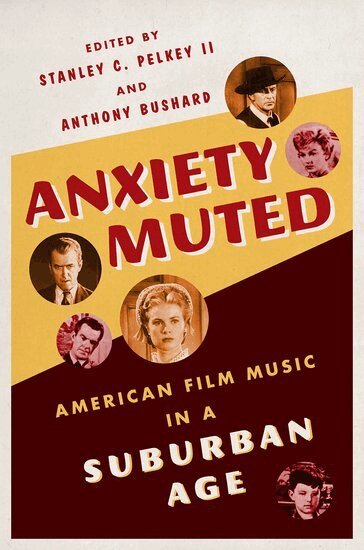
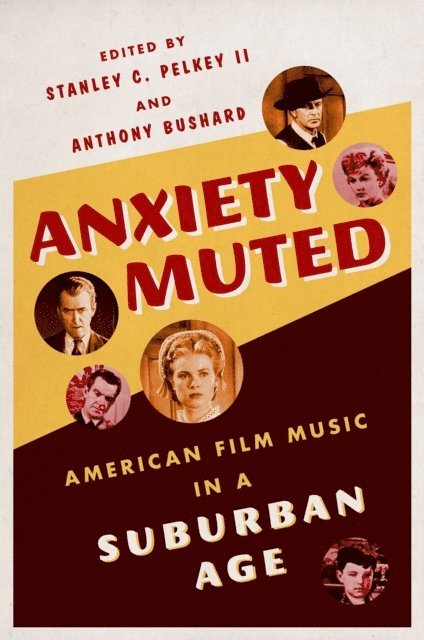
The most familiar entertainment icons and storylines from the 1950s and 60s remain potent signs that continue to resonate within contemporary American society and culture. Both the political Left and Right invoke the events and memories of those decades, celebrating or condemning the competing social forces embodied in and unleashed during those years. In recent decades, the entertainment industry has capitalized on this trend with films such as Pleasantville (1998), Far from Heaven (2002), The Hours (2002), Revolutionary Road (2008), and Julie & Julia (2009), and television shows such as Mad Men and Pan Am, all of which have looked back on the 1950s and 1960s with a mixture of nostalgia and criticism. Anxiety Muted: American Film Music in a Suburban Age explores the role of music in American film and television of the 1950s and 1960s, as well as in films from more recent years that reflect upon this period. Throughout the collection, authors use music as a means to interrogate film and television in order to explore how anxieties about issues of community, social codes, gender, family and suburbanization -- all central concerns of the Fifties and Sixties -- have been treated in motion picture media relating to those decades. These references function as signs of the social and political assumptions about the American past that foil contemporary self-understanding. By studying these musical materials through the lens of relevant writings of the 1950s, it demonstrates that specific television shows such as Leave It to Beaver -- often seen as the epitome of Fifties naivety -- offers a more nuanced vision of community and conformity than is usually recognized, revealing much about our own current social anxieties. By focusing on a common set of themes relevant to the time period, Anxiety Muted binds several strands of film studies into a cohesive and engaging introduction to the Fifties and Sixties, its visual media and its music. The book will be of interest to students and scholars of both film music and American music studies.
598 kr
Skickas inom 5-8 vardagar
The most familiar entertainment icons and storylines from the 1950s and 60s remain potent signs that continue to resonate within contemporary American society and culture. Both the political Left and Right invoke the events and memories of those decades, celebrating or condemning the competing social forces embodied in and unleashed during those years. In recent decades, the entertainment industry has capitalized on this trend with films such as Pleasantville (1998), Far from Heaven (2002), The Hours (2002), Revolutionary Road (2008), and Julie & Julia (2009), and television shows such as Mad Men and Pan Am, all of which have looked back on the 1950s and 1960s with a mixture of nostalgia and criticism. Anxiety Muted: American Film Music in a Suburban Age explores the role of music in American film and television of the 1950s and 1960s, as well as in films from more recent years that reflect upon this period. Throughout the collection, authors use music as a means to interrogate film and television in order to explore how anxieties about issues of community, social codes, gender, family and suburbanization -- all central concerns of the Fifties and Sixties -- have been treated in motion picture media relating to those decades. These references function as signs of the social and political assumptions about the American past that foil contemporary self-understanding. By studying these musical materials through the lens of relevant writings of the 1950s, it demonstrates that specific television shows such as Leave It to Beaver -- often seen as the epitome of Fifties naivety -- offers a more nuanced vision of community and conformity than is usually recognized, revealing much about our own current social anxieties. By focusing on a common set of themes relevant to the time period, Anxiety Muted binds several strands of film studies into a cohesive and engaging introduction to the Fifties and Sixties, its visual media and its music. The book will be of interest to students and scholars of both film music and American music studies.
268 kr
Skickas inom 10-15 vardagar
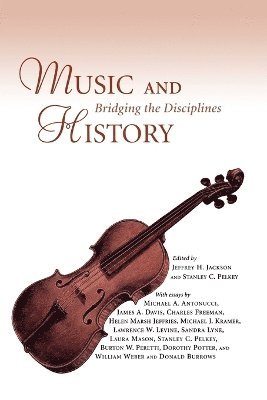
This book begins with a simple question: Why haven't historians and musicologists been talking to one another? Historians frequently look to all aspects of human activity, including music, in order to better understand the past. Musicologists inquire into the social, cultural, and historical contexts of musical works and musical practices to develop theories about the meanings of compositions and the significance of musical creation. Both disciplines examine how people represent their experiences. This collection of original essays, the first of its kind, argues that the conversation between scholars in the two fields can become richer and more mutually informing. The volume features an eloquent personal essay by historian Lawrence W. Levine, whose work has inspired a whole generation of scholars working on African American music in American history. The first six essays address widely different aspects of musical culture and history ranging from women and popular song during the French Revolution to nineteenth-century music publishing in Philadelphia, Pennsylvania. Two additional essays by scholars outside of musicology and history represent a new kind of disciplinary bridging by using the methods of cultural studies to look at cross-dressing in nineteenth- and early twentieth-century opera and blues responses to lynching in the New South. The last four essays offer models for collaborative, multidisciplinary research with a special emphasis on popular music. Jeffrey H. Jackson, Memphis, Tennessee, is assistant professor of history at Rhodes College. He is the author of Making Jazz French: Music and Modern Life in Interwar Paris. Stanley C. Pelkey, Portage, Michigan, is assistant professor of music at Western Michigan University. He is a member of the College Music Society, and his work has appeared in music-related periodicals.