Stanley Engerman - Böcker
Visar alla böcker från författaren Stanley Engerman. Handla med fri frakt och snabb leverans.
4 produkter
4 produkter
715 kr
Skickas inom 5-8 vardagar
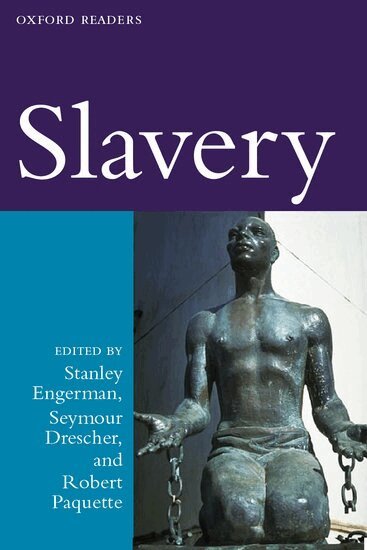
This new Reader draws on a range of documentary sources to show the origins, history, and realities of slavery and the slave trade. Exploring the economic, cultural, and political role of slavery, the volume shows the similarities as well as the differences in different times and places. While focusing primarily on the Americas, the volume extends to a consideration of slavery in other societies in the classical world, Africa, Asia, and the contemporary world. With over 150 selections, varying from one paragraph to several pages in length, the volume ranges widely, from international slave trade regulations and the individual records of slaveowners, to legislative debate concerning the emancipation of slaves. The volume aims to show the diversity of human experiences of slavery, and explains the causes of both the ending as well as the origins of slavery. Covering many aspects of slavery, the volume considers the ways in which slavery has been justified and attacked, the operations of slave societies, and the experiences of those living in them. Selections are drawn from a wide variety of sources, such as biblical and philosophical discussions, the writings of slaves, slaveowners, abolitionists, economists, lawyers, and historians. In addition, the volume includes selections from many leading historians and economists studying slavery and emancipation.
2 692 kr
Skickas inom 10-15 vardagar
The complex relationships between ethno-nationality, rights to land, and territorial sovereignty have long fed disputes over territorial control and landed rights between different nations, ethnicities, and religions. These disputes raise a number of interesting issues related to the nature of land regimes and to their economic and political implications.The studies drawn together in this key volume explore these and related issues for a broad variety of countries and times. They illuminate the diverse causes of ethno-national land disputes, and the different forms of adjustment and accommodation to the power differences between the contesting groups. This is done within a framework outlined by the editors in their analytical overview, which offers contours for comparative examinations of such disputes, past and present.Providing conceptual and factual analyses of comparative nature and wealth of empirical material (both historical and contemporary), this book will appeal to economic historians, economists, political scientists, sociologists, anthropologists and all scholars interested in issues concerning ethno-nationality and land rights in historical perspective.
807 kr
Skickas inom 10-15 vardagar
The complex relationships between ethno-nationality, rights to land, and territorial sovereignty have long fed disputes over territorial control and landed rights between different nations, ethnicities, and religions. These disputes raise a number of interesting issues related to the nature of land regimes and to their economic and political implications.The studies drawn together in this key volume explore these and related issues for a broad variety of countries and times. They illuminate the diverse causes of ethno-national land disputes, and the different forms of adjustment and accommodation to the power differences between the contesting groups. This is done within a framework outlined by the editors in their analytical overview, which offers contours for comparative examinations of such disputes, past and present.Providing conceptual and factual analyses of comparative nature and wealth of empirical material (both historical and contemporary), this book will appeal to economic historians, economists, political scientists, sociologists, anthropologists and all scholars interested in issues concerning ethno-nationality and land rights in historical perspective.
1 836 kr
Skickas inom 7-10 vardagar
Medieval slavery has received little attention relative to slavery in ancient Greece and Rome and in the early modern Atlantic world. This imbalance in the scholarship has led many to assume that slavery was of minor importance in the Middle Ages. In fact, the practice of slavery continued unabated across the globe throughout the medieval millennium. This volume - the final volume in The Cambridge World History of Slavery - covers the period between the fall of Rome and the rise of the transatlantic plantation complexes by assembling twenty-three original essays, written by scholars acknowledged as leaders in their respective fields. The volume demonstrates the continual and central presence of slavery in societies worldwide between 500 CE and 1420 CE. The essays analyze key concepts in the history of slavery, including gender, trade, empire, state formation and diplomacy, labor, childhood, social status and mobility, cultural attitudes, spectrums of dependency and coercion, and life histories of enslaved people.