Stefan Jarau - Böcker
Visar alla böcker från författaren Stefan Jarau. Handla med fri frakt och snabb leverans.
3 produkter
3 produkter
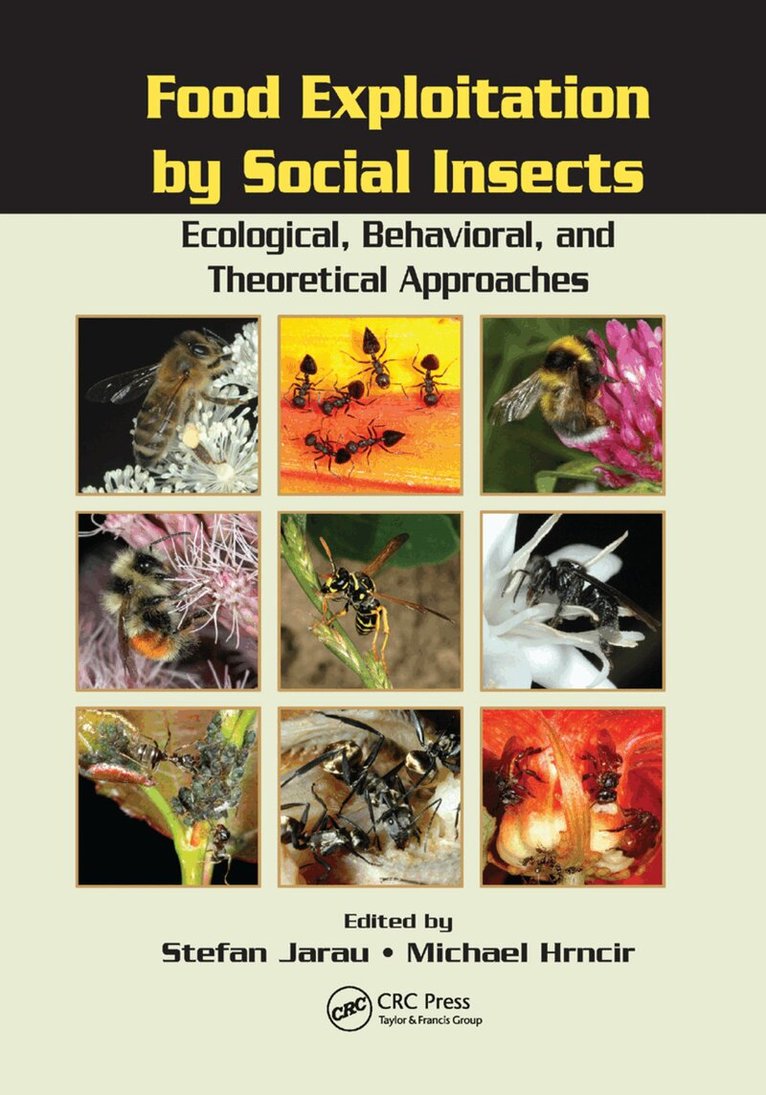
Food Exploitation By Social Insects
Ecological, Behavioral, and Theoretical Approaches
Häftad, Engelska, 2019
931 kr
Skickas inom 10-15 vardagar
Omnipresent in virtually all terrestrial ecosystems and of undisputed ecological and economical importance, the study of social insects is an area that continues to attract a vast number of researchers. As a consequence, a huge amount of information about their biology and ecology has accumulated. Distilling this scattered information into a highly focused reference, Food Exploitation by Social Insects: Ecological, Behavioral, and Theoretical Approaches unites traditional behavioral and ecological studies with theoretical and mathematical models.The book covers foraging ecology and behavior of social insects, their communication mechanisms, and theoretical models of important aspects. It examines two different but inseparably interlaced levels of social insect foraging: the macroscopic or colony level and the microscopic or individual level. The chapters include discussions of foraging decisions, patterns and strategies of social insect colonies, and information use and information transfer between workers. The book provides examples of how this biological knowledge can be used as a basis for the construction of mathematical and neural network models that in return may increase understanding of social insect foraging. The contributors provide a fresh look on their topics, covering a wide range of subjects and recent scientific developments that are unprecedented in breadth and depth. The coverage of ants, bees, and wasps in one resource is a unique feature of the book. This taxonomic content combined with the variety of research approaches, allows the book to provide deeper insight into the subject.
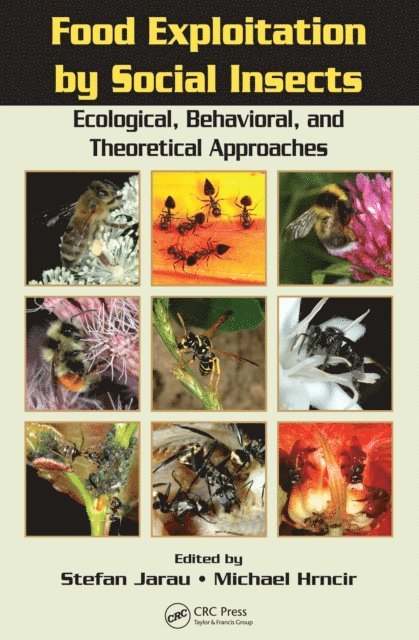
Food Exploitation By Social Insects
Ecological, Behavioral, and Theoretical Approaches
Inbunden, Engelska, 2009
2 588 kr
Skickas inom 10-15 vardagar
Omnipresent in virtually all terrestrial ecosystems and of undisputed ecological and economical importance, the study of social insects is an area that continues to attract a vast number of researchers. As a consequence, a huge amount of information about their biology and ecology has accumulated. Distilling this scattered information into a highly focused reference, Food Exploitation by Social Insects: Ecological, Behavioral, and Theoretical Approaches unites traditional behavioral and ecological studies with theoretical and mathematical models.The book covers foraging ecology and behavior of social insects, their communication mechanisms, and theoretical models of important aspects. It examines two different but inseparably interlaced levels of social insect foraging: the macroscopic or colony level and the microscopic or individual level. The chapters include discussions of foraging decisions, patterns and strategies of social insect colonies, and information use and information transfer between workers. The book provides examples of how this biological knowledge can be used as a basis for the construction of mathematical and neural network models that in return may increase understanding of social insect foraging. The contributors provide a fresh look on their topics, covering a wide range of subjects and recent scientific developments that are unprecedented in breadth and depth. The coverage of ants, bees, and wasps in one resource is a unique feature of the book. This taxonomic content combined with the variety of research approaches, allows the book to provide deeper insight into the subject.
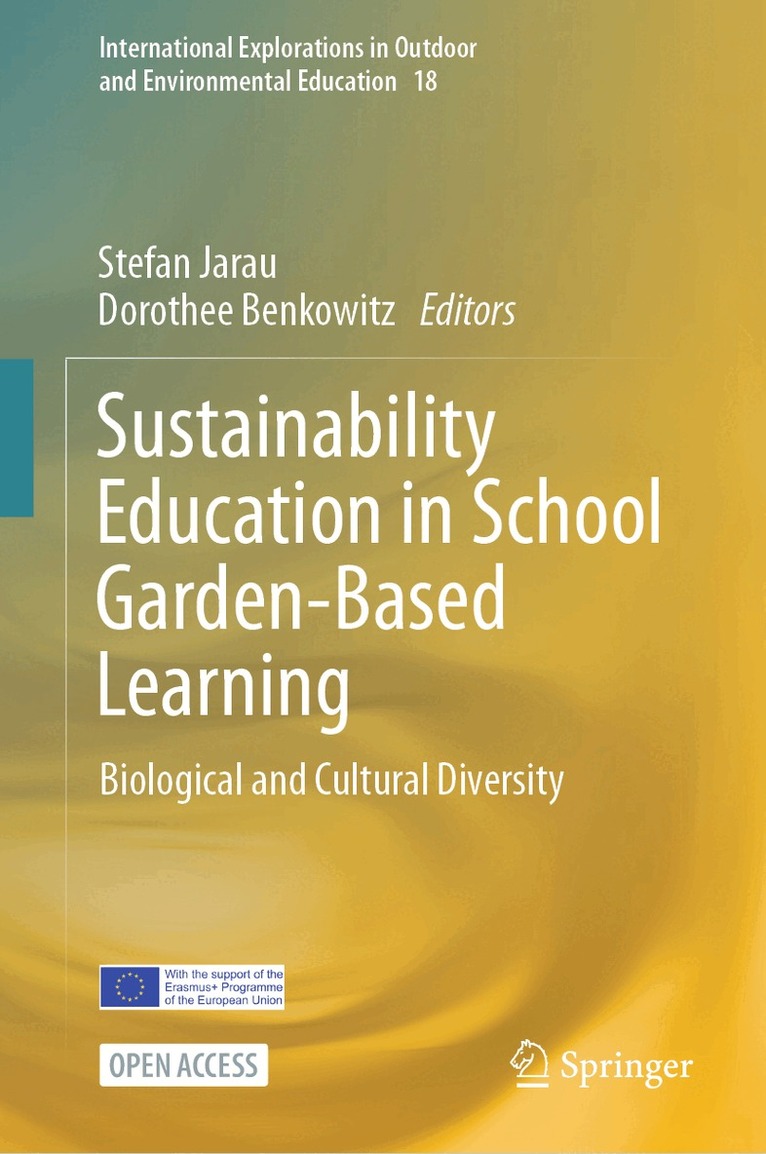
Del 18 - International Explorations in Outdoor and Environmental Education
Sustainability Education in School Garden-Based Learning
Biological and Cultural Diversity
Inbunden, Engelska, 2026
574 kr
Kommande
This open access book addresses sustainability education in garden-based learning settings with biological and cultural diversity as its central themes. It provides scientific background knowledge to understand biological diversity and its functional roles in ecosystems as well as didactic approaches to sensitize students for challenges related to biodiversity loss or preservation, respectively, and to further their environmental consciousness. It also addresses biodiversity education in a broader sense by discussing issues that include economic, political, cultural and ethical aspects. This book supports teachers of all educational levels as well as pedagogues involved in non-formal training in developing concepts and learning environments for biodiversity education in garden-based learning settings and, therefore, it is of great benefit for school teachers and university lecturers working with their students in a school garden or close-to nature designed school areas. Likewise, teacher mentors and trainers at universities, school leaders and policymakers responsible for the laying-out of school grounds can benefit from the information compiled in this volume.