Stefan L. Brandt – författare
Visar alla böcker från författaren Stefan L. Brandt. Handla med fri frakt och snabb leverans.
7 produkter
7 produkter
Inbunden, Engelska, 2022
1 384 kr
Skickas inom 5-8 vardagar
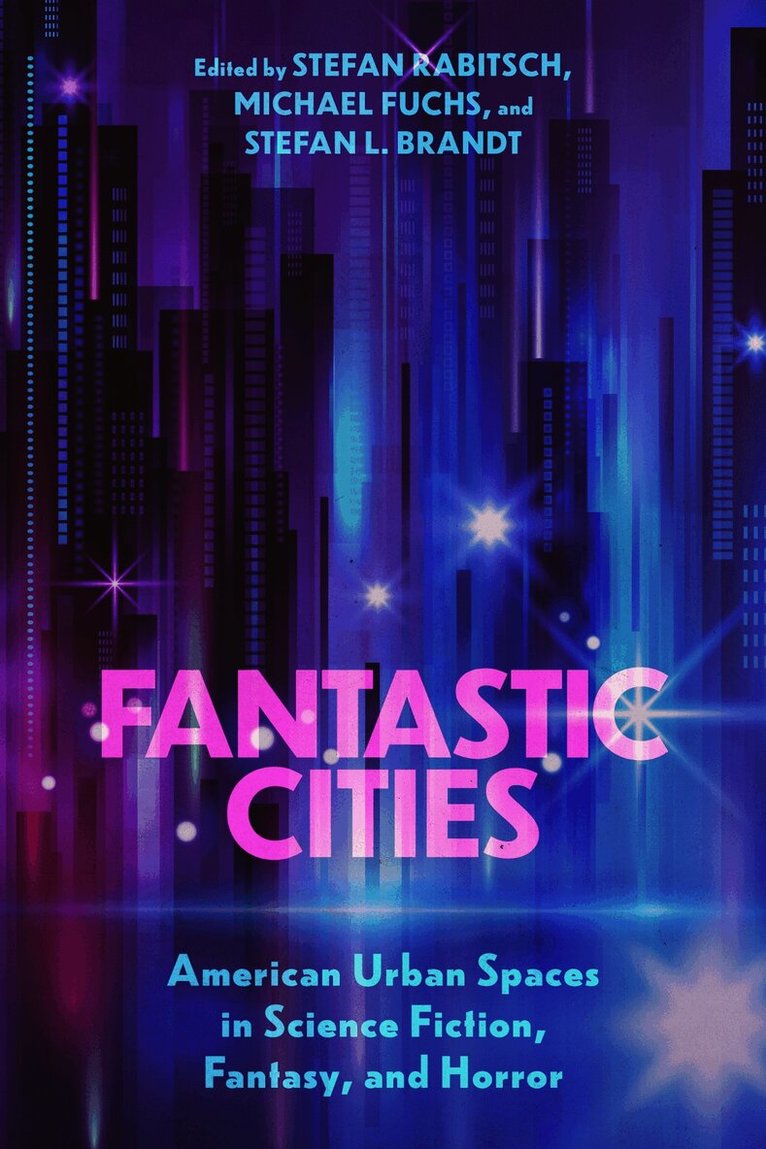
Metropolis, Gotham City, Mega-City One, Panem’s Capitol, the Sprawl, Caprica City—American (and Americanized) urban environments have always been a part of the fantastic imagination. Fantastic Cities: American Urban Spaces in Science Fiction, Fantasy, and Horror focuses on the American city as a fantastic geography constrained neither by media nor rigid genre boundaries. Fantastic Cities builds on a mix of theoretical and methodological tools that are drawn from criticism of the fantastic, media studies, cultural studies, American studies, and urban studies.Contributors explore cultural media across many platforms such as Christopher Nolan’s Dark Knight Trilogy, the Arkham Asylum video games, the 1935 movie serial The Phantom Empire, Kim Stanley Robinson’s fiction, Colson Whitehead’s novel Zone One, the vampire films Only Lovers Left Alive and A Girl Walks Home Alone at Night, Paolo Bacigalupi’s novel The Water Knife, some of Kenny Scharf’s videos, and Samuel Delany’s classic Dhalgren. Together, the contributions in Fantastic Cities demonstrate that the fantastic is able to "real-ize" that which is normally confined to the abstract, metaphorical, and/or subjective. Consequently, both utopian aspirations for and dystopian anxieties about the American city become literalized in the fantastic city.Contributions by Carl Abbott, Jacob Babb, Marleen S. Barr, Michael Fuchs, John Glover, Stephen Joyce, Sarah Lahm, James McAdams, Cynthia J. Miller, Fernando Gabriel Pagnoni Berns, Chris Pak, María Isabel Pérez Ramos, Stefan Rabitsch, J. Jesse Ramírez, A. Bowdoin Van Riper, Andrew Wasserman, Jeffrey Andrew Weinstock, and Robert Yeates.
Häftad, Engelska, 2022
430 kr
Skickas inom 5-8 vardagar
Metropolis, Gotham City, Mega-City One, Panem’s Capitol, the Sprawl, Caprica City—American (and Americanized) urban environments have always been a part of the fantastic imagination. Fantastic Cities: American Urban Spaces in Science Fiction, Fantasy, and Horror focuses on the American city as a fantastic geography constrained neither by media nor rigid genre boundaries. Fantastic Cities builds on a mix of theoretical and methodological tools that are drawn from criticism of the fantastic, media studies, cultural studies, American studies, and urban studies.Contributors explore cultural media across many platforms such as Christopher Nolan’s Dark Knight Trilogy, the Arkham Asylum video games, the 1935 movie serial The Phantom Empire, Kim Stanley Robinson’s fiction, Colson Whitehead’s novel Zone One, the vampire films Only Lovers Left Alive and A Girl Walks Home Alone at Night, Paolo Bacigalupi’s novel The Water Knife, some of Kenny Scharf’s videos, and Samuel Delany’s classic Dhalgren. Together, the contributions in Fantastic Cities demonstrate that the fantastic is able to "real-ize" that which is normally confined to the abstract, metaphorical, and/or subjective. Consequently, both utopian aspirations for and dystopian anxieties about the American city become literalized in the fantastic city.Contributions by Carl Abbott, Jacob Babb, Marleen S. Barr, Michael Fuchs, John Glover, Stephen Joyce, Sarah Lahm, James McAdams, Cynthia J. Miller, Fernando Gabriel Pagnoni Berns, Chris Pak, María Isabel Pérez Ramos, Stefan Rabitsch, J. Jesse Ramírez, A. Bowdoin Van Riper, Andrew Wasserman, Jeffrey Andrew Weinstock, and Robert Yeates.
Inbunden, Engelska, 2022
1 042 kr
Skickas
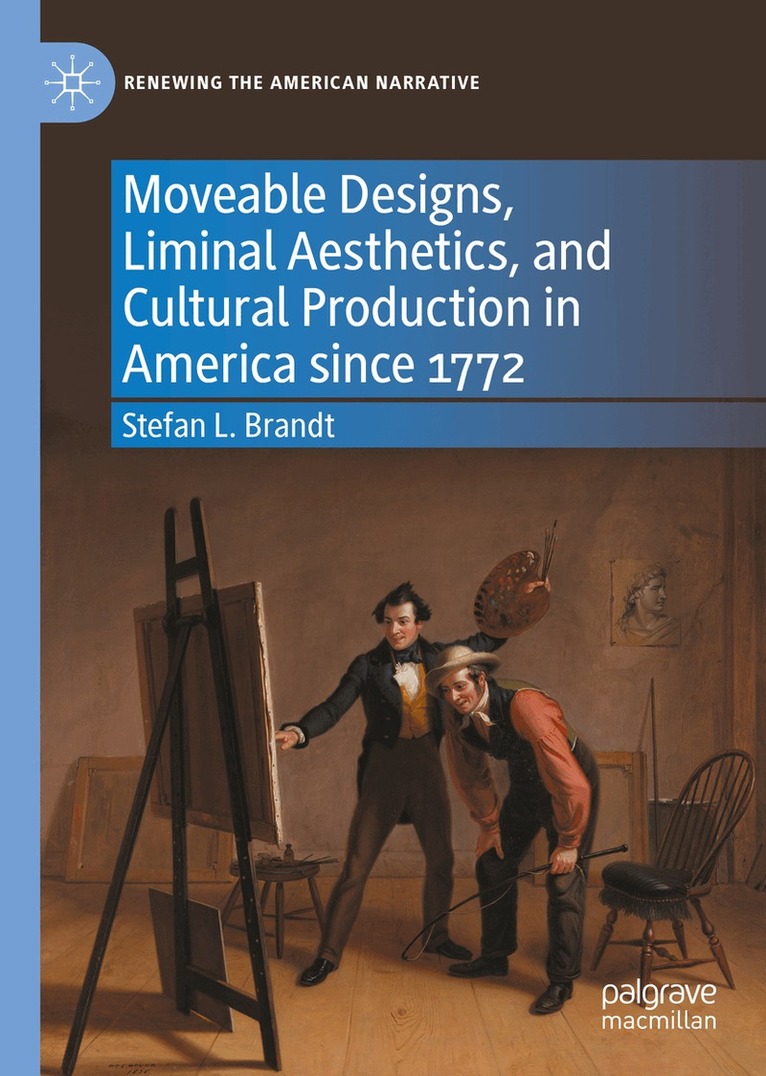
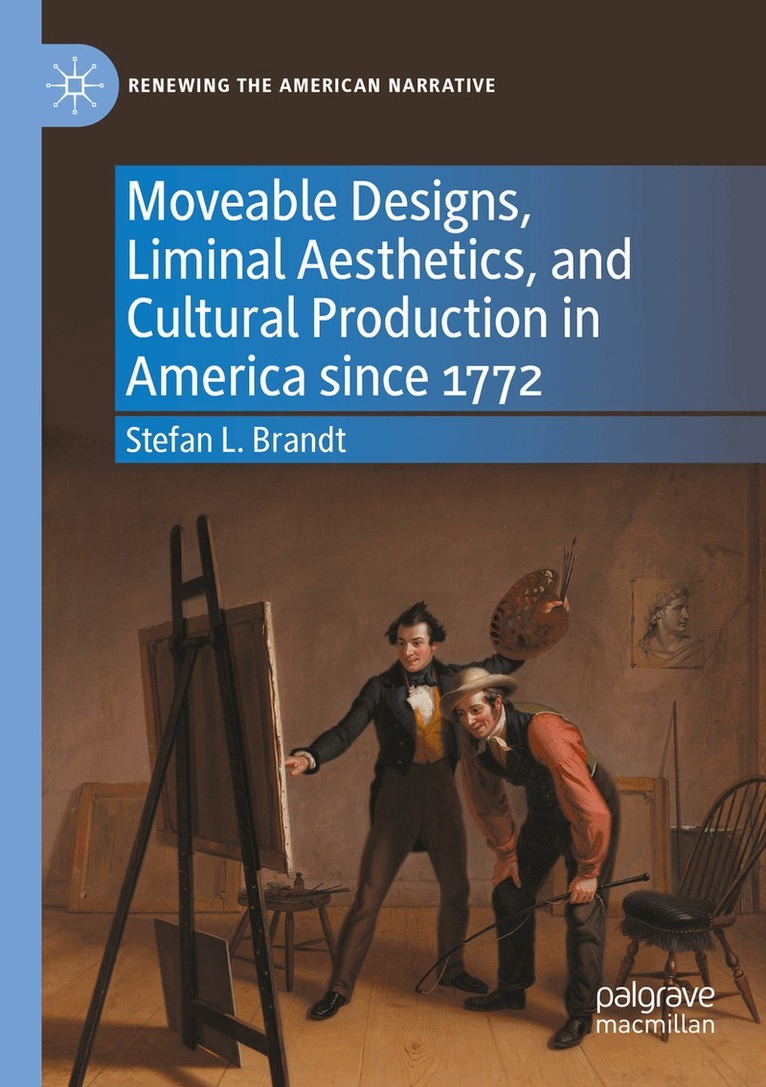
The book explores the liminal aesthetics of U.S. cultural and literary practice. Interrogating the notion of a presumptive unity of the American experience, Moveable Designs argues that inner conflict, divisiveness, and contradiction are integral to the nation’s cultural designs, themes, and motifs. The study suggests that U.S. literary and cultural practice is permeated by ‘moveable designs’—flexible, yet constant features of hegemonial practice that constitute an integral element of American national self-fashioning. The naturally pervasive liminality of U.S. cultural production is the key to understanding the resilience of American culture. Moveable Designs looks at artistic expressions across various media types (literature, paintings, film, television), seeking to illuminate critical phases of U.S. American literature and culture—from the revolutionary years to the movements of romanticism, realism, and modernism, up to the postmodern era. It combines a wide array of approaches, from cultural history and social anthropology to phenomenology. Connecting an analysis of literary and cultural texts with approaches from design theory, the book proposes a new way of understanding American culture as design. It is one of the unique characteristics of American culture that it creates—or, rather, designs—potency out of its inner conflicts and apparent disunities. That which we describe as an identifiable ‘American identity’ is actually the product of highly vulnerable, alternating processes of dissolution and self-affirmation.
E-bok
Engelska, 20221 831 kr
Läs direkt efter köp
The book explores the liminal aesthetics of U.S. cultural and literary practice. Interrogating the notion of a presumptive unity of the American experience, Moveable Designs argues that inner conflict, divisiveness, and contradiction are integral to the nation’s cultural designs, themes, and motifs. The study suggests that U.S. literary and cultural practice is permeated by ‘moveable designs’—flexible, yet constant features of hegemonial practice that constitute an integral element of American national self-fashioning. The naturally pervasive liminality of U.S. cultural production is the key to understanding the resilience of American culture. Moveable Designs looks at artistic expressions across various media types (literature, paintings, film, television), seeking to illuminate critical phases of U.S. American literature and culture—from the revolutionary years to the movements of romanticism, realism, and modernism, up to the postmodern era. It combines a wide array of approaches, from cultural history and social anthropology to phenomenology. Connecting an analysis of literary and cultural texts with approaches from design theory, the book proposes a new way of understanding American culture as design. It is one of the unique characteristics of American culture that it creates—or, rather, designs—potency out of its inner conflicts and apparent disunities. That which we describe as an identifiable ‘American identity’ is actually the product of highly vulnerable, alternating processes of dissolution and self-affirmation.
625 kr
Skickas inom 5-8 vardagar
Häftad, Engelska, 2023
1 431 kr
Skickas inom 10-15 vardagar
The book explores the liminal aesthetics of U.S. cultural and literary practice. Interrogating the notion of a presumptive unity of the American experience, Moveable Designs argues that inner conflict, divisiveness, and contradiction are integral to the nation’s cultural designs, themes, and motifs. The study suggests that U.S. literary and cultural practice is permeated by ‘moveable designs’—flexible, yet constant features of hegemonial practice that constitute an integral element of American national self-fashioning. The naturally pervasive liminality of U.S. cultural production is the key to understanding the resilience of American culture. Moveable Designs looks at artistic expressions across various media types (literature, paintings, film, television), seeking to illuminate critical phases of U.S. American literature and culture—from the revolutionary years to the movements of romanticism, realism, and modernism, up to the postmodern era. It combines a wide array of approaches, from cultural history and social anthropology to phenomenology. Connecting an analysis of literary and cultural texts with approaches from design theory, the book proposes a new way of understanding American culture as design. It is one of the unique characteristics of American culture that it creates—or, rather, designs—potency out of its inner conflicts and apparent disunities. That which we describe as an identifiable ‘American identity’ is actually the product of highly vulnerable, alternating processes of dissolution and self-affirmation.
Del 20 - Canadiana
In-Between – Liminal Spaces in Canadian Literature and Cultures
Inbunden, Engelska, 2017
923 kr
Skickas inom 5-8 vardagar
In the past few years, the concept of «liminality» has become a kind of pet theme within the discipline of Cultural Studies, lending itself to phenomena of transgression and systemic demarcation. This anthology employs theories of liminality to discuss Canada’s geographic and symbolic boundaries, taking its point of departure from the observation that «Canada» itself, as a cultural, political, and geographic entity, encapsulates elements of the «liminal.» The essays comprised in this volume deal with fragmented and contradictory practices in Canada, real and imagined borders, as well as contact zones, thresholds, and transitions in Anglo-Canadian and French-Canadian texts, discussing topics such as the U.S./Canadian border, migration, French-English relations, and encounters between First Nations and settlers.