Stefan Schneiderbauer - Böcker
Visar alla böcker från författaren Stefan Schneiderbauer. Handla med fri frakt och snabb leverans.
5 produkter
5 produkter
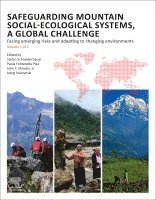
Safeguarding Mountain Social-Ecological Systems, vol. 1
A Global Challenge: Facing Emerging Risks and Adapting to Changing Environments
Häftad, Engelska, 2023
1 556 kr
Skickas inom 7-10 vardagar
Safeguarding Mountain Ecosystems: A Global Challenge provides an overview of the relevant research in mountain regions worldwide, identifying existing challenges and providing an understanding of the diversity of mountain ecosystems in different regions. Mountain ecosystems are increasingly vulnerable to modified climate conditions and other global changes (demographic, migration, urbanization). In this time of change, efforts for sustainable development in mountain ecosystems deserve all the attention, especially in synergy with the United Nations' International Frameworks, including the Sustainable Development Agenda 2030, the Sendai Framework for Disaster Risk Reduction, the Paris Agreement, and the New Urban Agenda.Sections underline the importance of mountain regions for humanity at global, regional and local scales, describe the challenges of safeguarding mountains and possible solutions worldwide, and scrutinize regional specificities of the major mountain ranges, describing the challenges and opportunities of each. Final sections reflect on applications and technologies that address and solve major problems. Focuses on existing challenges for mountain regions around the world Presents specific case studies of mountain ecosystems from major mountain ranges Features contributions from representatives of UN Agencies and research experts from the addressed regions, offering a very interdisciplinary view on challenges and opportunities
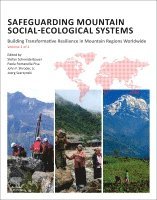
Safeguarding Mountain Social-Ecological Systems, Vol 2
Building Transformative Resilience in Mountain Regions Worldwide
Häftad, Engelska, 2024
1 641 kr
Skickas inom 7-10 vardagar
Safeguarding Mountain Social-Ecological Systems, Volume Two: Building Transformative Resilience in Mountain Regions Worldwide presents an overview of the relevant research in mountain regions worldwide, identifies existing challenges, and provides an understanding of the diversity of mountain ecosystems in different regions. It focuses on understanding, protecting, and enhancing mountain social-ecological systems.This second volume places a stronger emphasis on building transformative resilience in mountain regions, indicating a focus on proactive measures to address challenges and promote sustainable development. It also highlights regional perspectives and case studies and insights from various mountain regions worldwide.Focuses on existing efforts, emerging risks, and collaborative initiatives in the field of mountain social-ecological systemsAllows readers to gain insights into diverse social-ecological systems and understand the unique challenges and opportunities associated with each regionExplores strategies and approaches to enhance the resilience of mountain social-ecological systems through case studies, insights, and opportunities presented in each region
1 050 kr
Skickas inom 11-20 vardagar
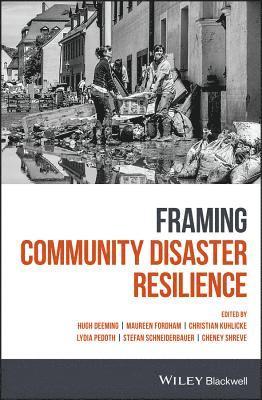
An essential guide to the foundations, research and practices of community disaster resilience Framing Community Disaster Resilience offers a guide to the theories, research and approaches for addressing the complexity of community resilience towards hazardous events or disasters. The text draws on the activities and achievements of the project emBRACE: Building Resilience Amongst Communities in Europe. The authors identify the key dimensions of resilience across a range of disciplines and domains and present an analysis of community characteristics, networks, behaviour and practices in specific test cases.The text contains an in-depth exploration of five test cases whose communities are facing impacts triggered by different hazards, namely: river floods in Germany, earthquakes in Turkey, landslides in South Tyrol, Italy, heat-waves in London and combined fluvial and pluvial floods in Northumberland and Cumbria. The authors examine the data and indicators of past events in order to assess current situations and to tackle the dynamics of community resilience. In addition, they put the focus on empirical analysis to explore the resilience concept and to test the usage of indicators for describing community resilience. This important text: Merges the forces of research knowledge, networking and practices in order to understand community disaster resilienceContains the results of the acclaimed project Building Resilience Amongst Communities in Europe - emBRACEExplores the key dimensions of community resilienceIncludes five illustrative case studies from European communities that face various hazardsWritten for undergraduate students, postgraduates and researchers of social science, and policymakers, Framing Community Disaster Resilience reports on the findings of an important study to reveal the most effective approaches to enhancing community resilience.The emBRACE research received funding from the European Community‘s Seventh Framework Programme FP7/2007-2013 under grant agreement n° 283201. The European Community is not liable for any use that may be made of the information contained in this publication.
1 585 kr
Skickas inom 10-15 vardagar
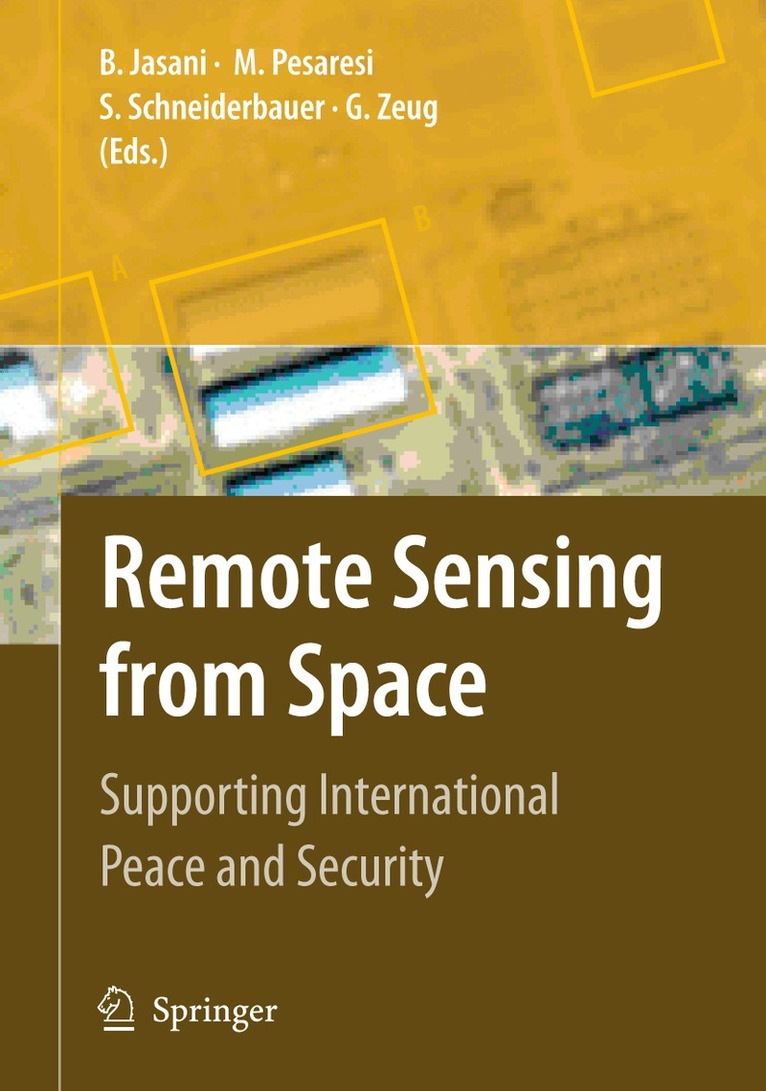
David Stevens Space-based information, which includes earth observation data, is increasingly becoming an integral part of our lives. We have been relying for decades on data obtained from meteorological satellites for updates on the weather and to monitor weather-related natural disasters such as hurricanes. We now count on our personal satellite-based navigation systems to guide us to the nearest Starbucks Coffee and use web-based applications such as Google Earth and Microsoft Virtual Earth to study the area of places we will or would like to visit. At the same time, satellite-based technologies have experienced impressive growth in recent years with an increase in the number of available sensors, an increase in spatial, temporal and spectral resolutions, an increase in the availability of radar satellites such as Terrasar-X and ALOS, and the launching of specific constellations such as the Disaster Monitoring Constellation (DMC), COSMO- SkyMed (COnstellation of small Satellites for the Mediterranean basin Observation) and RapidEye. Even more recent are the initiatives being set-up to ensure that space-based information is being accessed and used by decision makers, such as Sentinel Asia for the Asia and Pacific region and SERVIR for the Latin America and Caribbean region.
1 585 kr
Skickas inom 10-15 vardagar
David Stevens Space-based information, which includes earth observation data, is increasingly becoming an integral part of our lives. We have been relying for decades on data obtained from meteorological satellites for updates on the weather and to monitor weather-related natural disasters such as hurricanes. We now count on our personal satellite-based navigation systems to guide us to the nearest Starbucks Coffee and use web-based applications such as Google Earth and Microsoft Virtual Earth to study the area of places we will or would like to visit. At the same time, satellite-based technologies have experienced impressive growth in recent years with an increase in the number of available sensors, an increase in spatial, temporal and spectral resolutions, an increase in the availability of radar satellites such as Terrasar-X and ALOS, and the launching of specific constellations such as the Disaster Monitoring Constellation (DMC), COSMO- SkyMed (COnstellation of small Satellites for the Mediterranean basin Observation) and RapidEye. Even more recent are the initiatives being set-up to ensure that space-based information is being accessed and used by decision makers, such as Sentinel Asia for the Asia and Pacific region and SERVIR for the Latin America and Caribbean region.