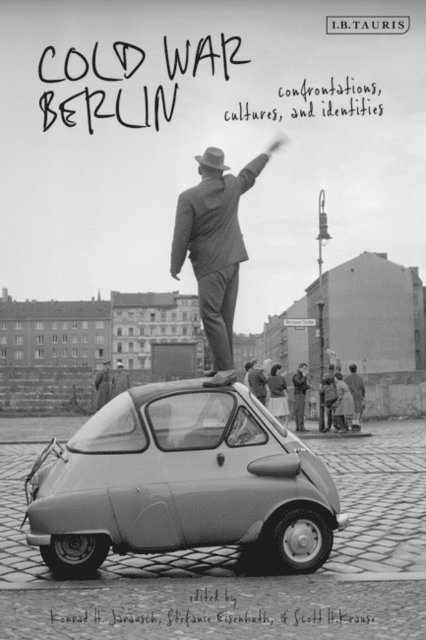
A wide range of transatlantic contributors addresses Berlin as a global focal point of the Cold War, and also assess the geopolitical peculiarity of the city and how citizens dealt with it in everyday life. They explore not just the implications of division, but also the continuing entanglements and mutual perceptions which resulted from Berlin's unique status. An essential contribution to the study of Berlin in the 20th century, and the effects - global and local - of the Cold War on a city.
A wide range of transatlantic contributors addresses Berlin as a global focal point of the Cold War, and also assess the geopolitical peculiarity of the city and how citizens dealt with it in everyday life. They explore not just the implications of division, but also the continuing entanglements and mutual perceptions which resulted from Berlin’s unique status. An essential contribution to the study of Berlin in the 20th century, and the effects - global and local - of the Cold War on a city.
Historikerinnen und Historiker agieren oft in der Öffentlichkeit. Sie beteiligen sich an gesellschaftlichen Debatten, setzen (geschichts-)politische Akzente und engagieren sich in der historischen Aufarbeitung. Dabei können sie eine aufklärende, eine agitierende, eine mahnende, eine anklagende oder auch verteidigende Rolle einnehmen und wirken so als Public Historians im breiten Feld der Public History. Ihre Interventionen betreffen oft die Erinnerungskultur und Geschichtspolitik, aber auch darüber hinausreichende aktuelle Fragen. Der geplante Band versammelt Beiträge aus dem ZZF Potsdam. Die Artikel nehmen einzelne Public Historians, gesellschaftliche Debatten und wissenschaftliche Selbstverständigungen in den Blick und thematisieren auf diese Weise das Verhältnis von Geschichte und Öffentlichkeit.