Stephan Hensell - Böcker
Visar alla böcker från författaren Stephan Hensell. Handla med fri frakt och snabb leverans.
2 produkter
2 produkter
1 886 kr
Skickas inom 3-6 vardagar
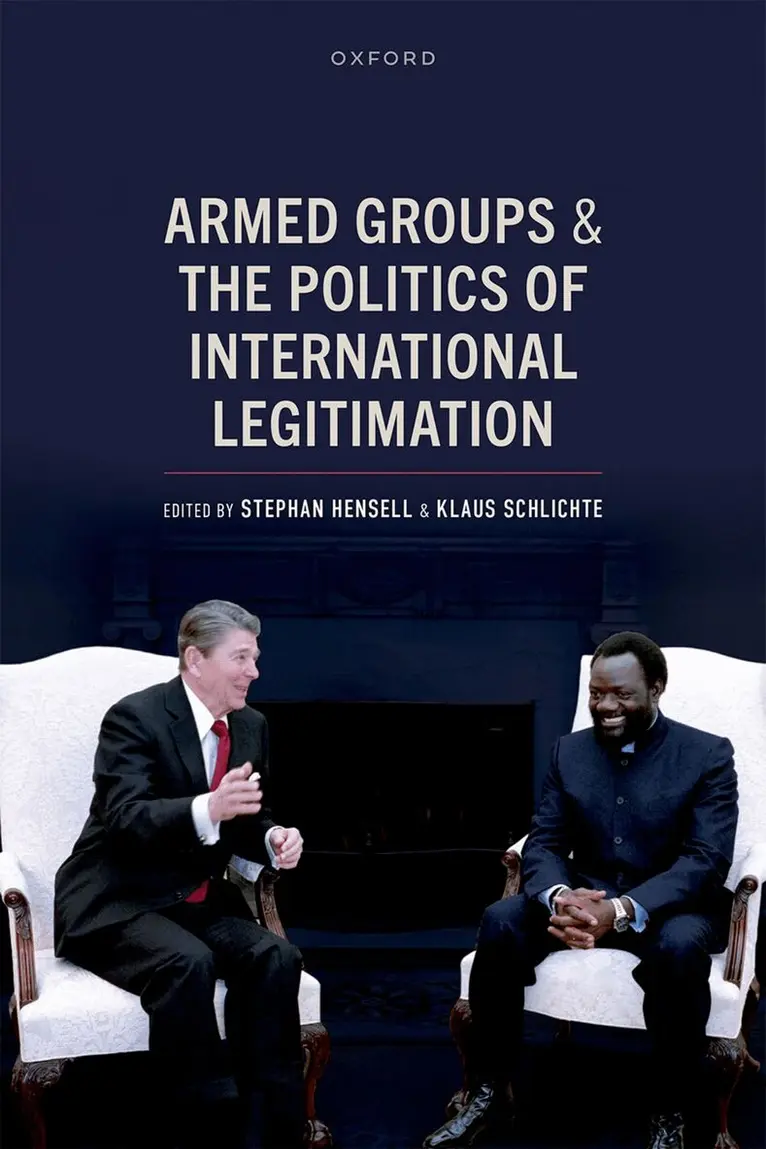
Non-state armed groups - rebels, guerrillas, militias, liberation movements - not only fight for state power but also for international legitimacy. Why are some armed groups successful in turning the power of the gun into legitimate authority that is internationally recognized while others fail? Contributing to a vibrant scholarly debate, this book is the first comparative study of armed groups that try to gain international legitimacy. It analyses how and when these attempts are successful. The volume presents a new framework for analysing the politics of legitimation that evolve around armed groups. Based on practice theory and global history, it highlights the interaction of practices and publics in the process of legitimation and introduces four different historical times, spanning from 1945 to the present, that have set different structural conditions for armed groups' pursuit of international legitimacy. Armed Groups and the Politics of International Legitimation encompasses in-depth case studies on Indonesia, Vietnam, Western Sahara, Nicaragua, El Salvador, Uganda, Angola, Palestine, Afghanistan, and Libya. Written by experts on these contexts, it suggests a research strategy of 'reiterative case comparison' that bridges the gap between political science, history, and sociology. It advances a new theoretical understanding of armed groups as international actors that co-shape international politics and as forces with a genuine quest for legitimacy, which allows us new insights into the fabric of international relations.
555 kr
Skickas inom 10-15 vardagar
Dieses Buch ist aus einem Projekt am Institut für Friedensforschung und Sich- heitspolitik an der Universität Hamburg (IFSH) hervorgegangen, das von 2003 bis 2006 von der Deutschen Forschungsgemeinschaft (DFG) sowie der Wiss- schaftsförderung der Universität Hamburg finanziell unterstützt wurde. Es ist - gleich eine überarbeitete Fassung meiner Dissertation, die ich im Januar 2008 an der Humboldt-Universität zu Berlin eingereicht habe. Der DFG, der Universität Hamburg und meinen Kolleginnen und Kollegen vom IFSH gilt mein Dank für die wohlwollende Förderung des Projektes. D- ken möchte ich auch meinen Freunden, Mitarbeitern und Gesprächspartnern in Albanien und Georgien, die mich bei nicht leichten Feldforschungen vor Ort unterstützt haben. Mein Dank gilt ferner dem längst nicht mehr auf Hamburg beschränkten Mitgliederkreis der Arbeitsgemeinschaft Kriegsursachenforschung (AKUF) an der Universität Hamburg für die ebenso produktive wie freu- schaftliche Zusammenarbeit der letzten Jahre. Nicht zuletzt danke ich aufrichtig meiner Familie, vor allem meinem „desperate workingwife“, für die Unterst- zung und große Geduld während der Arbeit an diesem Buch.