Stephan Kepser - Böcker
Visar alla böcker från författaren Stephan Kepser. Handla med fri frakt och snabb leverans.
2 produkter
2 produkter
2 783 kr
Skickas inom 5-8 vardagar
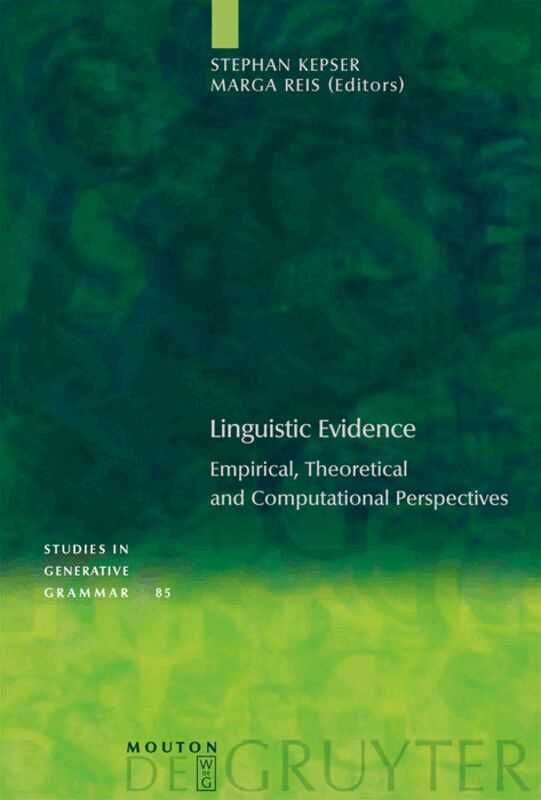
The renaissance of corpus linguistics and promising developments in experimental linguistic techniques in recent years have led to a remarkable revival of interest in issues of the empirical base of linguistic theory in general, and the status of different kinds of linguistic evidence in particular. Consensus is growing (a) that even so-called primary data (from introspection as well as authentic language production) are inherently complex performance data only indirectly reflecting the subject of linguistic theory, (b) that for an appropriate foundation of linguistic theories evidence from different sources such as introspective data, corpus data, data from (psycho-)linguistic experiments, historical and diachronic data, typological data, neurolinguistic data and language learning data are not only welcome but also often necessary. It is in particular by contrasting evidence from different sources with respect to particular research questions that we may gain a deeper understanding of the status and quality of the individual types of linguistic evidence on the one hand, and of their mutual relationship and respective weight on the other. The present volume is a collection of (selected) papers presented at the conference on 'Linguistic Evidence' in Tübingen 2004, which was explicitly devoted to the above issues. All of them address these issues in relation to specific linguistic research problems, thereby helping to establish a better understanding of the nature of linguistic evidence in particularly insightful ways.
2 272 kr
Skickas inom 5-8 vardagar
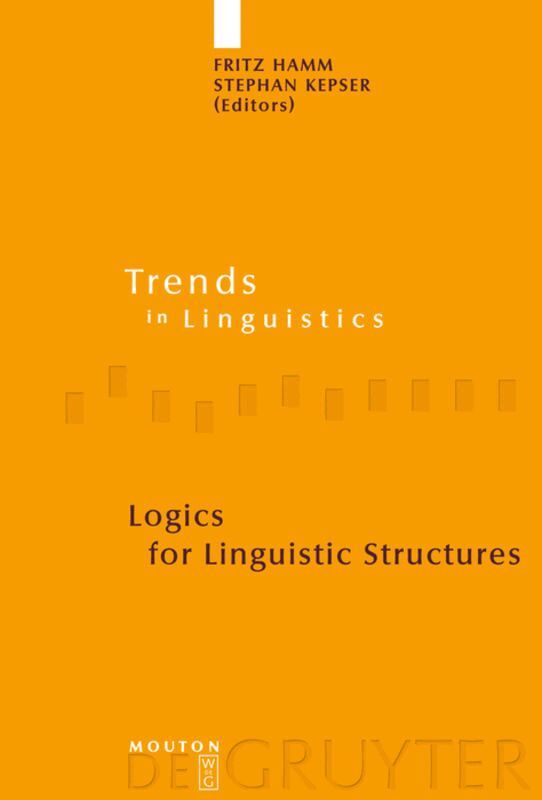
The contributions collected in this voume address central topics in theoretical and computational linguistics, such as quantification, types of context dependence and aspects concerning the formalisation of major grammatical frameworks, among others GB, DRT and HPSG.All contributions have in common a strong preference for logic as the major tool of analysis. The first main issue concerns the combination of DRT and HPSG styles of analysis into a single system for natural language processing. The second central issue concerns the logical and automata - theoretical foundations of descriptive formalisms presently in the focus of attention, for instance minimalism. A third issue is the significance of context and locality within an algorithmic notion of meaning. The last topic addressed concerns subclasses of empirically highly significant quantificational devices like proportionality quantifiers and quantifiers which give rise to sound and complete logics for non-trivial fragments of English. The volume will be of great benefit for theoretical and computational linguists, computer scientists, philosophers, and logicians.