Stephane Symons - Böcker
Visar alla böcker från författaren Stephane Symons. Handla med fri frakt och snabb leverans.
17 produkter
17 produkter
450 kr
Skickas inom 7-10 vardagar
More Than Life: Georg Simmel and Walter Benjamin on Art is the first book to trace the philosophical relation between Georg Simmel and his one-time student Walter Benjamin, two of the most influential German thinkers of the twentieth century.Reading Simmel’s work, particularly his essays on Michelangelo, Rembrandt, and Rodin, alongside Benjamin’s concept of Unscheinbarkeit (inconspicuousness) and his writings on Charlie Chaplin, More Than Life demonstrates that both Simmel and Benjamin conceive of art as the creation of something entirely new rather than as a mimetic reproduction of a given. The two thinkers diverge in that Simmel emphasizes the presence of a continuous movement of life, whereas Benjamin highlights the priority of discontinuous, interruptive moments.With the aim of further elucidating Simmel and Benjamin’s ideas on art, Stéphane Symons presents a number of in-depth analyses of specific artworks that were not discussed by these authors. Through an insightful examination of both the conceptual affinities and the philosophical differences between Simmel and Benjamin , Symons reconstructs a crucial episode in twentieth-century debates on art and aesthetics.
1 491 kr
Skickas inom 10-15 vardagar
More Than Life: Georg Simmel and Walter Benjamin on Art is the first book to trace the philosophical relation between Georg Simmel and his one-time student Walter Benjamin, two of the most influential German thinkers of the twentieth century.Reading Simmel’s work, particularly his essays on Michelangelo, Rembrandt, and Rodin, alongside Benjamin’s concept of Unscheinbarkeit (inconspicuousness) and his writings on Charlie Chaplin, More Than Life demonstrates that both Simmel and Benjamin conceive of art as the creation of something entirely new rather than as a mimetic reproduction of a given. The two thinkers diverge in that Simmel emphasizes the presence of a continuous movement of life, whereas Benjamin highlights the priority of discontinuous, interruptive moments.With the aim of further elucidating Simmel and Benjamin’s ideas on art, Stéphane Symons presents a number of in-depth analyses of specific artworks that were not discussed by these authors. Through an insightful examination of both the conceptual affinities and the philosophical differences between Simmel and Benjamin , Symons reconstructs a crucial episode in twentieth-century debates on art and aesthetics.
1 350 kr
Skickas inom 10-15 vardagar
In the Arcades Project, Walter Benjamin writes that his work is "related to theology as blotting pad is related to ink. It is saturated with it." For a thinker so decisive to critical literary, cultural, political, and aesthetic writings over the past half-century, Benjamin's relationship to theological matters has been less observed than it should, even despite a variety of attempts over the last four decades to illuminate the theological elements latent within his eclectic and occasional writings. Such attempts, though undeniably crucial to comprehending his thought, remain in need of deepened systematic analysis. In bringing together some of the most renowned experts from both sides of the Atlantic, Walter Benjamin and Theology seeks to establish a new site from which to address both the issue of Benjamin's relationship with theology and all the crucial aspects that Benjamin himself grappled with when addressing the field and operations of theological inquiry.
410 kr
Skickas inom 10-15 vardagar
In the Arcades Project, Walter Benjamin writes that his work is "related to theology as blotting pad is related to ink. It is saturated with it." For a thinker so decisive to critical literary, cultural, political, and aesthetic writings over the past half-century, Benjamin's relationship to theological matters has been less observed than it should, even despite a variety of attempts over the last four decades to illuminate the theological elements latent within his eclectic and occasional writings. Such attempts, though undeniably crucial to comprehending his thought, remain in need of deepened systematic analysis. In bringing together some of the most renowned experts from both sides of the Atlantic, Walter Benjamin and Theology seeks to establish a new site from which to address both the issue of Benjamin's relationship with theology and all the crucial aspects that Benjamin himself grappled with when addressing the field and operations of theological inquiry.
2 247 kr
Skickas inom 10-15 vardagar
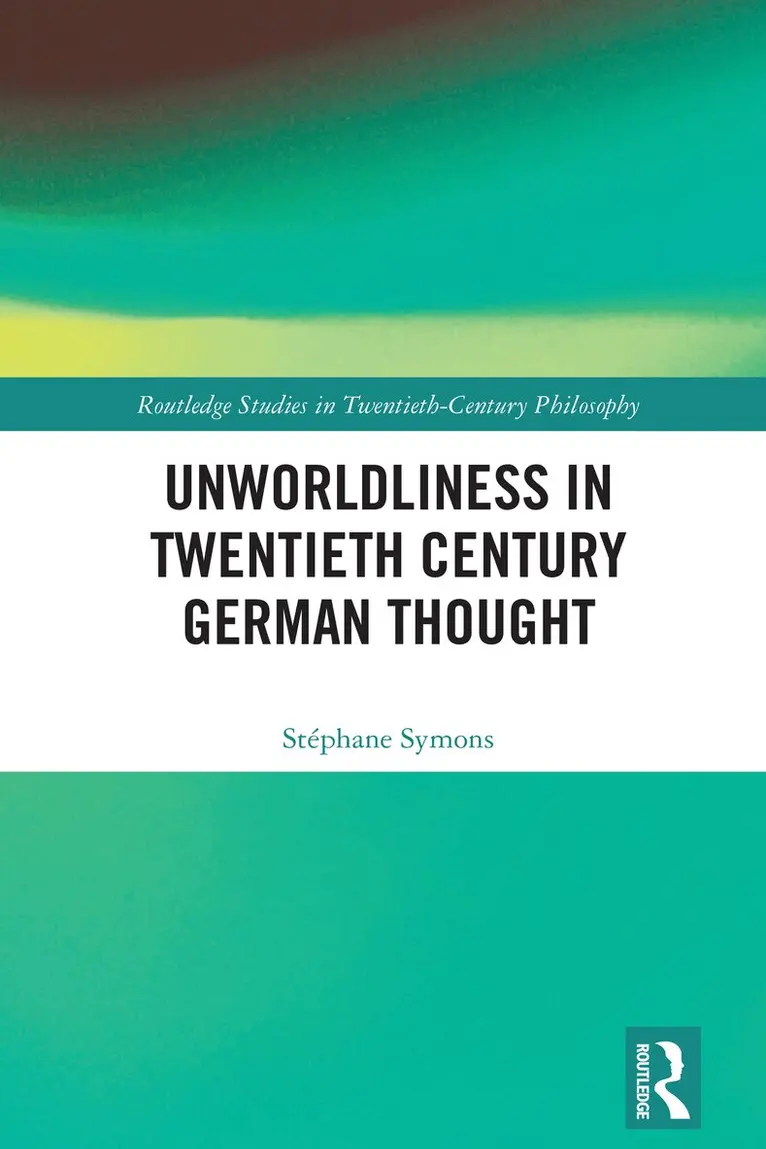
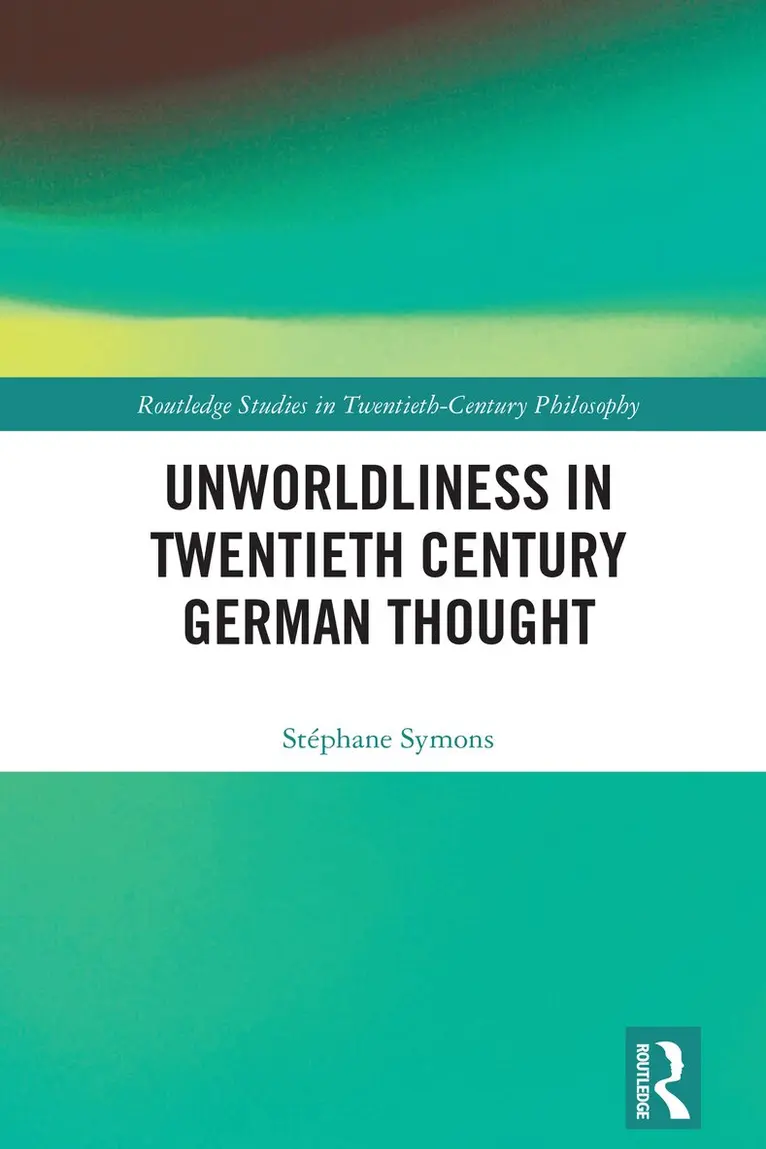
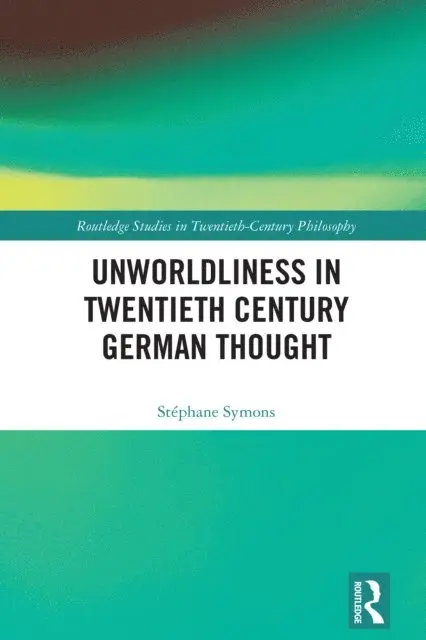
What happens when the world around us feels fragmented? How can a person continue to respond positively to their environment when it seems to have lost its internal coherence? These questions lie at the heart of this innovative interpretation of some of the most influential German philosophers of the twentieth century. The key figures in this study are the young Georg Lukács (1885–1971), Ernst Jünger (1895–1998), Ernst Bloch (1885–1977), Theodor Adorno (1903–1969), Max Kommerell (1902–1944), and Siegfried Kracauer (1889–1966).By establishing an intellectual dialogue among these otherwise diverse thinkers, this study identifies a common interest: the question whether an unworldly, fragmented universe can nonetheless elicit a creative response from individuals. Together, these authors offer an alternative to what is considered the dominant trend in twentieth-century German philosophy: the phenomenological emphasis on humans' lived interactions with a shared and unified lifeworld. Special attention is given to six distinct interpretations of Miguel de Cervantes's novel Don Quixote and the unworldly actions of its main character.Unworldliness in Twentieth Century German Thought will appeal to researchers and advanced students interested in twentieth-century continental philosophy, German intellectual history, critical theory, and literature and philosophy.
776 kr
Kommande
What happens when the world around us feels fragmented? How can a person continue to respond positively to their environment when it seems to have lost its internal coherence? These questions lie at the heart of this innovative interpretation of some of the most influential German philosophers of the twentieth century. The key figures in this study are the young Georg Lukács (1885–1971), Ernst Jünger (1895–1998), Ernst Bloch (1885–1977), Theodor Adorno (1903–1969), Max Kommerell (1902–1944), and Siegfried Kracauer (1889–1966).By establishing an intellectual dialogue among these otherwise diverse thinkers, this study identifies a common interest: the question whether an unworldly, fragmented universe can nonetheless elicit a creative response from individuals. Together, these authors offer an alternative to what is considered the dominant trend in twentieth-century German philosophy: the phenomenological emphasis on humans' lived interactions with a shared and unified lifeworld. Special attention is given to six distinct interpretations of Miguel de Cervantes's novel Don Quixote and the unworldly actions of its main character.Unworldliness in Twentieth Century German Thought will appeal to researchers and advanced students interested in twentieth-century continental philosophy, German intellectual history, critical theory, and literature and philosophy.
635 kr
Kommande
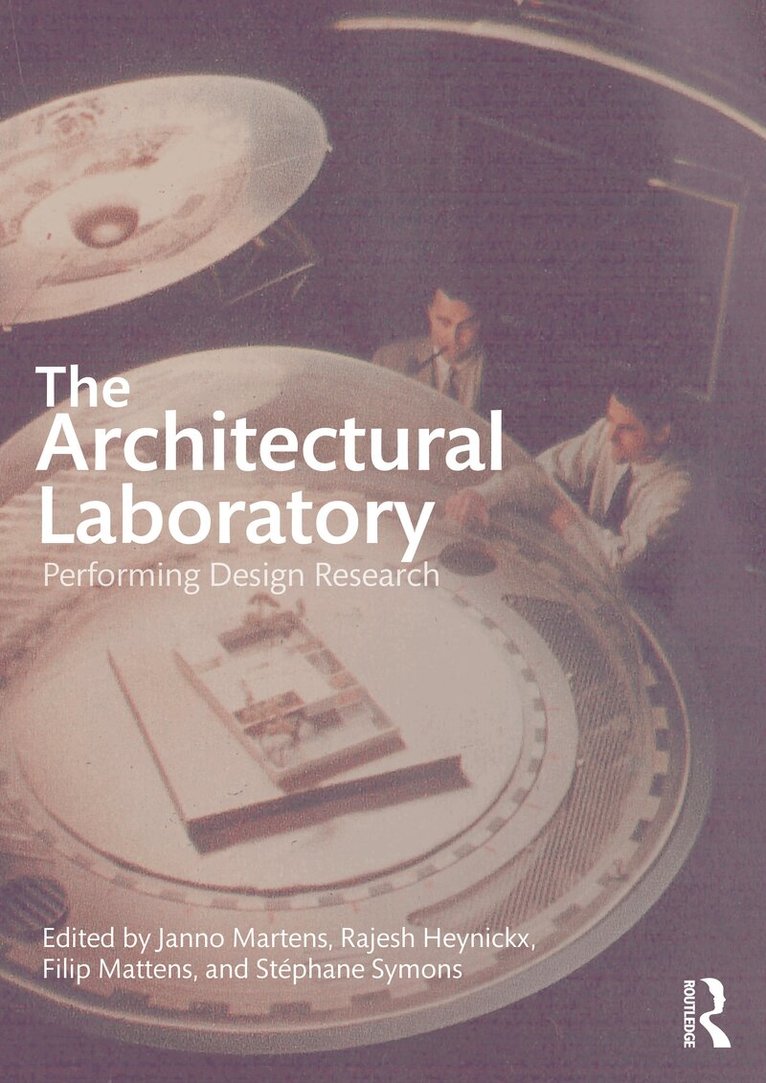
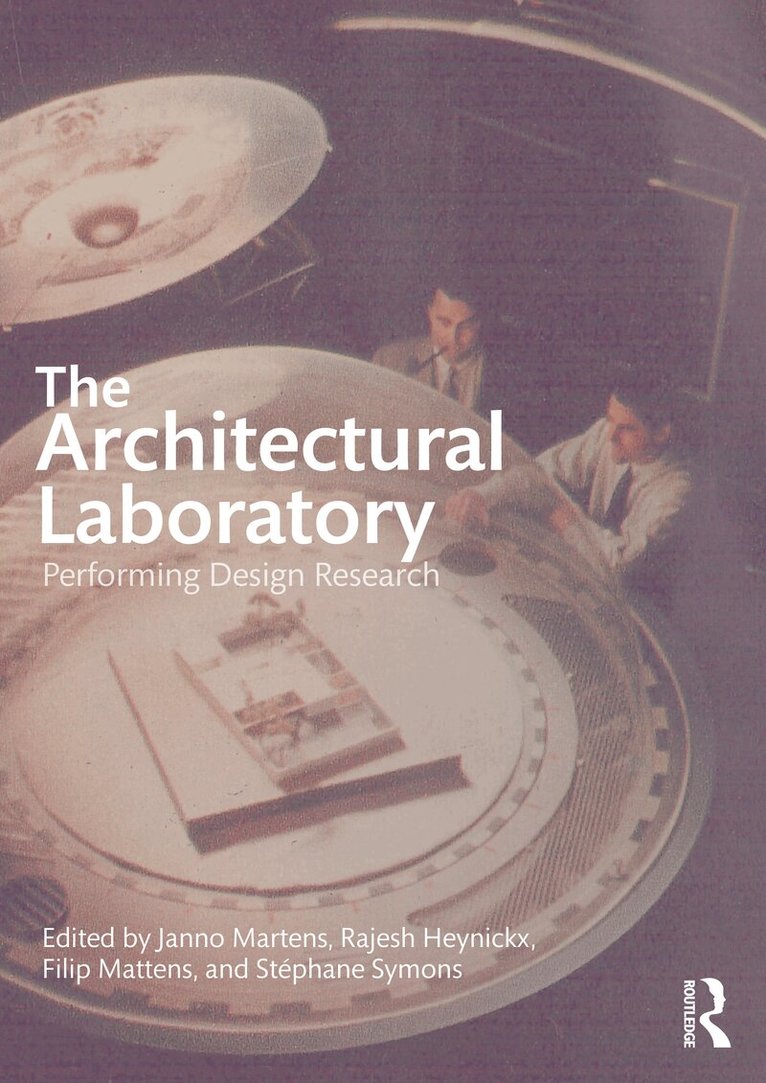
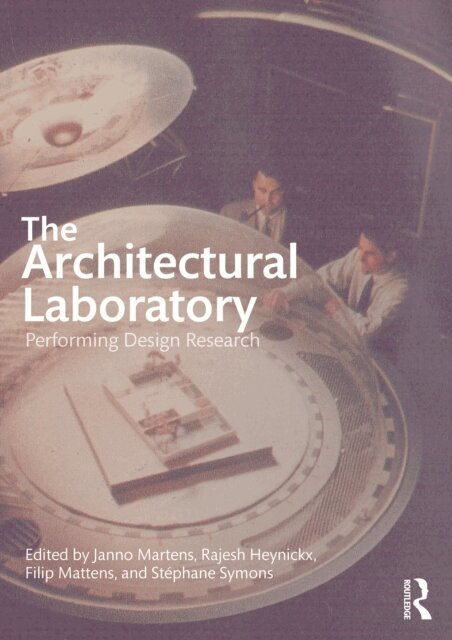
Over the past thirty years, the number of architectural laboratories has surged from a handful to hundreds across the globe. Yet the term remains elusive: What defines an architectural lab? And why has it become so compelling to architects today?The Architectural Laboratory is the first volume to critically address these questions, assembling a series of essays that examine some of the most remarkable architectural labs of the twentieth century. While scientific laboratories have long been the subject of scholarly inquiry, architecture labs remain underexplored. This book situates them within their specific architectural-historical contexts, revealing how they have operated both metaphorically and materially.On the one hand, architectural laboratories have functioned as amulets – protective spaces that shield practitioners from conventional expectations while fostering creativity through their unique material environments. On the other, they served as shibboleths – symbolic alignments with scientific traditions that lend credibility and facilitate interdisciplinary exchange. Within this dual framework, the volume identifies three key modalities of laboratory performance: simulation, personification, and technological visualization.Essential reading for architectural historians, theorists, practitioners, educators, students, critics, and curators, The Architectural Laboratory offers a compelling lens through which to understand the evolving role of experimentation in architectural practice.
2 325 kr
Kommande
Over the past thirty years, the number of architectural laboratories has surged from a handful to hundreds across the globe. Yet the term remains elusive: What defines an architectural lab? And why has it become so compelling to architects today?The Architectural Laboratory is the first volume to critically address these questions, assembling a series of essays that examine some of the most remarkable architectural labs of the twentieth century. While scientific laboratories have long been the subject of scholarly inquiry, architecture labs remain underexplored. This book situates them within their specific architectural-historical contexts, revealing how they have operated both metaphorically and materially.On the one hand, architectural laboratories have functioned as amulets – protective spaces that shield practitioners from conventional expectations while fostering creativity through their unique material environments. On the other, they served as shibboleths – symbolic alignments with scientific traditions that lend credibility and facilitate interdisciplinary exchange. Within this dual framework, the volume identifies three key modalities of laboratory performance: simulation, personification, and technological visualization.Essential reading for architectural historians, theorists, practitioners, educators, students, critics, and curators, The Architectural Laboratory offers a compelling lens through which to understand the evolving role of experimentation in architectural practice.
1 223 kr
Skickas inom 5-8 vardagar
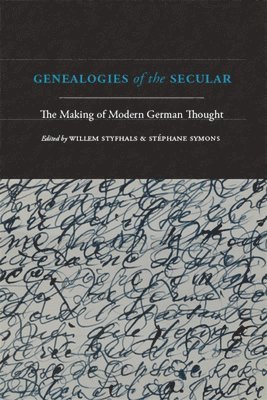
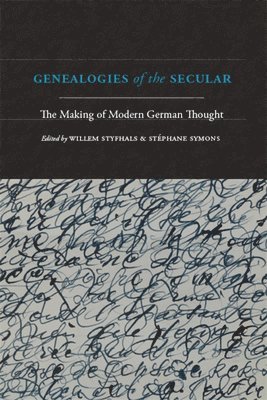
Presents a historical and philosophical overview of the twentieth-century German debates on secularization and their significance for contemporary discussions about the relationship between theology and modernity.While the concept of secularization is traditionally used to define the nature of modern culture, and sometimes to uncover the theological origins of secular modernity, its validity is being questioned ever more radically today. Genealogies of the Secular returns to the historical, intellectual, and philosophical roots of this concept in the twentieth-century German debates on religion and modernity, and presents a wide range of strategies that German thinkers have applied to apprehend the connection between religion and secularism. In fundamentally heterogeneous ways, these strategies all developed "genealogies of the secular" by tracing modern phenomena back to their religious or theological roots. This book aims to disclose the complex prehistory of the contemporary debates on political theology and postsecularism, and to show how prominent thinkers continue this German tradition today. It explores and assesses the classic theories of secularization that are epitomized in Carl Schmitt's writings on political theology, but also addresses German philosophers whose work has been rarely associated with secularization, including Walter Benjamin, Ernst Cassirer, Martin Heidegger, Immanuel Kant, and Hannah Arendt. Attention is also paid to two thinkers whose role in these discourses has not been fully explored yet: Jacob Taubes and Jan Assmann. By introducing their thinking on religion, politics, and secularization, the book also makes two of their own key texts available to an English-language readership.
566 kr
Skickas inom 3-6 vardagar
Presents a historical and philosophical overview of the twentieth-century German debates on secularization and their significance for contemporary discussions about the relationship between theology and modernity.While the concept of secularization is traditionally used to define the nature of modern culture, and sometimes to uncover the theological origins of secular modernity, its validity is being questioned ever more radically today. Genealogies of the Secular returns to the historical, intellectual, and philosophical roots of this concept in the twentieth-century German debates on religion and modernity, and presents a wide range of strategies that German thinkers have applied to apprehend the connection between religion and secularism. In fundamentally heterogeneous ways, these strategies all developed "genealogies of the secular" by tracing modern phenomena back to their religious or theological roots. This book aims to disclose the complex prehistory of the contemporary debates on political theology and postsecularism, and to show how prominent thinkers continue this German tradition today. It explores and assesses the classic theories of secularization that are epitomized in Carl Schmitt's writings on political theology, but also addresses German philosophers whose work has been rarely associated with secularization, including Walter Benjamin, Ernst Cassirer, Martin Heidegger, Immanuel Kant, and Hannah Arendt. Attention is also paid to two thinkers whose role in these discourses has not been fully explored yet: Jacob Taubes and Jan Assmann. By introducing their thinking on religion, politics, and secularization, the book also makes two of their own key texts available to an English-language readership.
561 kr
Skickas inom 10-15 vardagar
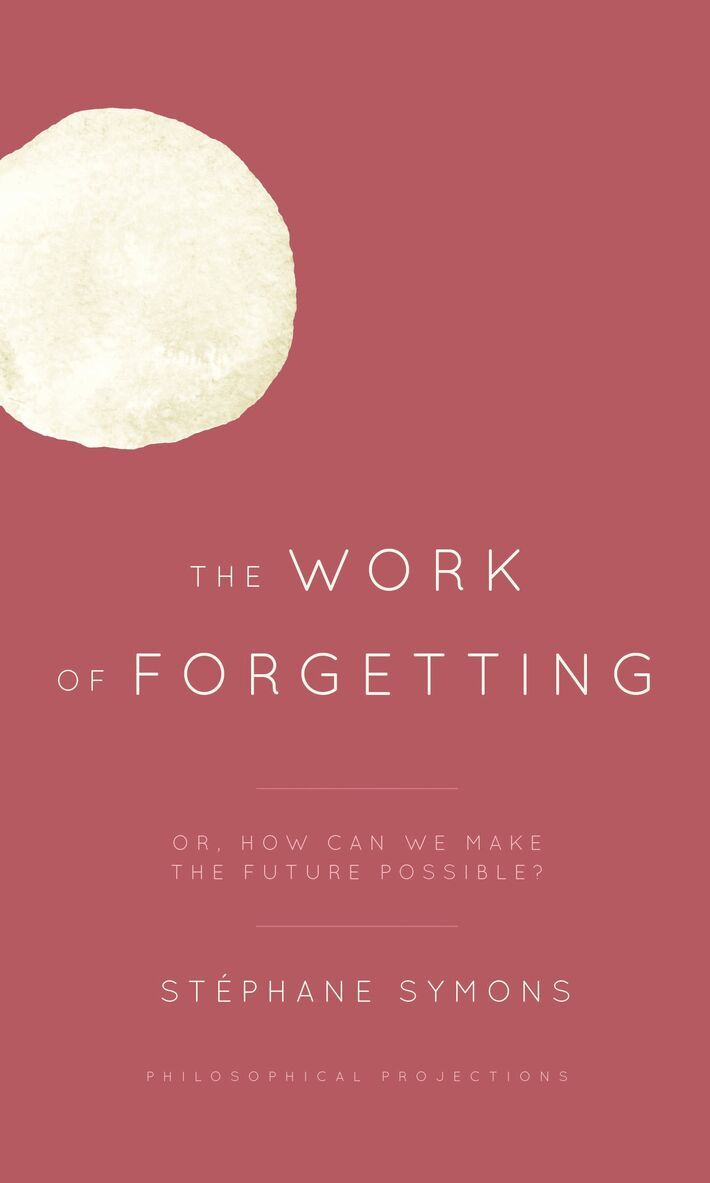
For over fifty years the concept of memory has played a crucial role in a large number of academic and societal debates. The Work of Forgetting: Or, How Can We Make the Future Possible? draws attention to the limits of the academic field of memory studies. It argues that the faculty of memory offers an inadequate response to the challenges of the present. The book sets up a dialogue between the philosophies of forgetting that underlie the writings of Friedrich Nietzsche, Walter Benjamin and Gilles Deleuze, and the philosophies of memory that inform the work of Sigmund Freud, Martin Heidegger and Hannah Arendt. It builds on the idea that history is inseparable from a type of transience that cannot be counter-acted by the preserving work of memory and develops a new understanding of the phenomenon of forgetting in which the passage of time is asserted in thought and thus made productive.
1 808 kr
Skickas inom 10-15 vardagar
For over fifty years the concept of memory has played a crucial role in a large number of academic and societal debates. The Work of Forgetting: Or, How Can We Make the Future Possible? draws attention to the limits of the academic field of memory studies. It argues that the faculty of memory offers an inadequate response to the challenges of the present. The book sets up a dialogue between the philosophies of forgetting that underlie the writings of Friedrich Nietzsche, Walter Benjamin and Gilles Deleuze, and the philosophies of memory that inform the work of Sigmund Freud, Martin Heidegger and Hannah Arendt. It builds on the idea that history is inseparable from a type of transience that cannot be counter-acted by the preserving work of memory and develops a new understanding of the phenomenon of forgetting in which the passage of time is asserted in thought and thus made productive.
409 kr
Skickas inom 10-15 vardagar
Philosophical thinking allows itself to be nourished by seemingly non-committal exercises of thought but at the same time seeks forms of irrefutable knowledge.
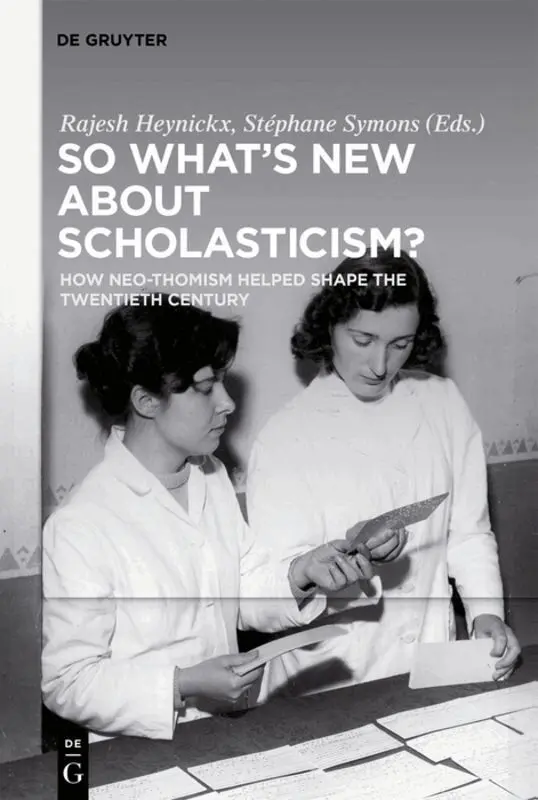
So What's New About Scholasticism?
How Neo-Thomism Helped Shape the Twentieth Century
Inbunden, Engelska, 2018
1 765 kr
Skickas inom 5-8 vardagar
In So What’s New about Scholasticism? thirteen international scholars gauge the extraordinary impact of a religiously inspired conceptual framework in a modern society. The essays that are brought together in this volume reveal that Neo-Thomism became part of contingent social contexts and varying intellectual domains. Rather than an ecclesiastic project of like-minded believers, Neo-Thomism was put into place as a source of inspiration for various concepts of modernization and progress. This volume reconstructs how Neo-Thomism sought to resolve disparities, annul contradictions and reconcile incongruent, new developments. It asks the question why Neo-Thomist ideas and arguments were put into play and how they were transferred across various scientific disciplines and artistic media, growing into one of the most influential master-narratives of the twentieth century. Edward Baring, Dries Bosschaert, James Chappel, Adi Efal-Lautenschläger, Rajesh Heynickx, Sigrid Leyssen, Christopher Morrissey, Annette Mülberger, Jaume Navarro, Herman Paul, Karim Schelkens, Wim Weymans and John Carter Wood reconstruct a bewildering, yet decipherable thought-structure that has left a deep mark on twentieth century politics, philosophy, science and religion.
414 kr
Tillfälligt slut
In-depth analysis of Victor Burgin’s video installation Parzival (2013). In commemoration of the destruction of the University Library of Leuven (Belgium) in August 1914, the projection work Parzival, created by Victor Burgin (°UK, 1941) in 2013, was installed within the rebuilt Library. The installation uniquely marked the 100th anniversary of the beginning of World War I, which left its profound traces on both the consciousness and physiognomy of the city of Leuven. Parzival is a montage piece combining digital images of ruins and bombed out cities with audio-visual and literary material that references, amongst other works, Richard Wagner’s opera Parsifal (premiere in 1882), Roberto Rossellini’s Germany Year Zero (1948) and Milan Kundera’s novel Identity (1998). This publication provides an in-depth analysis of Parzival, a work that is inspired by the period of seven months that Wagner spent in Venice (1858-1859). Burgin’s Parzival raises questions about some of the most fundamental elements in Wagner’s operatic work: the longing for a savior, the complex connection between violence and catharsis, and the presentiment that destruction awaits humanity in the future (Götterdämmerung). In an associative manner, Parzival brings together various artistic and political features to confront the romantic ideal of the ruin with the horrors that might result from such a myth. In addition, this book contains a reprint of Michel Foucault’s essay “The Imagination of the Nineteenth Century” (1980). This publication is GPRC-labeled (Guaranteed Peer-Reviewed Content).Contributors: Geert Bouckaert (KU Leuven), Victor Burgin (University of California, University of London, University of Southampton), Alexander Streitberger (Université catholique de Louvain), Stéphane Symons (KU Leuven), Hilde Van Gelder (KU Leuven)
290 kr
Skickas inom 5-8 vardagar
The first multidisciplinary analysis of one of the most impactful and popular contemporary artworks of recent years.In 1999, a short video of a solitary boy kicking an empty bottle up a hill in Mexico City became the first instalment of Children’s Games, a series of works by artist Francis Alÿs (b. Antwerp, 1959). The ongoing project, which now numbers around thirty-five works, has gradually given shape to an extensive collection of videos of children at play. For almost twenty-five years, Alÿs and his collaborators Félix Blume, Julien Devaux, and Rafael Ortega have been travelling around the world to document the distinctive ways in which children interact with each other and their physical environment. They have gone from remote villages in the Democratic Republic of the Congo, Afghanistan, Venezuela, and Nepal to the mountains of Switzerland and metropoles like Hong Kong and Paris, but have also visited the war-torn city of Mosul in Iraq, the border between Mexico and the United States, and the strait of Gibraltar that divides Africa and Europe. The resulting images are standing proof of the seriousness of play and of children’s stunning powers of resilience in the face of conflict.This volume provides a multidisciplinary perspective to the many layers of Children’s Games. It includes an interview with Francis Alÿs and Rafael Ortega, a series of essays by well-known scholars and art critics, curatorial statements, and a logbook related to the presentation of Children’s Games at the Venice Biennale of 2022.Contributors: Francis Alÿs (artist), Gerard-Jan Claes (filmmaker, artistic director of Sabzian), Tim Ingold (anthropologist, University of Aberdeen), Zeynep Kubat (art historian, curator and writer), Karen Lang (art historian, Royal Society of Arts), Rafael Ortega (artist), Rodrigo Perez de Arce (architect, Pontificia Universidad Católica de Chile), Juan Martín Pérez García (Network for the Rights of Children in Mexico (REDIM), Giulio Piovesan (journalist and photographer), John Potter (media education, University College London), Virginia Roy (curator at the University Museum of Contemporary Art of the National Autonomous University of Mexico), Stéphane Symons (professor of philosophy, KU Leuven), Hilde Teerlinck (Han Nefkens Foundation /curator of the Belgian Pavilion at the Venice Art Biennale 2022).Ebook available in Open Access.
423 kr
Kommande
Exhibition catalogue for Jean Katambayi Mukendi’s solo exhibition RATIO at KW Institute for Contemporary Art (Berlin, 21 February – 10 May 2026) and M HKA (Antwerp, 6 June - 20 September 2026).Jean Katambayi Mukendi: Circuits is the first comprehensive monograph dedicated to the Congolese artist, published on the occasion of his solo exhibition RATIO at KW Institute for Contemporary Art, Berlin, and M HKA—Museum of Contemporary Art Antwerp. Spanning his career from its inception to the present, the volume combines richly illustrated pages with insightful texts that situate Katambayi’s work within contemporary art history, African thought, and the cultural context of present-day Lubumbashi. It includes interviews, two texts written by the artist, and a multidisciplinary exploration of his installations, performances, and drawings.This book is published in partnership with the Contemporary Art Committee KU Leuven, KW, and M HKA.