Stephanie Collins – författare
Visar alla böcker från författaren . Handla med fri frakt och snabb leverans.
10 produkter
10 produkter
E-bok
PDF, Engelska, 20191 012 kr
Läs direkt efter köp
Moral duties are regularly attributed to groups. In the media or on the street, we might hear that a specific country has a moral duty to defend human rights, that environmentalists have a moral duty to push for global systemic reform, or that the affluent have a moral duty to alleviate poverty. Do such attributions make conceptual sense or are they mere political rhetoric? And what does that imply for the individual members of these groups? Group Dutiesoffers the first comprehensive answer to these questions. Stephanie Collins defends a Tripartite Model of group duties - so-called because it divides groups into three fundamental categories. First, we have combinations - collections of agents that don''t have any goals or decision-making procedures in common.These groups cannot bear moral duties. Instead, we should re-cast their purported duties as a series of duties, one held by each agent in the combination. Each duty demands its bearer to ''I-reason'': to do the best they can, given whatever they happen to believe the others will do. Second, there are groups whose members share goals but lack decision-making procedures. These are coalitions. Coalitions also cannot bear duties, but their alleged duties should be replaced with members''several duties to ''we-reason'': to do one''s part in a particular group pattern of actions, on the presumption that others will do likewise. Third and finally, collectives have group-level procedures for making decisions. They can bear duties. Collectives'' duties imply duties for collectives'' members to use theirrole in the collective with a view to the collective doing its duty. With the Tripartite Model in-hand, Collins argues that we can target our political demands at the right entities, in the right way, for the right reasons.
E-bok
Engelska, 20191 012 kr
Läs direkt efter köp
Moral duties are regularly attributed to groups. In the media or on the street, we might hear that a specific country has a moral duty to defend human rights, that environmentalists have a moral duty to push for global systemic reform, or that the affluent have a moral duty to alleviate poverty. Do such attributions make conceptual sense or are they mere political rhetoric? And what does that imply for the individual members of these groups? Group Dutiesoffers the first comprehensive answer to these questions. Stephanie Collins defends a Tripartite Model of group duties - so-called because it divides groups into three fundamental categories. First, we have combinations - collections of agents that don''t have any goals or decision-making procedures in common.These groups cannot bear moral duties. Instead, we should re-cast their purported duties as a series of duties, one held by each agent in the combination. Each duty demands its bearer to ''I-reason'': to do the best they can, given whatever they happen to believe the others will do. Second, there are groups whose members share goals but lack decision-making procedures. These are coalitions. Coalitions also cannot bear duties, but their alleged duties should be replaced with members''several duties to ''we-reason'': to do one''s part in a particular group pattern of actions, on the presumption that others will do likewise. Third and finally, collectives have group-level procedures for making decisions. They can bear duties. Collectives'' duties imply duties for collectives'' members to use theirrole in the collective with a view to the collective doing its duty. With the Tripartite Model in-hand, Collins argues that we can target our political demands at the right entities, in the right way, for the right reasons.
E-bok
PDF, Engelska, 2023994 kr
Läs direkt efter köp
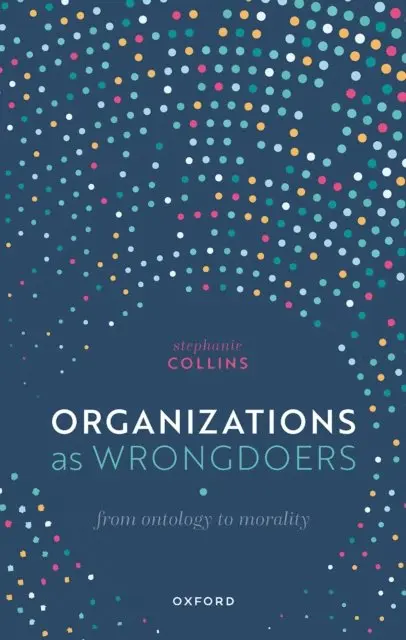
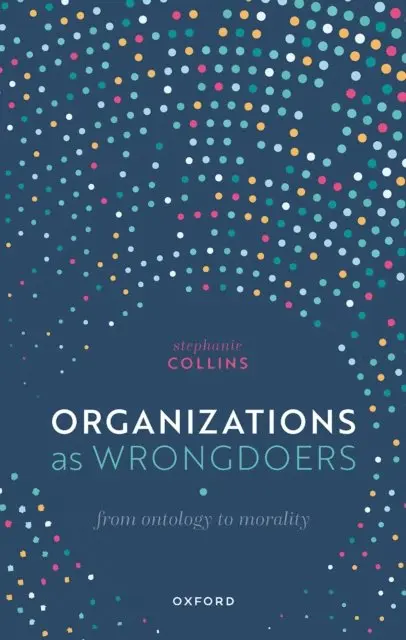
Organizations do moral wrong. States pursue unjust wars, businesses avoid tax, charities misdirect funds. Our social, political, and legal responses require guidance. We need to know what we''re responding to and how we should respond to it. We need a metaphysical and moral theory of wrongful organizations. This book provides a new such theory, paying particular attention to questions that have been underexplored in existing debates. These questions include: where are organizations located as material objects in the natural world? What''s the metaphysical relation between organizations and their members? Can organizations be blameworthy for attitudes and character traits, as well as for actions? What about feelings of guilt, remorse, and shame-can organizations feel these emotions and why does this matter? How and why are members implicated in organizations'' wrongs? How should organizations'' reparative costs be apportioned among members?The book provides provocative answers to these questions. It argues that organizations are material objects with humans as material parts - much like how a pizza is a material object with slices as material parts. This picture helps us make sense of organizations'' blameworthiness, including blame for organization-level actions, attitudes, and character traits. What''s more, organizations can experience moral self-awareness - a crucial component of guilt, remorse, and shame. Members can be implicated in organizations'' actions in numerous ways - and, it is argued, members'' level of implication should determine their share of organizations'' reparative burdens.
E-bok
Engelska, 2023994 kr
Läs direkt efter köp
Organizations do moral wrong. States pursue unjust wars, businesses avoid tax, charities misdirect funds. Our social, political, and legal responses require guidance. We need to know what we''re responding to and how we should respond to it. We need a metaphysical and moral theory of wrongful organizations. This book provides a new such theory, paying particular attention to questions that have been underexplored in existing debates. These questions include: where are organizations located as material objects in the natural world? What''s the metaphysical relation between organizations and their members? Can organizations be blameworthy for attitudes and character traits, as well as for actions? What about feelings of guilt, remorse, and shame-can organizations feel these emotions and why does this matter? How and why are members implicated in organizations'' wrongs? How should organizations'' reparative costs be apportioned among members?The book provides provocative answers to these questions. It argues that organizations are material objects with humans as material parts - much like how a pizza is a material object with slices as material parts. This picture helps us make sense of organizations'' blameworthiness, including blame for organization-level actions, attitudes, and character traits. What''s more, organizations can experience moral self-awareness - a crucial component of guilt, remorse, and shame. Members can be implicated in organizations'' actions in numerous ways - and, it is argued, members'' level of implication should determine their share of organizations'' reparative burdens.
Inbunden, Engelska, 2023
1 139 kr
Skickas inom 5-8 vardagar
Organizations do moral wrong. States pursue unjust wars, businesses avoid tax, charities misdirect funds. Our social, political, and legal responses require guidance. We need to know what we're responding to and how we should respond to it. We need a metaphysical and moral theory of wrongful organizations. This book provides a new such theory, paying particular attention to questions that have been underexplored in existing debates. These questions include: where are organizations located as material objects in the natural world? What's the metaphysical relation between organizations and their members? Can organizations be blameworthy for attitudes and character traits, as well as for actions? What about feelings of guilt, remorse, and shame-can organizations feel these emotions and why does this matter? How and why are members implicated in organizations' wrongs? How should organizations' reparative costs be apportioned among members?The book provides provocative answers to these questions. It argues that organizations are material objects with humans as material parts - much like how a pizza is a material object with slices as material parts. This picture helps us make sense of organizations' blameworthiness, including blame for organization-level actions, attitudes, and character traits. What's more, organizations can experience moral self-awareness - a crucial component of guilt, remorse, and shame. Members can be implicated in organizations' actions in numerous ways - and, it is argued, members' level of implication should determine their share of organizations' reparative burdens.
Inbunden, Engelska, 2026
2 251 kr
Kommande
Social ontology is the study of the nature and properties of the social world. It is concerned with analyzing various entities that arise from social interaction. These include groups, money, corporations, institutions, property, social classes, races, genders, artifacts, artworks, language, and law. What are the building blocks of things like these? How are they constructed or set up? Are social categories and kinds produced by our attitudes? By our language? Our practices? Are they produced by causal patterns? And is there just one way social categories are set up, or are there many varieties of social construction? These are all questions about social ontology. Social ontology is a rapidly growing interdisciplinary field of research. Across fields of philosophy-in metaphysics, ethics, political philosophy, philosophy of mind, epistemology, and so on-theorists are embarking on projects in social ontology and looking for frameworks to address questions about social construction and the nature of social entities. Social ontology also directly engages the social sciences, with important social ontological work being done by sociologists, legal theorists, economists, business theorists, cognitive scientists, and others, who address foundational and methodological questions. The purpose of the Oxford Handbook of Social Ontology is to provide readers with a survey of topics in this large and interdisciplinary field, with authoritative overviews of key historical approaches to the nature of the social world, theories of the building blocks of the social world, theories of how the social world is constructed, and theories of important social domains that social ontologists are working on.
Inbunden, Engelska, 2019
1 208 kr
Skickas inom 5-8 vardagar
Moral duties are regularly attributed to groups. In the media or on the street, we might hear that a specific country has a moral duty to defend human rights, that environmentalists have a moral duty to push for global systemic reform, or that the affluent have a moral duty to alleviate poverty. Do such attributions make conceptual sense or are they mere political rhetoric? And what does that imply for the individual members of these groups? Group Duties offers the first comprehensive answer to these questions. Stephanie Collins defends a Tripartite Model of group duties - so-called because it divides groups into three fundamental categories. First, we have combinations - collections of agents that don't have any goals or decision-making procedures in common. These groups cannot bear moral duties. Instead, we should re-cast their purported duties as a series of duties, one held by each agent in the combination. Each duty demands its bearer to 'I-reason': to do the best they can, given whatever they happen to believe the others will do. Second, there are groups whose members share goals but lack decision-making procedures. These are coalitions. Coalitions also cannot bear duties, but their alleged duties should be replaced with members' several duties to 'we-reason': to do one's part in a particular group pattern of actions, on the presumption that others will do likewise. Third and finally, collectives have group-level procedures for making decisions. They can bear duties. Collectives' duties imply duties for collectives' members to use their role in the collective with a view to the collective doing its duty. With the Tripartite Model in-hand, Collins argues that we can target our political demands at the right entities, in the right way, for the right reasons.
Inbunden, Engelska, 2022
1 723 kr
Skickas inom 5-8 vardagar
Häftad, Engelska, 2025
497 kr
Skickas inom 3-6 vardagar
Häftad, Engelska, 2020
318 kr
Tillfälligt slut