Stephanos Efthymiadis – författare
Visar alla böcker från författaren Stephanos Efthymiadis. Handla med fri frakt och snabb leverans.
18 produkter
18 produkter
Häftad, Engelska, 2020
910 kr
Skickas inom 10-15 vardagar
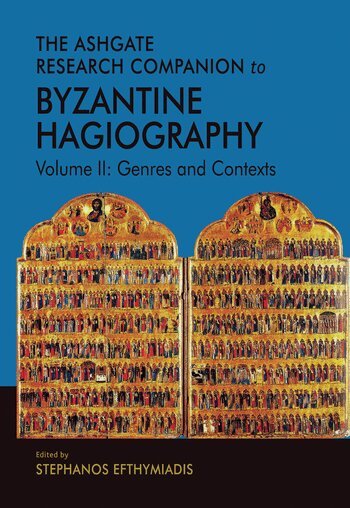
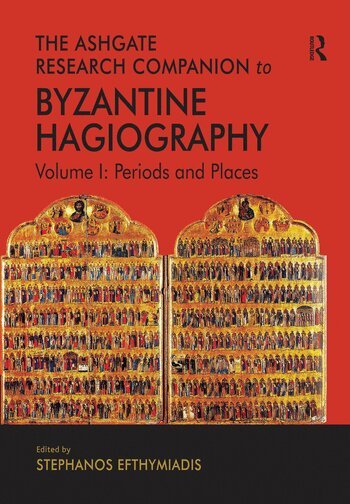
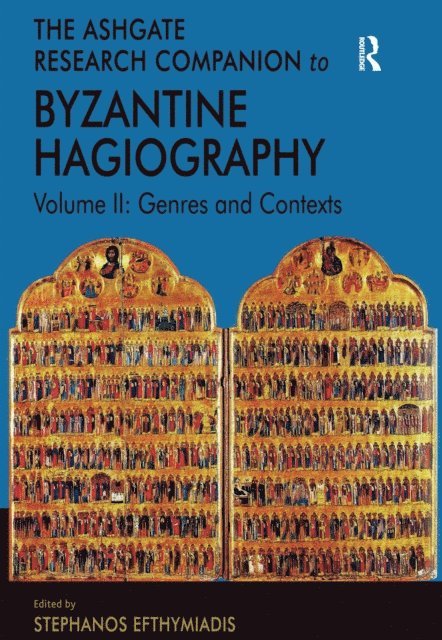
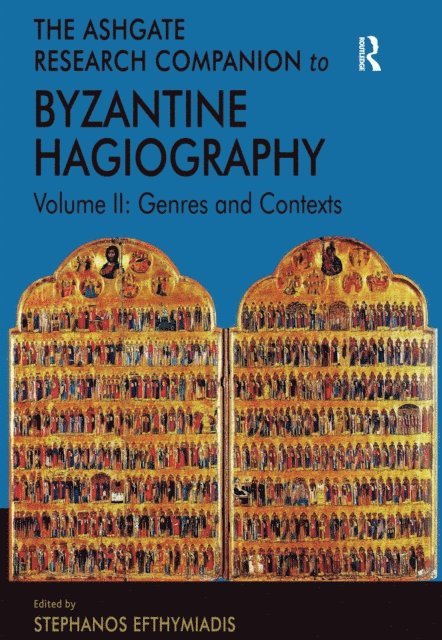
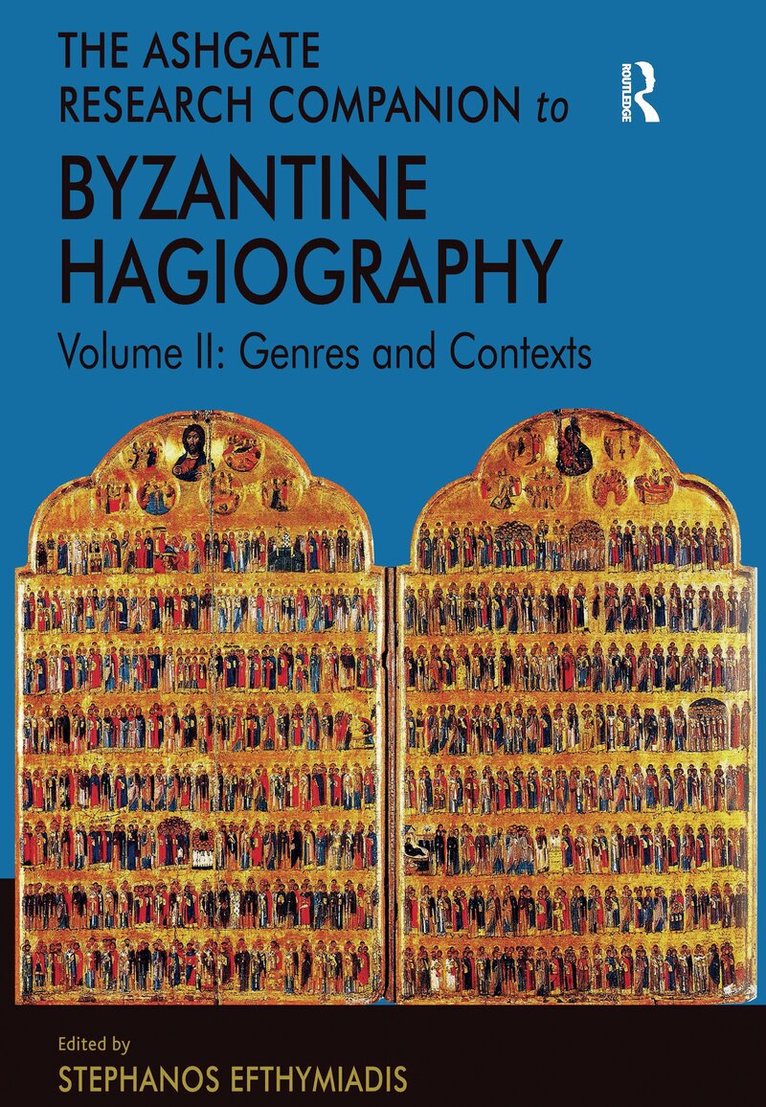
For an entire millennium, Byzantine hagiography, inspired by the veneration of many saints, exhibited literary dynamism and a capacity to vary its basic forms. The subgenres into which it branched out after its remarkable start in the fourth century underwent alternating phases of development and decline that were intertwined with changes in the political, social and literary spheres. The selection of saintly heroes, an interest in depicting social landscapes, and the modulation of linguistic and stylistic registers captured the voice of homo byzantinus down to the end of the empire in the fifteenth century. The seventeen chapters in this companion form the sequel to those in volume I which dealt with the periods and regions of Byzantine hagiography, and complete the first comprehensive survey ever produced in this field. The book is the work of an international group of experts in the field and is addressed to both a broader public and the scholarly community of Byzantinists, medievalists, historians of religion and theorists of narrative. It highlights the literary dimension and the research potential of a representative number of texts, not only those appreciated by the Byzantines themselves but those which modern readers rank high due to their literary quality or historical relevance.
Häftad, Engelska, 2020
910 kr
Skickas inom 10-15 vardagar
For an entire millennium, Byzantine hagiography, inspired by the veneration of many saints, exhibited literary dynamism and a capacity to vary its basic forms. The subgenres into which it branched out after its remarkable start in the fourth century underwent alternating phases of development and decline that were intertwined with changes in the political, social and literary spheres. The selection of saintly heroes, an interest in depicting social landscapes, and the modulation of linguistic and stylistic registers captured the voice of homo byzantinus down to the end of the empire in the fifteenth century. The seventeen chapters in this companion form the sequel to those in volume I which dealt with the periods and regions of Byzantine hagiography, and complete the first comprehensive survey ever produced in this field. The book is the work of an international group of experts in the field and is addressed to both a broader public and the scholarly community of Byzantinists, medievalists, historians of religion and theorists of narrative. It highlights the literary dimension and the research potential of a representative number of texts, not only those appreciated by the Byzantines themselves but those which modern readers rank high due to their literary quality or historical relevance.
Inbunden, Engelska, 2011
2 249 kr
Skickas inom 10-15 vardagar
For an entire millennium, Byzantine hagiography, inspired by the veneration of many saints, exhibited literary dynamism and a capacity to vary its basic forms. The subgenres into which it branched out after its remarkable start in the fourth century underwent alternating phases of development and decline that were intertwined with changes in the political, social and literary spheres. The selection of saintly heroes, an interest in depicting social landscapes, and the modulation of linguistic and stylistic registers captured the voice of homo byzantinus down to the end of the empire in the fifteenth century. The seventeen chapters in this companion form the sequel to those in volume I which dealt with the periods and regions of Byzantine hagiography, and complete the first comprehensive survey ever produced in this field. The book is the work of an international group of experts in the field and is addressed to both a broader public and the scholarly community of Byzantinists, medievalists, historians of religion and theorists of narrative. It highlights the literary dimension and the research potential of a representative number of texts, not only those appreciated by the Byzantines themselves but those which modern readers rank high due to their literary quality or historical relevance.
Inbunden, Engelska, 1998
2 505 kr
Skickas inom 10-15 vardagar
The patriarch Tarasios holds a key position in the ending of the first period of Iconoclasm in Byzantium, with the seventh Oecumenical Council at Nicaea in 787. His Life forms an equally key source for the history and culture of the Byzantine world in the eighth and ninth centuries. This book provides a full introduction, a critical edition with English translation, and a detailed commentary and indexes for this important document. The introduction first places the text within the framework of other patriarchal biographies composed in the period c.850-950. Dr Efthymiadis then looks at Tarasios himself, as layman, patriarch, and saint, and provides a biographical sketch of the author of the Life, Ignatios the Deacon, together with a discussion of the date and reasons for the work’s composition. In addition, this new text and translation makes more accessible a highly sophisticated example of Byzantine prose.
Del 11 - Dumbarton Oaks Texts
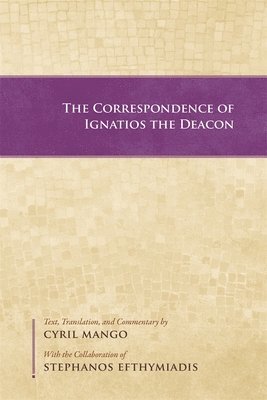
Correspondence of Ignatios the Deacon
Häftad, Engelska, 2020
414 kr
Skickas inom 11-20 vardagar
E-bok
PDF, Engelska, 20251 115 kr
Läs direkt efter köp
Inbunden, Engelska, 2025
1 351 kr
Skickas inom 7-10 vardagar
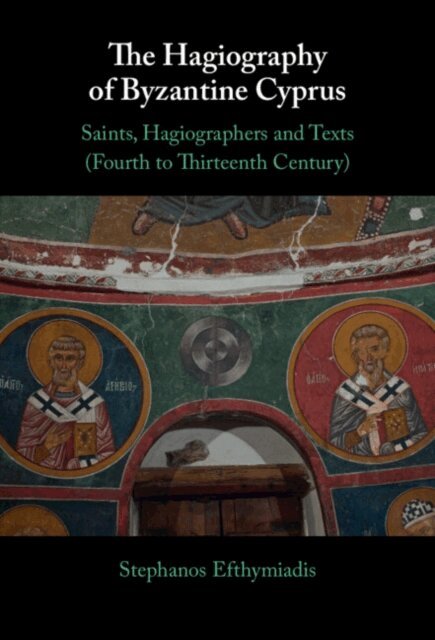
In an empire such as Byzantium, where the large urban centres monopolised cultural activity and literary creation, writing texts in praise of local saints offered a noteworthy incentive for literary expression on the periphery. Between the establishment of Christianity on the island in the fourth century and its passing from Byzantine to Frankish rule in the thirteenth, Cyprus saw a significant number of hagiographical texts dedicated to its bishop saints and defending the claims and privileges of its Church. This book offers the first systematic study of this body of texts, inquiring into their literary background and engagement both with contemporary Mediterranean history and with issues specifically affecting Cyprus. It also draws attention to hagiographical texts written in later times as reflecting the enduring interest of Byzantine Christianity in the saints of Cyprus, whose cult had by then acquired a universal appeal.
E-bok
PDF, Engelska, 20242 985 kr
Läs direkt efter köp
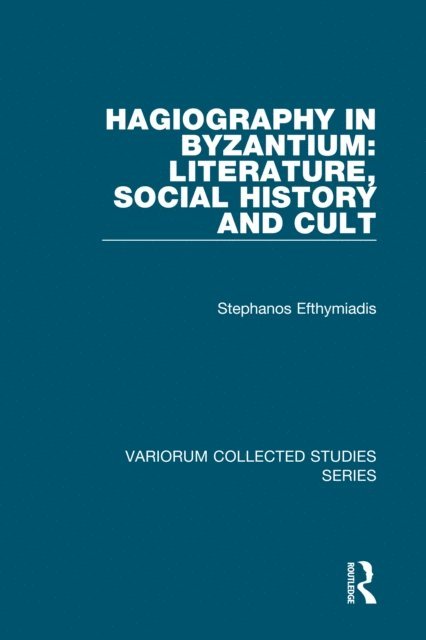
Involving a vast number of texts, saintly heroes and authors, Byzantine hagiography stands out as a field of scholarly research highly rewarding for both the philologist and the historian. The studies reproduced in this volume cover a chronological range from late antiquity to the Paleologan era. They bring together annotated editions of specific texts and discussions of their contexts, complemented by comprehensive surveys of saintly and monastic cult. Having appeared over the last twenty years, they also illustrate and reflect upon the significant development and re-orientation which has marked the study of hagiography in recent decades.
E-bok
Engelska, 20242 985 kr
Läs direkt efter köp
Involving a vast number of texts, saintly heroes and authors, Byzantine hagiography stands out as a field of scholarly research highly rewarding for both the philologist and the historian. The studies reproduced in this volume cover a chronological range from late antiquity to the Paleologan era. They bring together annotated editions of specific texts and discussions of their contexts, complemented by comprehensive surveys of saintly and monastic cult. Having appeared over the last twenty years, they also illustrate and reflect upon the significant development and re-orientation which has marked the study of hagiography in recent decades.
Häftad, Engelska, 2016
975 kr
Skickas inom 10-15 vardagar
The patriarch Tarasios holds a key position in the ending of the first period of Iconoclasm in Byzantium, with the seventh Oecumenical Council at Nicaea in 787. His Life forms an equally key source for the history and culture of the Byzantine world in the eighth and ninth centuries. This book provides a full introduction, a critical edition with English translation, and a detailed commentary and indexes for this important document. The introduction first places the text within the framework of other patriarchal biographies composed in the period c.850-950. Dr Efthymiadis then looks at Tarasios himself, as layman, patriarch, and saint, and provides a biographical sketch of the author of the Life, Ignatios the Deacon, together with a discussion of the date and reasons for the work’s composition. In addition, this new text and translation makes more accessible a highly sophisticated example of Byzantine prose.
1 045 kr
Läs direkt efter köp
For an entire millennium, Byzantine hagiography, inspired by the veneration of many saints, exhibited literary dynamism and a capacity to vary its basic forms. The subgenres into which it branched out after its remarkable start in the fourth century underwent alternating phases of development and decline that were intertwined with changes in the political, social and literary spheres. The selection of saintly heroes, an interest in depicting social landscapes, and the modulation of linguistic and stylistic registers captured the voice of homo byzantinus down to the end of the empire in the fifteenth century. The seventeen chapters in this companion form the sequel to those in volume I which dealt with the periods and regions of Byzantine hagiography, and complete the first comprehensive survey ever produced in this field. The book is the work of an international group of experts in the field and is addressed to both a broader public and the scholarly community of Byzantinists, medievalists, historians of religion and theorists of narrative. It highlights the literary dimension and the research potential of a representative number of texts, not only those appreciated by the Byzantines themselves but those which modern readers rank high due to their literary quality or historical relevance.
E-bok
PDF, Engelska, 20161 045 kr
Läs direkt efter köp
For an entire millennium, Byzantine hagiography, inspired by the veneration of many saints, exhibited literary dynamism and a capacity to vary its basic forms. The subgenres into which it branched out after its remarkable start in the fourth century underwent alternating phases of development and decline that were intertwined with changes in the political, social and literary spheres. The selection of saintly heroes, an interest in depicting social landscapes, and the modulation of linguistic and stylistic registers captured the voice of homo byzantinus down to the end of the empire in the fifteenth century. The seventeen chapters in this companion form the sequel to those in volume I which dealt with the periods and regions of Byzantine hagiography, and complete the first comprehensive survey ever produced in this field. The book is the work of an international group of experts in the field and is addressed to both a broader public and the scholarly community of Byzantinists, medievalists, historians of religion and theorists of narrative. It highlights the literary dimension and the research potential of a representative number of texts, not only those appreciated by the Byzantines themselves but those which modern readers rank high due to their literary quality or historical relevance.
E-bok
Engelska, 20201 054 kr
Läs direkt efter köp
For an entire millennium, Byzantine hagiography, inspired by the veneration of many saints, exhibited literary dynamism and a capacity to vary its basic forms. The subgenres into which it branched out after its remarkable start in the fourth century underwent alternating phases of development and decline that were intertwined with changes in the political, social and literary spheres. The selection of saintly heroes, an interest in depicting social landscapes, and the modulation of linguistic and stylistic registers captured the voice of homo byzantinus down to the end of the empire in the fifteenth century. The seventeen chapters in this companion form the sequel to those in volume I which dealt with the periods and regions of Byzantine hagiography, and complete the first comprehensive survey ever produced in this field. The book is the work of an international group of experts in the field and is addressed to both a broader public and the scholarly community of Byzantinists, medievalists, historians of religion and theorists of narrative. It highlights the literary dimension and the research potential of a representative number of texts, not only those appreciated by the Byzantines themselves but those which modern readers rank high due to their literary quality or historical relevance.
E-bok
PDF, Engelska, 20201 045 kr
Läs direkt efter köp
For an entire millennium, Byzantine hagiography, inspired by the veneration of many saints, exhibited literary dynamism and a capacity to vary its basic forms. The subgenres into which it branched out after its remarkable start in the fourth century underwent alternating phases of development and decline that were intertwined with changes in the political, social and literary spheres. The selection of saintly heroes, an interest in depicting social landscapes, and the modulation of linguistic and stylistic registers captured the voice of homo byzantinus down to the end of the empire in the fifteenth century. The seventeen chapters in this companion form the sequel to those in volume I which dealt with the periods and regions of Byzantine hagiography, and complete the first comprehensive survey ever produced in this field. The book is the work of an international group of experts in the field and is addressed to both a broader public and the scholarly community of Byzantinists, medievalists, historians of religion and theorists of narrative. It highlights the literary dimension and the research potential of a representative number of texts, not only those appreciated by the Byzantines themselves but those which modern readers rank high due to their literary quality or historical relevance.
E-bok
Engelska, 20171 119 kr
Läs direkt efter köp
The patriarch Tarasios holds a key position in the ending of the first period of Iconoclasm in Byzantium, with the seventh Oecumenical Council at Nicaea in 787. His Life forms an equally key source for the history and culture of the Byzantine world in the eighth and ninth centuries. This book provides a full introduction, a critical edition with English translation, and a detailed commentary and indexes for this important document. The introduction first places the text within the framework of other patriarchal biographies composed in the period c.850-950. Dr Efthymiadis then looks at Tarasios himself, as layman, patriarch, and saint, and provides a biographical sketch of the author of the Life, Ignatios the Deacon, together with a discussion of the date and reasons for the work’s composition. In addition, this new text and translation makes more accessible a highly sophisticated example of Byzantine prose.
E-bok
PDF, Engelska, 20171 119 kr
Läs direkt efter köp
The patriarch Tarasios holds a key position in the ending of the first period of Iconoclasm in Byzantium, with the seventh Oecumenical Council at Nicaea in 787. His Life forms an equally key source for the history and culture of the Byzantine world in the eighth and ninth centuries. This book provides a full introduction, a critical edition with English translation, and a detailed commentary and indexes for this important document. The introduction first places the text within the framework of other patriarchal biographies composed in the period c.850-950. Dr Efthymiadis then looks at Tarasios himself, as layman, patriarch, and saint, and provides a biographical sketch of the author of the Life, Ignatios the Deacon, together with a discussion of the date and reasons for the work’s composition. In addition, this new text and translation makes more accessible a highly sophisticated example of Byzantine prose.
Inbunden, Engelska, 2014
2 586 kr
Skickas inom 10-15 vardagar
For an entire millennium, Byzantine hagiography, inspired by the veneration of many saints, exhibited literary dynamism and a capacity to vary its basic forms. The subgenres into which it branched out after its remarkable start in the fourth century underwent alternating phases of development and decline that were intertwined with changes in the political, social and literary spheres. The selection of saintly heroes, an interest in depicting social landscapes, and the modulation of linguistic and stylistic registers captured the voice of homo byzantinus down to the end of the empire in the fifteenth century. The seventeen chapters in this companion form the sequel to those in volume I which dealt with the periods and regions of Byzantine hagiography, and complete the first comprehensive survey ever produced in this field. The book is the work of an international group of experts in the field and is addressed to both a broader public and the scholarly community of Byzantinists, medievalists, historians of religion and theorists of narrative. It highlights the literary dimension and the research potential of a representative number of texts, not only those appreciated by the Byzantines themselves but those which modern readers rank high due to their literary quality or historical relevance.
Inbunden, Engelska, 2011
2 249 kr
Skickas inom 10-15 vardagar
Involving a vast number of texts, saintly heroes and authors, Byzantine hagiography stands out as a field of scholarly research highly rewarding for both the philologist and the historian. The studies reproduced in this volume cover a chronological range from late antiquity to the Paleologan era. They bring together annotated editions of specific texts and discussions of their contexts, complemented by comprehensive surveys of saintly and monastic cult. Having appeared over the last twenty years, they also illustrate and reflect upon the significant development and re-orientation which has marked the study of hagiography in recent decades.